
1979225
Description

Mind Map by Jack Bartlett, updated more than 1 year ago

|
Created by Jack Bartlett
over 11 years ago
|
|
C2: Chemistry
- Atoms, Compounds and Isotopes
Annotations:
- Atoms: Mass number: top number, protons + neutrons Atomic number: bottom number, protons
- Compounds: One or two atoms formed together
- Isotopes: Different forms of the same element which have the same number of protons but a different number of neutrons
- Ions
- Ions and Formulas
Annotations:
- Groups that lose electrons: 1, 2 Groups that gain electrons: 6, 7 Gaining an electron becomes negative, Losing an electron becomes positive
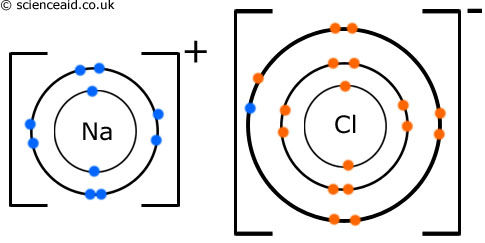
- Formulas: - Must have positively charged part, negatively charged part and then equal 0 Sodium Chloride: Na+ (+1) and Cl (-1) (+1) + (-1) = 0 So it is balanced as NaCl Magnesium Chloride: Mg2+ (+2) and Cl- (-1) (+2) + ( -1) = 1 So it is unbalanced and requires 2 Chloride atoms making MgCl2
- Electronic Structure
- Ions and Formulas
- Covalent
- Bonding
Annotations:
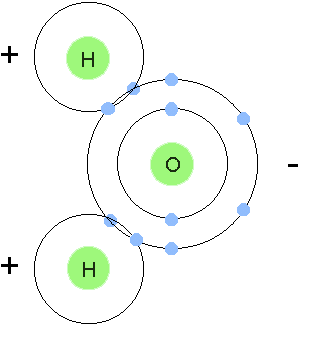
- Covalent Bonding: sharing electrons to make full outer shells and reach noble gas configuraton
- Substances
Annotations:
- Simple Molecular Substances: - Very strong covalent bonds - Forces of attraction between molecules are very weak - Low melting and boiling points - No ions or electrical charge so do not conduct electricity
- Giant Covalent Structures (Macromolecules): - Similar to lattices but no charged ions - All atoms strongly covalently bonded - Very high melting and boiling points - Do not conduct electricity (except molten graphite) - Examples are graphite and diamond
- Bonding
- Metallic Structures
Annotations:
- - Giant structure - Sea of free (delocalised) electrons coming from the outer shell of every metal atom in the structure - This allows good conduction of heat and electricity - Electrostatic attraction between positive metal ions and negative electrons - Allow layers to slide over each other
- Alloys: - Stronger - Mixture of two metals - Distorts structure stopping layers from sliding over each other
- New Materials
Annotations:
- Smart Materials: - Behave differently depending on the conditions - Have remembered shapes that can go back to after being bent
- Nanoparticles: - Tiny particles - Fullerenes Fullerenes can be used to make nanotubes
- Nanotubes: - Huge surface area to volume ratio (catalyst use) - Use as sensors - Stronger, lighter building materials - Don't leave white marks in suncream or deodorant - Absorbed easier; drug use - Lubricant use - Conductors could be used in electric circuits
- Mass
- Relative Formula Mass
Annotations:
- Relative Atomic Mass: How heavy different atoms are in relation to carbon-12 in Ar
- Relative Formula Mass: All the relative atomic masses added together MgCl2 --> 24 + (35.5 x 2) = 95Mr
- Moles: Equal to its Mr in grams Mr x Moles = Mass (g)
- Formula Mass Calculations
Annotations:
- Percentage Mass of an Element in a Compound: Ar x No. of atoms / Mr (of compound) then x 100
- Empirical Formula: Experimental mass / Ar then x 10 then /4 Then the two numbers you get are put to the right side of the element in the abbreviated equation
- Calculating Masses in Reactions
Annotations:
- Work out Mr then divide or multiply accordingly
- Relative Formula Mass
- Percentage Yield and Reversible Reactions
Annotations:
- Percentage Yield: Comparing the actual and predicted yield Actual yield (g) / Predicted yield (g) then x 100 Shows the overall success of the experiment
- Reversible Reactions: You never get a 100% yield, reactants are always lost, this happens particularly in reversible reactions as the reactant never completely change ammonium chloride <--> ammonia + hydrogen chloride
- Energy Transfer
Annotations:
- Exothermic: Energy is transferred to the surrounding usually in the form of heat and usually shown by a rise in temperature (e.g. combustion) - Oxidisation - Neutralisation
- Endothermic: Energy is taken in from the surroundings usually in the form of heat and usually shown byy a fall in temperature - Less common - Thermal decompositions: heat + calcium carbonate decomposes to make quick lime
- Can be reversible: hydrated copper sulphate --> anhydrous copper sulphate + water (ENDOTHERMIC) anhydrous copper sulphate + water --> hydrated copper sulphate (EXOTHERMIC)
- Acids and Alkalis
Annotations:
- pH scale: 1-2-3-4-5-6-7-8-9-10-11-12-13-14 Acids ... Neutral ... Alkalis Red ... Green ... Purple Indicator: dye that changes colour
- Bases: Alkali is a base that dissolves in water Bases and acids neutralise
- Acids: H+ ions Alkalis: OH- ions Acid + base --> salt + water State symbols: (s) - solid, (l) - liquid, (g) - gas, (aq) - dissolved in water {aqueous}
- Acids Reacting with Metals
Annotations:
- Acid + metal --> salt + hydrogen Hydrochloric acids produce chloride salts Sulfuric acids will always product sulfate salts Nitric acids produce nitrate salts when neutralised but with metals it can produce nitrogen oxide.
- Bases and Neutralisation
Annotations:
- Combination of meatl and acid names the salt e.g. hydrochloric acid + copper oxide --> copper chloride
- Oxides
Annotations:
- Acid + metal oxide --> salt + water
- Hydroxides
Annotations:
- Acid + metal hydroxide --> salt + water
- Ammonia
Annotations:
- Can be neutralised with HNO3 to make fertiliser Ammonia dissolves in water to produce an alkaline solution, when reacted with nitric acid you get a neutral salt - ammonium nitrate NH3 (aq) + HNO3 (aq) --> NH4NO3 (aq) [no water is produced]
- Making Salts
- Bonding
- Ionic
Annotations:
- Bonding: - Atoms lose or gain electrons to form charged particles (ions) - Shells with one electron lose it, shells with one electron off noble gas configuration gain one
- Compound Structure: - Giant regular lattice - Very strong electrostatic forces of attraction between oppositely charged ions
- Compound Properties:- High melting points (due to strong attraction between ions)- High boiling point (due to strong attraction between ions) - Ions freely move and carry electric current when compound is melted - Dissolve easily, similar reaction to melting
- Covalent
Annotations:
- See Covalent; Bonding
- Ionic
- Polymers
Annotations:
- Properties of Plastics: Bonds between different molecules determine the properties of the plastic Weak Forces: - Individual tangled chains of polymers, held by weak intermolecular forces are free to slide over each other Strong Forces: - Crosslinks hold the chains firmly together The properties are determined by the starting materials and reaction conditions
- Chemical Analysis and Instrumental Methods
Annotations:
- Paper Chromatography: Artificial colours can be separated using paper chromatography where it runs through solvent
- Machines: (Instrumental methods) Advantages: - Very sensitive - Very fast and can be automated - Very accurate
- Gas Chromatography: Used to identify substances - Gas carries substances through column - Different speeds separate them - Time taken to reach detector (retention time) recorded - Graph is drawn to show peaks when substances arrive - Mass spectrometer also identifies substance as they leave the column - Graphs show relative molecular mass
- Rate of Reaction
Annotations:
- Affecting Factors: - Temperature - Concentration - Use of catalysts - Surface area (of solids) - Pressure (of gases)
- Measuring Reaction Rate
Annotations:
- Measuring how quickly a product is made or how quickly the reactants are used up Rate of reaction = Amount of reactant used or product formed/ Time
- Precipitation: "X" under beaker and the quicker clouds cover the "X" the quicker the rate of reaction
- Change in Mass: Measure how much gas was given off by weighing the beaker throughout the whole reaction, the quicker the mass drops, the quicker the reaction rate
- The Volume of Gas Given off: Use a gas syringe to measure the amount of gas given off, the more gas given off in a time interval, the quicker the rate of the reaction
- Collision Theory
Annotations:
- More collision = faster reaction Temperature: particles gain energy and move more Concentration/Pressure: particles closer Surface Area: separates particles
- Reaction Rate Experiments
Annotations:
- Hydrochloric Acid and Marble Chips:Measure carbon dioxide given off using a gas syringeBreak up marble chips each time, eventually using powdered chalk Graph: x = time, y = amount of gas evolved
- Magnesium Metal and Dilute Hydrochloric Acid:Use a mass balance (scales) to measure amount of hydrogen gas given off Repeat with increased concentrations Graph: x = time, y = loss in mass
- Sodium Thiosulfate and Hydrochloride Acid: Use paper marked with an "X" that will disappear due to the yellow and cloudy precipitate formed This can be done at different temperatures Graph: x = time taken for mark to disappear, y = temperature
- Decomposition of Hydrogen Peroxide: 2H2O2 (aq) --> 2H2o (l) + O2 (g) Usually quite slow but Manganese(IV) oxide catalyst speeds it up. Could also use potato peel or blood Use a gas syringe to measure the oxygen gas given off Better catalysts give steeper graphs on the graph: x = time, y = volume of gas given off
- Catalysts
Annotations:
- A substance which speeds up a reaction, without being changed or used up Solid catalysts give a surface to stick to increasing successful collisions
- Reducing Costs:- Less energy needed- Can work it at a much lower temperature - Reuse them
- Disadvantages:- Expensive - Specific for certain reactions - Poisoned by impurities
- Electrolysis
- Electrolysis of Sodium Chloride
- Aluminium Extraction
- Electroplating
- Electrolysis of Sodium Chloride
Media attachments
Want to create your own Mind Maps for free with GoConqr? Learn more.