
Mind map
Phishing Scams
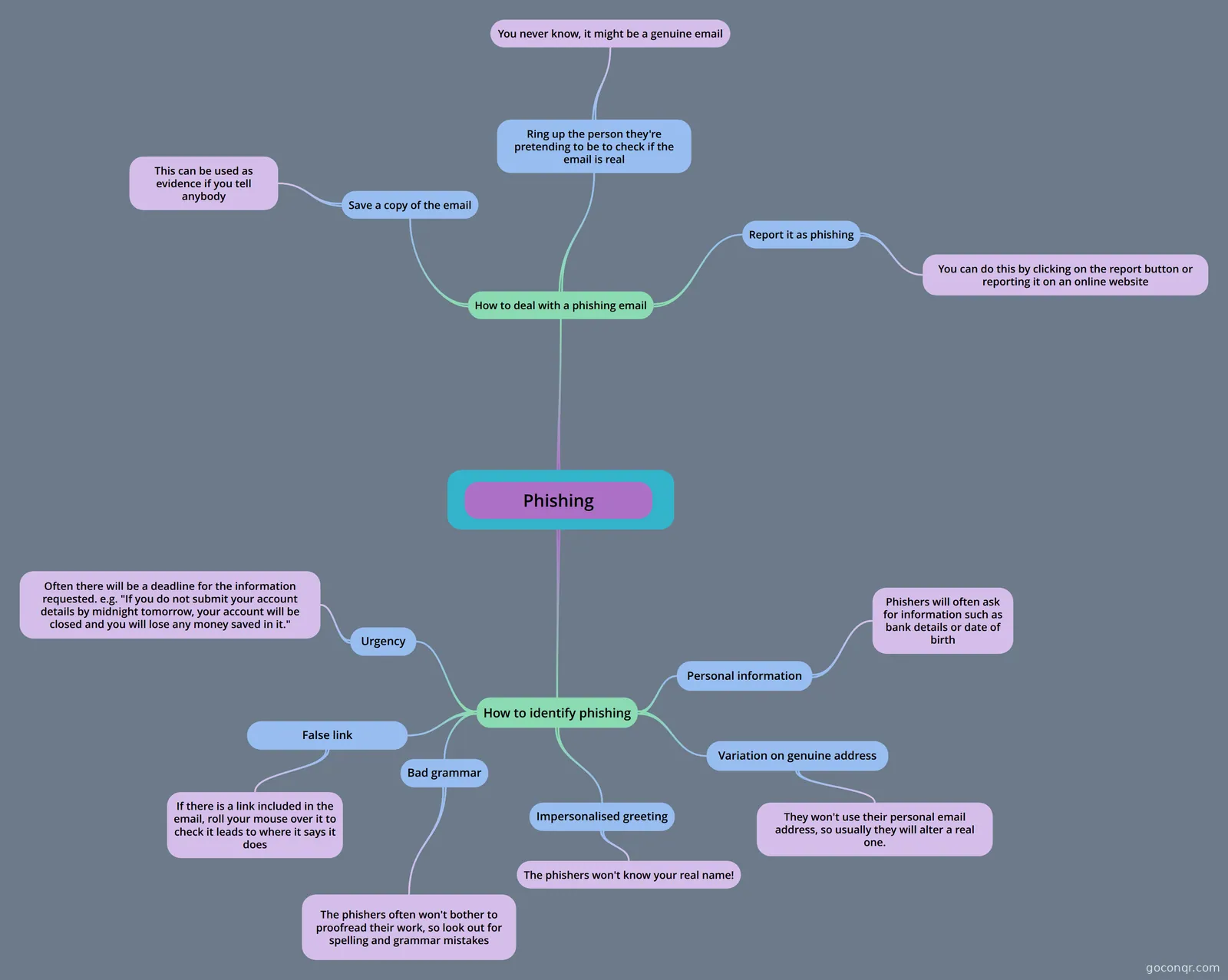
Mind map: Phishing scams
Map content
Phishing Scams
Phishing
- How to identify phishing
- Impersonalised greeting
- The phishers won't know your real name!
- Bad grammar
- The phishers often won't bother to proofread their work, so look out for spelling and grammar mistakes
- Variation on genuine address
- They won't use their personal email address, so usually they will alter a real one.
- False link
- If there is a link included in the email, roll your mouse over it to check it leads to where it says it does
- Personal information
- Phishers will often ask for information such as bank details or date of birth
- Urgency
- Often there will be a deadline for the information requested. e.g. "If you do not submit your account details by midnight tomorrow, your account will be closed and you will lose any money saved in it."
- Impersonalised greeting
- How to deal with a phishing email
- Ring up the person they're pretending to be to check if the email is real
- You never know, it might be a genuine email
- Save a copy of the email
- This can be used as evidence if you tell anybody
- Report it as phishing
- You can do this by clicking on the report button or reporting it on an online website
- Ring up the person they're pretending to be to check if the email is real
- How to identify phishing
Information
- Description
- A mind map on how to identify phishing and how to deal with emails you think might be a scam.
- Created by
- Lucy Corlett
- Views
- 278
- Tags
- Rating