
2645151
Description

Mind Map by Millie Fenner, updated more than 1 year ago
|
|
Created by Millie Fenner
almost 11 years ago
|
|
Textiles (2)
- Smart fabrics
- What is a smart fabric?
- A smart fabric is a fabric that has been designed to
react automatically to changes in its surroundings.
They can be produced in a variety of ways
- A smart fabric is a fabric that has been designed to
react automatically to changes in its surroundings.
They can be produced in a variety of ways
- Thermochromic fibres: This is a
micro-encapsulated dye that changes colour
at different temperatures. The colour
changing effect changes after 5-10 washes.
- Photochromic fabric: this fabric
changes it's colour in response to
light conditions. It is used on
fashion t-shirts and camoflage
clothing
- Conductive fabrics: are
used to integrate
electronics into textiles.
- What is a smart fabric?
- Modern fabrics and technologies.
- Kevlar - is a very strong polymer that's made
chemically and can be spun into strong fibres. Kevlar is
a very, very strong fabric which resists abrasion and is
used in bulletproof jackets.
- Nomex - is another
polymer spun into a fibre
which is very fire resistant
and is used in fire fighters
jackets.
- Fastskin - is a fabric
designed by speedo. it is
designed to mimic a sharks
skin the rough surface of
the fabric reduces the drag
in the water of the
swimmer.
- Gore-tex - is waterproof, wind proof and
breathable. Used for ski wear such as coats
and gloves.
- Tactel - is a type of nylon, which is
light-weight, soft, can be recycled into
plastic, and dries very quickly-8 times
quicker than cotton.
- Kevlar - is a very strong polymer that's made
chemically and can be spun into strong fibres. Kevlar is
a very, very strong fabric which resists abrasion and is
used in bulletproof jackets.
- Fabric constructions
- Knitted
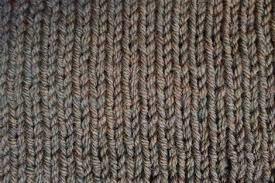
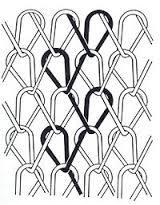
- Weft-kitted fabrics are made by
hand or machine. Weft knits are
used for socks, T-shirts and
jumpers. Weft-knitted fabric is
made by looping together long
lengths of yarn. This makes the
fabric stretchy and comfortable.
The yarn runs in rows across the
fabric. If a stitch is dropped it
will ladder down the length of
the fabric. weft knits, made by
hand or machine, are used for
socks, t-shirts and jumpers.
- Warp Knit
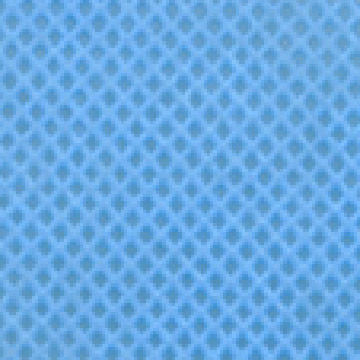
- Warp-knitted fabric is made
by machine and is used for
swimwear. Warp-knitted
fabric is made by machine.
The loops interlock vertically
along the length of the fabric.
Warp knits are slightly
stretchy and do not ladder.
They are used for swimwear,
underwear and geotextiles.
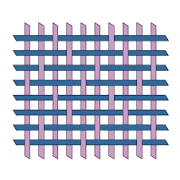
- Plain weave
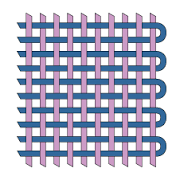
- In plain-weave the warp and weft are
aligned so that they form a simple
criss-cross pattern. It is strong and
hardwearing. It is used for fashion and
furnishing fabrics.
- In plain-weave the warp and weft are
aligned so that they form a simple
criss-cross pattern. It is strong and
hardwearing. It is used for fashion and
furnishing fabrics.
- Twill weave
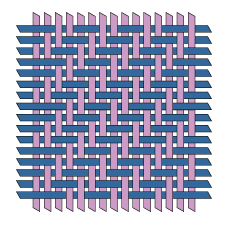
- In a twill-weave the crossings of weft and
warp are offset to give a diagonal pattern
on the fabric surface. Twill weave is
strong and drapes well. It is used for jeans,
jackets and curtains.
- In a twill-weave the crossings of weft and
warp are offset to give a diagonal pattern
on the fabric surface. Twill weave is
strong and drapes well. It is used for jeans,
jackets and curtains.
- Satin weave
- Satin weave is like the twill;
however the surface is very
shiny due to the warp threads
going over three weft threads
instead of two or one. This
mean the woven fibres are
exposed uninterrupted.
- Satin weave is like the twill;
however the surface is very
shiny due to the warp threads
going over three weft threads
instead of two or one. This
mean the woven fibres are
exposed uninterrupted.
- Bonded/non woven
- Bonded-fibre fabrics are made from
webs of synthetic fibres bonded
together with heat or adhesives.
They are cheap to produce, but not
as strong as woven or knitted
fabrics. Bonded-fibre fabrics are
mainly used for interlining. They are
easy to sew, crease-resistant, do not
fray and are stable to washing and
dry-cleaning.
- Bonded-fibre fabrics are made from
webs of synthetic fibres bonded
together with heat or adhesives.
They are cheap to produce, but not
as strong as woven or knitted
fabrics. Bonded-fibre fabrics are
mainly used for interlining. They are
easy to sew, crease-resistant, do not
fray and are stable to washing and
dry-cleaning.
- Knitted
- Non-decorative techniques
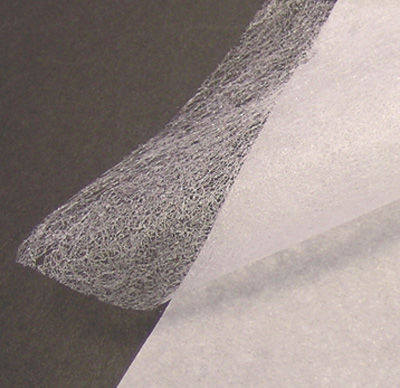
- Bondaweb
- A web of glue that is ironed onto
fabric in order to cut out a neat
shape, and then ironed onto fabric
for accuracy and neatness when
sewing.
- A web of glue that is ironed onto
fabric in order to cut out a neat
shape, and then ironed onto fabric
for accuracy and neatness when
sewing.
- Heat press
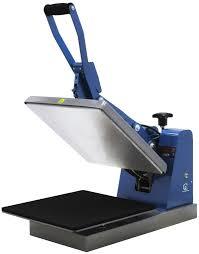
- Machine used to transfer an image
printed from the computer from
paper to fabric with heat and
pressure.
- Machine used to transfer an image
printed from the computer from
paper to fabric with heat and
pressure.
- Bondaweb
- Printing Methods
- Block printing
- One image is stamped over
and over again to make a
repeat pattern. each layer of
colour is stamped individually.
Time consuming, requires
great hand skills.
- One image is stamped over
and over again to make a
repeat pattern. each layer of
colour is stamped individually.
Time consuming, requires
great hand skills.
- Screen printing
- An image is tarnferred to a
very fine mesh screen and then
dye is pushed through the screen
using a squeegee, this forces the
dye through and onto the fabric.
- An image is tarnferred to a
very fine mesh screen and then
dye is pushed through the screen
using a squeegee, this forces the
dye through and onto the fabric.
- Transfer printing
- An image from the computer is printed
onto paper and then transferred to fabric
using a heat press (this is not called heat
press)
- An image from the computer is printed
onto paper and then transferred to fabric
using a heat press (this is not called heat
press)
- Block printing
- More smart materials
- UV reactive beads/paint/thread
- The colour changes depending on
the amount of UV ray(light) they
experience.
- The colour changes depending on
the amount of UV ray(light) they
experience.
- LEDs
- Light Emitting Diodes, small electronic
lights that can be sewn into clothing,
however they require a battery to run
and often need conductive thread to
work.
- Light Emitting Diodes, small electronic
lights that can be sewn into clothing,
however they require a battery to run
and often need conductive thread to
work.
- Solar panels
- Small panels that can generate
power from UV rays form the
sun.
- Small panels that can generate
power from UV rays form the
sun.
- UV reactive beads/paint/thread
- Fastenings
- Buttons/covered buttons
- Toggle
- Zip
- Velcro
- Press studs/ poppers
- Magnetic clasps
- Padlock
- Buckle
- Bag clasp
- Frog buttons
- Safety buckles/clips
- Eyelets and lacing
- Hook and eye
- Buttons/covered buttons
- Recycled fabrics: plastic bottles
turned into fleece
- Reusing- used clothing cab be
donated to charity shops to be
used again, or they can be
modified to give them a new
lease of life.
- Reprocessing- textile items are
broken down to their fibrous form
and then re-made into something
new. Things that can be recycled into
another fabric: furniture, carpets,
tires, footwear, and non-durable
goods such as sheets and towels.
- Both are good for the environment because they reduce
the amount of wastage going to landfill sites. And reduce
the need for more products.
- Reusing- used clothing cab be
donated to charity shops to be
used again, or they can be
modified to give them a new
lease of life.
- Sustainably grown fabrics
like bamboo, linen
- Recycled fabrics: plastic bottles
turned into fleece
Media attachments
Want to create your own Mind Maps for free with GoConqr? Learn more.