
2876273
Description

Mind Map by masked_ranger, updated more than 1 year ago

|
Created by masked_ranger
over 10 years ago
|
|
Science-Body Systems
- Respiratory System
- respiratory system is responsible for getting oxygen into your body and carbon dioxide out.
- occurs when you inhale (breathe in)
- When you breathe in, you actually take in a mixture of gases (of which about 21 per cent is oxygen)
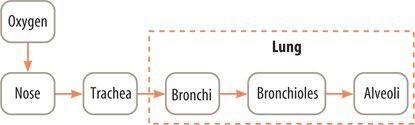
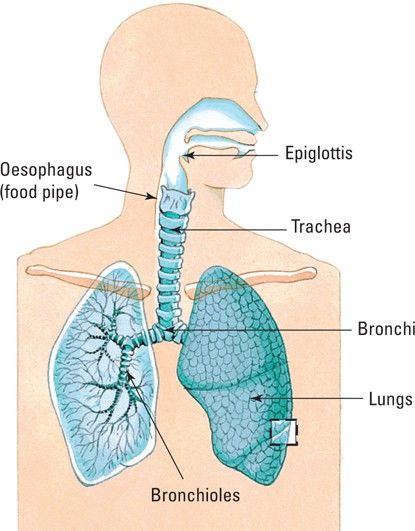
- air moves down your trachea (or windpipe)
- then down into one of two narrower tubes called bronchi (bronchus)
- then into smaller branching tubes called bronchioles
- which end in tiny air sacs called alveoli (alveolus).
- which end in tiny air sacs called alveoli (alveolus).
- then into smaller branching tubes called bronchioles
- then down into one of two narrower tubes called bronchi (bronchus)
- air moves down your trachea (or windpipe)
- When you breathe in, you actually take in a mixture of gases (of which about 21 per cent is oxygen)
- occurs when you exhale (breathe out).
- occurs when you inhale (breathe in)
- respiratory system is responsible for getting oxygen into your body and carbon dioxide out.
- Circulatory System
- Work together to provide your cells with oxygen which is essential for cellular respiration
- involves the breaking down of glucose so that energy is released in a form that your cells can then use
- carbon dioxide is produced as a waste product
- Carbon dioxide then needs to be removed from your cells or it would cause damage or death to them.
- Carbon dioxide then needs to be removed from your cells or it would cause damage or death to them.
- involves the breaking down of glucose so that energy is released in a form that your cells can then use
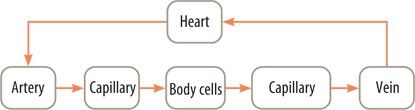
- circulatory system is responsible for transporting oxygen and nutrients to your body's cells, and wastes
such as carbon dioxide away from them.
- blood cells that are transported in your blood vessels and heart.
- three major types of blood vessels
- arteries,
- which transport blood to the heart
- which transport blood to the heart
- capillaries,
- in which materials are exchanged with cells
- in which materials are exchanged with cells
- veins,
- which transport blood back to the heart
- which transport blood back to the heart
- arteries,
- three major types of blood vessels
- blood cells that are transported in your blood vessels and heart.
- Work together to provide your cells with oxygen which is essential for cellular respiration
- Digestive System
- Excretory System
Media attachments

Want to create your own Mind Maps for free with GoConqr? Learn more.