
31485186
Description

Mind Map by lina vanessa castillo collazos, updated more than 1 year ago

|
Created by lina vanessa castillo collazos
over 4 years ago
|
|
EMAIL WRITING
- Formal emails are usually sent to people the writer doesn’t know or to people outside the company. Less formal
emails are usually sent to people the writer knows and / or colleagues. If you are not sure how formal your email
should be, copy the email style of the person who wrote to you, or use a semiformal style. The following are
some guidelines on how to start and end emails with different levels of formality, along with some common
phrases used in emails
- SEMI-FORMAL EMAILS
- Use semi-formal emails with people
you donot know very well. Sometimes
it is difficult to know if the email needs to
be formal or semi-formal. It is a good
idea to copy the email style of the person
who writes to you.
- OPENING
- Dear John -- Dear Olivia
- Dear John -- Dear Olivia
- CLOSING
- Thanks -- Best regards --Yours
- Thanks -- Best regards --Yours
- OPENING
- Use semi-formal emails with people
you donot know very well. Sometimes
it is difficult to know if the email needs to
be formal or semi-formal. It is a good
idea to copy the email style of the person
who writes to you.
- FORMAL EMAILS
- Formal emails are similar to
letters.
- OPENING
- Dear Sir or Madam Dear Sir / Madam -
Dear Mr Thomas Dear Dr Thomas Dear
Ms Smith (use for a married / unmarried
woman) Dear John Thomas -
- Dear Sir or Madam Dear Sir / Madam -
Dear Mr Thomas Dear Dr Thomas Dear
Ms Smith (use for a married / unmarried
woman) Dear John Thomas -
- CLOSING
- Yours faithfully (UK) Sincerely
(US) - Regards Yours sincerely
(UK) Sincerely (US)
- Yours faithfully (UK) Sincerely
(US) - Regards Yours sincerely
(UK) Sincerely (US)
- CONTRACTIONS
- When writing for male mails do not
use contractions,such as I’m , didn’t,
you’ll, etc. Formal I am writing to ask
for some information. Informal I’m
writing to ask for some information.
- When writing for male mails do not
use contractions,such as I’m , didn’t,
you’ll, etc. Formal I am writing to ask
for some information. Informal I’m
writing to ask for some information.
- OPENING
- Formal emails are similar to
letters.
- INFORMAL EMAILS
- In many companies, informal emails are sent
between colleagues.
- OPENING
- Hi John Hello Olivia Hi (Use Hi or
Hello without the person’s name.)
Hello John (Start the email with
the person’s first name.) J (Invery
informal situations,
youcanwritethe firstletter of
theperson’sname.This is for
someone called John.
- Hi John Hello Olivia Hi (Use Hi or
Hello without the person’s name.)
Hello John (Start the email with
the person’s first name.) J (Invery
informal situations,
youcanwritethe firstletter of
theperson’sname.This is for
someone called John.
- CLOSING
- Best wishes All the best Thanks
John (You can close an email with
just your first name) J (Invery
informal situations,
youcanwritethe firstletter of
yourname.This is a closing for
someone called John)
- Best wishes All the best Thanks
John (You can close an email with
just your first name) J (Invery
informal situations,
youcanwritethe firstletter of
yourname.This is a closing for
someone called John)
- OPENING
- In many companies, informal emails are sent
between colleagues.
- SEMI-FORMAL EMAILS
- OTHER EXAMPLES OF EMAIL
WRITING
- STRUCTURE
- SALUDO
(Greetings)
INTRODUCCIÓN
(Introduction)
CUERPO (Body)
CONCLUSIÓN
(Conclusion)
- SALUDO
(Greetings)
INTRODUCCIÓN
(Introduction)
CUERPO (Body)
CONCLUSIÓN
(Conclusion)
- INTRODUCTION
- I am writing with regard
to… Le escribo con
respecto a… --I am writing
in connection with… Le
escribo en relación a… -- I
am emailing in reference
to… Le envío este correo
en referencia a… --I am
writing to inform you
that… Le escribo para
informarle de… -- I am
contacting you to… Me
pongo en contacto con
usted… --I am happy to
inform you that… Me
alegra informarle que… -- I
would like… Me gustaría…
- I am writing with regard
to… Le escribo con
respecto a… --I am writing
in connection with… Le
escribo en relación a… -- I
am emailing in reference
to… Le envío este correo
en referencia a… --I am
writing to inform you
that… Le escribo para
informarle de… -- I am
contacting you to… Me
pongo en contacto con
usted… --I am happy to
inform you that… Me
alegra informarle que… -- I
would like… Me gustaría…
- TEXT BODY
- ADEMÁS: furthermore,
moreover, in addition…
--AUNQUE / SIN
EMBARGO: although,
though, however,
nevertheless… --POR
OTRO LADO: On the other
hand --POR LO TANTO:
therefore --COMO
RESULTADO / COMO
CONSECUENCIA: as a
result / as a consequence…
- ADEMÁS: furthermore,
moreover, in addition…
--AUNQUE / SIN
EMBARGO: although,
though, however,
nevertheless… --POR
OTRO LADO: On the other
hand --POR LO TANTO:
therefore --COMO
RESULTADO / COMO
CONSECUENCIA: as a
result / as a consequence…
- FIRED
- Best wishes: Los mejores deseos
saludo Kind regards: un
cordial saludo Best regards:
un cordial saludo Sincerely:
atentamente Best: saludos
--Regards: saludos / un
saludo --Thanks: gracias
--Many thanks: muchas
gracias
- Best wishes: Los mejores deseos
saludo Kind regards: un
cordial saludo Best regards:
un cordial saludo Sincerely:
atentamente Best: saludos
--Regards: saludos / un
saludo --Thanks: gracias
--Many thanks: muchas
gracias
- CONCLUSION
- Thanks you for you help
Gracias por tu ayuda I look
forward to hearing from you
Espero sus noticias. --Thanks
in advance Gracias por
adelantado. --Please, feel free
to contact me if you have any
questions Por favor, si tiene
alguna duda contacte
conmigo. --If you have any
questions, do not hesitate to
contact me No dude en
ponerse en contacto conmigo
si tiene alguna pregunta. --Let
me know if you need
anything else Infórmeme si
necesita algo más
- Thanks you for you help
Gracias por tu ayuda I look
forward to hearing from you
Espero sus noticias. --Thanks
in advance Gracias por
adelantado. --Please, feel free
to contact me if you have any
questions Por favor, si tiene
alguna duda contacte
conmigo. --If you have any
questions, do not hesitate to
contact me No dude en
ponerse en contacto conmigo
si tiene alguna pregunta. --Let
me know if you need
anything else Infórmeme si
necesita algo más
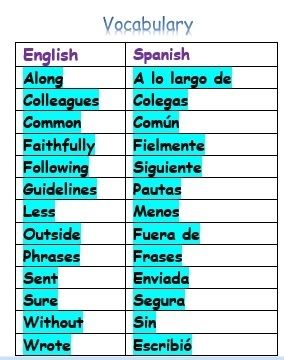
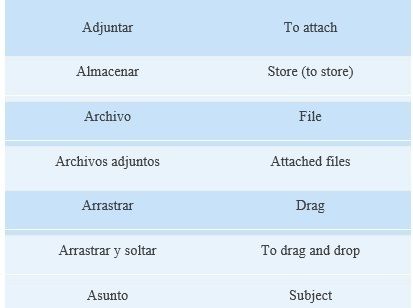
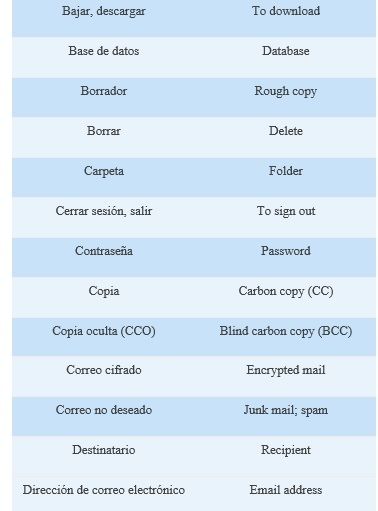
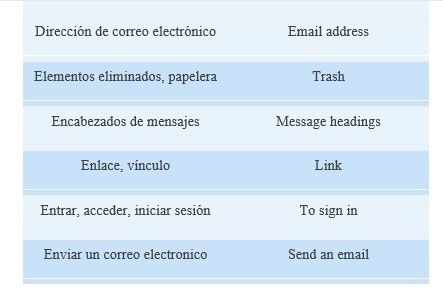
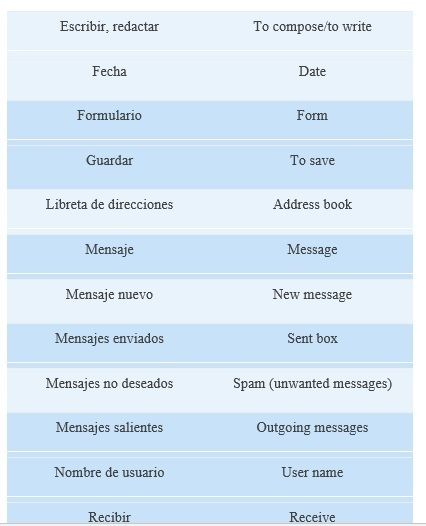
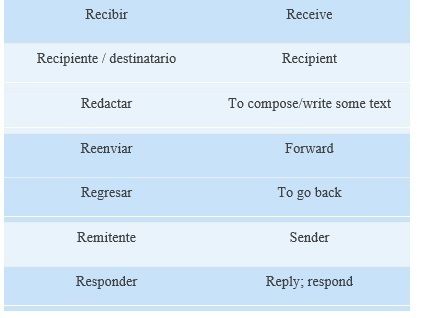
- VOCABULARY
- STRUCTURE
Media attachments
Want to create your own Mind Maps for free with GoConqr? Learn more.