
36349767
Description

Mind Map by ANA CARMEN SEGURA BECERRA, updated more than 1 year ago

|
Created by ANA CARMEN SEGURA BECERRA
over 3 years ago
|
|
INTERLANGUAGE
- 1.2. Contrastive analysis (CA)
and Error analysis (EA)
- CA: Linguists examining the target
language and contrasting it with the
mother tongue. EA: Learners who share
the same mother tongue simply do not
speak the L2 in axactly the same way.
- CA: Linguists examining the target
language and contrasting it with the
mother tongue. EA: Learners who share
the same mother tongue simply do not
speak the L2 in axactly the same way.
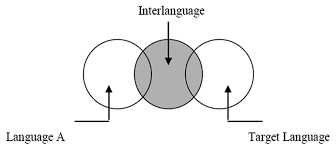
- 1.3. Interlanguage
- It is the existence of a
"special" language,
created by the individual,
and standing midway
between the mother
tongue and the target
language.
- it is also called by
Nemser like"an
approximative
system"
- James called it
"interlingua"
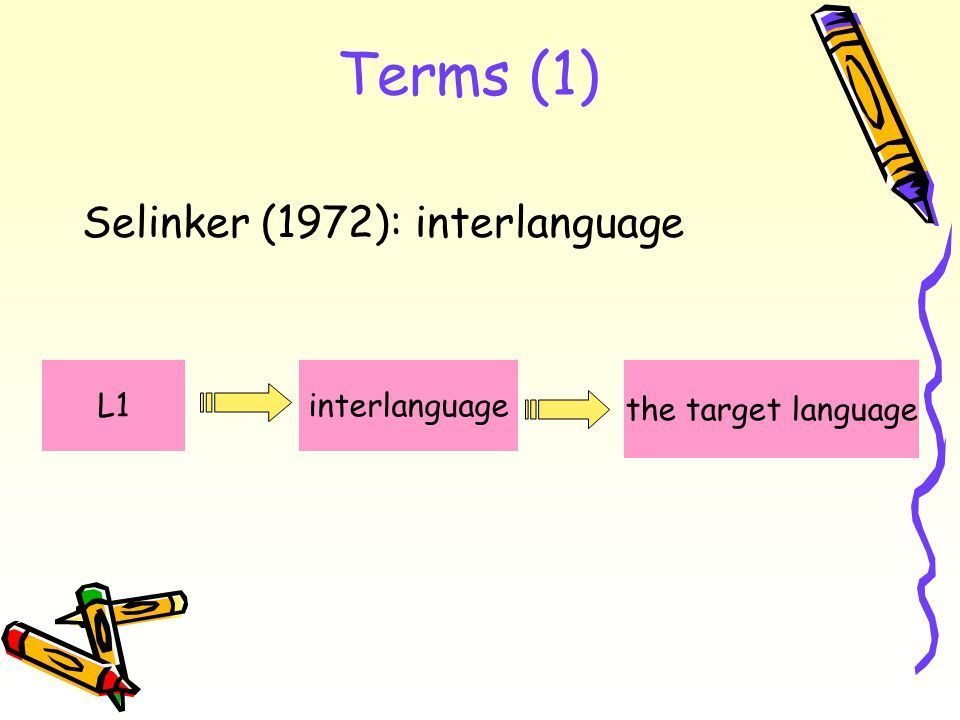
- Larry Selinker
coined the term
"interlanguage"
- it is also called by
Nemser like"an
approximative
system"
- It is the existence of a
"special" language,
created by the individual,
and standing midway
between the mother
tongue and the target
language.
- 1.4. The general
characteristics of
interlanguage
- Idiolect: the language
system of an individual as
expressed by the way he
or she speaks or writes
within the overall system
of a particular language.
- Variable and
systematic: they are
unstable and
dynamic.
- Idiolect: the language
system of an individual as
expressed by the way he
or she speaks or writes
within the overall system
of a particular language.
- 1.5. Psycholinguistic and
sociolinguistic aspects
- Psycholinguistics was defined
by Scovel as the "study of the
normal and abnormal use of
language and speech to gain
a better understanding of
how the human mind
functions.
- Elaine Tarone proposes
that IL consists of
different styles and its
linguistic and
phonological
characteristics change
according to the social
context.
- Psycholinguistics was defined
by Scovel as the "study of the
normal and abnormal use of
language and speech to gain
a better understanding of
how the human mind
functions.
- 1.6. Linguistic processes in
the construction of
interlanguage
- Selinker sees the
development of IL as
resting on five central
cognitive processes.
- 1. Language
transfer; some
items, rules, and
subsystems of a
learner´s IL may be
transferred from
the first language.
- 1.6.1. The nature of
transfer: Richard
defines transfer as
"the use of elements
from one language
while speaking
another.
- 1.6.2. TRansfer:
Positive and
negative"
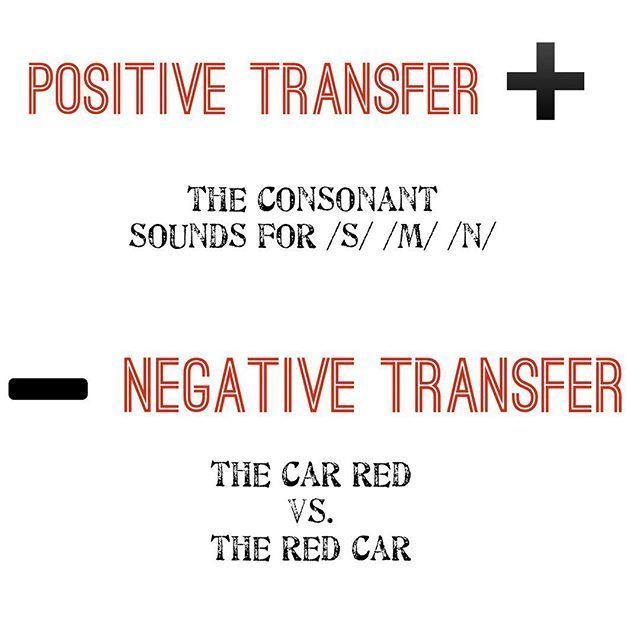
- Positive transfer: it
facilitates learning
and happens when
there is a
coincidence of
elements between
the L1 and the L2.
- Negative transfer
(interference); It refers
to the use of a structure
or element of the L1 that
it is not appropriate in
the L2, thereby
producing an error.
- Positive transfer: it
facilitates learning
and happens when
there is a
coincidence of
elements between
the L1 and the L2.
- 1.6.4.
Overgeneralization
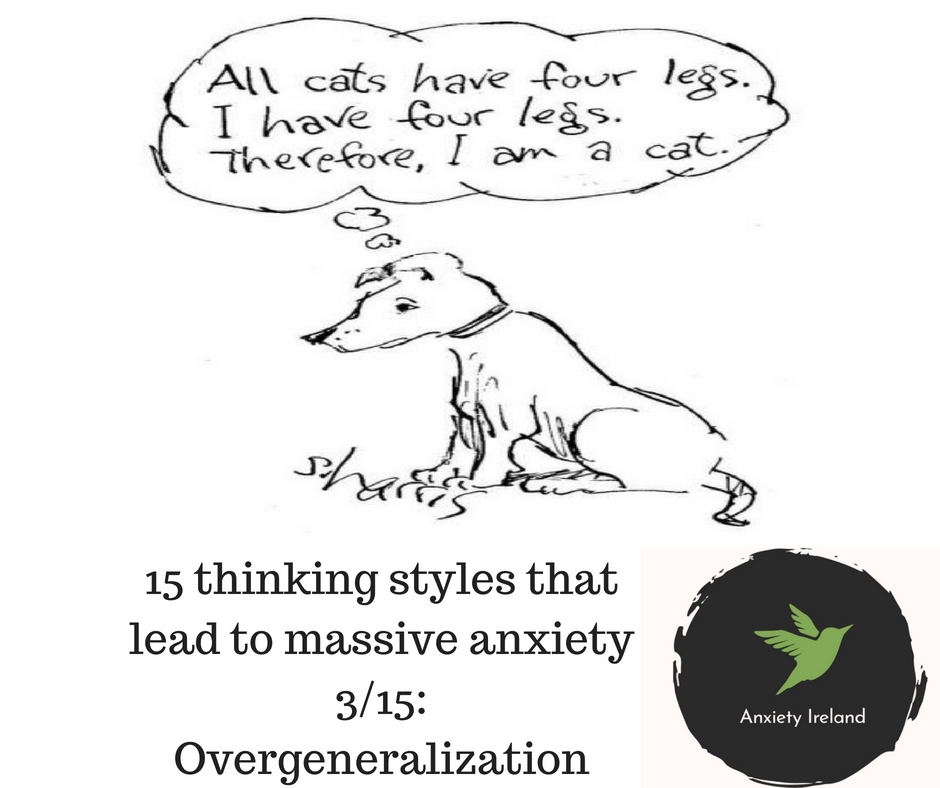
- It is defined by Ellis as "The
oversuppliance of an interlanguage
feature in contexts in which it does not
occur in target language use.
Overgeneralizations result in errors.
- Its two main features: 1. the tendency to use
regular forms where possible and 2. to simplify
elements and structures (regularisation and
simplification).
- Its two main features: 1. the tendency to use
regular forms where possible and 2. to simplify
elements and structures (regularisation and
simplification).
- It is defined by Ellis as "The
oversuppliance of an interlanguage
feature in contexts in which it does not
occur in target language use.
Overgeneralizations result in errors.
- 1.6.3. Transfer
and language
universals
- 1.6.1. The nature of
transfer: Richard
defines transfer as
"the use of elements
from one language
while speaking
another.
- 2. Overgeneralization of
target language
structures; some
interlanguage elements
are the result of a "clear
overgeneralization" of
target language rules
and semantic features.
- 3. Transfer of
training; some IL
elements may derive
from the way in
which learners are
taught.
- Some erroneous IL
features may be
caused by the way in
which learners are
taught.
- Some erroneous IL
features may be
caused by the way in
which learners are
taught.
- 4. Strategies used in
second language
learning; Selinker
defines a strategy as "an
identifiable approach
by the learner to the
material to be learned"
- 1. Cognitive
strategies are those
involved in the
analysis, synthesis,
or transformation of
learning materials.
- 2. Metacognitive
strategies are those
involved in planning,
monitoring, and
evaluating learning
- 3. Social/affective
strategies concern
the ways in which
learners choose to
interact with other
speakers.
- 1. Cognitive
strategies are those
involved in the
analysis, synthesis,
or transformation of
learning materials.
- 5. Strategies used in
second language
communication;
These are "an
identifiable approach
by the learner to
communication with
native speakers of the
TL"
- Communication
strategies have been
defined in a number of
different ways :
- A systematic technique employed by a
speaker to express his meaning when
face with some difficulty (Corder
1978).
- A mutual attempt of two interlocutors
to agree on a meaning in situations
when requisite meaning structures are
not shared (Tarone 1980).
- Potentially conscious plans for
solving what an individual
presents to itself as a problem in
reaching a particular
communicative goal (Faerch and
Kasper 1986).
- Techniques of coping with
difficulties in communicating in
an imperfectly known second
language (Stern 1983).
- All these meanings have
three features in
common;
problematicity,
consciousness, and
intentionallity.
- A systematic technique employed by a
speaker to express his meaning when
face with some difficulty (Corder
1978).
- Communication
strategies have been
defined in a number of
different ways :
- 1. Language
transfer; some
items, rules, and
subsystems of a
learner´s IL may be
transferred from
the first language.
- Selinker sees the
development of IL as
resting on five central
cognitive processes.
- 1.7. The process of
fossilization in
interlanguage
- It refers to the process
whereby a learner´s IL
development stops
some way short of
target language norms.
- 1.7.1. Causes of fossilization: Internal
factors; age and the lack of desire to
aculturate and external factors;
Communicative pressure, lack of
learning opportunity and the nature of
feedback on learner´s use of L2
- 1.7.1. Causes of fossilization: Internal
factors; age and the lack of desire to
aculturate and external factors;
Communicative pressure, lack of
learning opportunity and the nature of
feedback on learner´s use of L2
- It refers to the process
whereby a learner´s IL
development stops
some way short of
target language norms.
Media attachments








Want to create your own Mind Maps for free with GoConqr? Learn more.