
40168939
Description

Mind Map by Layla Abdulbaki, updated 12 months ago
More


Meningitis
Annotations:
- Almost 50% of children presenting to GP with MCD were sent home on 1 visit: more likely to die
- Pathology
- Common causes investigate
with gram stain
- Listeria (+)
- Pneumococcus (-)
- Neisseria (-)
- Herpes simplex virus
- Spectrum of colonisation
- Gram positive bacteria that invade neutrophils
- Endotoxins = inflammatory response
o Widespread vasodilation > CV
shock
- Myocardial damage > septic shock
- Intravascular coagulation > blocked blood
vessels
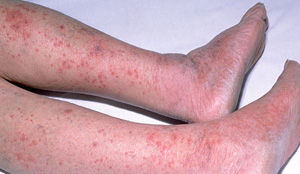
- Vessel damage - haemorrhage into tissues
(e.g. petechial rash
- Basically, disruption of normal CV system physiology and its role in delivering
oxygen nutrients to tissues
- Basically, disruption of normal CV system physiology and its role in delivering
oxygen nutrients to tissues
- Vessel damage - haemorrhage into tissues
(e.g. petechial rash
- Intravascular coagulation > blocked blood
vessels
- Myocardial damage > septic shock
- Endotoxins = inflammatory response
o Widespread vasodilation > CV
shock
- Evidence usually picked up by CSF but in this case using Polymerase Chain Reaction to ID DNA of
meningococcus
- Uusually evidence of septicaemia
- Uusually evidence of septicaemia
- Gram positive bacteria that invade neutrophils
- Listeria (+)
- Lab work
- Polymerase chain
reaction for DNA
detection
- High RBC count (610/ cu mm) -
normal <5
- High WBC count (4000 cells/cu mm) - normal
<5 o 2% lymphocytes, 98% polymorphs
- Low BGL (0.9 mmol/L) - normal 5.8
- High protein levels (5359g/L) -
normal 150-400
- Clotting high (>6.0g/L) - normal 1.5-4.5
- Polymerase chain
reaction for DNA
detection
- Common causes investigate
with gram stain
- Immediate managment
- Penicillin from GP
according to NICE
guidelines
Annotations:
- First line of defence
- Erythromyocin is used for
pneumoccus too esp. with
penicillin allergies
- Empiric antibodies for suspected
pneumococcus
- e.g. IV Ceftiaxone
- e.g. IV Ceftiaxone
- Anti-viral e.g.
Aciclovir
- for suspected viral encephalitis
- for suspected viral encephalitis
- Corticosteroid
e.g.
Dexamethasone
Annotations:
- Rare, only used in some cases
- Penicillin from GP
according to NICE
guidelines
- Physical signs and symptoms
- Drowsy, unrousable
- Glasgow coma score 7/15
- Glasgow coma score 7/15
- Small
haemorrhagic
lesion on foot
- Evidence of septicaemia
Annotations:
- blood poisoning/ toxicity resulting in deranged blood clotting and rash
- Evident in advanced cases but less obvious early on
- Signs and symptoms
- Headache, nausea, vomiting
- Photophobia
- Stiff neck
- Non-blanching rash
- Headache, nausea, vomiting
- These 'spots' are a well-publicised
feature of meningococcal infections
- Glass test check if the spots are blanching vs. non-blanching
- Glass test check if the spots are blanching vs. non-blanching
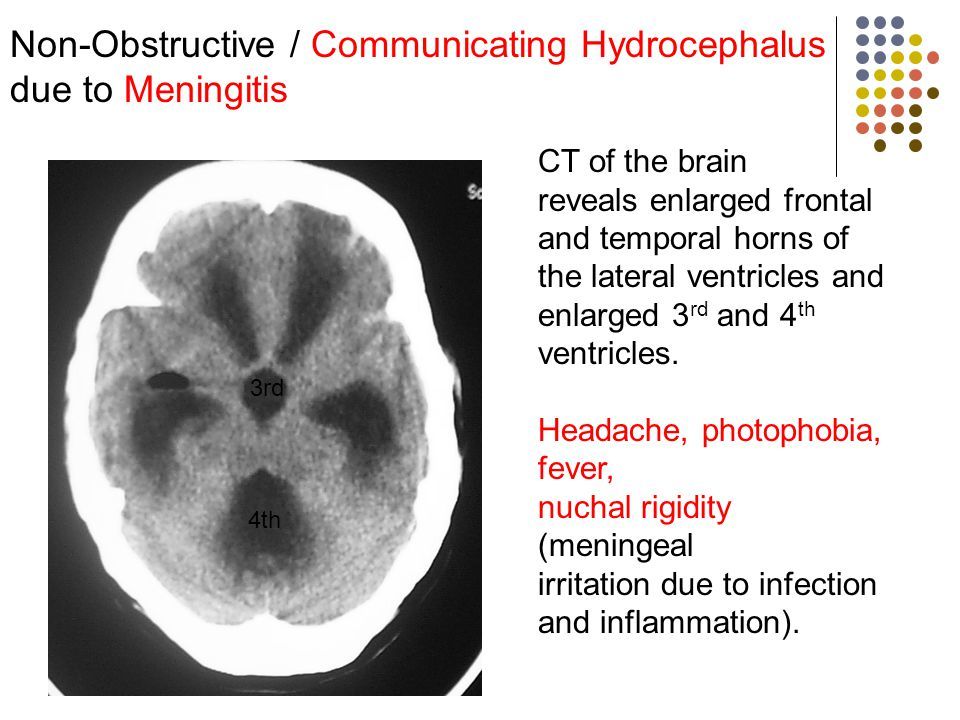
- Dialated temporal horns
- Possible evidence of cerebral oedema
- Possible evidence of cerebral oedema
- Prodrome phase in self-limiting viral illness
- Lasts up to 4 hours in young children
- Lasts up to 8 hours in adolescents
- Lasts up to 4 hours in young children
- Symptoms from hours of onset (RED FLAG symptoms)
- Fever earliest symptom across ages and most common
- Sepsis features second earliest symptom and most common
- Impaired mental status, meningism and
haemorrhagic rash takes longer across ages
and develops slower (also occurs in less
people)
- Importance
- Identifying these could reduce proportion of missed cases in first consultation by half
- Recognising symptoms after 19 hours of onset, brings prognosis
forward 11 hours
- Recognising symptoms after 19 hours of onset, brings prognosis
forward 11 hours
- Identifying these could reduce proportion of missed cases in first consultation by half
- Fever earliest symptom across ages and most common
- Long term
- Gangrene due to obstructed circulation
- Severe septicaemia
- Gangrene due to obstructed circulation
- Drowsy, unrousable
- Public health importance
- Public health (CCDC) needs to be notified
Annotations:
- Pt must have picked up bacteria from close contact Bacteria often colonises throat but in this case
- Type A
- Meningitis type A (Meningitis belt) of
Africa, type B not so common Africa
- Type A found in Asia far more than other types
- Meningitis type A (Meningitis belt) of
Africa, type B not so common Africa
- Responsibilities of public health
officials
- Follow up family o Follow up staff who performed intubation of pt. in A&E (low
risk but need to be given antibiotic cover) o Follow in flat or halls - need to
consider flatmates and any possible close contacts:
- Follow up family o Follow up staff who performed intubation of pt. in A&E (low
risk but need to be given antibiotic cover) o Follow in flat or halls - need to
consider flatmates and any possible close contacts:
- Type B
- rates of type B quite steady from 1999-2009
- Type B far more common
2005-2015 in England vs. type C,
Y and other regardless of age
- Type B most common in children age 1-4, then <1, and then 15-19 years
- rates of type B quite steady from 1999-2009
- New vaccine!
- In infants born since 01 July 2015 o Type C particularly used to be in
teenagers/students but vaccine now o New this month, meningococcus type
ACWY vaccine in adolescents
- In infants born since 01 July 2015 o Type C particularly used to be in
teenagers/students but vaccine now o New this month, meningococcus type
ACWY vaccine in adolescents
- Public health (CCDC) needs to be notified
- Prevention
- Friends and relatives
- Parents need to get their children vaccinated A+C, ACYW or C-
conjugate, B
- Contact tracing and giving antibiotic prophylaxis for close contacts
- Surveillance and notifiable disease reporting
- Parents need to get their children vaccinated A+C, ACYW or C-
conjugate, B
- Friends and relatives
- Meninges are the three membranes (the
dura mater, arachnoid, and pia mater)
that line the skull and vertebral canal and
enclose the brain and spinal
Media attachments
Want to create your own Mind Maps for free with GoConqr? Learn more.