
Mind map
Energy supply, demand and insecurity
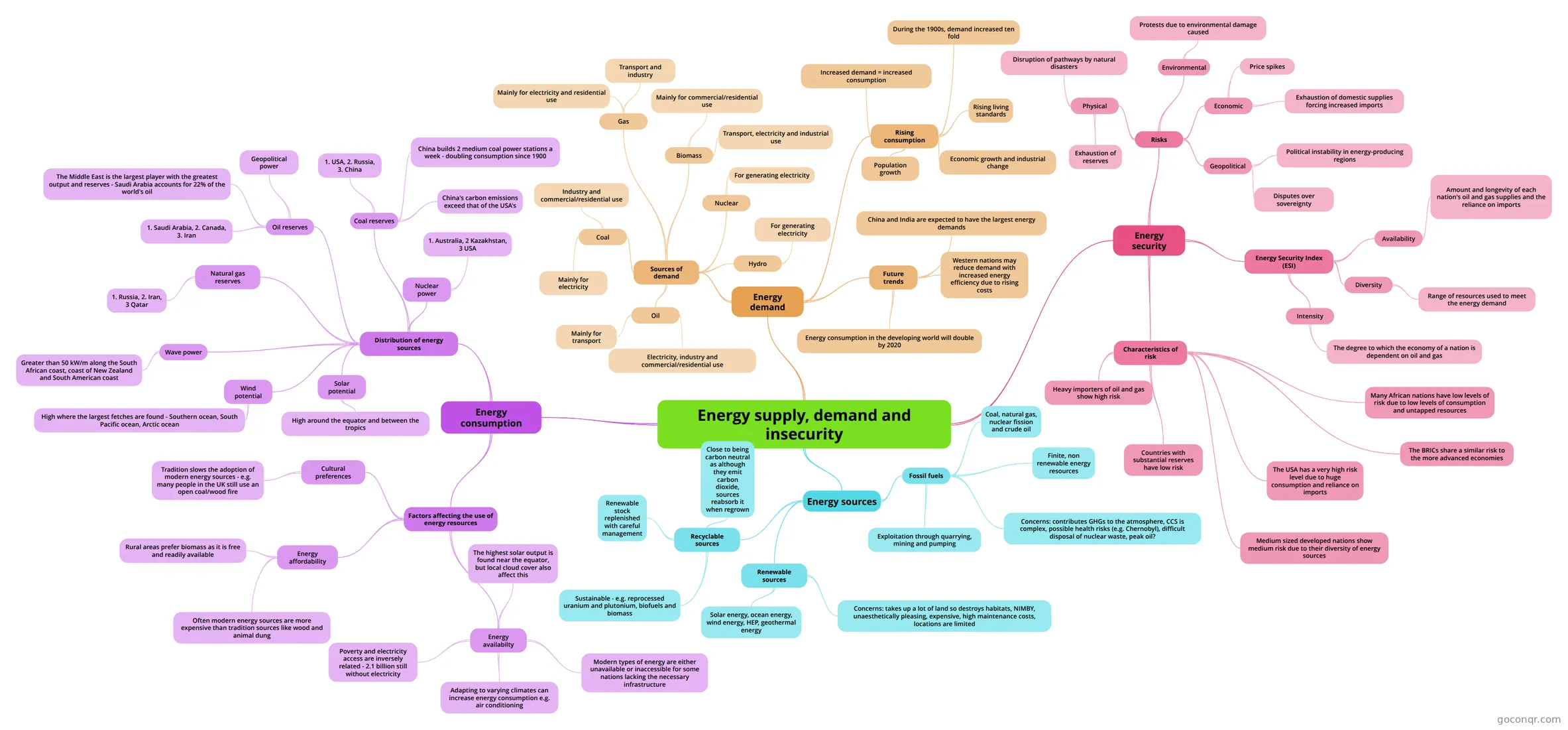
Mind map: Energy supply, demand and insecurity
Map content
Energy supply, demand and insecurity
Energy sources
- Fossil fuels
- Finite, non renewable energy resources
- Exploitation through quarrying, mining and pumping
- Coal, natural gas, nuclear fission and crude oil
- Concerns: contributes GHGs to the atmosphere, CCS is complex, possible health risks (e.g. Chernobyl), difficult disposal of nuclear waste, peak oil?
- Renewable sources
- Solar energy, ocean energy, wind energy, HEP, geothermal energy
- Concerns: takes up a lot of land so destroys habitats, NIMBY, unaesthetically pleasing, expensive, high maintenance costs, locations are limited
- Recyclable sources
- Sustainable - e.g. reprocessed uranium and plutonium, biofuels and biomass
- Renewable stock replenished with careful management
- Close to being carbon neutral as although they emit carbon dioxide, sources reabsorb it when regrown
- Fossil fuels
Energy consumption
- Factors affecting the use of energy resources
- Energy availabilty
- Modern types of energy are either unavailable or inaccessible for some nations lacking the necessary infrastructure
- Adapting to varying climates can increase energy consumption e.g. air conditioning
- The highest solar output is found near the equator, but local cloud cover also affect this
- Poverty and electricity access are inversely related - 2.1 billion still without electricity
- Energy affordability
- Often modern energy sources are more expensive than tradition sources like wood and animal dung
- Rural areas prefer biomass as it is free and readily available
- Cultural preferences
- Tradition slows the adoption of modern energy sources - e.g. many people in the UK still use an open coal/wood fire
- Energy availabilty
- Distribution of energy sources
- Solar potential
- High around the equator and between the tropics
- Wind potential
- High where the largest fetches are found - Southern ocean, South Pacific ocean, Arctic ocean
- Wave power
- Greater than 50 kW/m along the South African coast, coast of New Zealand and South American coast
- Natural gas reserves
- 1. Russia, 2. Iran, 3 Qatar
- Oil reserves
- 1. Saudi Arabia, 2. Canada, 3. Iran
- The Middle East is the largest player with the greatest output and reserves - Saudi Arabia accounts for 22% of the world's oil
- Geopolitical power
- Coal reserves
- 1. USA, 2. Russia, 3. China
- China builds 2 medium coal power stations a week - doubling consumption since 1900
- China's carbon emissions exceed that of the USA's
- Nuclear power
- 1. Australia, 2 Kazakhstan, 3 USA
- Solar potential
- Factors affecting the use of energy resources
Energy demand
- Sources of demand
- Oil
- Mainly for transport
- Electricity, industry and commercial/residential use
- Coal
- Mainly for electricity
- Industry and commercial/residential use
- Gas
- Mainly for electricity and residential use
- Transport and industry
- Biomass
- Mainly for commercial/residential use
- Transport, electricity and industrial use
- Nuclear
- For generating electricity
- Hydro
- For generating electricity
- Oil
- Rising consumption
- Increased demand = increased consumption
- During the 1900s, demand increased ten fold
- Rising living standards
- Population growth
- Economic growth and industrial change
- Future trends
- China and India are expected to have the largest energy demands
- Western nations may reduce demand with increased energy efficiency due to rising costs
- Energy consumption in the developing world will double by 2020
- Sources of demand
Energy security
- Risks
- Physical
- Disruption of pathways by natural disasters
- Exhaustion of reserves
- Environmental
- Protests due to environmental damage caused
- Economic
- Price spikes
- Exhaustion of domestic supplies forcing increased imports
- Geopolitical
- Political instability in energy-producing regions
- Disputes over sovereignty
- Physical
- Energy Security Index (ESI)
- Availability
- Amount and longevity of each nation's oil and gas supplies and the reliance on imports
- Diversity
- Range of resources used to meet the energy demand
- Intensity
- The degree to which the economy of a nation is dependent on oil and gas
- Availability
- Characteristics of risk
- Heavy importers of oil and gas show high risk
- Countries with substantial reserves have low risk
- Medium sized developed nations show medium risk due to their diversity of energy sources
- The BRICs share a similar risk to the more advanced economies
- Many African nations have low levels of risk due to low levels of consumption and untapped resources
- The USA has a very high risk level due to huge consumption and reliance on imports
- Risks
Information
- Description
- Energy Mind Map on Energy supply, demand and insecurity, created by emmajackson95 on 29/04/2013.
- Created by
- emmajackson95
- Views
- 144
- Tags
- Rating