
753144
Description

Mind Map by sian.phillips, updated more than 1 year ago

|
Created by sian.phillips
over 11 years ago
|
|
Landforms
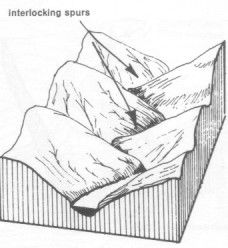
- Interlocking Spurs
- As the river flows downstream it
erodes the softer rock. As the
river erodes the landscape in the
upper course, it winds and bends
to avoid areas of hard rock. This
creates interlocking spurs, which
look a bit like the interlocking
parts of a zip.
- As the river flows downstream it
erodes the softer rock. As the
river erodes the landscape in the
upper course, it winds and bends
to avoid areas of hard rock. This
creates interlocking spurs, which
look a bit like the interlocking
parts of a zip.
- Waterfalls
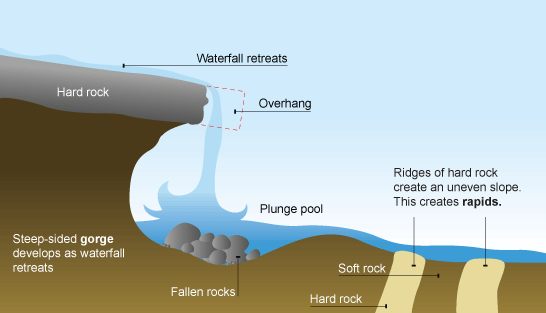
- A waterfall is formed when water flows over a ridge of hard and soft
rock on the river bed. The water starts to erode the soft rock
underneath which causes the distance between the rocks to
increase. The water then starts to erode a plunge pool underneath.
This is where the water falls with increasing impact and makes it
deeper. The water erodes the soft rock by the processes of
Hydrauliaction and abrasion. Hydraulic action is where the water
gets into cracks in the rock, expands and pushes the air resulting in
the rock becoming weaker and more cracked.
- A waterfall is formed when water flows over a ridge of hard and soft
rock on the river bed. The water starts to erode the soft rock
underneath which causes the distance between the rocks to
increase. The water then starts to erode a plunge pool underneath.
This is where the water falls with increasing impact and makes it
deeper. The water erodes the soft rock by the processes of
Hydrauliaction and abrasion. Hydraulic action is where the water
gets into cracks in the rock, expands and pushes the air resulting in
the rock becoming weaker and more cracked.
- Meanders
- River Cliffs
- Oxbow Lakes
- Oxbow lakes are formed by the continual erosion and deposition of a meander bend. Deposition occurs on the
inside of the bend. this is because the water flows slowly here which means that the river has little energy to hold
onto materials. Erosion occurs on the outside bend. This erosion results in the outside bends of the river becoming
closer together. This is called the river neck. With either continual erosion or a flood the land separating the two
bends will disappear, meaining the meander has been cut through completely. Deposition blocks off the old
meander as the water takes the fastest route. The old meander will eventually dry up.
- Oxbow lakes are formed by the continual erosion and deposition of a meander bend. Deposition occurs on the
inside of the bend. this is because the water flows slowly here which means that the river has little energy to hold
onto materials. Erosion occurs on the outside bend. This erosion results in the outside bends of the river becoming
closer together. This is called the river neck. With either continual erosion or a flood the land separating the two
bends will disappear, meaining the meander has been cut through completely. Deposition blocks off the old
meander as the water takes the fastest route. The old meander will eventually dry up.
- Flood Plains
- Levees
Media attachments
Want to create your own Mind Maps for free with GoConqr? Learn more.