
Notas
Physicalism Mind/Brain Identity Theories

Conteúdo das notas (1)
Página 1
Designed to overcome the issues of causation with Cartesian Dualism - how the metaphysical can affect the physical (mental states having affect on the body) and similarly how the physical can affect the metaphysical (ingesting hallocinogenics)
Physicalsm is the view that all that exists is physical - that which possesses extension
Type-type identity theory suggests:
Mental phenomena are identical to certain physcial phenomena
Ergo
Having a mental state consists of being in a particular physical state
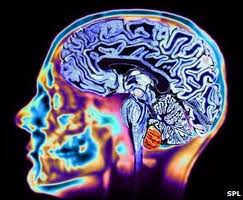
Pain = C-fibres firing

=

Reductive -
Identity theory reduces mental states to physical states

As the pain I am feeling now is identical to C-fibres activity the pain I was feeling yesterday is also identical
Pros:Simple
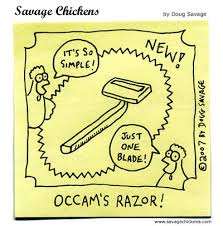
Occam's Razor
No need to account for relationship between physical and metaphysical - they are the same
Science based
Weaker version of type-type
Every token of one type will be identical with a token of the second type
Timepiece Analogy

Various tokens of the timepiece can be found on people's wrists, mantelpieces, town halls etc.
Every token of the timepiece will be identical in terms of physical parts designed to tell the time
However there is no single type of arrangement
Could be digital, analogue etc.
Type-type applies in the case of scientific identities - water is always H2O
Unduly restrictive in terms of mental states as it implies that mentality must be confined to human biological systems. What about Washoe?
Multi-realisability of mental states:
In the case of stroke victims a mental function lost through damage to a particular area of the brain is sometimes reinstated when a different part of the brain takes over

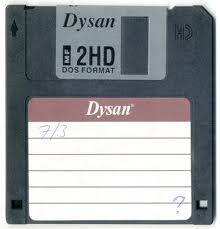
Like how information can be stored in different forms: hard or floppy disks
Too Reductive?
Hilary Putnam - 1967
Finding the cocktail of chemicals that relates to pain in humans is too narrow - it only works for humans
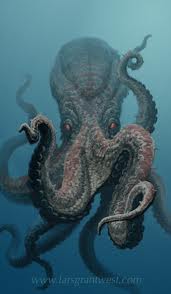
Octopus brain may be completely different to human brain
Octopus probably feel pain though
Leibniz's Law
1. Brain States and processes have spatial location
2. Mental States and processes do not have spatial location
3. Therefore mental states and processes cannot be brain-states and processes
What is it like to be a bat?
Thomas Nagel 1974
Mental states are private
Bats have very different mental states to humans
We can only speculate about what it is like to be a bat
From the outside brain states appear to be physical processes whereas from an internal prospective they will be experiences as states of mind
Impossible to avoid a duality of properties
Intentional Mental States
Most mental states possess intentionality
I cannot just believe - I must believe something
Propositional 'that' clause - 'I believe that...'
Type-Type
Token-token
Problems with both Mind/Brain Identity Theories
Informações
- Descrição
- A-Level Philosophy (Philosophy of the Mind ) Notas sobre Physicalism Mind/Brain Identity Theories, criado por lucy-hook em 27-11-2013.
- Criado por
- lucy-hook · nov 2013
- Atualizado
- 22 dez 2016
- Visualizações
- 254
- Tags
- Avaliação