
Quiz
Lung Volumes/Capacities and Effects of Obstructive/Restrictive Lung Disease
Este quiz tem tipos de pergunta que abrem no player de sempre.
Perguntas do quiz (26)
1Properly apply the labels to this diagram of the various lung volumes and capacities.
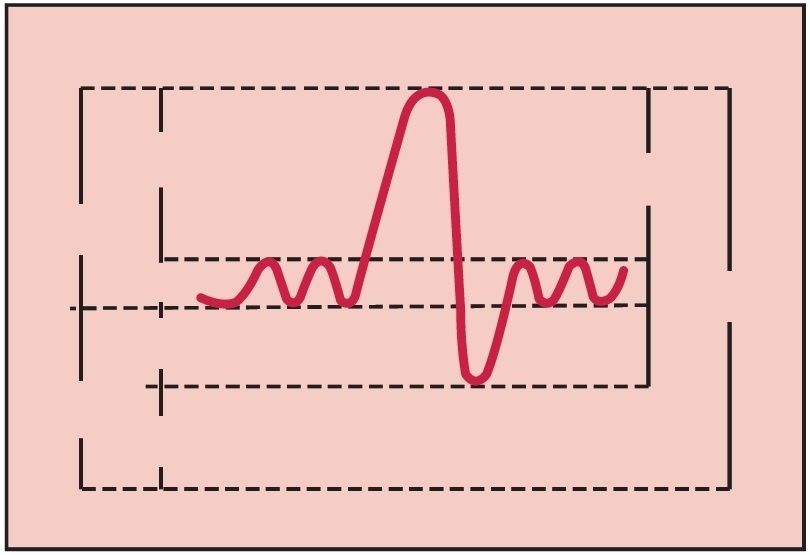
- AMaximum Inhalation
- BMaximum Exhalation
- CIC
- DFRC
- EIRV
- FTV
- GERV
- HRV
- IVC
- JTLC
- KMTV
2the amount of air inspired or expired during normal resting ventilation.
- ATidal Volume (TV)
- BInspiratory Reserve Volume (IRV)
- CExpiratory Reserve Volume (ERV)
- DResidual Volume (RV)
- EInspiratory Capacity (IC)
- FFunctional Residual Capacity (FRC)
- GVital Capacity (VC)
- HTotal Lung Capacity (TLC)
3the extra amount of air that can be inspired during maximal inhalation.
- ATidal Volume (TV)
- BInspiratory Reserve Volume (IRV)
- CExpiratory Reserve Volume (ERV)
- DResidual Volume (RV)
- EInspiratory Capacity (IC)
- FFunctional Residual Capacity (FRC)
- GVital Capacity (VC)
- HTotal Lung Capacity (TLC)
4the extra amount of air that can be expired during maximal exhalation.
- ATidal Volume (TV)
- BInspiratory Reserve Volume (IRV)
- CExpiratory Reserve Volume (ERV
- DResidual Volume (RV)
- EInspiratory Capacity (IC)
- FFunctional Residual Capacity (FRC)
- GVital Capacity (VC)
- HTotal Lung Capacity (TLC)
5the amount of air left in the lungs following maximal exhalation.
- ATidal Volume (TV)
- BInspiratory Reserve Volume (IRV)
- CExpiratory Reserve Volume (ERV)
- DResidual Volume (RV)
- EInspiratory Capacity (IC)
- FFunctional Residual Capacity (FRC)
- GVital Capacity (VC)
- HTotal Lung Capacity (TLC)
6the total amount of air that can be inspired with maximal inhalation following a tidal exhalation.
- ATidal Volume (TV)
- BInspiratory Reserve Volume (IRV)
- CExpiratory Reserve Volume (ERV)
- DResidual Volume (RV)
- EInspiratory Capacity (IC)
- FFunctional Residual Capacity (FRC)
- GVital Capacity (VC)
- HTotal Lung Capacity (TLC)
7the total amount of air that remains in the lungs following a tidal exhalation.
- ATidal Volume (TV)
- BInspiratory Reserve Volume (IRV)
- CExpiratory Reserve Volume (ERV)
- DResidual Volume (RV)
- EInspiratory Capacity (IC)
- FFunctional Residual Capacity (FRC)
- GVital Capacity (VC)
- HTotal Lung Capacity (TLC)
8the potential total amount of air that can be in the lungs under volitional control.
- ATidal Volume (TV)
- BInspiratory Reserve Volume (IRV)
- CExpiratory Reserve Volume (ERV)
- DResidual Volume (RV)
- EInspiratory Capacity (IC)
- FFunctional Residual Capacity (FRC)
- GVital Capacity (VC)
- HTotal Lung Capacity (TLC)
9the maximum amount of air the lungs can hold at full inspiration.
- ATidal Volume (TV)
- BInspiratory Reserve Volume (IRV)
- CExpiratory Reserve Volume (ERV)
- DResidual Volume (RV)
- EInspiratory Capacity (IC)
- FFunctional Residual Capacity (FRC)
- GVital Capacity (VC)
- HTotal Lung Capacity (TLC)
10Which of the following equations for TLC are correct?
- ATLC = IC + FRC
- BTLC = VC + RV
- CTLC = IRV + TV + ERV + RV
- DTLC = IRV + TV + ERV
- ETLC = IC +ERV
- FTLC = IRV + TV
- GTLC = ERV +RV
- HTLC = M + TV
11Which of the following equations are correct?
- AVC = IRV + TV + ERV
- BVC = IC + ERV
- CIC = IRV + TV
- DFRC = ERV + RV
- ETLC = VC + RV
- FVC = IRV + IC + ERV
- GIC = IRV + ERV
- HFRC = ERV + IRV
- IVC = IRV + ERV + RV
12What is FVC?
- AForced Vital Capacity
- Bthe amount of air that can be forcibly exhaled from the lungs after taking the deepest breath possible.
- CFixed Vital Capacity
- Dthe potential total amount of air that can be in the lungs under volitional control.
- EFinal Vital Capacity
13What is FEV?
- Athe amount of air a person can exhale during a forced breath.
- BForced Expiratory Volume
- CFixed Expiratory Volume
- Da marker used to measure lung function.
- Ethe amount of air left in the lungs following maximal exhalation.
- Fthe extra amount of air that can be expired during maximal exhalation.
14For a healthy patient, FEV1 / FC is _____.
- A>70%
- B>50%
- C>60%
- D>80%
- E98-100%
15Mild COPD is characterized by which of the following?
- AFEV1 / FVC < 70%
- BFEV1 >= 80%
- C50% <= FEV1 < 80%
- D30% <= FEV1 < 50%
- EFEV1 < 30% or FEV1 < 50% with chronic respiratory failure
16Moderate COPD is characterized by which of the following?
- AFEV1/FVC < 80%
- B50% <= FEV1 < 80%
- CFEV1 >= 80%
- D30% <= FEV1 < 50%
- EFEV1 < 30% or FEV1 < 50% with chronic respiratory failure
17Severe COPD is characterized by which of the following?
- AFEV1/FVC < 80%
- B30% <= FEV1 < 50%
- CFEV1 >= 80%
- D50% <= FEV1 < 80%
- EFEV1 < 30% or FEV1 < 50% with chronic respiratory failure
18Very Severe COPD is characterized by which of the following?
- AFEV1/FVC < 80%
- BFEV1 < 30% or FEV1 < 50% with chronic respiratory failure
- C30% <= FEV1 < 50%
- D50% <= FEV1 < 80%
- EFEV1 >= 80%
19For patients with COPD, RV and FRC become increased, resulting in increased TLC.
- AVerdadeiro
- BFalso
20For patients with COPD, IRV and ERV become increased, resulting in increased VC.
- AVerdadeiro
- BFalso
21You are treating a patient with moderate COPD (Stage 2). Using the BODE Index, you note that the patient has a HIGH score. What might this tell you?
- AThe patient has a higher risk of mortality.
- BThe patient has a lower risk of mortality
- CNothing conclusive; BODE is contraindicated for patients with Stage 2 COPD.
22You are treating a patient with moderate COPD (Stage 2). Using the BODE Index, you note that the patient has a LOW score. What might this tell you?
- AThe patient has a higher risk of mortality
- BThe patient has a lower risk of mortality
- CNothing conclusive; BODE is contraindicated for patients with Stage 2 COPD.
23Which of the following is representative of the lung volume/capacity changes common to chronic obstructive lung diseases?
- A
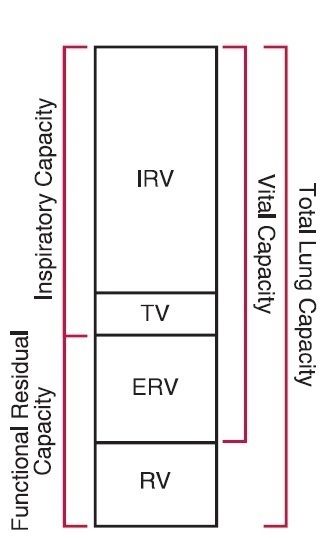
- B
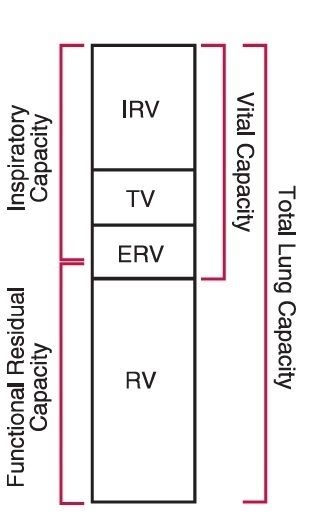
- C
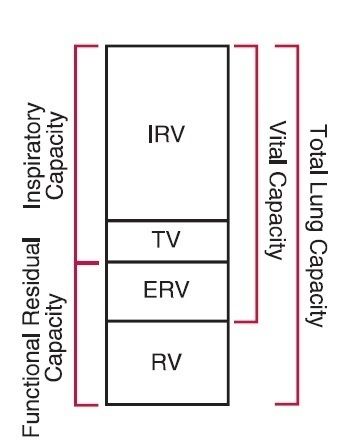
- A
24Which of the following is representative of the lung volume/capacity changes common to chronic restrictive lung diseases?
- A
- B
- C
- A
25Which of the following are characteristics of restrictive lung disease?
- ADifficulty expanding the thorax
- BDecreased lung volumes (i.e. IRV)
- CIncreased lung volumes (i.e. RV and FRC)
- DDifficulty exhaling air (i.e. decreased FEV1)
26Which of the following are characteristics of obstructive lung disease?
- ADifficulty expanding the thorax
- BDecreased lung volumes (i.e. IRV)
- CIncreased lung volumes (ie. RV and FRC)
- DDifficulty exhaling air (i.e. decreased FEV1)
Informações
- Descrição
- Basic review
- Autor
- Ben Williams
- Idioma
- English
- Visualizações
- 38
- Etiquetas
- Avaliação
- Ainda sem avaliações Avalie este quiz