
Quiz
2º ESO - Unit 1: The fall of the Roman Empire and the Early Middle Ages
Perguntas do quiz (60)
1Chronology of the Western Roman Empire
- A476-1453
- B27 BCE-476 BCE
- C27 BCE-476
- D27 BCE-1453
2The power of the Roman emperors during the High Roman Empire was
- Aweak
- Bcentralised
- Cdemocratic
- Donly religious
3The role of the Senate during the High Roman Empire was
- Ato discuss and pass laws
- Bto kill Julius Caesar
- Cto ratify the decisions of the emperor
- Dthere was no Senate
4Roman society was divided into
- ACitizens and slaves
- BCitizens and non-citizens
- CFree people and serfs
- DPharaoh, scribes, soldiers and peasants
5The Roman Empire expanded mostly
- Aaround the Atlantic Ocean
- Baround the Mediterranean Sea
- Conly in Europe
- DEurope, Asia and America
6The main economic activities during the High Roman Empire was
- Aagriculture and livestock
- Bcraftwork and trade
- Cagriculture and craftwork
- Dagriculture and trade
7Trade during the High Roman Empire was NOT favoured by
- APax Romana
- BRoads
- CBarbarians
- DSingle currency
8Roman emperors had religious power because
- Athey appointed the gods
- Bthey appointed the Pope
- Cthe were considered divine
- Dthey had met Christ
9The crisis of the Roman Empire is considered to begin by
- Athe late 3rd century BCE
- Bthe late 3rd century
- Cthe late 5th century
- Dthe late 1st century BCE
10The Lower Roman Empire was NOT characterised by
- Ainsecurity
- Burban liife
- Cweak political power
- Dthe acceptance of Christianity
11Emperor Constantine is well-known for
- Aprosecuting the Christians
- Bbuilding the Aqueduct of Segovia
- Caccept freedom of worship
- Dmake Christianity the official religion
12One of the main reasons for the insecurity during the Lower Roman Empire was
- Athe Huns decided to live within the borders of the Roman Empire
- Bthe Roman legions attacked the Huns and failed
- Cthe Germanic peoples were pushed within the borders of the Roman Empire
- DPax Romana
13Among the consequences of the insecurity during the Lower Roman Empire we DO NOT find
- Acollapse of trade
- Bruralisation of society
- Ccentralisation of power
- Dsacking of the cities
14The emperor Theodosius I (the Great) is famous because
- Ahe established freedom of worship in the Roman Empire
- Bhe unified the Roman Empire
- Che was the Pope
- Dhe divided the Roman Empire
15The date of the division of the Roman Empire in two was
- A380
- B395
- C407
- D476
16The capital of the Eastern Roman Empire was
- AConstantinople
- BRome
- CAthens
- DCairo
17One of the causes of the mass migrations between the 3rd and 10th centuries in the Western Roman Empire was
- APolitical strength
- BGreat military power of the Romans
- CPressure from peoples with greater military power
- DAll of the above
18What Germanic peoples conquered the city of Rome and established in the Italian Peninsula?
- AVisigoths
- BOstrogoths
- CFranks
- DSaxons
19Politically speaking, the Germanic peoples were characterised by
- Acentralisation
- Bruralisation
- CConflicts in the kingdoms
- Dagriculture
20The name 'Byzantine' comes from
- AThe city Byzantine
- BThe emperor Byzantion
- CThe Greek colony Byzantion
- DThe Sporting Byzantion
21The city of Constantinople was founded as Nova Roma by
- ATheodosius the Great
- BJustinian the Great
- CConstantine the Great
- DCharles the Great (Charlemagne)
22The splendour of the Byzantines was under the emperor
- ATheodosius the Great
- BConstantine the Great
- CJustinian the Great
- DCharles the Great (Charlemagne)
23Justinian's idea as emperor of the Byzantine Empire was
- Ato live quietly and peacefully
- Bto restore the glory of the Roman Empire
- Cto grow crops and exchange them
- Dto build a new city
24Justinian tried to restore the glory of the Roman Empire mostly by
- Aspeaking his own language
- BCaesaropapism
- Cconquer former territories of the Roman Empire
- Dbuild a gigantic amphitheatre
25After Justinian the Great, the Byzantines...
- Aexpanded their territories
- Blost all their territories very quickly
- Chad a progressive growth
- Dsuffered a progressive decadence
26The fall of Constantinople, which marked the end of the Byzantine Empire, was
- Ain 1492, in the hands of the Barbarians
- Bin 1453, in the hands of the Barbarians
- Cin 1492, in the hands of the Ottoman Turks
- Din 1453, in the hands of the Ottoman Turks
27The title of emperor of the Byzantine Empire was
- APontifex Maximus
- BPatriarch of Constantinople
- CBasileus
- DStratego
28The Codex Iustinianus was
- Athe first Encyclopaedia
- Ba compilation of Byzantine novels
- Ca compilation of Roman laws
- Da compilation of Roman recipies
29The most important economic activity of the Byzantine Empire was
- Aagriculture
- Blivestock
- Ccraftwork
- Dtrade
30Trade in the Byzantine Empire was important because of the
- APax Romana
- BMare Nostrum
- CStrategic position of Constantinople
- DTheir crops
31Constantinople had a strategic position because it is between
- AEurope and Africa
- BAfrica and Asia
- CEurope and Asia
- Dthe Atlantic Ocean and the Mediterranean Sea
32Byzantine religion
- ACatholic Christianity
- BOrthodox Christianity
- CProtestant Christianity
- DPolytheism
33Name
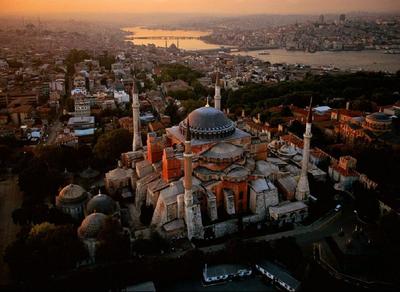
- AHagia Marks
- BHagia Sophia
- CPalatine Chapel
- DSaint Mark's Basilica
34Type of floor plan
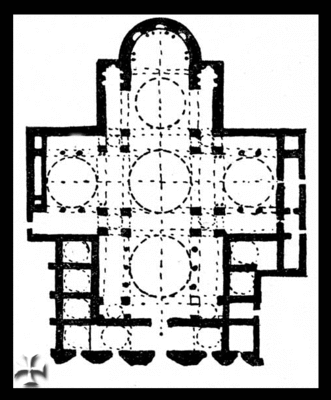
- ALatin-cross plan
- BGreek-cross plan
- CBasilica plan
- DOctogonal plan
35The most significant constructive element of the image is
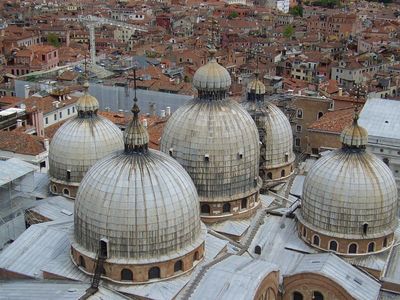
- AVaults
- BDomes
- CColumns
- DPillars
36This is
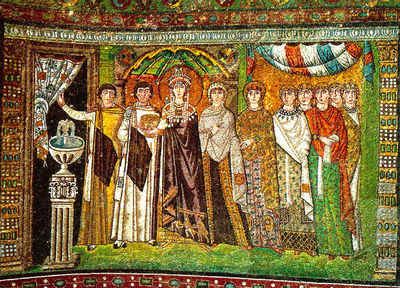
- Apainting
- Bsculpture
- Cmosaic
- Darchitecture
37The most important typology of buildings in Byzantine architecture are
- Apolitical
- Beconomic
- Creligious
- Dmilitary
38Hagia Sophia of Constantinople was ordered by
- ATheodosius the Great
- BConstantine the Great
- CJustinian the Great
- DCharles the Great (Charlemagne)
39What characteristic would you associate with Byzantine mosaics and paintings?
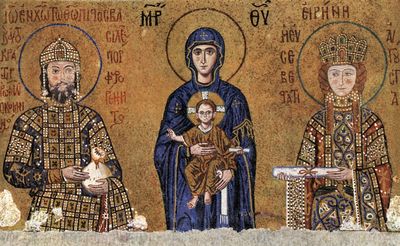
- ARealism
- BRigidity
- CHierarchical perspective
- DSchematism
40The Carolingian Empire is the continuation of the
- AFrankish kingdom
- BOstrogoth kingdom
- CVisigoth kingdom
- DByzantine Empire
41The battle between the Franks and the Visigoths which meant the end of the Visigoth Kingdom of Tolouse was
- ABattle of Poitiers, 732
- BBattle of Vouillé, 732
- CBattle of Poitiers, 507
- DBattle of Vouillé, 507
42Political power in the Frankish kingdoms was in the hands of the
- Aclergy
- Bpeasants
- Cmayors of the palace
- Darmy generals
43Who led the Franks in the battle of Poitiers?
- ACharles Martel
- BPepin the Short
- CCharlemagne
- DJustinian the Great
44The battle of Poitiers confronted the Franks against the
- ASlavs
- BLombards
- CVikings
- DMuslims
45Who started the Carolingian dynasty as leaders of the Franks?
- ACharles Martel
- BPepin the Short
- CCharlemagne
- DLouis the Pious
46What happened in the year 800?
- ACharlemagne acceded to the Frankish throne
- BCharlemagne died
- CCharlemagne was crowned emperor
- DCharlemagne was born
47Where did Charlemagne have his capital?
- AConstantinople
- BRome
- CParis
- DAachen
48Charlemagne's idea as Frankish king and Holy Roman Emperor was
- Ato control the world
- Bto discover new territories
- Cto restore the glory of the Roman Empire
- Dto become Pope
49Which of the following was NOT conquered by Charlemagne?
- ANorth-east of the Iberian Peninsula
- BModern-day France
- CGreat Britain
- DModern-day Germany
50The way Charlemagne had for having more power was
- Ato establish an allegiance with the Byzantine emperor
- Bto establish an allegiance with the Pope
- Cto fight against the Pope
- Dto fight against the Byzantine emperor
51What happened after Charlemagne's death?
- AHis children fought for the territories
- BHis son Louis inherited his territories
- CHe did not have any successors
- DHe gave his territories to the Pope
52When was the Treaty of Verdun?
- A814
- B832
- C823
- D843
53What was the consequence of the Treaty of Verdun?
- ACharlemagne's territories were kept united
- BCharlemagne's territories were divided in two parts
- CCharlemagne's territories were divided in three parts
- DCharlemagne's territories were divided in four parts
54The division of the territories in the Carolingian Empire was into
- ACounties and latifundia
- BCounties and marches
- CCountries and provinces
- DMarches and provinces
55Economy during the Carolingian Empire can be summarised as:
- Amostly rural
- Bmostly urban
- Ctrade was the most important activity
- Dthey promoted geographical explorations
56The manorial system is based on
- Aan agreement between free people
- Ban agreement between the king and the Pope
- Can agreement with the slaves
- Dthe differences between citizens and non-citizens
57In the manorial system, the emperor gave land to the nobility in exchange of
- Aland
- Btaxes
- Cloyalty
- Dchurches
58The Palatine School of Aachen was characterished by
- Athe use of Roman models
- Bthe use of Byzantine domes
- Cthe copy of French manuscripts
- Dthe construction of a market
59What type of buildings were more important in Carolingian architecture?
- APalaces and ports
- BCastles and churches
- CPalaces and markets
- DChurches and monasteries
60Name of the building
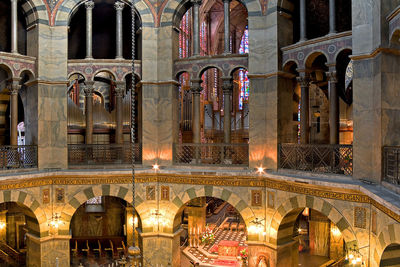
- AHagia Sophia (Constantinople - Istambul, Turkey)
- BSaint Mark's Basilica (Venice, Italy)
- CPalatine Chapel (Aachen, ermany)
- DFulda Abbey (Fulda, Germany)
Informações
- Descrição
- Quiz for revising unit 1
- Autor
- Jaime Alonso
- Idioma
- Español
- Visualizações
- 1.439
- Etiquetas
- Avaliação
- 4,0 de 5 · 1 avaliação Avalie este quiz