
Quiz
Phys Scie II- Final Exam Review (Exam 4, Exam 1, & Exam 2)
Perguntas do quiz (150)
1The first minerals to crystallize are those with the
- Alower melting point
- Bhigher melting point
2The last minerals to crystallize from a cooling magma have a
- Alow melting point and a high silica content
- Blow melting point and a low silica content
- Chigh melting point and a low silica content
- Dhigh melting point and a high silica content
3The protective shells that many sea organisms grow are not minerals because they
- Abecome compacted.
- Bare organic.
- Care made of ooze.
- Dare not calcium carbonate.
4The silicates are the largest mineral group because silicon and oxygen are
- Afound in the common mineral quartz.
- Bthe two most abundant elements in Earth's crust.
- Cthe hardest elements on Earth's surface.
5Minerals are formed by the process of
- Amagma differentiation.
- Bcrystallization.
- Cpartial melting.
- Dsilica enrichment.
6The first minerals to crystallize from a cooling magma have a
- Alow melting point and a high silica content.
- Bhigh melting point and a low silica content.
- Chigh melting point and a high silica content.
- Dlow melting point and a low silica content.
7Minerals are composed of
- Ahomogenous solids.
- Binorganic solids.
- Csilicon compounds.
- Dcommon types of rocks.
8The melting point of silicate minerals is strongly dependent on the amount of silica it contains. The first minerals to melt are those with
- Alowest melting point and lowest silica content.
- Bhighest silica content and highest melting point.
- Clowest melting point and highest silica content.
- Dlowest silica content and highest melting point.
9The most common mineral in Earth's crust is ________, and the second most common mineral is ________.
- Aolivine, feldspar
- Bsilicate, carbonate
- Cquartz, feldspar
- Dfeldspar, quartz
10The last minerals to crystallize from a cooling magma have the
- Ahighest melting point and the highest percentage of silica.
- Blowest melting point and the lowest percentage of silica.
- Chighest melting point and the lowest percentage of silica.
- Dlowest melting point and the highest percentage of silica.
11Silica has a relatively
- Ahigh melting point.
- Blow melting point.
12The Mohorovicic discontinuity occurs because of a
- Adensity change in rocks of the same composition on both sides of the boundary.
- Bchange in temperature with depth.
- Cchange in the composition of rocks on both sides of the boundary.
- Dshift in the density of minerals with the same composition.
13In comparison to P-waves, S-waves
- Acan travel through all mediums–solid granite, magma, water and/or air.
- Bcan travel only through solids—not in fluids.
- Ccompress and expand the rock as they move through it.
- Dare fast and the first to register on a seismograph.
14The Earth's magnetic field is attributed to the
- Aflow of molten fluid in Earth's outer core.
- Bflow of molten liquid in Earth's inner core.
- Cmovement of lithospheric plates in the outer mantle.
- Dmovement of lithospheric plates at Earth's surface.
15The asthenosphere is part of the
- Alithosphere.
- Bcrust.
- Cmantle.
- Douter core.
16The speed of a seismic wave depends on
- Aits frequency.
- Bthe type of material it travels through.
- Cits amplitude.
- Dhow far it has to travel.
17Which seismic waves produce a wave shadow?
- ALove waves.
- BS-waves.
- CP- and S- waves
- DP-waves.
18The Mohorovicic discontinuity marks the change in rock density elasticity between the
- Ainner and outer core.
- Basthenosphere and lithosphere.
- Ccore and the mantle.
- Dmantle and the crustal surface.
19The Earth's layer with plastic-like behavior is the
- Amantle.
- Binner core.
- Ccrust.
- Douter core.
20The lithosphere includes
- Acontinental and oceanic crust and the upper part of the mantle.
- Bcontinental and oceanic crust.
- Cthe crust and the upper part of the mantle.
- Dpart of the mantle and the crust.
21The thickness of Earth's crust
- Avaries from 10 km under the oceans to 60 km under the continents.
- Bon average is about 10 km.
- Cvaries from 10 km under the continents to 60 km under the oceans.
- Don average is about 60 km.
22P-waves travel faster through the inner core than the outer core because the inner core is
- Asolid.
- Bthe same as the outer core.
- Chotter than the outer core.
- Drock.
23The outer core is
- Aliquid.
- Bthe source for volcanoes.
- Cplastic.
- Drock.
24Seismic waves are classified as body waves and surface waves. An example of a body wave is a
- ARayleigh wave.
- BTertiary wave (T-wave).
- CLove wave.
- DPrimary wave (P-wave).
25In comparison to S-waves, P-waves
- Aare the second seismic wave to register on a seismograph.
- Bcan travel only through solids, not through fluids.
- Ccan travel through solid granite, magma, water and/or air.
- Dvibrate the particles of their medium up and down and side-to-side.
26The outer core
- Atransmits S-waves.
- Bflows fast enough to power Earth's magnetic field.
- Chas a plasticlike flow.
- Dis solid as a rock.
27Because S-waves do not travel through Earth's outer core, scientists inferred that the outer core is
- Aimpenetrable.
- Bmolten liquid.
- Cvery dense.
- Dsolid.
28Continental crust is
- Amore dense than oceanic crust.
- Bthinner than oceanic crust.
- Cthinner and more dense than oceanic crust.
- Dless dense than oceanic crust.
29Water able to be contained in the subsurface depends on
- Apermeability.
- Bchemical composition.
- Cporosity.
- Dnone of these
30The greater the hydraulic gradient the
- Agreater the porosity.
- Bless the permeability.
- Cfaster the flow.
- Dslower the flow.
31A rock's permeability can be described by its
- Awater-transmitting capability, or hydraulic conductivity.
- Bwater-holding capacity.
- Cdepth of burial.
- Ddensity.
32When subsurface ground material is completely saturated with water, we call it
- Athe saturated zone.
- Bthe water table.
- Cgroundwater.
- Dgroundwater in the saturated zone.
33Water is vital to life on our planet. Most of Earth's water supply is in the
- Aground.
- Boceans.
- Crivers, lakes, and streams.
- Dice caps.
34The flow of groundwater depends on
- Aporosity and hydraulic gradient.
- Bpermeability and gravity.
- Cporosity only.
- Dpermeability and porosity.
35A rock with a high porosity will most likely have a
- Alow density.
- Blarge proportion of open pore spaces.
- Clow permeability.
- Dhigh permeability.
36The capacity a material has for transmitting fluids is known as its
- Aimpermeability.
- Bpermeability.
- Cporosity.
- Dcompetence.
37A rock with very low porosity will most often have a
- Alow permeability.
- Blarge proportion of open spaces.
- Chigh permeability.
- Dvery high density.
38A sub-surface region that holds and transmits water is called a/an
- Aaquiclude.
- Bhydrometer.
- Cwater table.
- Daquifer.
39The degree to which a soil or rock allows groundwater to flow is called
- Apermeability.
- Bporosity.
- Caquifer.
- Dhydraulic gradient.
40The flow of groundwater depends on
- Ahydraulic gradient, and hydraulic conductivity.
- Bporosity and permeability.
- Cpermeability only.
- Dporosity only.
41Groundwater is water
- Abelow the water table.
- Babove the water table.
- Cthat soaks into the ground.
- Dbeneath the ground surface.
42The driving force of our planet's hydrologic cycle comes from
- Awind.
- Bprecipitation of water over the oceans.
- Cthe balance between precipitation and evaporation.
- Dsolar energy.
43A soil composed of flattened soil particles will most likely have a
- Alow porosity.
- Bhigh permeability.
- Chigh porosity.
- Dlow hydraulic conductivity.
44The flow of groundwater is
- Afrom where the water table is high to where it is low.
- Binsignificant.
- Cas fast as the water in streams.
- Dfrom where the water table is low to where it is high.
45A mineral that is not a silicate is
- Acalcite
- Bquartz
- Cfeldspar
- Dmica
46Galena belongs to the class of minerals known as the
- Asulfides
- Bsilicates
- Ccarbonates
- Dsulfates
47Which of the following properties most clearly reflects the internal arrangement of atoms in a crystalline material?
- Aluster
- Bdensity
- Ccolor
- Dcleavage
48The process of crystallization acts to
- Aenrich the crystallized minerals in silica
- Bdeplete the molten magma of silica
- Cenrich the molten magma in silica
- Dnone of the above
49The last minerals to crystallize are those with the
- Ahigher melting point
- Blower melting point
50A soil composed of well-rounded sand grains of uniform size will most likely have a
- Alow porosity
- Bhigh porosity
- Clow permeability
- Dhigh permeability
51The following statement describes which subatomic particle best?
It is a nucleon.- Aan electron
- Ba proton
- Ca neutron
- Dproton and neutron
52How many electrons are there in the third shell of sodium, Na (atomic number 11)?
- Anone
- Bone
- Ctwo
- Dthree
53What is the name of the following compound?
NaF- Anatural fosfate
- Bnitrogen afleck
- Csodium fluoride
- Dsodium phosphide
- Enatrium fluoride
54Which of the following would be considered applied research?
- Aexamining how susceptible a metal is to bending
- Bdetermining how readily a metal corrodes in a wet environment
- Cdetermining the lightest and strongest metal to be used for an airplane wing
- Ddetermining the melting temperature of a metal
- Etesting the strength of a piece of metal
55Which of the following statements best describes an element?
- Aa material that has consistent physical properties
- Ba material with more than one type of atom
- Ca material consisting of only one type of atom
- Da material that has consistent chemical properties
- Ea material that is pure
56Which of these does not describe a metal at room temperature?
- Abendable
- Bgas
- Csolid
- Dliquid
- Eshiny
57How would you describe the volume of the following object?
the amount of water in a swimming pool- Amacroscopic
- Bmicroscopic
- Csubmicroscopic
- Dall of the above
- Enone of the above
58Which of the following physical properties would you expect for krypton (Kr)?
- Ashiny
- Bbrittle
- Cconducts electricity
- Da gas at room temperature
- Ehard
59How many different elements are in the compound C₆H₁₂O₆.
- A3
- B24
- C6
- DAll of the elements are the same.
60Which of the following statements does not describe a proton?
- AIt orbits around the nucleus of an atom.
- BIt is a nucleon.
- CIt has a positive charge equivalent but opposite of an electron's.
- DIt is attracted to negatively charged electrical plates.
- EIt is much more massive than an electron.
61Which of the following is not a nonmetal?
- Asulfur (atomic no. = 16)
- Bxenon (atomic no. = 54)
- Ctitanium (atomic no. = 22)
- Dselenium (atomic no. = 34)
- Ehelium (atomic no. = 2)
62Which of the following would be considered basic research?
- Atesting a safe, nontoxic mouse glue
- Btesting the strength of a mouse cage
- Cexamining how quickly a trapdoor closes
- Dexamining why a mouse likes cheddar cheese more than swiss cheese
- Estudying ways of catching mice safely
63What is the main difference between a conceptual model and a physical model?
- APhysical models and conceptual models can be used to describe the same things.
- BPhysical models can only be used to represent the real world.
- CA physical model represents the shape and form while a conceptual model describes how a system behaves.
- DConceptual models can only be used to describe concepts.
- EA conceptual model represents the shape and form while a physical model describes how a system behaves.
64A cat strolls across your backyard. An hour later, a dog with its nose to the ground follows the trail of the cat. Explain what is going on from a molecular point of view.
- AThe dog is smelling molecules from the cat.
- BThe cat is leading the dog into a trap.
- CThe dog is smelling atoms from the cat
- DThe dog is following the areas of increased density of the Earth.
65If you remove two protons and two neutrons from a gold atom (Au), what new element is formed (if any)?
- AAu-2
- BAu
- CRe
- DTl
- EIr
66Oxygen atoms are used to make water molecules. Does this mean that oxygen, O2, and water, H2O, have similar properties?
- AYes, but that their properties are similar is only a coincidence.
- BYes, and this explains how fish are able to breathe water.
- CNo, compounds are uniquely different from the elements from which they're made.
- DNo, but their similar properties are only a coincidence.
67Which of the following would be considered a chemical property?
- Amelting temperature
- Breactivity towards water
- Cboiling temperature
- Dconductivity
- Eflexibility
68Which of the following statements about electrons is true?
- AElectrons have a negative charge.
- BElectrons are particles.
- CElectrons in atoms can be excited by light energy.
- DElectrons behave like waves.
- Eall of the above
69Should the periodic table be memorized? Why or why not?
- ANo. The periodic table changes every year. Memorizing it would be a waste of time.
- BYes. Without memorizing the periodic table, one would not have any real understanding of how and why chemical compounds are put together.
- CYes. Like the alphabet, we need to memorize the periodic table in order to easily write the language of chemistry.
- DNo. The periodic table is a reference to be used, not memorized.
70The following image describes which type of change?
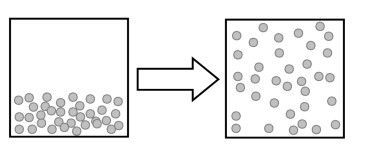
- Aan elemental change
- Ba chemical change
- Cno change
- Da physical change
- Ea change in reactivity
71The mass number of an element is ________.
- Athe sum of the isotopes
- Bthe sum of the electrons and the neutrons
- Cthe number of protons
- Dthe sum of the protons and the neutrons
- Ethe sum of the electrons and the protons
72How many atoms are in one molecule of Na₂SO₄
- A4
- B7
- C24
- D2
- E3
73Which element has the atomic number 12?
- AMg
- BBe
- CB
- DNa
- EC
74How is the term photon related to the term quantum?
- AA quantum is a wave of light while a packet of quanta equals one photon.
- BA quantum is a particle of light while a photon is a wave of light.
- CA quantum of light is actually one photon.
- DA quantum is a particle of light exactly one photon long.
- EA quantum of photons is equal to the wavelength.
75What was Niels Bohr's explanation for the observation of atomic spectra?
- ANucleons could be excited by different electron energies.
- BAny photon could excite an electron.
- COnly certain photons with the correct energy could excite the quanta in the nucleus.
- DElectrons could only move in discrete energy steps within an atom.
- EElectrons could not move in an atom.
76Which of the following elements will most likely be shiny and flexible?
- Aiodine (I)
- Bsilicon (Si)
- Crhodium (Rh)
- Dhydrogen (H)
- Ehelenium (Se)
77The nucleus of an electrically neutral iron atom contains 26 protons. How many electrons does this iron atom have?
- A24
- B52
- C26
- Dnone
78Why isn't dirt listed in the periodic table?
- AElements like dirt and air are so common that there is no need to list them in the periodic table.
- BDirt IS listed in the periodic table but is not easily recognized because it is listed as one of the rare earths with its old scientific name, dysprosium, symbol Dy.
- CThe periodic table lists only elements made of one kind of material. Dirt is a mixture of elements and compounds.
- DNone of the above is true.
79Strontium, Sr (number 38), is especially dangerous to humans because it tends to accumulate in calcium-dependent bone marrow tissues (calcium, Ca, number 20). This fact relates to the organization of the periodic table in that strontium and calcium are both
- Ain group 2 of the periodic table.
- Bsoluble in water
- Cmetals
- Dmade of relatively large atoms
80Which of the following elements are in the same group as silicon (Si)?
- AB
- BP
- CC
- DAs
- Enone of the above
81What is the name of the following compound?
CO2- Acarbon dioxide
- Bcalcium oxide
- Cdicobalt
- Dcalcium dioxide
- Edioxocarbon
82Which of the following is said to be quantized?
- Athe volume of air in a balloon
- Bthe amount of water in a glass
- Cthe amount of time in an hour
- Dthe number of eggs in an egg carton
- Enone of the above
83What is the valence shell?
- AIt is the shell of electrons in element V (atomic no. = 23)
- BIt is the last partially filled orbital in an atom.
- CIt is the shell of electrons in an atom that is the least reactive.
- DIt is the same as the orbital configuration.
- EIt is the outermost shell of electrons in an atom.
84Which contributes more to an atom's mass: electrons or protons? Which contributes more to an atom's size?
- AProtons contribute more to an atom's mass while electrons contribute more to its size.
- BProtons contribute more to both the mass and size of an atom.
- CElectrons contribute more to both the mass and size of an atom.
- DElectrons contribute more to an atom's mass while protons contribute more to its size.
85Elements that are in the same ________ have a tendency to have very similar chemical properties due to periodic trends.
- Acompound
- Bgroup
- Ctextbook
- Drow
- Eperiod
86What do the components of a conceptual model have in common?
- AEach component must correlate with a corresponding component of a physical model.
- BAll components interact with each other.
- CThe components have nothing in common. This is what differentiates a conceptual model from a physical model.
- D All components are mutually independent of each other.
87Which of the following is an example of a physical change?
- Acharcoal being converted into ash
- Ba candy bar being digested by a student
- Ciron metal reacting with oxygen to form rust
- Dwater boiling and being converted into steam
- Ewater being electrolyzed and being converted in hydrogen and oxygen
88Which of these properties describes a metal?
- Afragile
- Bbrittle
- Cdoesn't conduct electricity very well
- Dconducts heat very well
- Etransparent
89What is the name of the following compound?
CaCl2- Acalcium chloride
- Bdicalcium chloride
- Ccarbon chloride
- Ddichlorocalcium
- Ecalc two
90Which are older, the atoms in the body of an elderly person or those in the body of a baby?
- AIt depends upon their diet.
- BAn elderly person because they have been around much longer.
- CThey are of the same age, which is appreciably older than the solar system.
- DA baby because this is surely a trick question.
91Which of the following statements describes an isotope?
- Aelement with the same number of protons but a different number of electrons
- Belement with the same number of neutrons but a different number of electrons
- Celement with the same number of protons but a different number of neutrons
- Delement with the same number of neutrons but a different number of protons
- Enone of the above
92Would you use a physical model or a conceptual model to describe the following: the brain; the mind; the solar system; the beginning of the universe?
- Aphysical; physical; physical; physical
- Bconceptual; conceptual; conceptual; conceptual
- Cphysical; conceptual; physical; conceptual
- Dconceptual; physical; conceptual physical
93Which of the following could NOT be represented by a conceptual model?
- Athe energy of a nucleus
- Bthe floor plan of a house
- Cthe behavior of schoolchildren
- Dthe weather
94Which of the following is a property of light?
- AIt is a particle.
- BIts energy comes in packets of uniform size.
- CIt is a wave.
- Dall of the above
- Enone of the above
95The repeating trends that take place when examining the elements are called ________.
- Athe metal shift
- Ba group conscience
- Cperiodicity (periodic trend)
- Dthe family cycle
- Enone of the above
96Which of the following elements is an alkali metal?
- Acerium (Cr)
- Bargon (Ar)
- Clithium (Li)
- Dlead (Pb)
- Eindium (In)
97Which atom is smallest?
- ABe
- BSr
- CCa
- DMg
- EAll are the same size.
98Which of the following elements is a transition metal?
- A lead (Pb)
- Bxenon (Xe)
- Csilver (Ag)
- Dlithium (Li)
- Echlorine (Cl)
99Which of the following describes a nonmetal?
- Aductile
- Bmalleable
- Cgood conductor of heat
- Dpoor conductor of electricity
- Eshiny
100Which of the following elements are in the same period as magnesium (Mg)?
- ACa
- BCl
- CSr
- DMn
- Enone of the above
101Metals are useful for the structural support of buildings because they
- Ado not conduct heat well
- Bare strong but can be bent
- Cconduct electricity
- Dare shiny
102Which of the following bonds would be the most polar?
- AC-Cl
- BC-Br
- CC-F
- DC-I
- EAll are equally polar.
103Which of the following bonds would be the least polar?
- AC-H
- BC-F
- CC-O
- DC-Cl
- EAll are equally polar.
104The source of an atom's electronegativity is the
- Akinetic energy electrons have orbiting the nucleus.
- Brepulsive force occurring among electrons within the same shell.
- Crepulsive force occurring between electrons within neighboring shells.
- Dpositively charged atomic nucleus.
105If you mix a typical aluminum ion (Al, atomic no. = 13) with a typical oxygen ion (O, atomic no. = 8), what compound is formed?
- AAl2O3
- BAl13O8
- CAl3O2
- DAl3O
- EAl2O2
106Which of the following elements will most likely not form an ion at all?
- ANa
- BMg
- CBr
- DO
- EAr
107Which of the following is the weakest?
- AA dipole-induced dipole attraction
- BA dipole-dipole attraction
- CAn induced dipole-induced dipole attraction
- DAn ion-dipole attraction
- EA chemical bond
108Which of the following compounds contains ionic bonds?
- ACH4
- BOF2
- CCl2
- DK2O
- Enone of the above
109If a neutral atom loses one electron, what is the electrical charge of the atom?
- A+2
- B-2
- C+1
- D-1
- Eneutral
110What is the main difference between a dipole-dipole interaction and a dipole-induced dipole interaction?
- ADipole-induced dipole interactions are stronger because the induced dipoles can be formed at any time.
- BDipole-dipole interactions are weaker because the dipoles are permanent.
- CBoth are similar, but one involves a temporary dipole created by a permanent dipole.
- DBoth are identical.
- Enone of the above
111Which of the following statements describes a polar molecule?
- AThe molecules are usually not attracted to one another very strongly.
- BPolar molecules have the weakest intermolecular interactions with ionic compounds.
- CThe electrons in the molecule are distributed evenly throughout the molecule.
- DThe molecules have a high degree of symmetry.
- ENone of these statements describe polar molecules.
112What is one role of unpaired valance electrons?
- AThey are the nonbonding electrons.
- BThey tell us which Lewis dot structure is correct.
- CThey take part in the formation of different types of bonds.
- DThey keep the paired electrons separated to minimize interaction.
- EThey provide the number of Lewis dots.
113Which of the following does not describe ionic compounds?
- AThey have a tendency to melt easily.
- BThey are usually very ordered.
- C They consist of positive and negative ions.
- DThey are held together by electrostatic attraction.
- Enone of the above
114Which of the following molecules is the most polar?
- AHCl
- BBrF
- CBr2
- DCO
115What is the valence shell?
- AIt is the shell of electrons in element V (atomic no. = 23)
- BIt is the shell of electrons in an atom that is the least reactive.
- CIt is the same as the orbital configuration.
- DIt is the last partially filled orbital in an atom.
- EIt is the outermost shell of electrons in an atom.
116Which of the following best describes ionic bonding?
- Atwo atoms exchanging a set of electrons
- Btwo atoms sharing a set of electrons
- Cone atom giving up some of its electrons to another atom
- Dwhen two elements with same charge are held together by electrostatic forces
- Enone of the above
117Which of the following statements is untrue?
- ACovalent molecules usually have low melting points.
- BCovalent molecules can have nonbonding electrons.
- CCovalent bonds can involve more than one pair of electrons.
- DCovalent molecules are never crystalline.
- EAll of the above statements are true.
118Which of the following elements will most likely form an ion with a +1 charge?
- AAl
- BMg
- CCl
- DNa
- ESi
119Which of the following is not a property of metal?
- Aconducts electricity
- Bis strong, but can be bent
- Cdoes not conduct heat well
- Dis shiny
- EAll of the above are properties of metals.
120How many valence electrons does bromine (Br, atomic no. = 35) have?
- A28
- B7
- C21
- D1
- E35
121How is the number of unpaired valence electrons in an atom related to the number of bonds that the atom can form?
- AThere is no defined relationship between the number of unpaired valence electrons and number of bonds that the atom can form.
- BThe number of unpaired valence electrons in an atom is the same as the number of bonds that the atom can form.
- CThe number of unpaired valence electrons in an atom is twice the number of bonds that the atom can form.
- DThe number of unpaired valence electrons in an atom is one-half the number of bonds that the atom can form.
122Which of the following elements will most likely form an ion with a -2 charge?
- AMg
- BS
- CCl
- DNe
- ENa
123How many valence electrons does gallium (Ga, atomic no. = 31) have?
- A1
- B31
- C3
- D6
- E70
124Is an ionic compound an example of a chemical compound, or is a chemical compound an example of an ionic compound?
- AAn ionic compound is an example of a chemical compound.
- BEach is an example of the other.
- CAn chemical compound is an example of a ionic compound.
- DNeither is an example of the other.
125The concept of a chemical bond is ________.
- Ahow two or more electrons reside in an orbital
- Bthe sharing of nucleons
- Chow two or more atoms are held together
- Dhow much energy it takes to remove an electron from a set of atoms
- Enone of the above
126How would you classify the following material?
a cappuccino (with foam)- A a solution
- Ba heterogeneous mixture
- Ca suspension
- Da compound
- Ean element
127Why is secondary treatment often needed for sewage?
- AThe solution is contaminated with dangerous bacteria.
- BThe dissolved organics are too high and lead to bacterial growth
- CThere are too many finely divided particles that need to be filtered.
- DThere are too many dissolved inorganic compounds.
- Enone of the above
128What is the difference between a compound and a mixture?
- AThe components of a mixture do not have the same properties individually as they do when mixed.
- BA compound can be physically separated into its components; a mixture cannot be physically separated into its components.
- CA compound is just a mixture of elements.
- DA mixture can be physically separated into its components; a compound cannot be physically separated into its components.
- EThe components of a compound have the same properties individually as they do when mixed.
129Which of the following statements describes a saturated solution?
- Aa solution of salt water with salt at the bottom
- Ba carbonated beverage with bubbles
- Ca solution where the solvent cannot dissolve any more solute
- Dall of the above
- Enone of the above
130In a solution of 77 percent nitrogen and 23 percent oxygen, which is the solvent?
- Anitrogen
- Boxygen
- Cboth
- Dneither
- EGases cannot form solutions.
131What is molarity?
- Athe number of liters of solute per mole of solution
- Bthe number of moles of solute per liter of solution
- Cthe number of moles of solute per liter of solvent
- Dthe number of grams of solute per liter of solution
- Enone of the above
132What statement best describes a mole?
- AIt is a very large number chemists use to count atoms or molecules.
- Bthe amount of molecules or atoms in 1 gram of something
- Ca very small number chemists use to count atoms or molecules
- Da little furry mammal that lives in the ground
- Enone of the above
133How would you classify the following material?
swimming pool water- Aheterogeneous mixture
- Ba pure element
- Ca pure compound
- Dhomogeneous mixture
- Edepends on how many children have been in it
134How does a suspension differ from a solution?
- AA suspension is a heterogeneous mixture consisting of different phases whereas a solution is a homogeneous mixture consisting of a single phase.
- BThe difference between a suspension and a solution can only be determined by chemical means.
- CA suspension is a heterogeneous mixture whose components can be separated by simple filtration. A solution is a homogeneous mixture which cannot be separated by simple filtration.
- DAlthough a solution and suspension are both homogeneous mixtures, only the components of a suspension will separate by spinning the mixture in a centrifuge.
135Mixtures can be separated into their components by taking advantage of differences in the chemical properties of the components. Why might this separation method be less convenient than taking advantage of differences in the physical properties of the components?
- AThe chemical properties of the components of a mixture are too different from each other.
- BThe chemical properties of the components of a mixture are too similar to each other.
- CA chemical property involves a chemical change so that you no longer have what you had.
- DChemical properties are not as apparent as are physical properties.
136The following image represents which kind of matter?
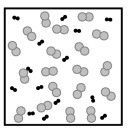
- A a compound
- Ban element
- Ca mixture
- Dnone of the above
- Eall of the above
137The following image represents which kind of matter?
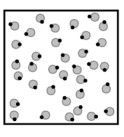
- Aan element
- Ba mixture
- Ca compound
- Dnone of the above
- Eall of the above
138Which of the following solutions is the most concentrated?
- A0.1 liter of water with 1 gram of sugar
- B0.5 liter of water with 50 grams of sugar
- C2 liters of water with 0.2 gram of sugar
- D3 liters of water with 30 grams of sugar
- EThey all have the same concentration.
139Is the air in your house a homogeneous or heterogeneous mixture?
- Aheterogeneous because of the dust particles it contains
- Bhomogeneous because it is all at the same temperature
- Chomogeneous because it is mixed very well
- Dheterogeneous because it consists of different types of molecules
140What is the first step in treating raw sewage?
- Aremoval of sludge
- Bremoval of grit by settling
- Cfiltration of solids
- D disinfection
- Eremoval of fine particles by settling
141Which has the most atoms?
- Aa mole of helium
- Ba mole of gold
- Ca mole of lead
- DAll of the above have the same number of atoms.
- Enone of the above
142Which of the following would be considered a heterogeneous mixture?
- Awater
- Bmilk
- Cvinegar
- Dvegetable oil
- Esalad dressing
143In a solution made from one teaspoon of sugar and one liter of water, which is the solute?
- Asugar
- Bthe teaspoon
- Cwater
- Dboth sugar and water
- Enone of the above
144Which of the following is a mixture?
- Ahelium
- Biron
- Cair
- Dgold
- Esalt
145What is the purpose of treating water with chlorine gas or ozone during water purification?
- Ato improve taste
- Bto kill bacteria
- Cto improve color
- Dto remove solids
- Enone of the above
146How is the solubility of a gas affected by temperature?
- AAs temperature goes up, the solubility goes up.
- BAs temperature goes up, the solubility stays the same.
- CAs temperature goes down, the solubility goes down.
- DAs temperature goes down, the solubility goes up.
- EBoth: As temperature goes up, the solubility goes up....And: As temperature goes up, the solubility stays the same.
147How is the solubility of a solid affected by temperature?
- AAs temperature goes up, the solubility goes up.
- BAs temperature goes down, the solubility goes down.
- CAs temperature goes down, the solubility goes up.
- DAs temperature goes up, the solubility goes down.
- EBoth: As temperature goes up, the solubility goes up. ....And: As temperature goes down, the solubility goes down.
148Which of the following accurately describes osmosis?
- AThe less concentrated solution gets more dilute.
- BThe more concentrated solution absorbs water from the less concentrated solution.
- CThe less concentrated solution absorbs water from the more concentrated solution.
- DThe ions migrate from the more concentrated solution to the less concentrated.
- Enone of the above
149How would you classify the following material?
coffee (with milk)- Aan element
- Ba compound
- Ca suspension
- Da heterogeneous mixture
- Ea solution
150Which of the following would be considered a homogeneous mixture?
- Ahydrogen cyanide
- Bwine
- Cpretzel
- Drusty iron
- Esugar
Informações
- Descrição
- Physical Science II-Exams 1-4
- Autor
- Emelina Solorzano
- Idioma
- English
- Visualizações
- 163
- Etiquetas
- Avaliação
- Ainda sem avaliações Avalie este quiz