
Flashcards
Land Art, Institutional Critique, Installation Art
Flashcards do conjunto (23)
- 1Land artLand art, variously known as Earth art, environmental art, and Earthworks, is an art movement that emerged in the 1960s and 1970s,[1] largely associated with Great Britain and the United States, but which included examples from many countries. As a trend "Land art" expanded boundaries of art by the materials used and the siting of the works. The materials used were often the materials of the Earth including for instance the soil and rocks and vegetation and water found on-site, and the siting of the works were often distant from population centers. Though sometimes fairly inaccessible, photo documentation was commonly brought back to the urban art gallery.
- 2Institutional critiqueInstitutional Critique takes the form of temporary or nontransferable approaches to painting and sculpture, architectural alterations and interventions, and performative gestures and language intended to disrupt the otherwise transparent operations of galleries and museums and the professionals who administer them.
- 3Installation ArtInstallation art is an artistic genre of three-dimensional works that often are site-specific and designed to transform the perception of a space. Generally, the term is applied to interior spaces, whereas exterior interventions are often called public art, land art or intervention art; however, the boundaries between these terms overlap.
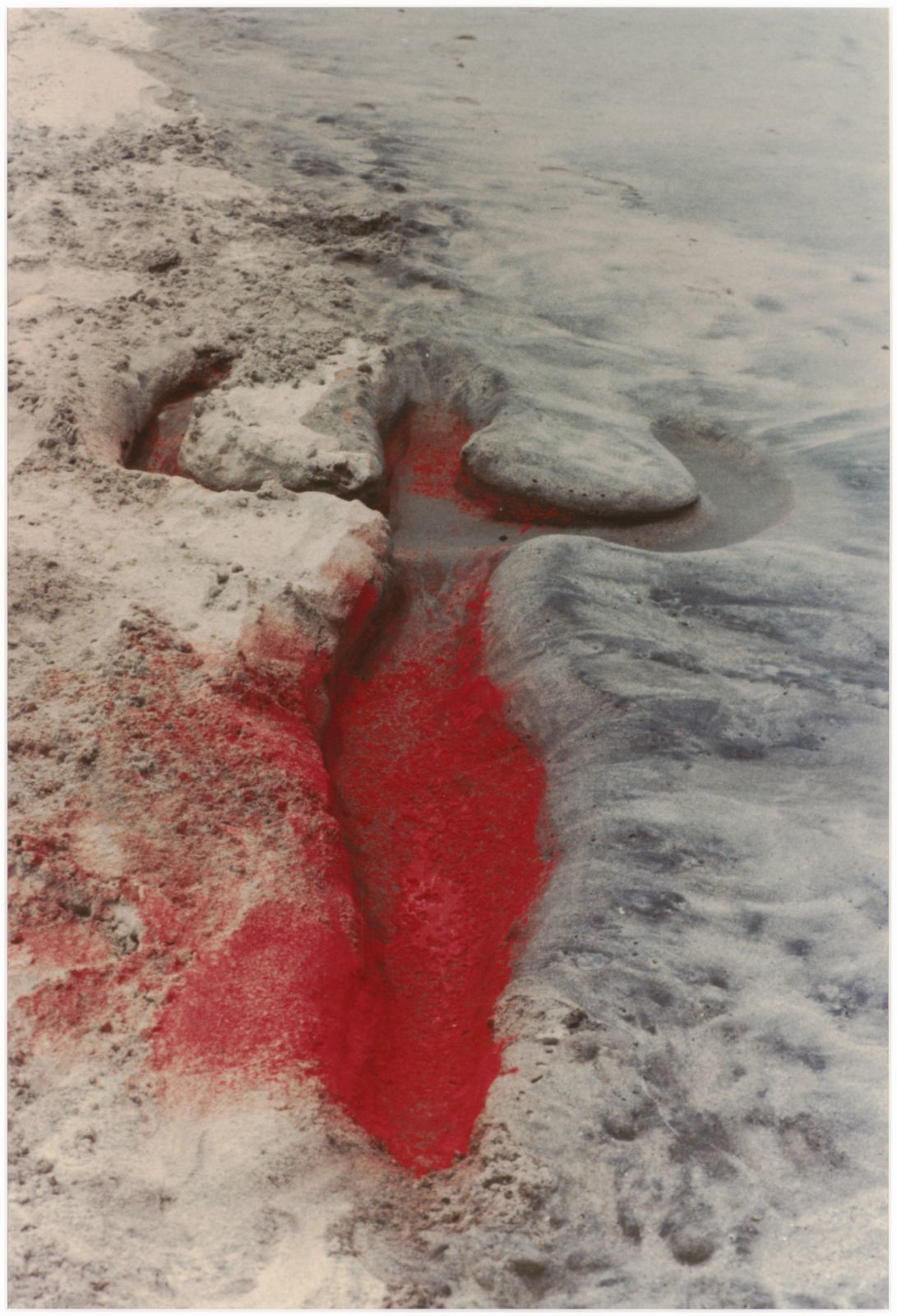
- 4—Ana Mendieta
land art
-Mendieta created a series of earthworks
in which she altered and sculpted
landscapes using a variety of techniques
and materials (removing rock and soil,
depositing flowers, moss, gun powder,
etc.).
-A Cuban exile, she drew on her spiritual
roots, intending to leave them behind to
create potential encounters with ““one
universal energy which runs through
everything: from insect to man, from
man to spectre, from spectre to plant,
from plant to galaxy.” - 5—Chris Burden
Installation Art
-Burden’s sculpture seems to change form as viewer circles it.
-The effect of the artwork depends on the motion of the viewer – it is not a stable form that exists with or without being seen.
-Performative encounter foreshadows Burden’s work as performance artist.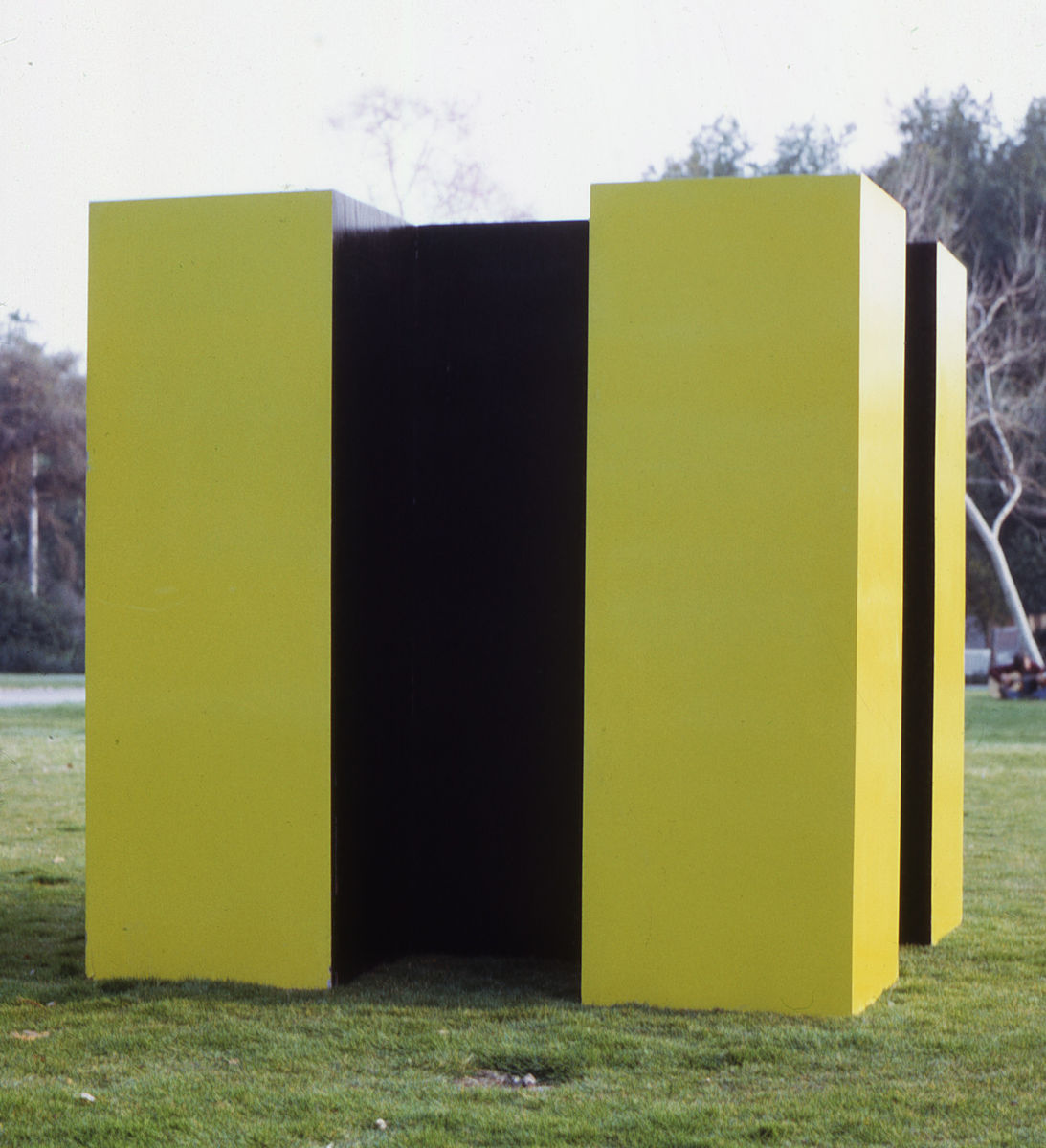
- 6—Christo & Jeanne
land art
- for the striking pink installation that took place for just two weeks in may, christo and jeanne-claude encircled 11 islands in the bay with 6.5 million square feet of pink fabric.
-approximately 50 drawings and collages, a large-scale model of the bay and its islands, hundreds of photographs and documents, several photomurals, and physical components of the project.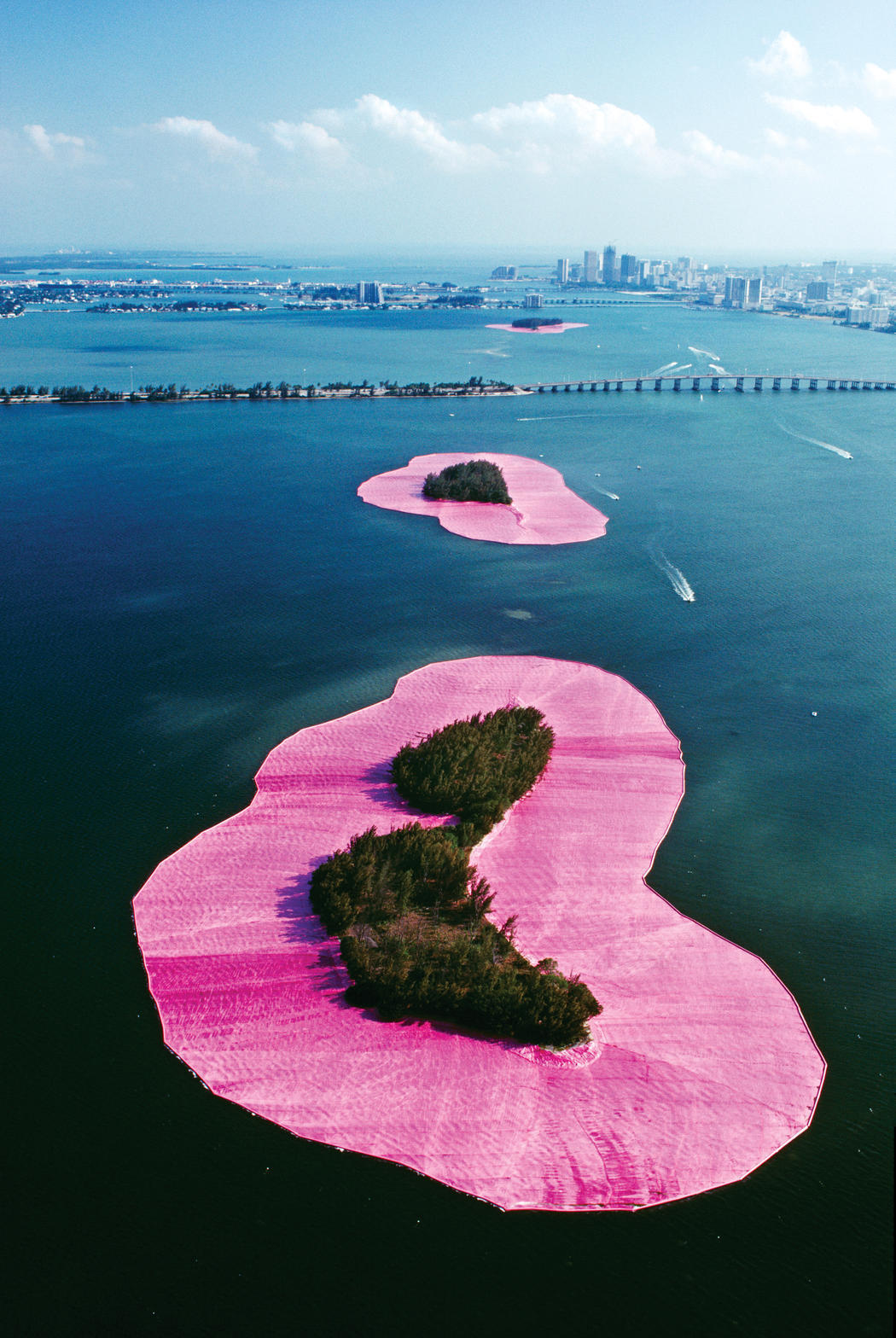
- 7—Daniel Buren
Installation Art
-Buren’s work the second high-profile exclusion of 1971. Complaints from minimalists such as Judd and Flavin that his work blocked theirs. But this exposed a contradiction in that their works were
not nearly as neutral (ie. they only existed as objects in themselves and not as products embedded in a social-political system).
-The piece also foregrounded the role that the Guggenheim’s architecture played in creating the conditions under which artworks were experienced, managed, and in some cases suppressed.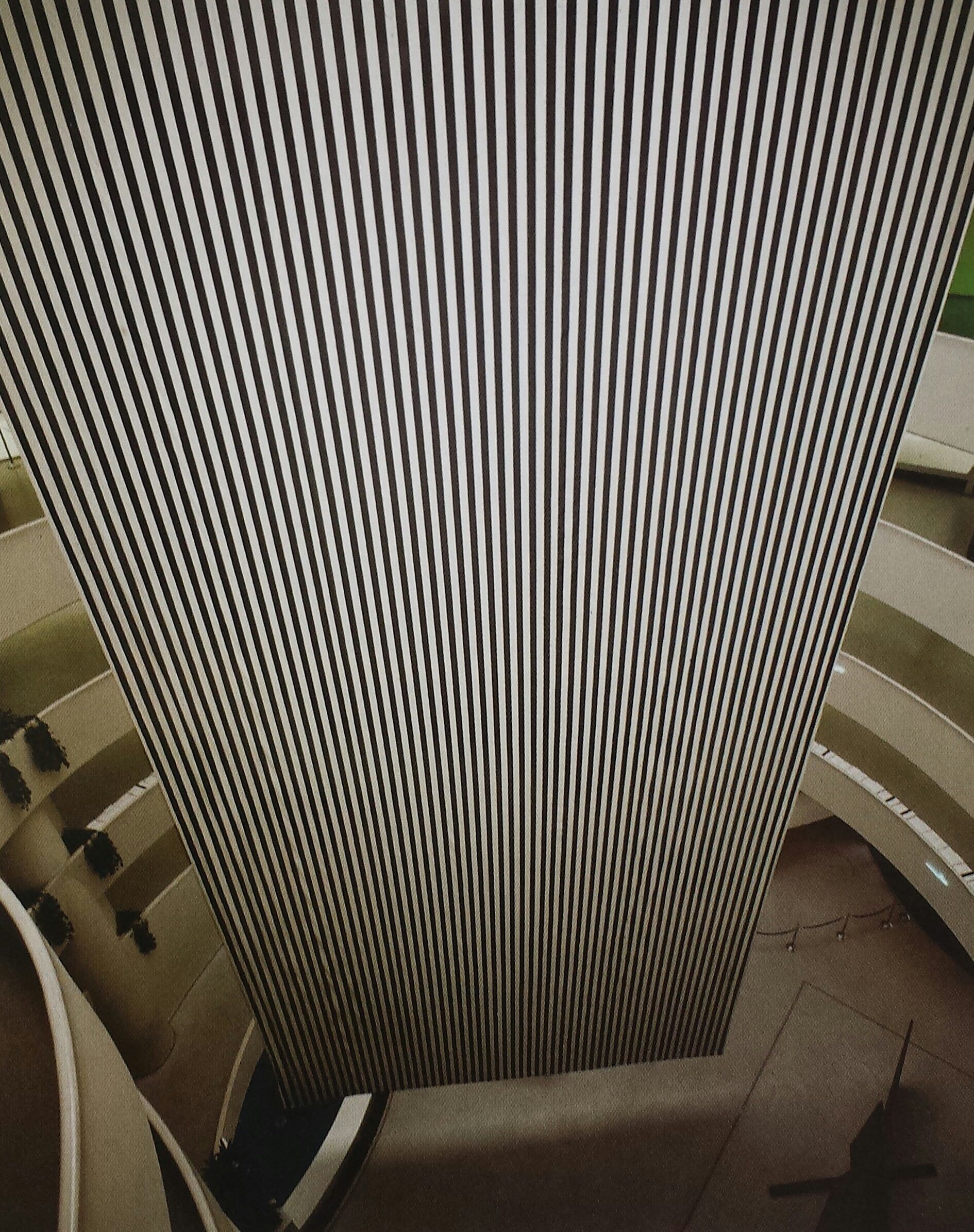
- 8—Eva Hesse
Post-minimal
-conceptual
-spatial qualities around the work
- feminist critique of minimalism
- considering the body through the lens of a Jewish woman who fled the Nazis
-visceral, bodily
- cheese cloth – deteriorates over time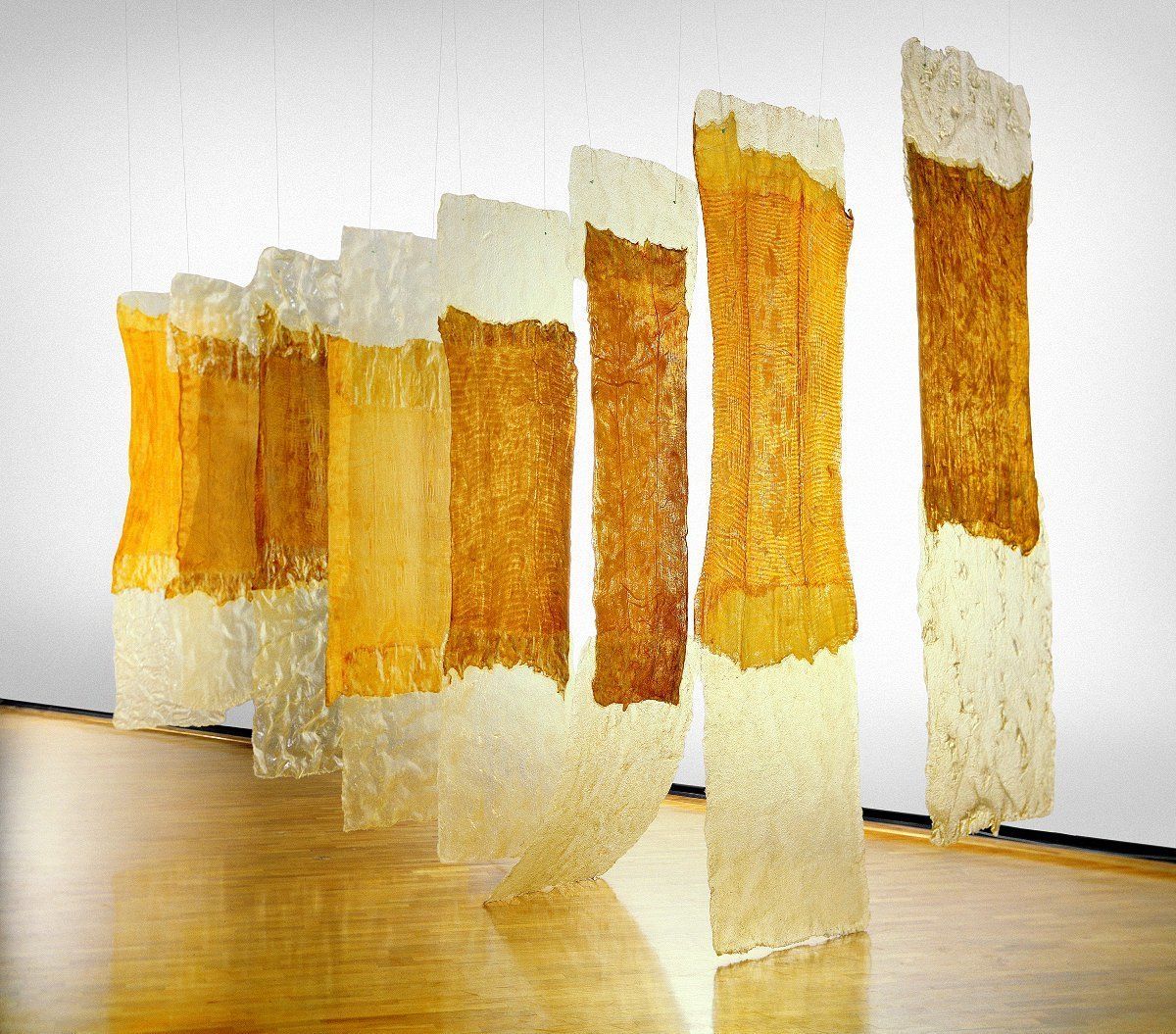
- 9—Gordon Matta-Clark
land art
-Commissioned by the Paris Biennial of 1975. Matta-Clark cut a conical section through 17th century buildings that were being demolished near the site of the Centre Pompidou, which was under construction.
-Unlike other ”anarchitectural” intervention, Conical Intersect took place in a busy, urban environment and was highly visible to the public – a performance of sorts.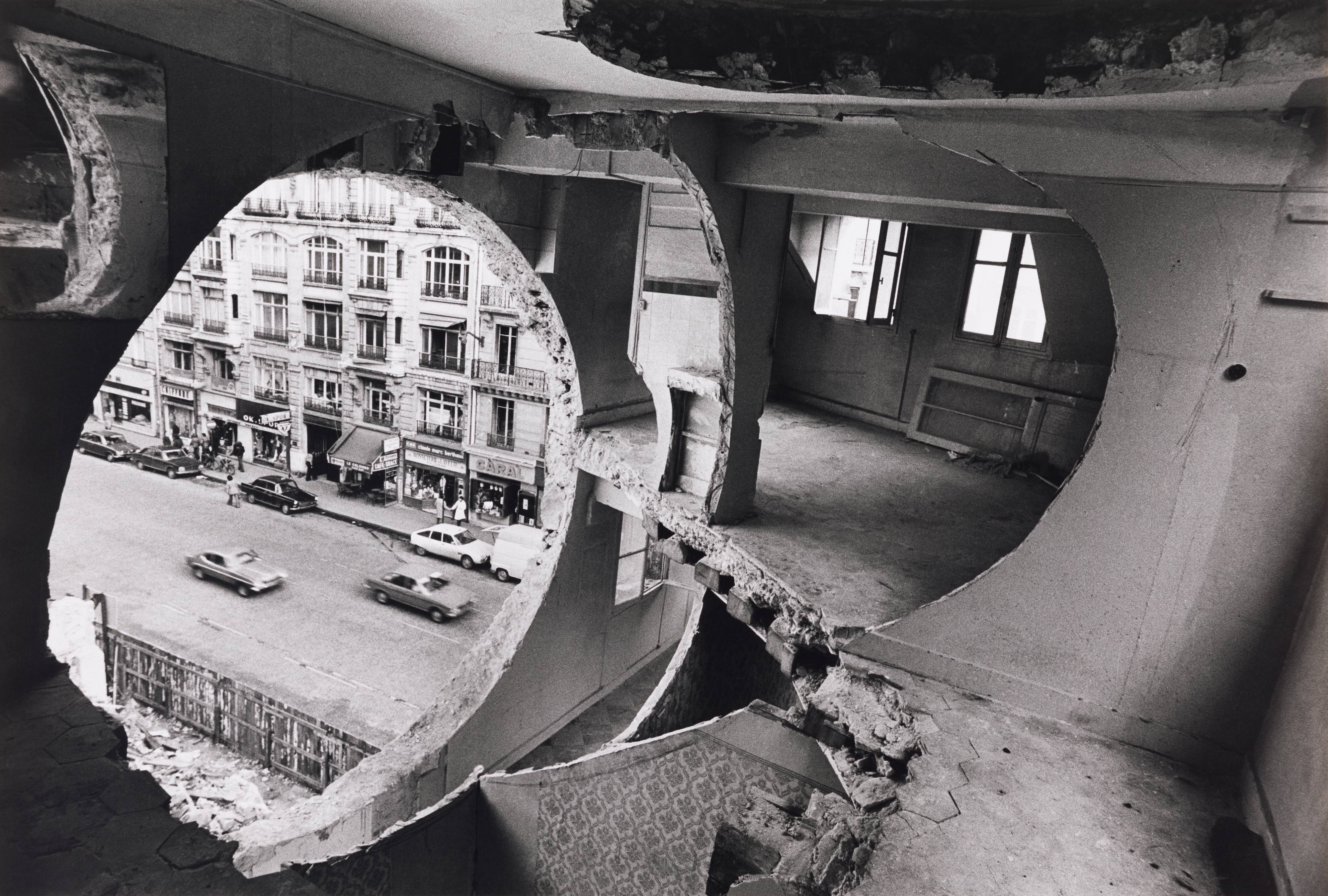
- 10—Hans Haacke
Installation Art
- Excluded from a Guggenheim exhibition in 1971 because it supposedly violated what the museum director considered to be the fundamental neutrality of the work of art.
-By pointing to the exploitation and injustice that was occurring in the real estate market, Haacke seemed to be
making a case about inequality in that the work was to be presented on prime real estate in mid-town Manhatten.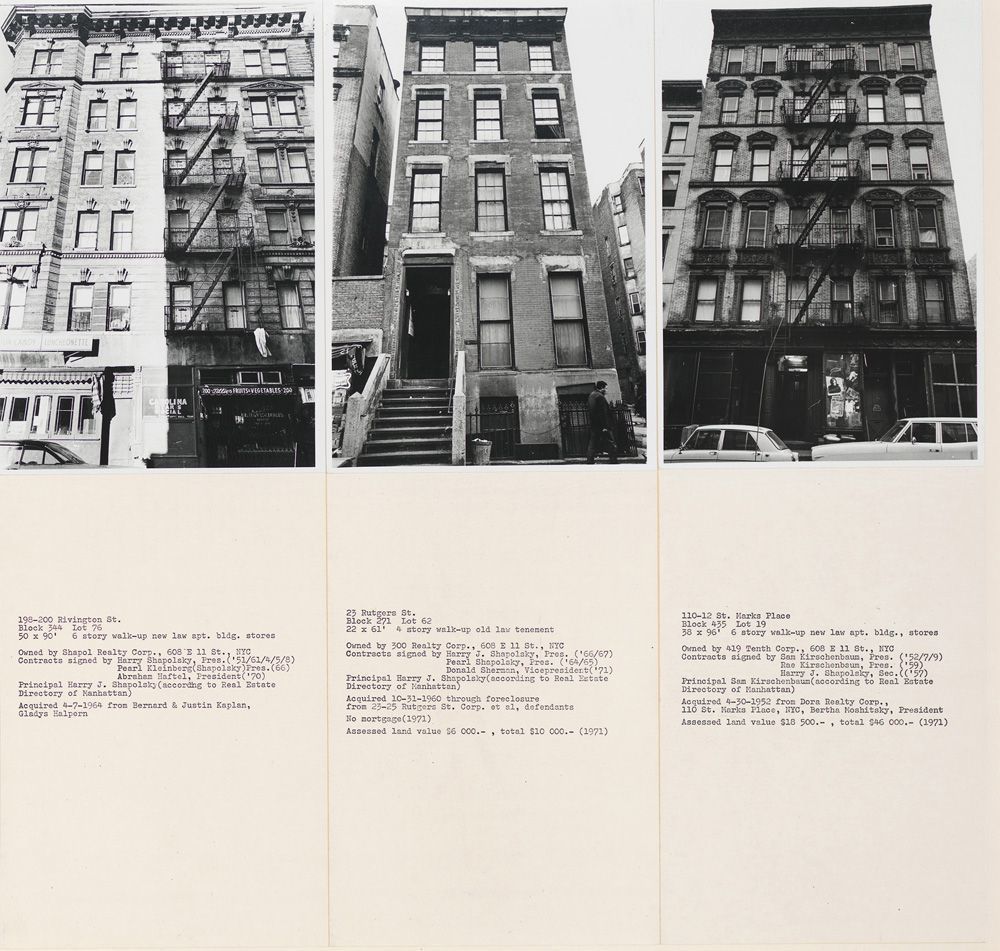
- 11—James Turrell
land art- modern art
-Roden Crater is a gateway to the contemplation of light, time and landscape.
-Constructed to last for centuries to come, Roden Crater links the physical and the ephemeral, the objective with the subjective, in a transformative sensory experience.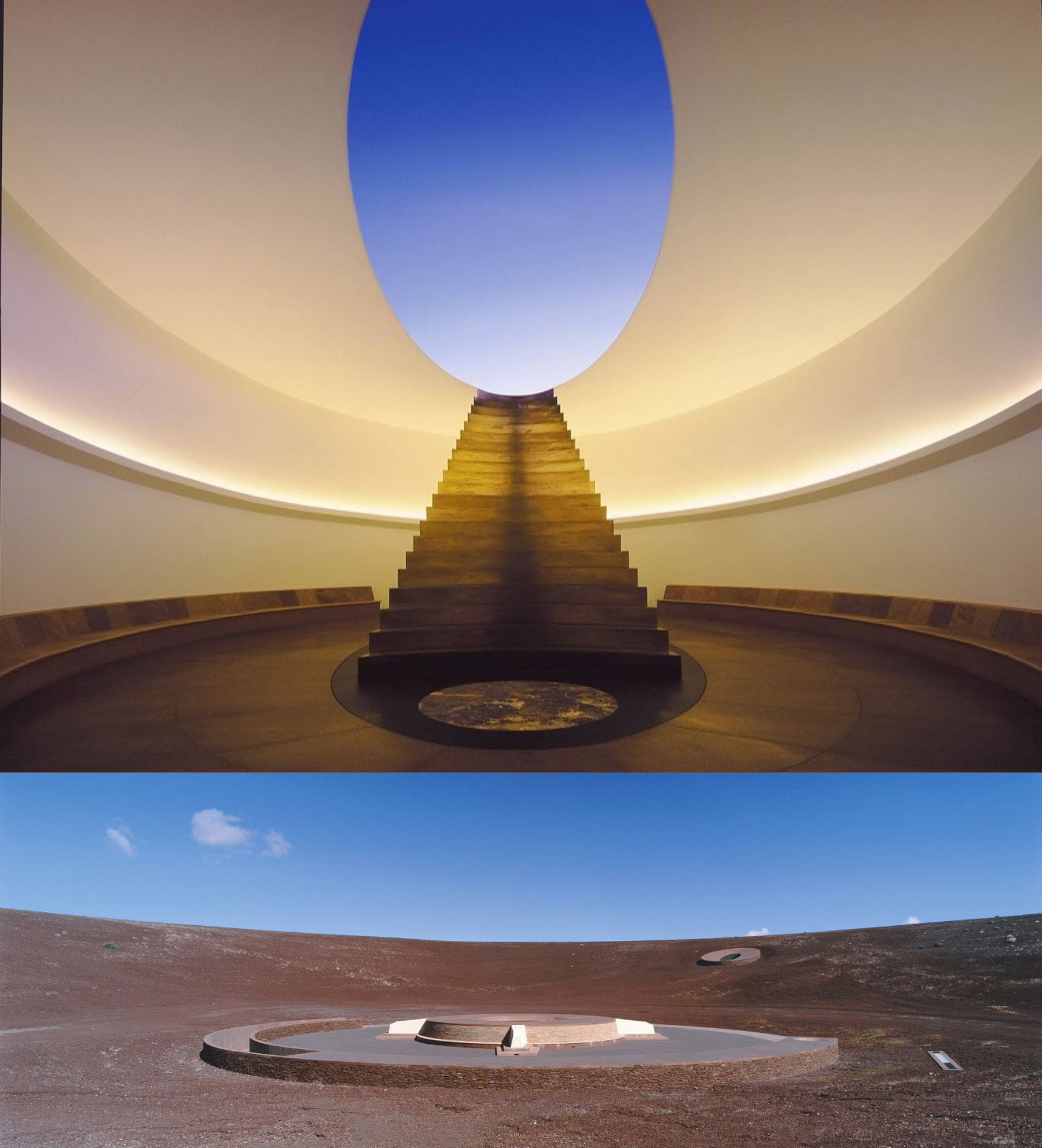
- 12—Louise Bourgeois
Post minimalist / feminist art
-Freudian ideas of sexual trauma
-Trapped while safe
-Womb- like
-Bodily
-Plaster, latex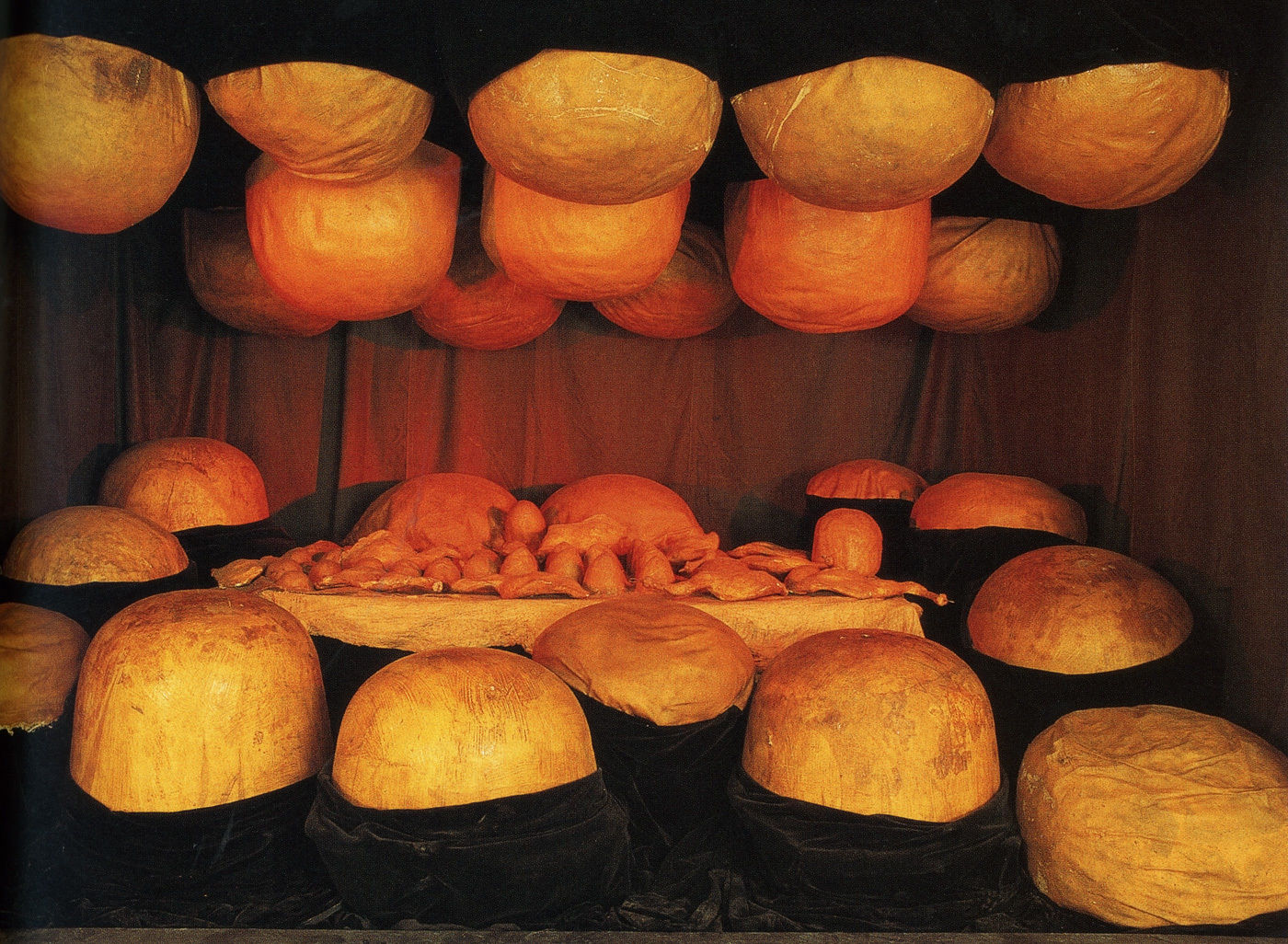
- 13—Lynda Benglis
Minimalism
-Blatt and the related works, which Benglis has described as her “poured” or “fallen” paintings, were created in part as a response to the so-called action paintings of Abstract Expressionist Jackson Pollock, made two decades before.
-The works are full of accidental bubbles and blobs, which the artist welcomed out of respect for the material’s natural behavior.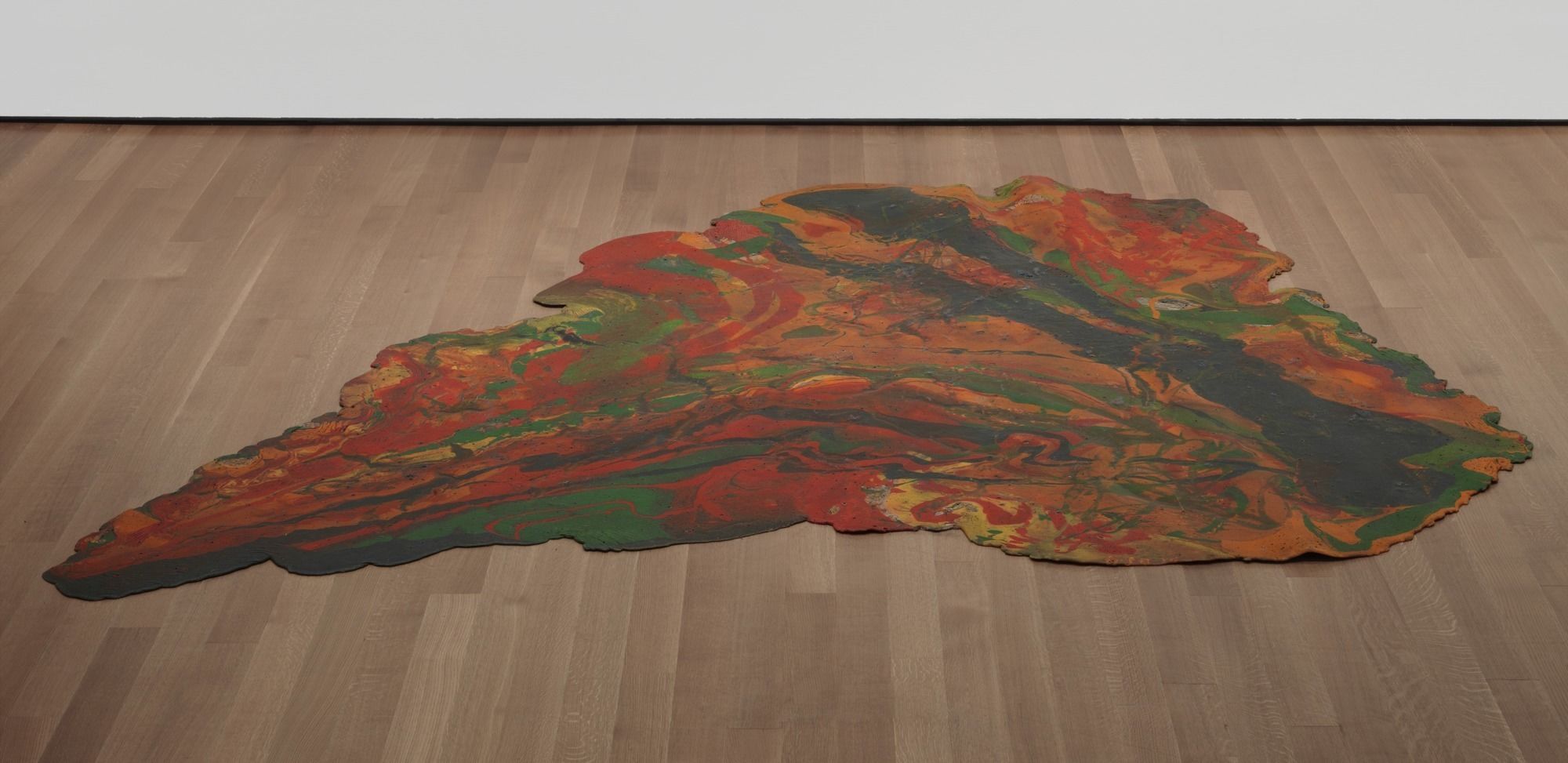
- 14—Marcel Broodthaers
Institutional Critique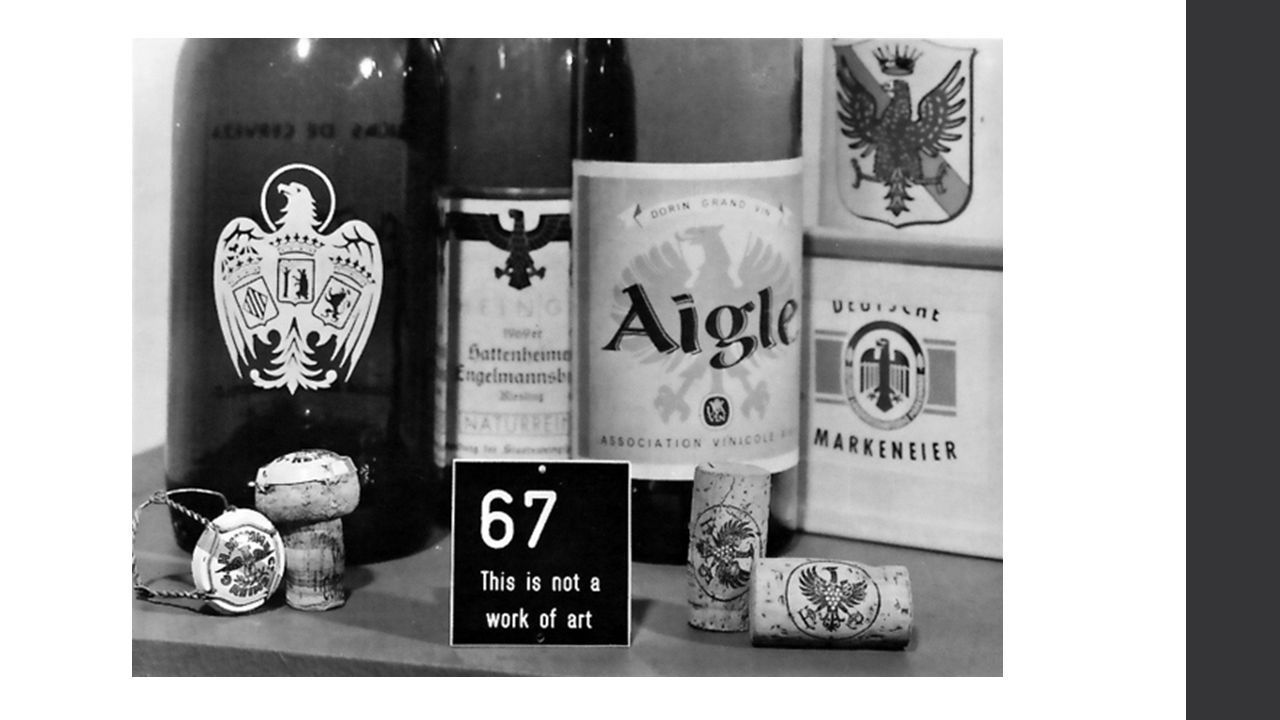
- 15—Marcel Broodthaers
Institutional Critique
- Here, he filled a shallow pan past its brim with the shells and paired them with an equally heaping bowl of painted wooden french fries. This combination is a witty nod to Broodthaers's heritage, as moules-frites (mussels and french fries) is generally considered the Belgian national dish. Moreover, in French, la moule (a mussel) is close in pronunciation and spelling to le moule (a cast or mold), a traditional device used by sculptors. By incorporating the shells into his sculpture, Broodthaers transformed a verbal pun into a visual one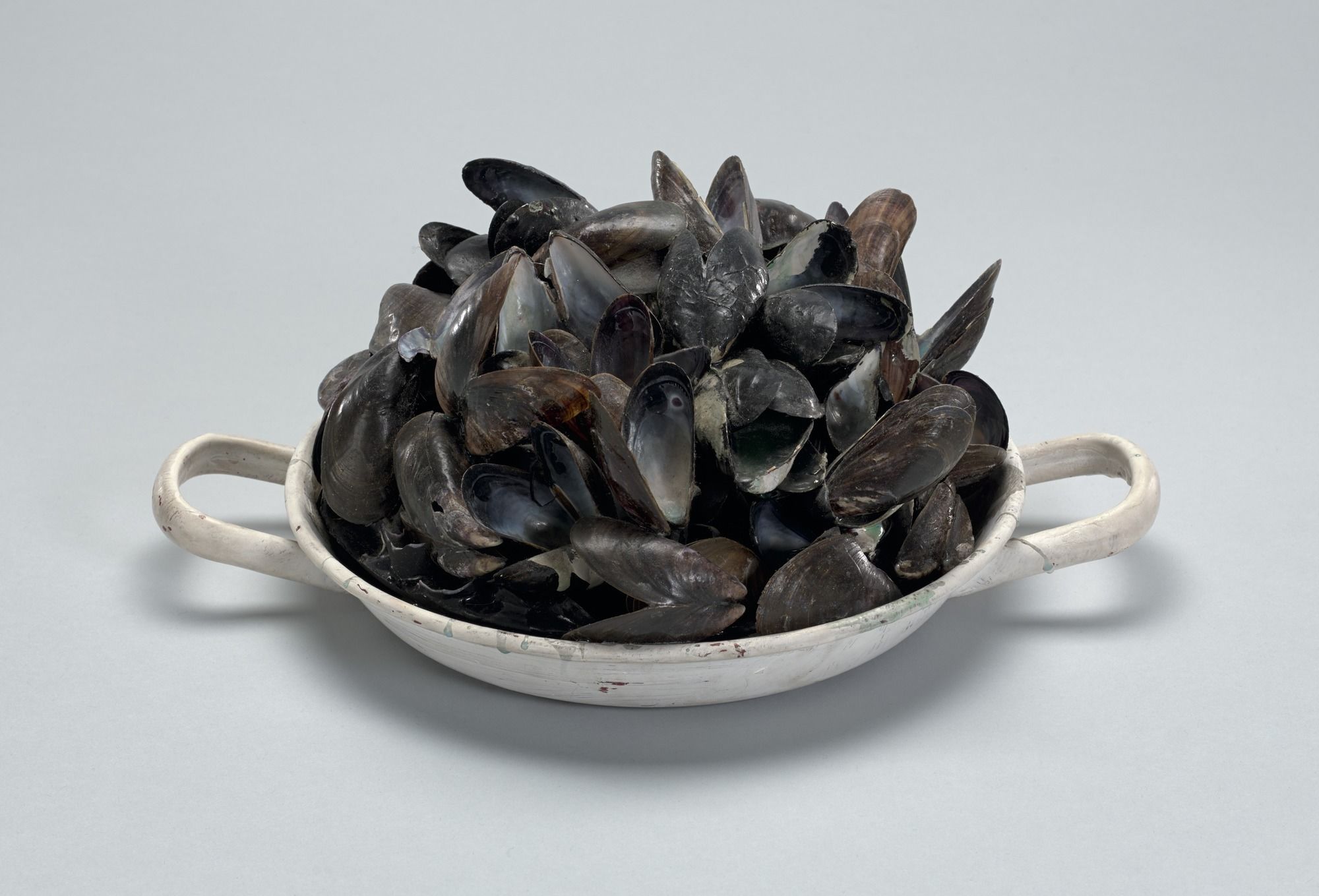
- 16—Michael Asher
Conceptual art
-Involving both a dematerialization of the art object and a focus on the conventions, or social pact, that invisibly underwrite the supposedly "universal" conditions of aesthetic judgment, the
Pomona College Project could also be
connected to the aims of Conceptual art.
-there is another sense in which the
phenomenological richness of the work, its invitation to its audience to move through it bodily and thus to participate in the constitution of its meaning, identifies it with other, more
materialized types of interventions...”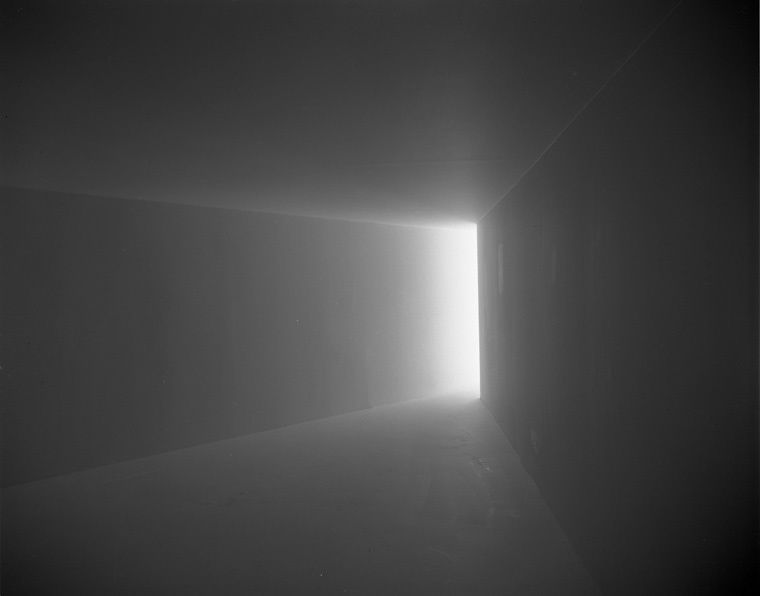
- 17—Michael Heizer
land art
-the largest piece of contemporary art in existence.
-Situated in an area called Basin and Range in the Nevada Desert, its geographic isolation coupled with Heizer’s solitary existence means that few have ever visited the site, and that very little is known about it.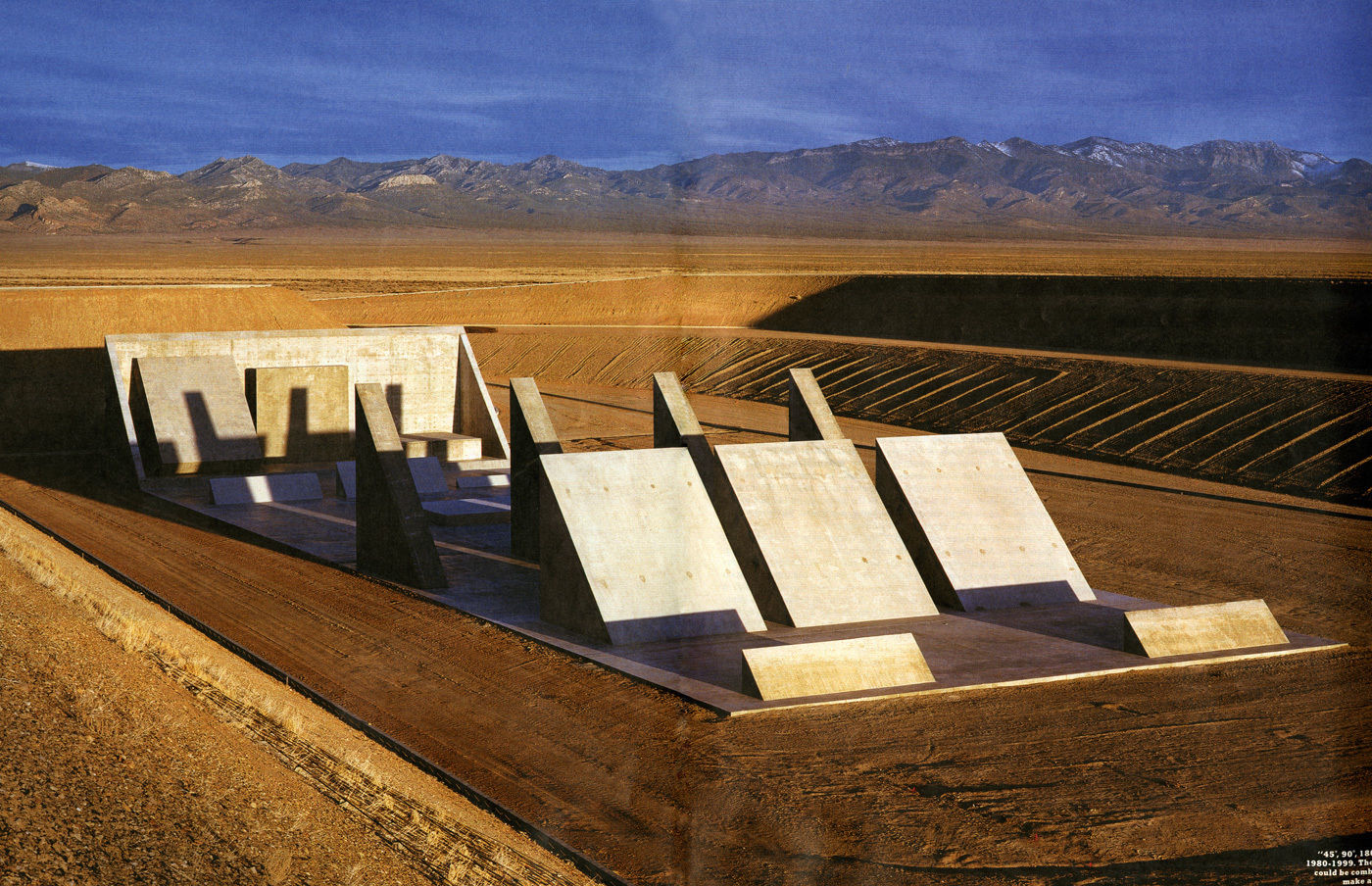
- 18—Nancy holt
land art
-Sun Tunnels (1973–76) is composed of four massive cylindrical, concrete forms—large enough for a viewer to walk inside without ducking—positioned in a cross formation on the desert’s cracked clay floor.
- Smithson’s iconic earthwork, a giant basalt helix built into the edge of Utah’s Great Salt Lake, was created with the expectation that it will ultimately recede back into the water.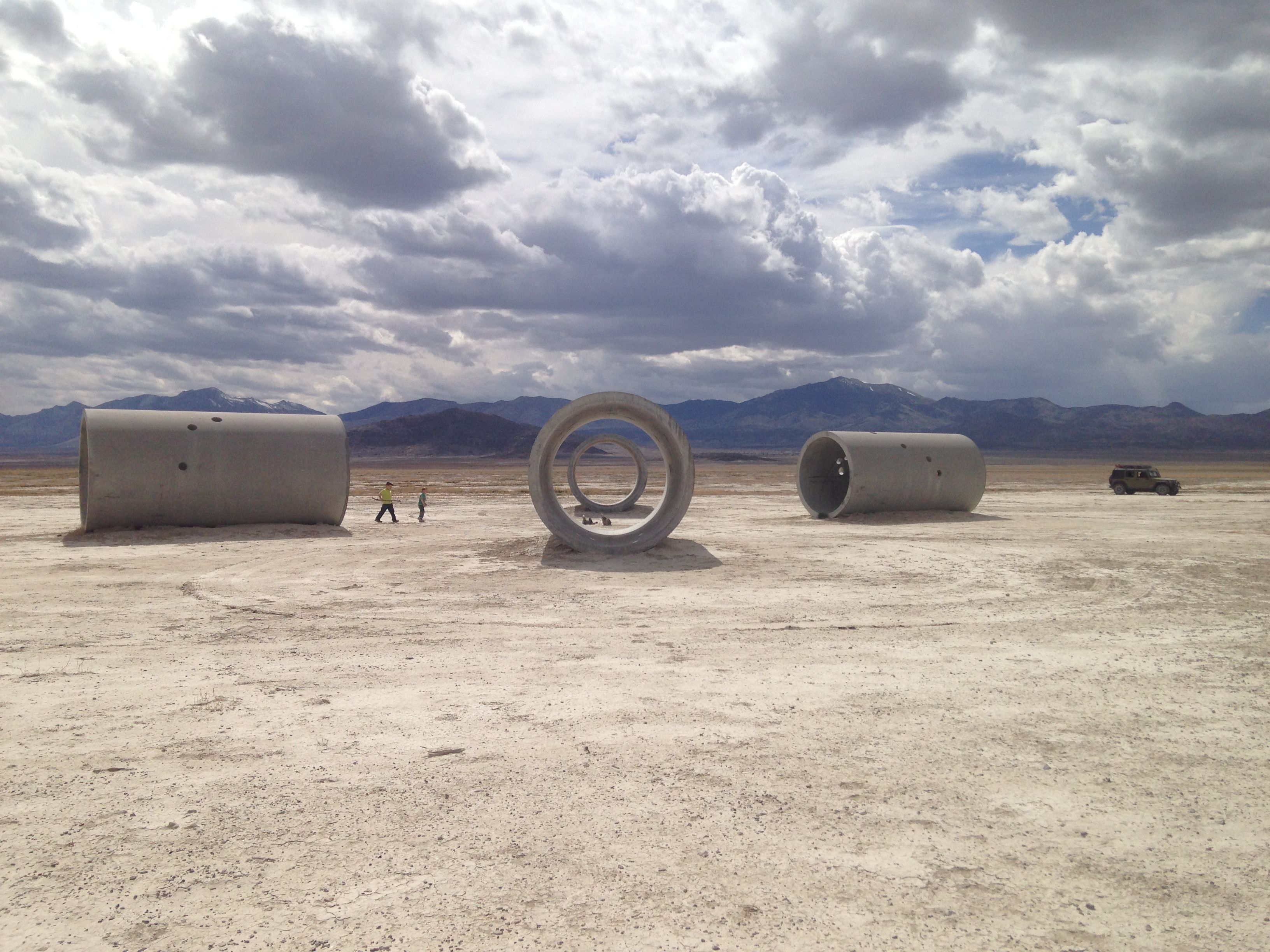
- 19—Richard long
land art
-This piece demonstrates how Long had already found a visual language for his lifelong concerns with impermanence, motion and relativity.
-He photographed this work, and recorded his physical interventions within the landscape.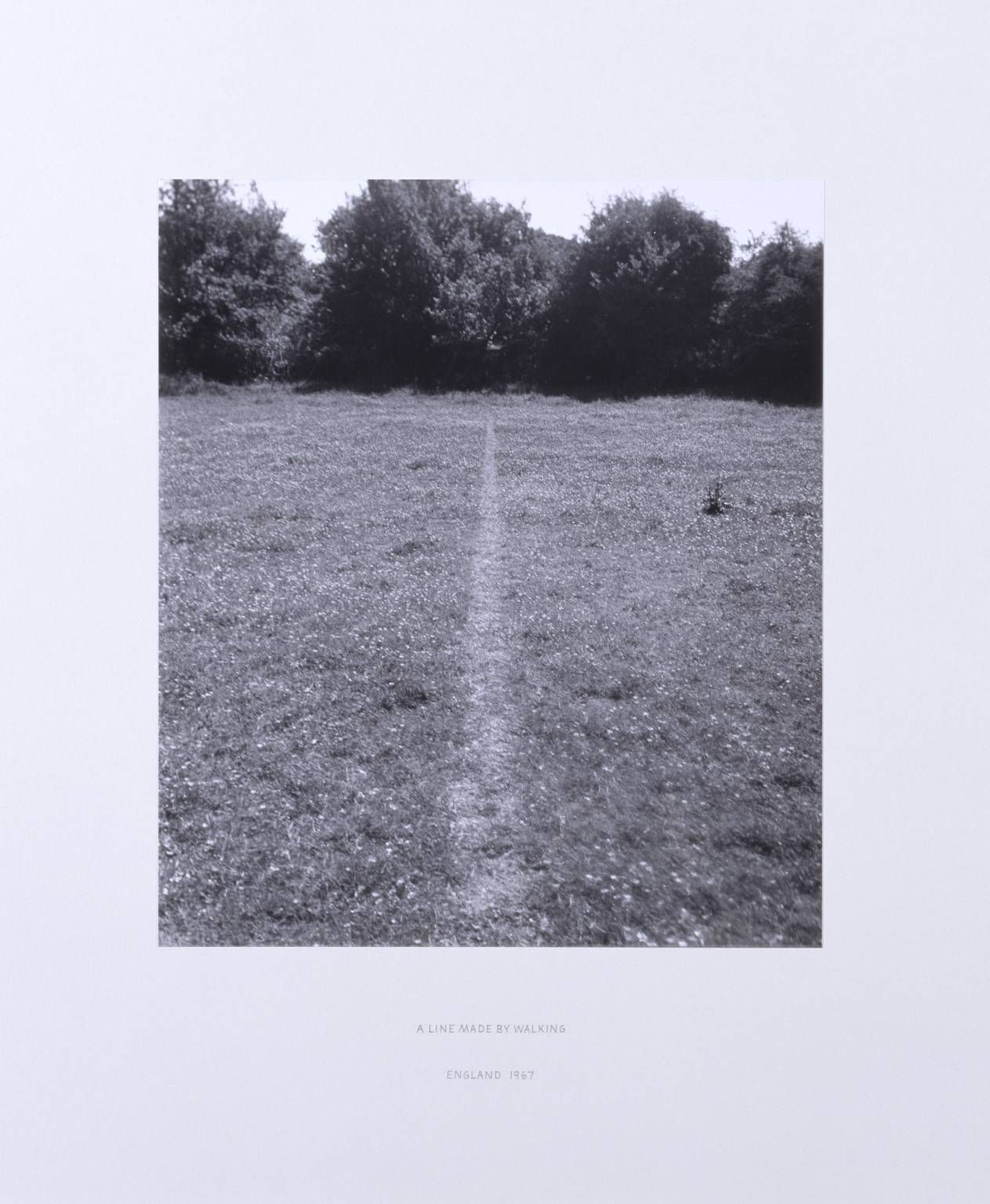
- 20—Robert smithson
Installation art
-Smithson's three mirrors in a corner create a structure both lucid and elusive: as each mirror reflects the space around it, it multiplies the reflections in the other mirrors, creating an image with the symmetry of a crystal.
- Smithson also combined mirrors with heaps of sand, gravel, and other rocks, matching nature's brute rubble with its precise visual twin.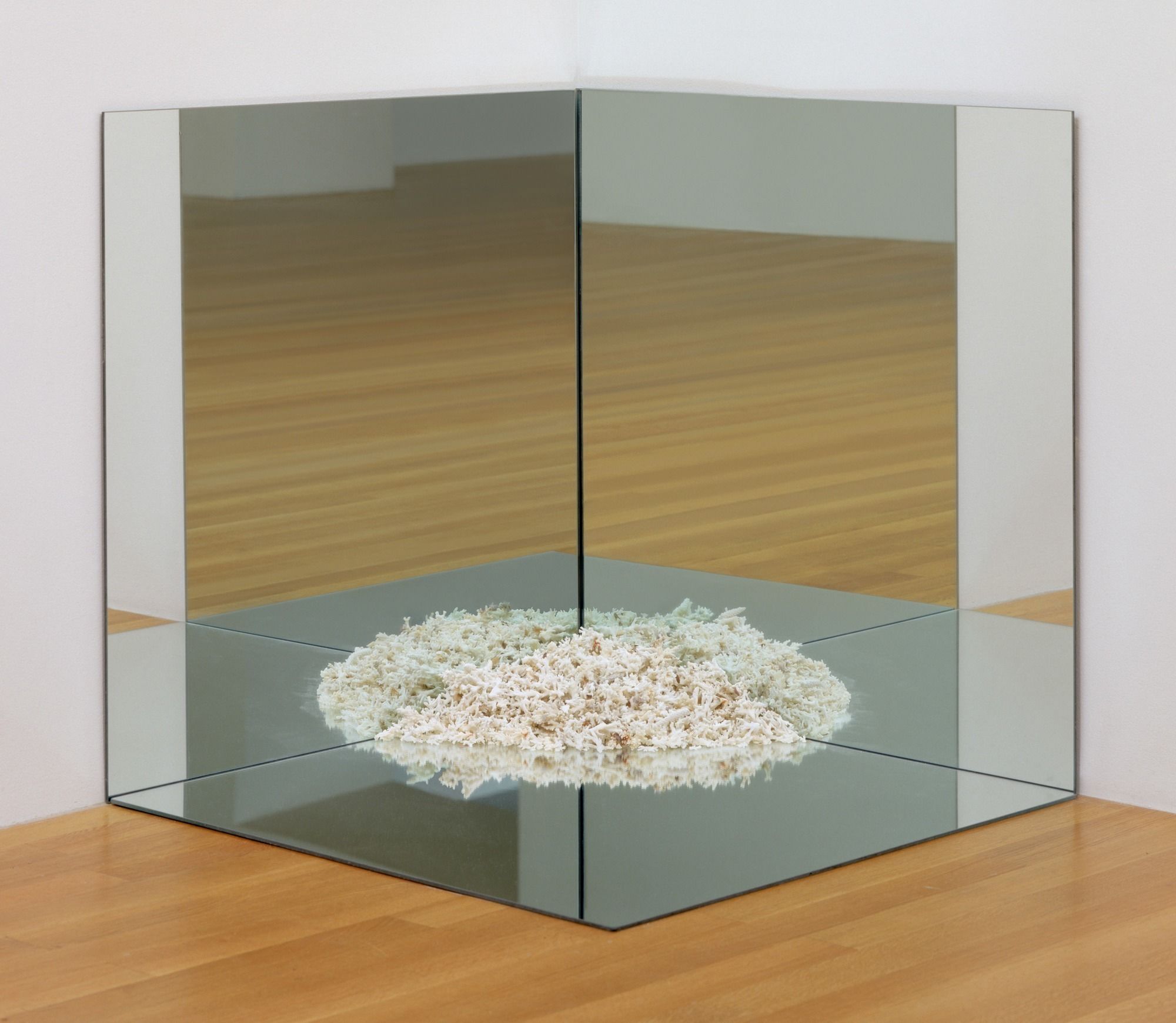
- 21—Robert smithson
Land art
-Smithson wanted to reconnect with the environment - hence works like Spiral Jetty, which also reflected his interest in science and geology.
-To create the 457 metre long spiral, Smithson bulldozed material from the shore into the lake.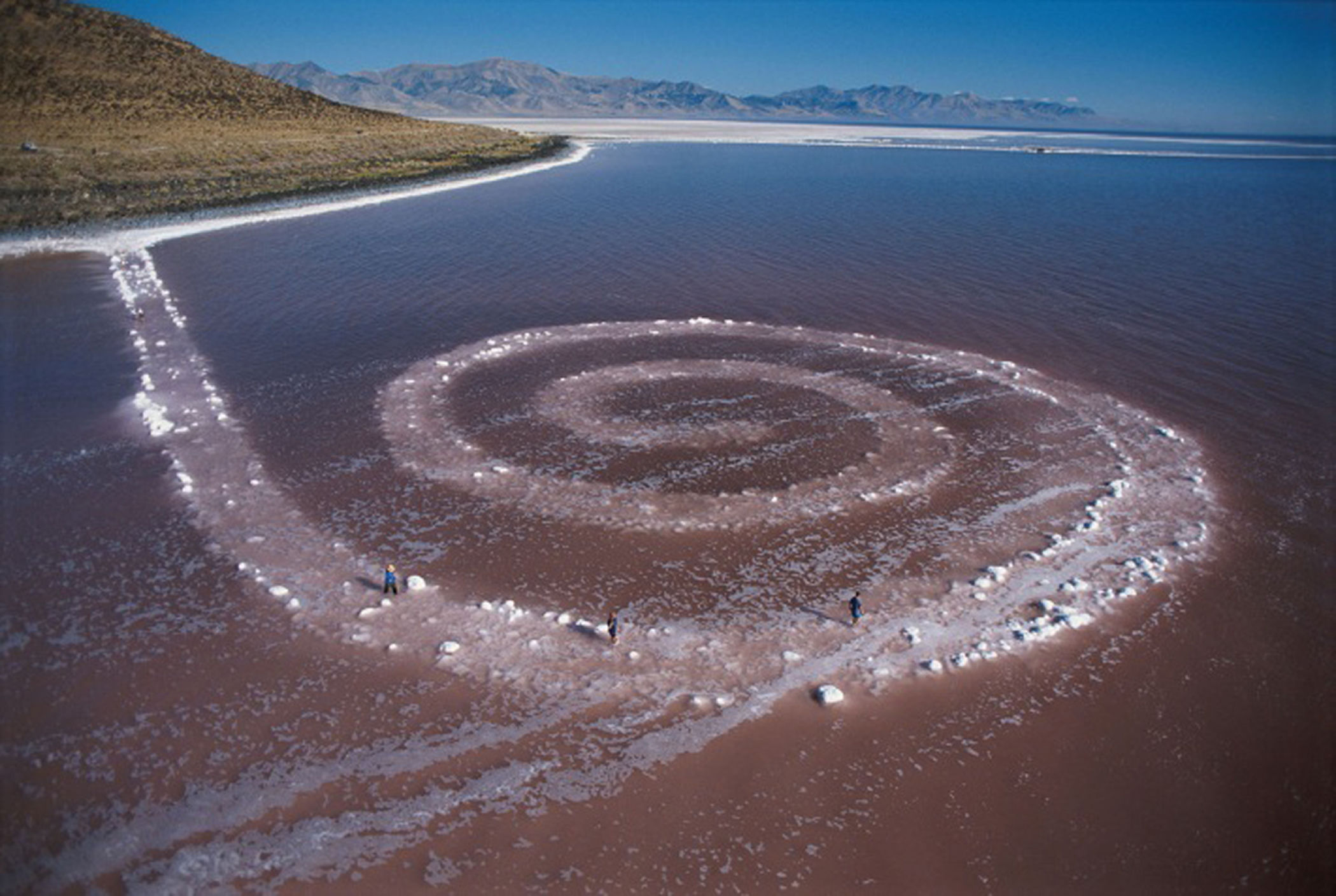
- 22—Walter de maria
land art
-The Lightning Field is recognized internationally as one of the late-twentieth century's most significant works of art and exemplifies Dia's commitment to the support of art projects whose nature and scale exceed the limits normally available within the traditional museum or gallery.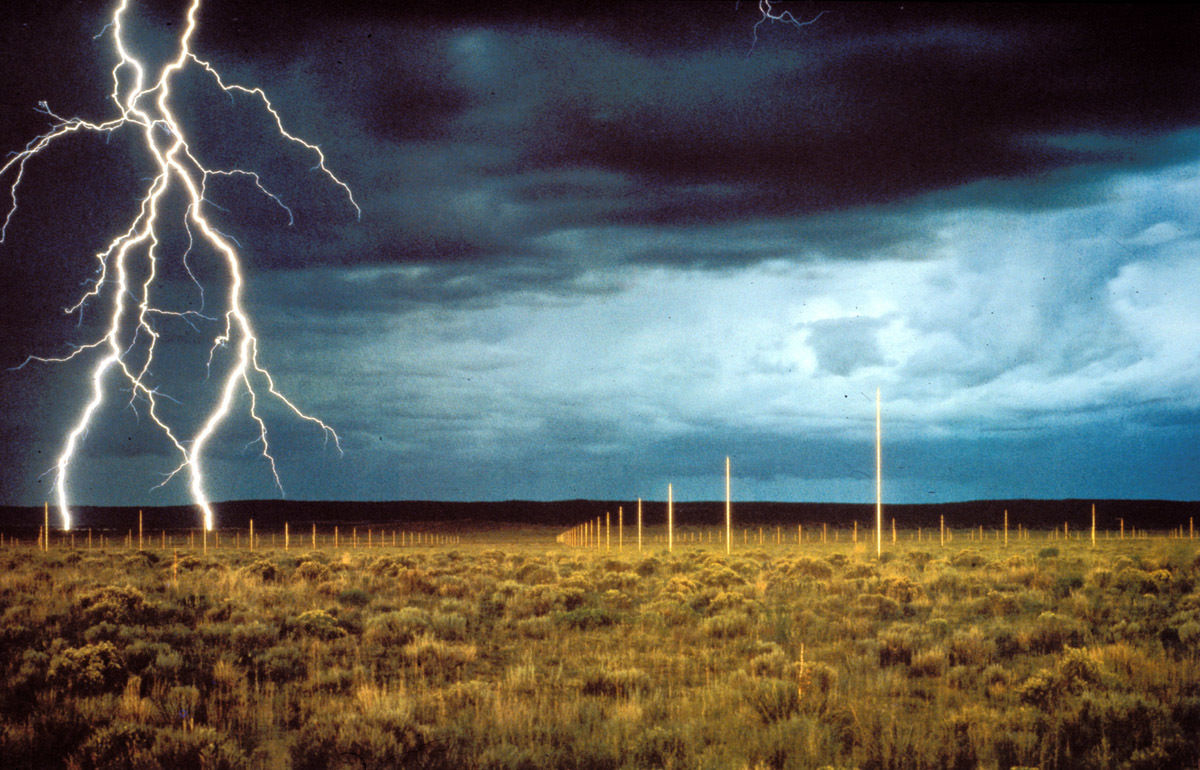
- 23—Yayoi kusama
Feminist art
-she always defined herself in her own terms. “I am an obsessional artist,” she once said. “People may call me otherwise, but…I consider myself a heretic of the art world.”
-She started painting at the age of 10 when she began experiencing the visual and aural hallucinations that would plague her, while also fueling her creativity, for the rest of her life.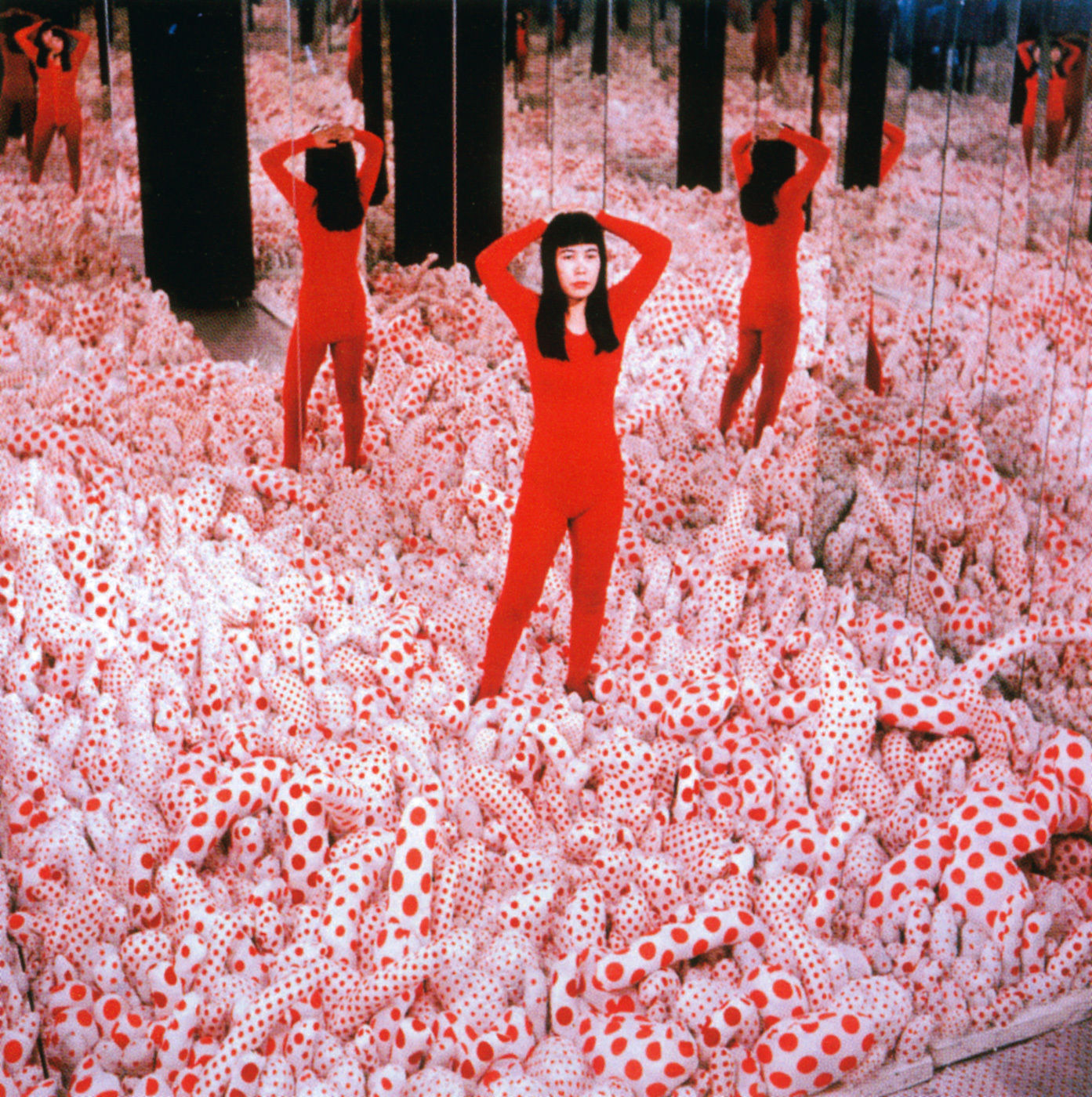
Informações
- Descrição
- FlashCards sobre Land Art, Institutional Critique, Installation Art, criado por yongtao wang em 06-11-2019.
- Criado por
- yongtao wang
- Visualizações
- 59
- Avaliação