Flashcards
Equine Biomechanics
Flashcards do conjunto (83)
- 1Biomechanicsthe study of the mechanics of a living body, especially of the forces exerted by muscles and gravity on the skeletal structure
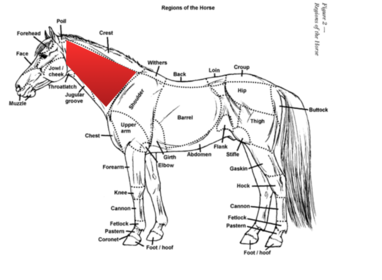
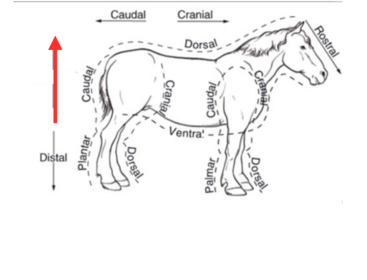
- 2—Neck region of the horse
- 3—Croup region of the horse
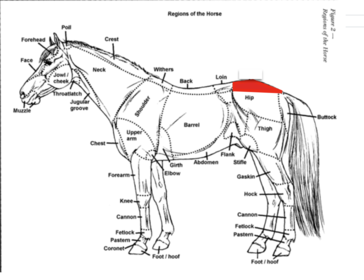
- 4—Loin region of the horse
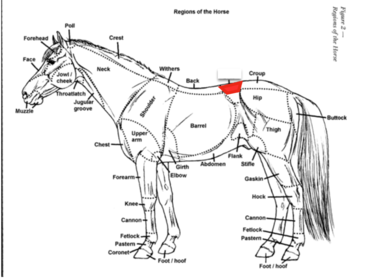
- 5—Withers region
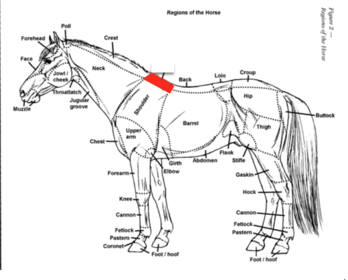
- 6—Crest region
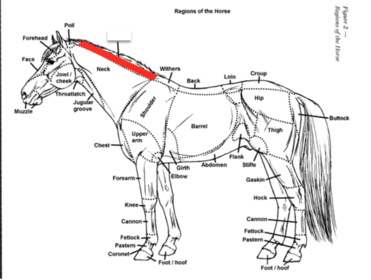
- 7—Throat Latch region
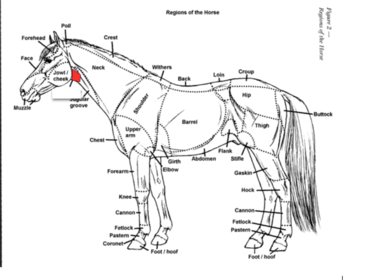
- 8—Jowl/cheek region
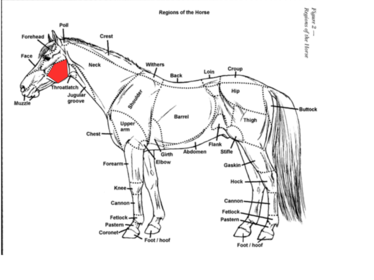
- 9—Muzzle region
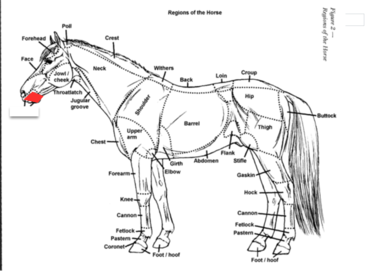
- 10—face region
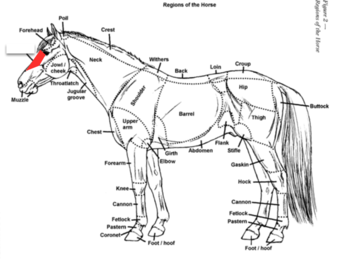
- 11—forehead region
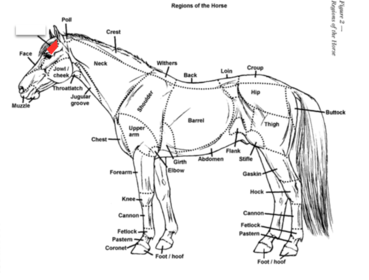
- 12—forehead region
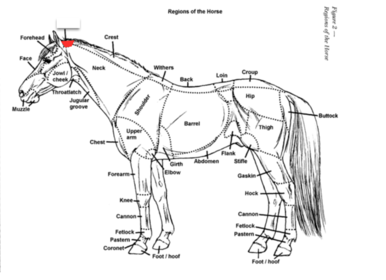
- 13—knee region
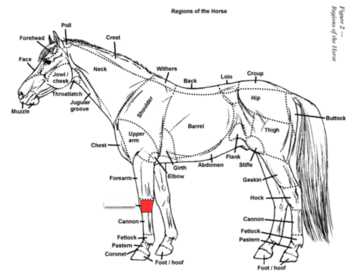
- 14—Forearm region
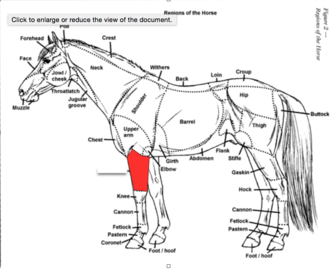
- 15—upper arm region
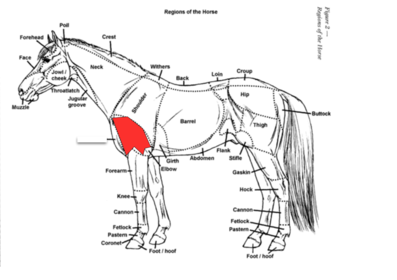
- 16—Chest region
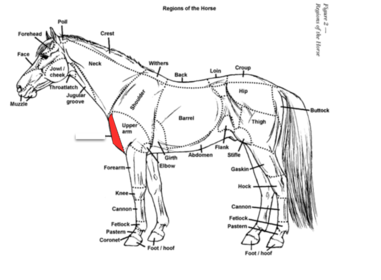
- 17—shoulder region
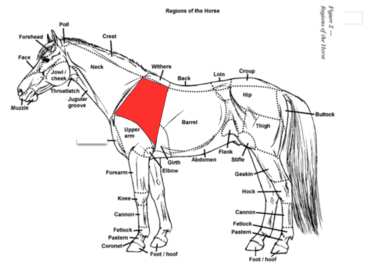
- 18—jugular/groove region
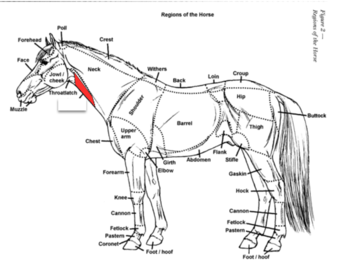
- 19—foot/hoof region
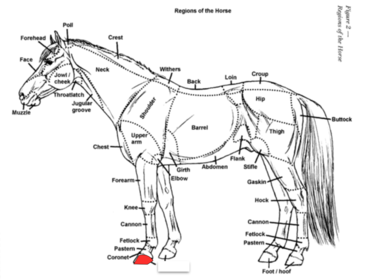
- 20—coronet region
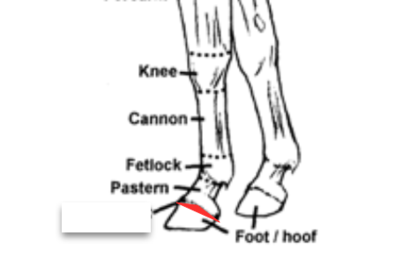
- 21—Pastern region
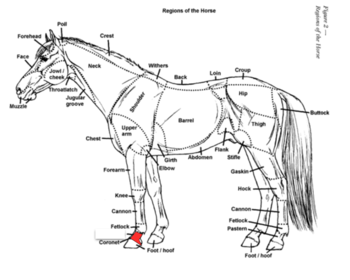
- 22—Fetlock region
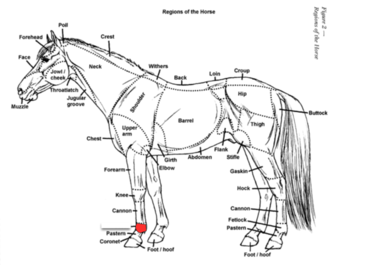
- 23—Cannon region
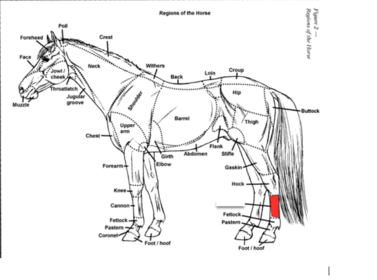
- 24—Cannon region
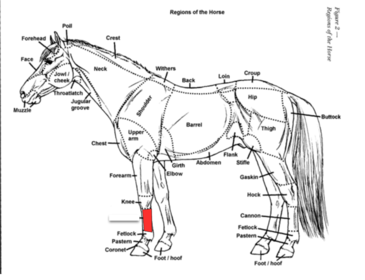
- 25—hip region
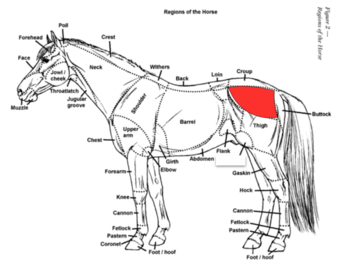
- 26—Stifle region
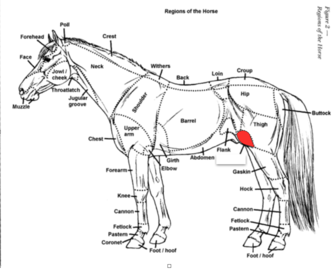
- 27—Flank region
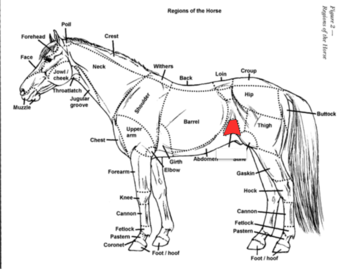
- 28—Abdomen region
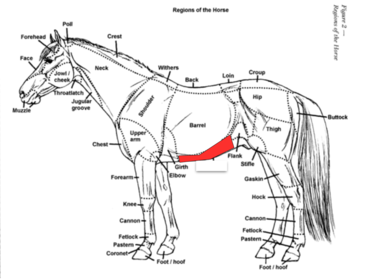
- 29—Girth region
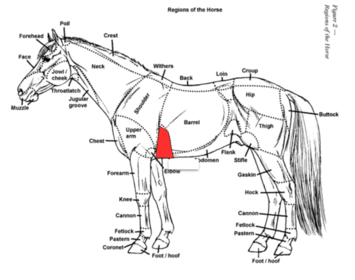
- 30—Elbow region
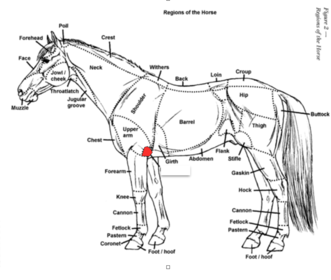
- 31—Fetlock region
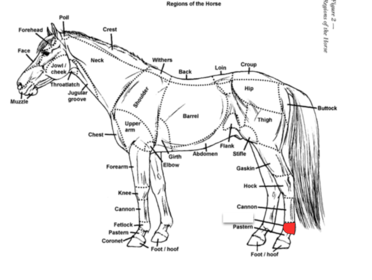
- 32—Hock Region
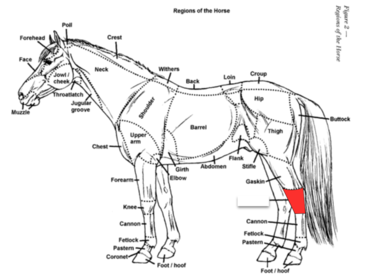
- 33—Gaskin region
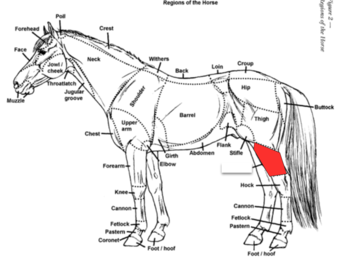
- 34—Barrel Region
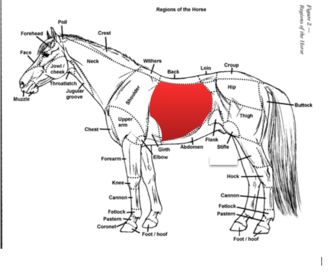
- 35—Buttock region
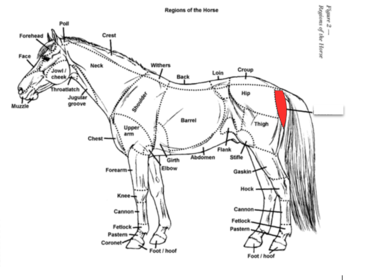
- 36—Thigh region
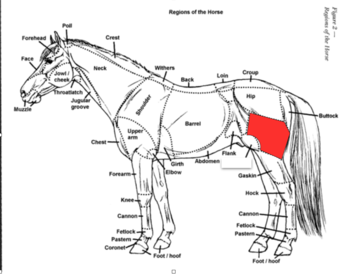
- 37medialtowards the median plane, closer to the middle and inside of the horse
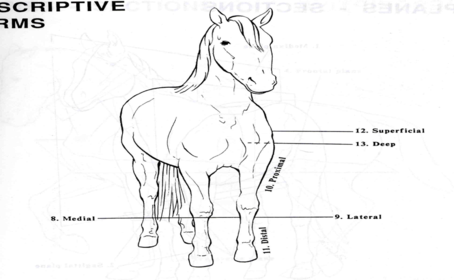
- 38lateralfarther from the median plane
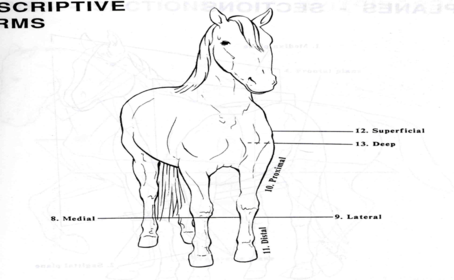
- 39proximalnearest the trunk or point of origin of a limb, vessel, nerve, or organ
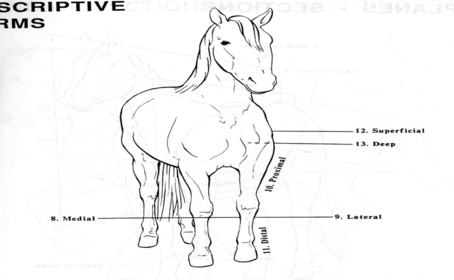
- 40distalfarther from the trunk or point of origin of a limb, vessel, nerve or organ
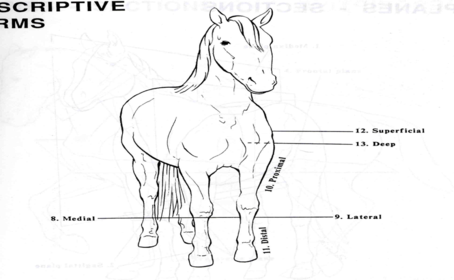
- 41superficialnearer the surface, close to the skin
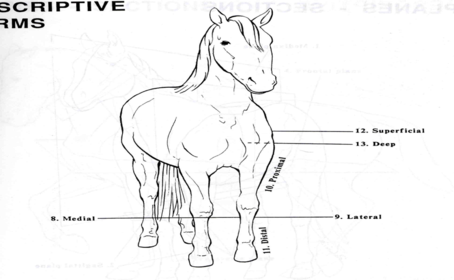
- 42deepfather from the surface
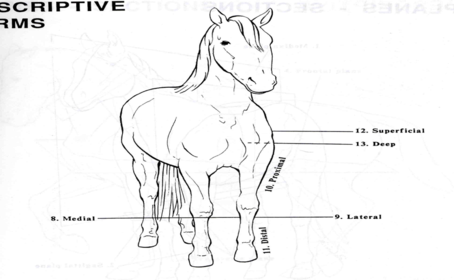
- 43peripheraldistant from its point of origin; near the surface of the body
- 44what principles are horses judged onbalance, muscling, structural correctness
- 45BalanceMost important indicator of good conformation.
Represents overall skeletal framework based on surface reference points - 46Shoulder angle45-50 degrees
Dictates acton of forelimb and stride length
Reference points- withers to point of scapula - 47hip anglepoint of hip and back of stifle
- 48other concepts of balanceidea of thirds
chest length= leg length
short neck vs long
neck tie-in - 49shorter cannon bone =allows you to decrease the force on tendons
- 50—caudal
towards the tail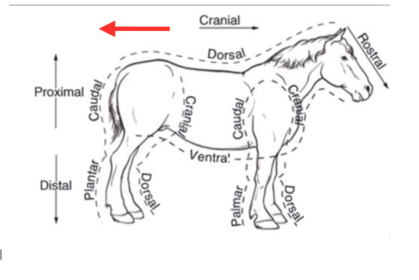
- 51—cranial
towards the head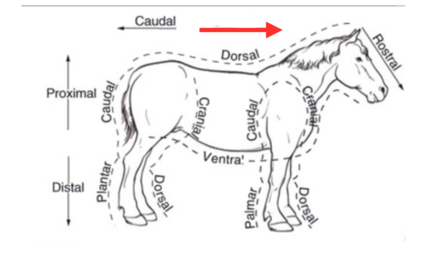
- 52—rostral
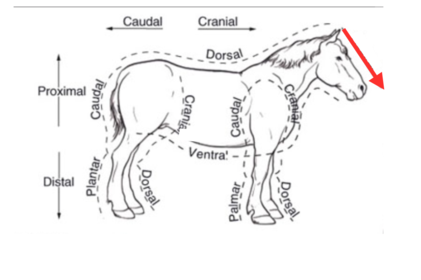
- 53—ventral
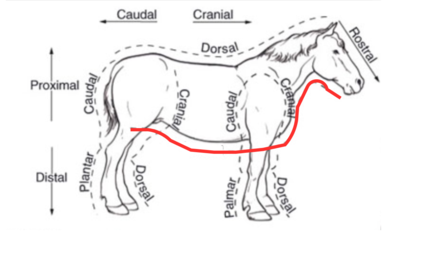
- 54—dorsal
away from the ground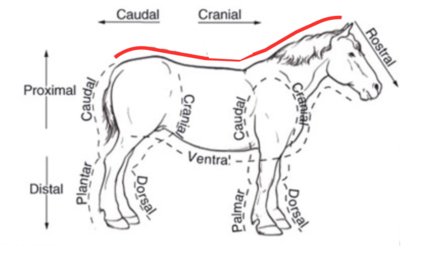
- 55—caudal
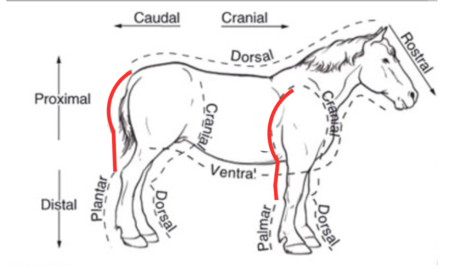
- 56—cranial
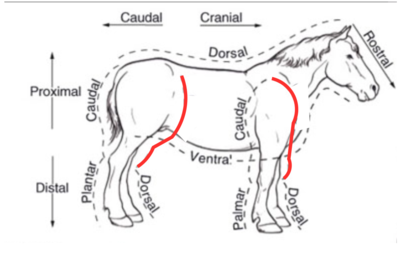
- 57—dorsal
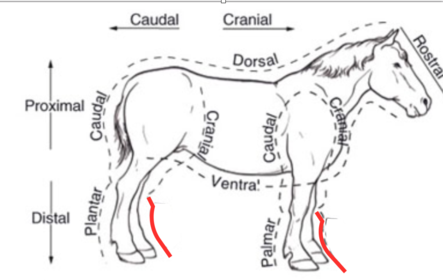
- 58—Plantar
The surface below the prox. end of the tarsus directed caudally. The opposite of dorsal.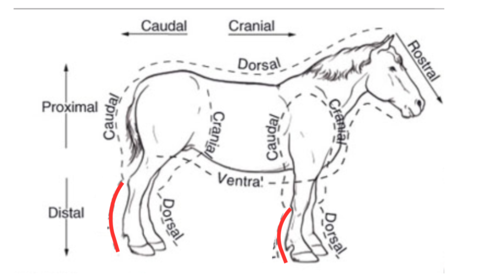
- 59—distal
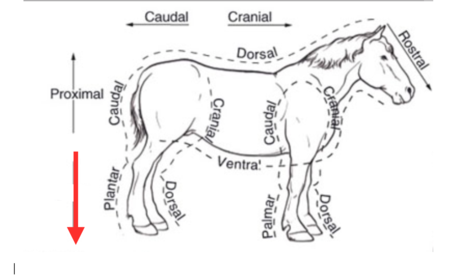
- 60—Proximal
- 61—ideal position vertical line from shoulder should fall through elbow and center of foot
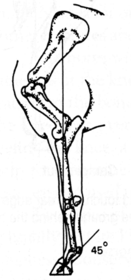
- 62—calf-kneed (bad and hyperextended)
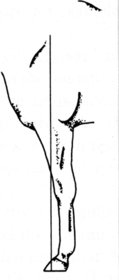
- 63—knee sprung
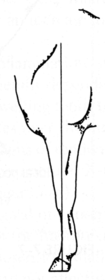
- 64—camped-out
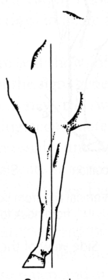
- 65—camped under
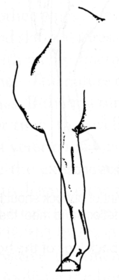
- 66—IDEAL
vertical line from point of shoulder should fall in center of knee, cannon, pastern, and foot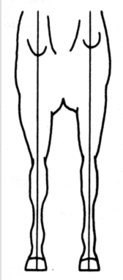
- 67—base narrow; stands close
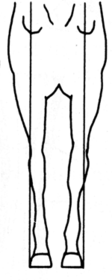
- 68—Pigeon-toed
weight distribution is faulty and causes arthritis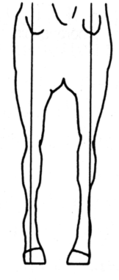
- 69—knock-kneed
arthritis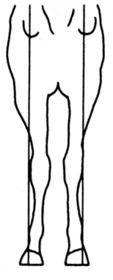
- 70—bow-legged
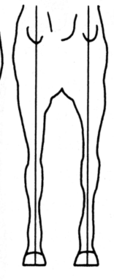
- 71—toes out
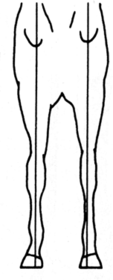
- 72—narrow-chested; toes out
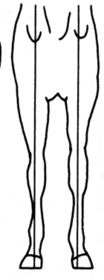
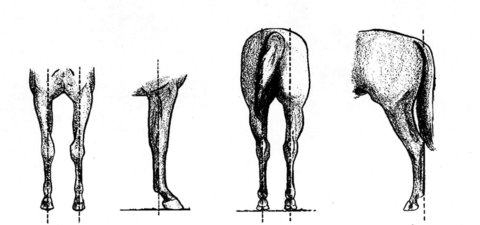
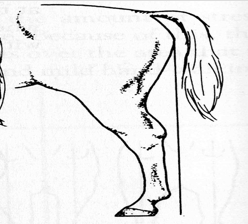
- 73—ideal position
vertical line from point of buttock should touch the rear edge of cannon from hock to fetlock and meet the ground behind the heel.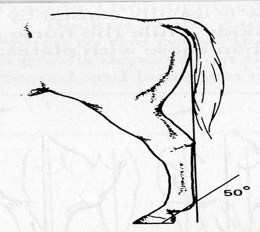
- 74—stands under
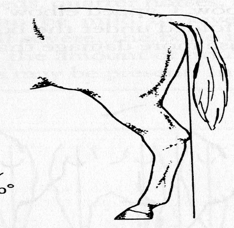
- 75—camped-out
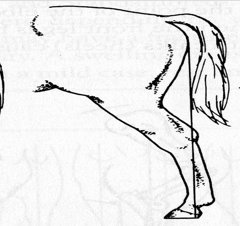
- 76—leg too straight
- 77—ideal position
vertical line from point of buttock should fall in center of hock, cannon, pastern, and foot.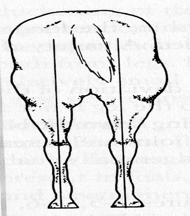
- 78—stands wide
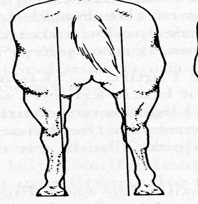
- 79—stands close
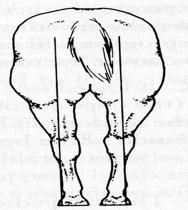
- 80—bow-legged
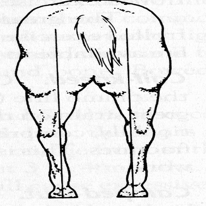
- 81—cow-hocked
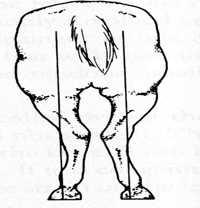
- 82where does the most force occur on the legmedial part of the leg
- 83—IDEAL