
Flashcards
Nutrition - CVD and Diet
Flashcards do conjunto (39)
- 1Modifiable risk factors for CVDDiet/dietary patterns
Alcohol intake
BMI and waist circumference
Lipids
Physical activity
Blood pressure
Metabolic syndrome
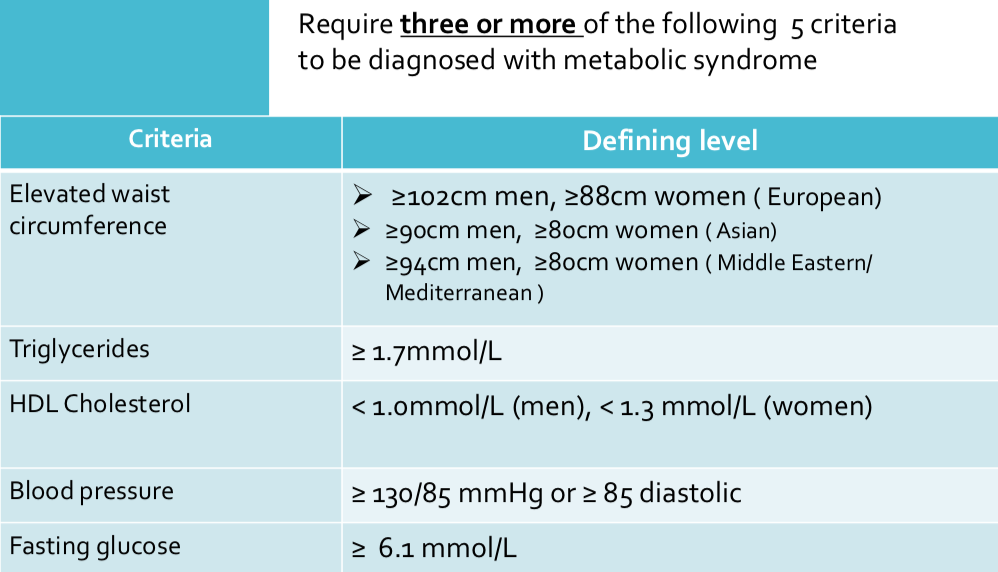
Cigarette Smoking - 2What is Metabolic Syndrome?Cluster of conditions defined by:
Excessive abdominal weight
Elevated triglycerides and reduced HDL cholesterol
Increased Blood Pressure
Elevated glucose - 3What's so bad about metabolic syndrome?Adipose tissue produces a range of substances that result in a low level chronic inflammatory response, inflammation=bad
White adipose produces leptin, TNF-a, IL-6
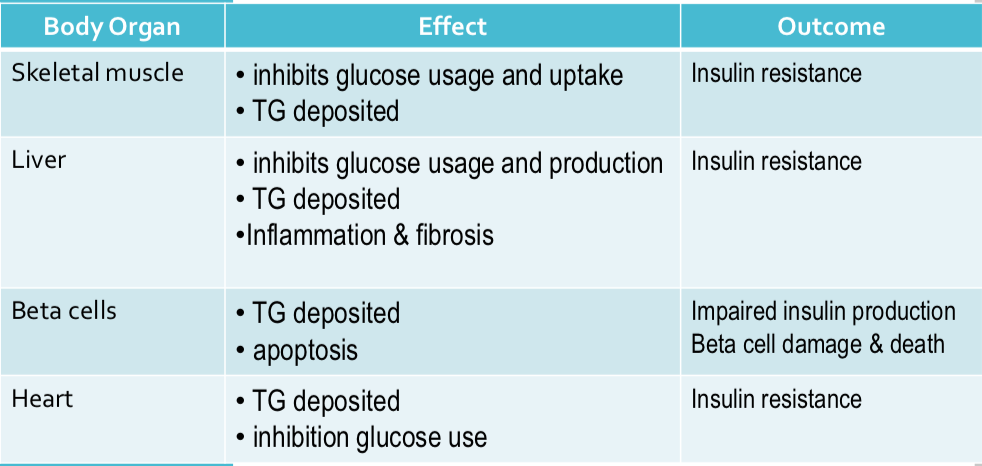
--> these are pro inflammatory, raised in obesity and believed to have a role in insulin resistance - 4What are the effects of free fatty acids in selected body organs?For all: TG deposited, leading to insulin resistance
- 5What is metabolic syndrome again, table this time, surely don't remember this right?
- 6What is the Framingham study?Ongoing longitudinal study in Framingham, Massachusetts. Kept checking in on people since 1948, currently monitoring the grandchildren of original cohort.
All about identifying risk factors, 7 major factors: age, sex, BP, TC, HDL, smoking, glucose intolerance, LV hypertrophy
Also found some life style factors - PA, stress, psychosocial factors - 7Ancel Keys - The "Seven Country Study" who dat?In the 1960's, a "classic study" investigating diet and CHD
Analysed death rates every 5 years of lots of people in 7 countries (Finland, Greece, Italy, Japan, Netherlands, US, Yugoslavia - 8What's the big deal with the Seven Country Study?Birth of the Mediterranean Diet hypothesis?
Lower incidence of heart disease in mediterranean countries (Japan also low)
Lowest incidence of colon and breast cancer
Among highest life expectancy rates
The cohort from Greece was Crete - hence it is the CRETE diet that the Med Diet is based on.
All this good study even after accounting for education etc and in spite of the fact they were low socioeconomic status and very high rates of smoking - 9So what's the main take home from the Seven Country Study?A relationship between a low saturated fat intake and incidence of CHD
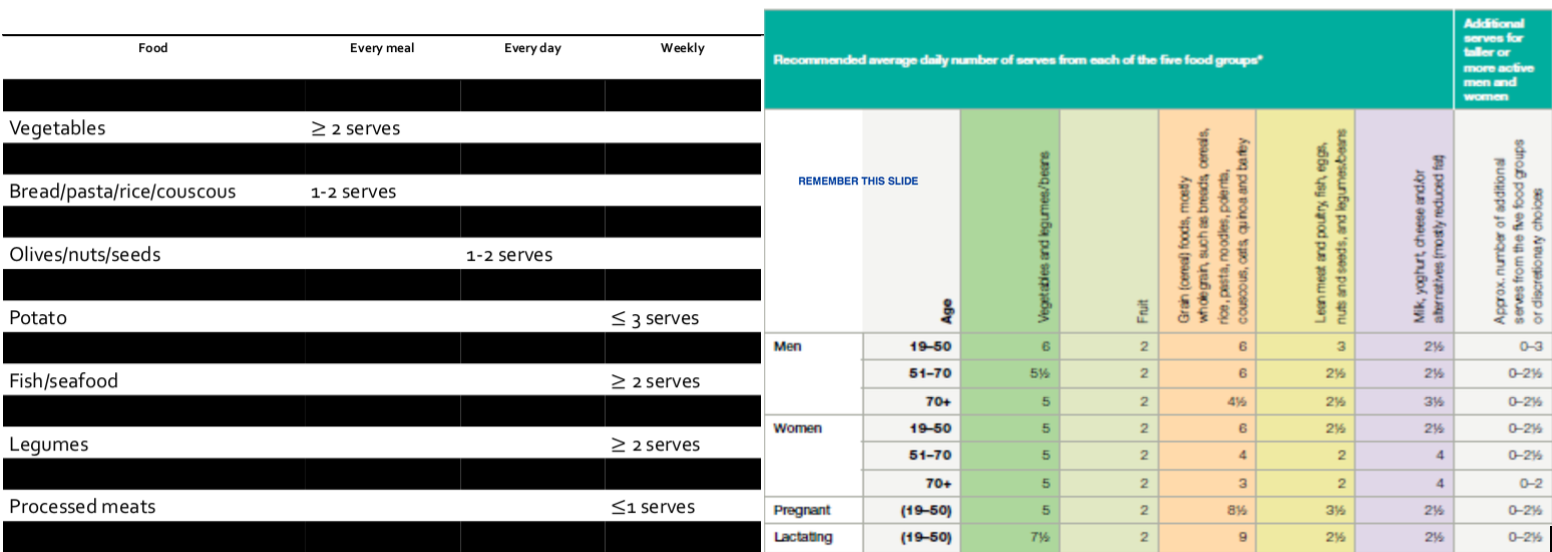
No relationship between total fat intake and rates of CHD - 10What is the Mediterranean Diet?- Rich in plant based foods
- High intake of fruit, vegetables, legumes, nuts and unrefined cereals
- High intake of olive oil (monounsaturated), low intake of saturated fats
- Moderately high intake of fish
- Low to moderate intake of dairy
- Low intake of meat & poultry
- Regular but moderate intake of alcohol - 11How is the Mediterranean diet different to the AGHE?
- 12What was the Lyon Diet Heart Study?A randomised SECONDARY prevention trial, testing whether a Mediterranean-type Diet (rich in alpha linolenic acid) would decrease the rate of recurrence after a first MI.
Spoiler alert: it works better than American Heart Association Diet - 13What did the Lyon Diet Heart Study participants eat?- More bread
- More vegetables and legumes
- More fish
- Less meat (replace with poultry)
- Fruit everyday
- No butter or cream (replace with olive oil or "special margarine", chemically similar to olive oil) - 14PREDIMED studyTested the effect of Mediterranean Diet in men and women at high risk of CVD (primary?)
Tested Med+olive oil, Med+nuts and control (low fat)
--> Reduction in CVD events for both test groups, decreased prevalence of metabolic syndrome (esp in nut group), diabetes and peripheral arterial disease. - 15So to sum that up... Framingham study? Seven Country Study? Lyon Diet Heart Study? PREDIMED Study?Framingham study - longitudinal study to determine risk factors for CVD
Seven Country Study - analysed diet and CHD, found that Mediterranean Diet was best (Crete)
Lyon Diet Heart Study - found that Med diet is effective in secondary prevention
PREDIMED Study - found that Med diet is effective in primary prevention - 16What is the DASH Diet?Dietary Approaches to Stop Hypertension
-tested control, high fruit and veg and combo, all diets had 3g sodium/day
- in people with BMI <35, not in BP meds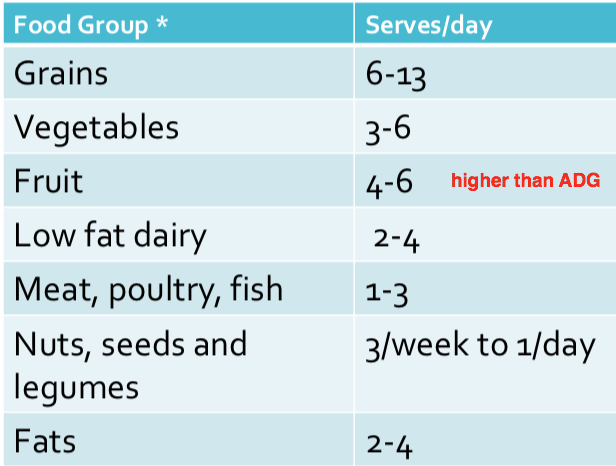
- 17Findings of DASHNot super clear from notes, I think a reduction in BP.
Recommendations from study = low fat, include lean meats, nuts, fruit and veg and non-fat dairy products - 18What dietary changes may reduce cholesterol? (This is the "Portfolio Dietary Pattern")Dietary cholesterol <200mg
Plant sterols
Nuts
Soy proteins
Soluble fibre - 19What diet is recommended in PRIMARY prevention of CVD?Grade A: DASH
Grade B: "Healthy or prudent diet" eg AGHE
Grade C: Mediterranean diet - 20What diet is recommended in PRIMARY prevention of hypertension?DASH diet
- 21What diet is recommended in PRIMARY prevention of hypercholesterolaemia?Mediterranean diet
- 22What diet is recommended in SECONDARY prevention of CVD?DASH diet to lower BP, also weight loss suggested in overweight/obese
Portfolio diet to improve lipid profile - 23What diet is recommended in SECONDARY prevention of Lipids?Portfolio diet pattern is recommended for those with hyperlipdaemia
- 24Dietary sources of Fatty Acids: n-6 fatty acids (Linoleic acid and Arachidonic acid) n-3 fatty acids (a-linolenic acid and EPA & DHA)
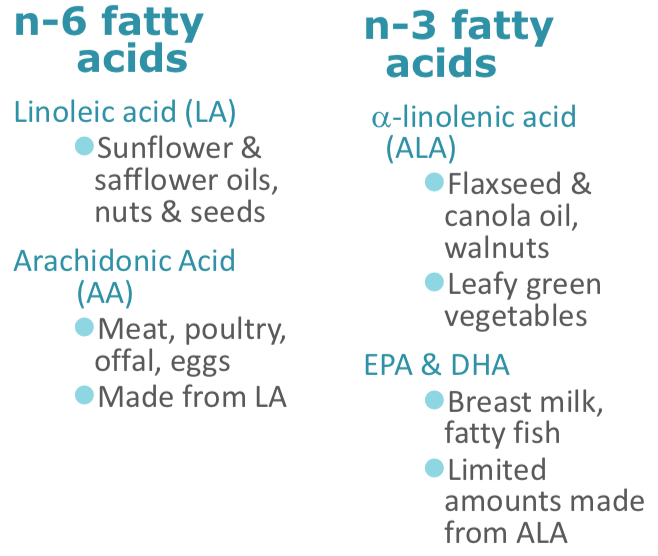
- 25Why do we need n-6 Linoleic acid (LA) and n-3 alpha-linolenic acid (ALA)?They are used for the synthesis of prostaglandins, leukotrienes and thromboxane.
n-6 Linoleic acid is pro-inflammatory and pro-thrombotic (don't want too much)
and
n-3 alpha-linolenic acid is anti-inflammatory and anti-thrombotic - 26Dietary sources of saturated fatsFull cream milk, cream, butter, cheese
Fatty cuts of meat
Coconut and palm oil
Think: Mostly animal fats - 27Dietary sources of monounsaturated fatsOlive oil, canola oil, peanut oil
Avocados
Nuts eg Almonds and cashews
Think: Plant fats - 28Dietary sources of trans fatsHydrogenated/partly hydrogenated vegetable fats
Deep fried foods
Baked goods eg biscuits, pastries
Think: Man-made fats - 29N-3 fats and CVD - what were the findings of the DART trial?Significant reduction in mortality in the 2 years after MI in people who consumed fish/fish oil
Omega 3s good - 30GISSI-Prevenzione TrialPatients with recent MI, tested n-3 +/- Vitamin E
Found: n-3 beneficial, Vitamin E was not
Effect seems to be anti-arrhythmic/antifibrillatory, finding supported by other studies - 31What's the upshot on Omega 3s then?Dietary fish protective for heart disease/stroke
More fish = less heart death
HOWEVER...
Omega 3 supplementation no effect for primary or secondary prevention of CHD
Supplements only indicated in hyperTG and HF (modest evidence) - 32Sodium: yay or nay?Decreased sodium intake improves blood pressure.
eg DASH study - dose related relationship between Na and BP
High sodium foods include processed meats eg ham, soy sauce, vegemite, cheese, crackers, "cup-a-soup" - 33What are Phytosterols?Occur in plant based foods and prevent absorption of cholesterol, decrease LDL in blood.
Also present in fortified margarines, require 2-3g/day for people at high risk (=25-30g of margarine) - 34Antioxidants What did van Horn et al, 2008 find?Investigated primary and secondary prevention,
NO significant effect, supplementation not recommended to reduce CVD risk - 35Dietary recommendations: FATSFor gen pop, as per AGHE (30% of total energy)
For high risk:
Reduce dietary fats, replace with phytosterol margarine
Saturated fats <7% of total energy
Trans fats <1% of total energy
!!! 1g EPA + DHA/day plus >2g alpha-linolenic acid/day - 36Dietary recommendations: SODIUMAll Australians - suggested dietary intake of sodium is 2000mg/day (ave estimate ppl currently consume 3600mg/day)
For high CVD risk - <1550mg/day (4g salt)
avoid highly processed foods, food labels should be 120mg/100g ideally - 37Dietary recommendations: FIBRENot a lot of evidence that fibre will reduce CVD risk but short studies.
recommend 25g/day for women, 30d/day for man
Good sources include: whole grain cereals, fruit, veg and legumes
Soluble fibre has modest cholesterol lowering effect, eg from rolled oats, legumes some fruit and veg
Food labels >3g/100g is good - 38Dietary recommendations: WEIGHT AND PHYSICAL ACTIVITYMaintain a healthy weight or reduce weight
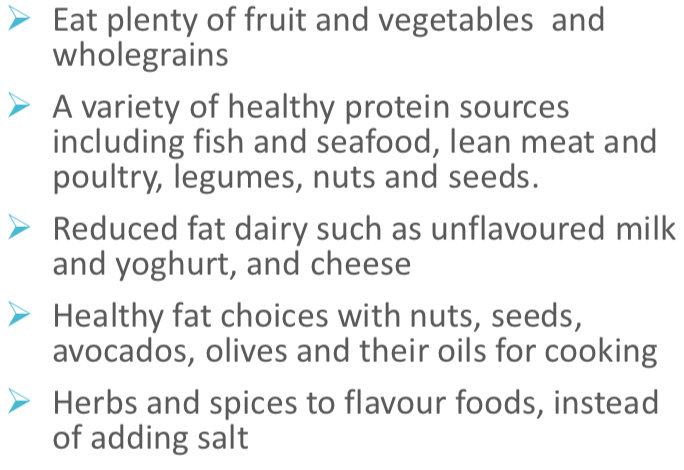
Be physically active - 39How do the Heart Foundation Recommendations compare?Sounds pretty similar?
Informações
- Descrição
- Pharmacy FlashCards sobre Nutrition - CVD and Diet, criado por Katherine Buckley em 05-11-2018.
- Criado por
- Katherine Buckley
- Visualizações
- 4
- Avaliação