
18483793


| Questão | Responda |
| Oscillations that obey SHM have these characteristics: | Acceleration (and resultant force) is proportional to the displacement of a body from the equilibrium position. The acceleration (and RF) always acts towards the equilibrium position (which is opposite to displacement direction). |
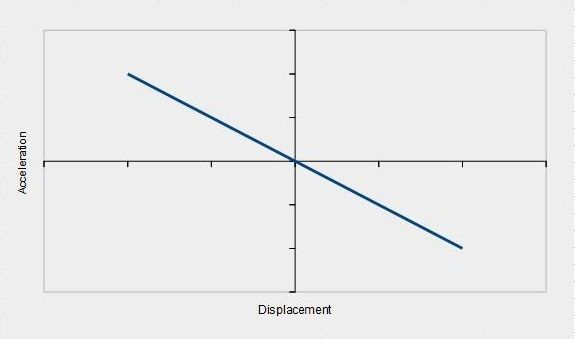
| Acceleration-Displacement graph for SHM: |
Image:
Y X Cropped (image/jpeg)
|
| What does this graph tell us? | a ∝ -x (x = displacement) |
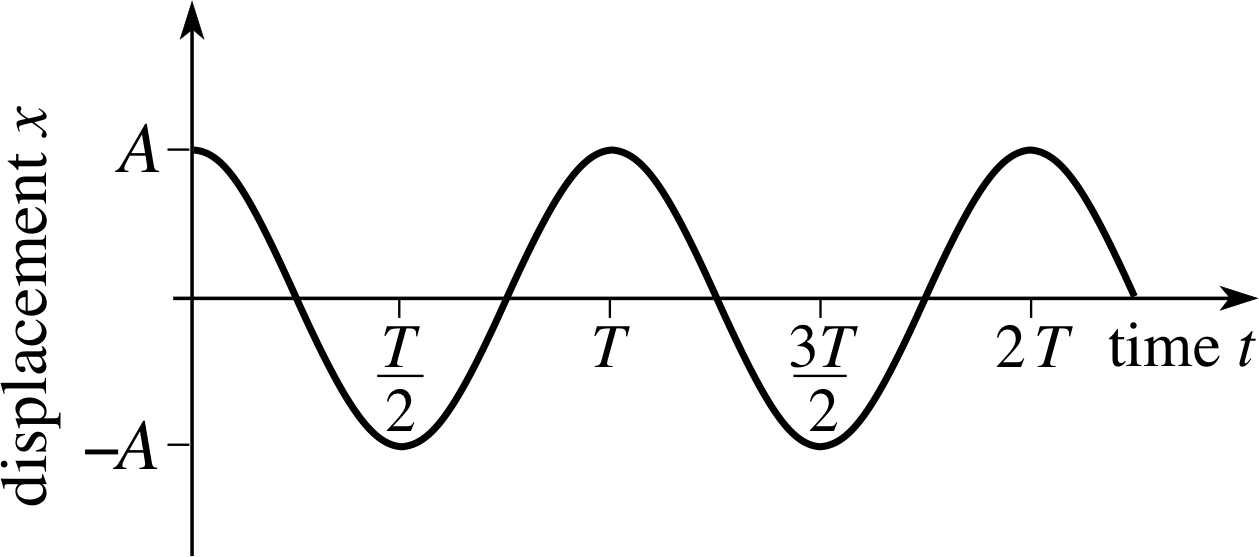
| SHM displacement-time graph: (cos t) |
Image:
Phys5 1f 2 (image/png)
|
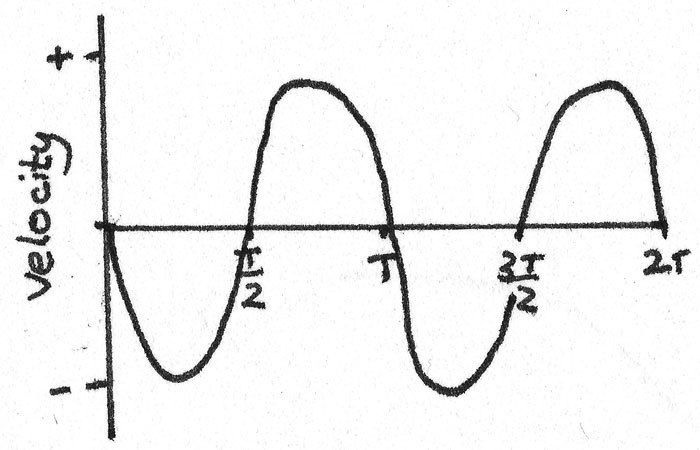
| SHM velocity-time graph: (-sin t) |
Image:
Velocity Time (image/jpeg)
|
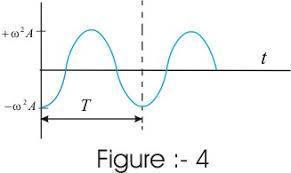
| SHM acceleration-time graph: (-cos t) | |
| How do we calculate angular speed? (aka angular frequency) | ω = 2πf OR ω = 2π/T |
| How do we calculate displacement of a body in SHM? | x = Acosωt (A = amplitude) |
| How do we calculate velocity of a body in SHM? | v = -ωAsinωt |
| How do we calculate acceleration of a body in SHM? | a = -ω^2 x (as a = -ω^2 Acosωt) |
| x = Acosωt , v = -ωAsinωt and -ω^2 Acosωt only work for which values of t? | -1 < t < 1 (as these are the ranges of sin and cos) |
| In SHM what is the maximum displacement equal to? | Amplitude (A) |
| How would we calculate the max velocity? | v(max) = ωA |
| How would we calculate the max acceleration? | a(max) = ω^2 A |
| What is the gradient of an acceleration-displacement graph? | -ω^2 |
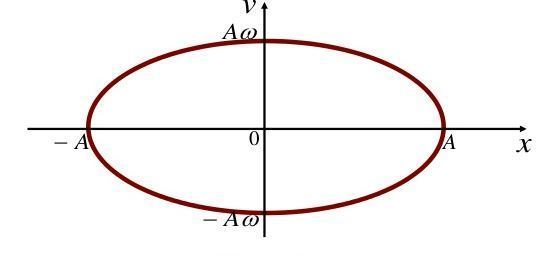
| SHM velocity-displacement graph: | |
| What is the relationship between velocity and displacement? | v = +/- ω(root(A^2 - x^2)) |
Quer criar seus próprios Flashcards gratuitos com GoConqr? Saiba mais.