
Flashcards
CONTRACT LAW
Flashcards do conjunto (77)
- 1Corpus Iuris Civilis comprised four parts:Codex
Digesta
Institutes
Novellae - 2What is Codex?A collection of Imperial Legislation
- 3What is Digesta?codification of works of prominent Roman jurists (legal scholars)
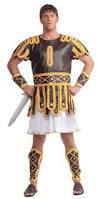
- 4What is Institutes?text book for law students
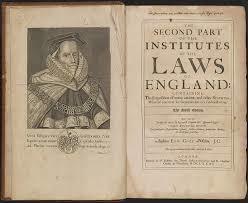
- 5What is Novellae?New legislation passed by Justinian after the formation of the codex

- 6The Roman law, when applied together with the law of the Netherlands, formed theRoman-Dutch Law.
- 7Roman-Dutch law, influenced by principles of English law, is referred to as theCommon Law.
- 8South African Law consists of.....The Constitution, legislation, the common law, and indigenous customary law
- 9Nature of lawrules community must adhere to – they regulate society. “A body of rules governing human conduct that is recognised as binding by the State and which the State will, if necessary, enforce.”
- 10Major purposes of lawensure order and justice in society.
- 11Law can becoercive or regulatory
Non-compliance attracts sanction by the State.
Law is different from mere behavioural or religious rules. SA is a secular democratic State.
No sanction (punishment) from the State for violation of religious or moral standards. - 12Legal subjectLegal subject can be a natural person or a juristic person.
- 134 types of rightsReal rights
Personal rights
Intellectual Property rights
Personality rights - 14Fundamental rights(Human Rights) Chapter 2 (Bill of Rights). Binds Legislature, executive & judiciary (sec. 8(1)); also binds natural or juristic persons in certain circumstances (section 8(2)). Rights include privacy, speech & access to information; education, housing, health, etc.
- 15An entrenched customary practice treated as law in a particular community.Requirements
Reasonable
Long existence
Accepted & Complied with by the community (society) to which it applies
Clear & Certain - 16Legislative authoritiesParliament (Section 44),
Provincial Legislatures (Section 104),
Municipal Councils (Section 156)
, other subordinate legislative bodies - 17Areas of exclusive provincial competence:e.g. ambulance services; provincial sport, veterinary services, billboards & display of advertisements in public places.
Legislation that falls outside the competence of the provincial legislature is can be challenged in the High Court and invalidated. - 18Types of courtsHigher Courts
Constitutional Court – Has jurisdiction in constitutional matters or decisions related to constitutional matters. Highest Court on constitutional matters
Supreme Court of Appeal- Appellate jurisdiction only. Highest Court on all matters except constitutional matters.
High Courts – (See list of names & Geographical locations in Text Book – para. 1.34)- Jurisdiction – both civil & criminal; original as well as appellate.
Lower Courts
Civil jurisdiction
– District Magistrate Court: R100,000
– Regional Magistrate Court: R300,000. Parties may consent otherwise
No jurisdiction regarding status of a person except specifically provided otherwise by statute.
District Magistrate courts: criminal Jurisdiction excludes murder, high treason & rape
Can impose a fine of up to R60,000
Can impose a prison term of up to 3 yrs.
Regional Magistrate courts: criminal jurisdiction- only high treason excluded. Can impose fine of up to R300,000.
Small Claims Court
Claims up to R12,000. No Criminal jurisdiction. Presided by “Commissioner”. - 19Doctrine of Precedent (Stare decisis)Judicial precedent means the process whereby judges follow principles from previously decided cases where the facts are similar.
Decisions of superior courts – absolutely binding
Decisions of same court/court with equal jurisdiction – qualifiedly binding – may be departed from if wrong. - 20A legal obligation is a legal tie (or legal relationship) between two people. One party has a duty to give performanceAnother party has a corresponding right to receive performance.
- 21The party who has a duty to deliver performance is called aa debtor.
- 22The party who has a right to receive performance is calleda creditor.
- 23Some legal obligations are recognized and enforced by lawThese are called civil obligations.
- 24Others are recognized but not enforced by the law.These are called natural obligations. A good example is a Wager.
- 25Legal obligations can arise out ofdelict, contracts , or otherwise imposed by law.
- 26delict?a violation of the law;
- 27A Delict creates an obligation on the wrongdoer towards the victim, in terms of which the wrongdoer has the duty topay compensation to the victim, and the victim has the right to receive compensation from the wrongdoer.
A legal obligation arising out of delict does not depend on consent or agreement of the parties. It is automatically imposed by law. - 28The following elements must be present for a delict to give rise to a legal obligation:An act (or omission)
Unlawfulness (of the conduct)
Fault (intent or negligence)
Causation
Damage. - 29A contract is an agreement made with...the serious intention of creating legal relations that creates rights and duties between the parties and is enforceable by law.
- 30Requirements for a contract.Consensus
Intention to create legal relations
Capacity
Legality
Physical possibility
Formalities (where applicable) - 31Transfer of rightsCession:
Cession is where one party (the cedent) transfers his/her personal rights to another (the cessionary).
There must be a contract of cession between the cedent (grantor) and the cessionary - 32can only give what you have?Nemo plus iuris
- 33Transfer of Duties ?Delegation
Delegation refers to the transfer of the debtor’s duties to another person
Creditor’s consent required.
Tripartite agreement. - 34Transfer of Rights and DutiesAssignment
Assignment happens where cession and delegation occur simultaneously (at the same time). - 35ConsensusMeans that the parties have a corresponding will or intention in the creation of legal obligations.
- 363 Categories of ConsensusTrue consensus
Assumed consensus
Consensus by operation of law - 37Consensus & Formation of Contractsoffer from one party, and acceptance by another.
- 38Where a contract is voidit means it was invalid right from the beginning. This means that there was a defect in the process of forming the contract that was so severe that the contract never came into existence.
- 39Contract is voidableif the innocent party has the option to choose whether to treat is as valid and continue, or to treat it as at an end (terminated). The process of forming the contract has a defect (flaw) but not so severe.
- 40More than one party canmake an offer or accept an offer.
- 41Simple joint liability or entitlementParties equally liable or entitled
Performance must be divisible.
Applies by operation of law unless parties agree otherwise. - 42Joint & Several Liability and entitlementPerformance has to be divisible
- 43Common liability or entitlementPerformance not divisible
Joint and several liability not prescribed by law or the parties
Parties jointly liable in common (together) for delivery of full performance.
Creditors equally entitled in common (no divided portions) - 44Vicarious liabilityIf the CPA is applicable, an employer/principal is
jointly and severally liable for anything done by
his/her employee in the course of employment,
excluding criminal liability. - 45Terms that make up a contractEssentialia
Incidentalia
Conditions
Terms
Assumptions
Guarantee
Modal Clauses - 46EssentialiaParties enter into a specific contract
Eg: sale, lease
Reach consensus regarding minimum characteristics of the specific contract.
Eg: Sale Contract
Nature of the contract, to buy or sell
Thing to be sold
Price - 47IncidentaliaAgreed between parties for their own purposes and to fulfil their own need
- 48ConditionsStipulations or provisions of the contract
2 types:
Suspensive Condition
Resolutive Condition - 49TermsEnforcement of continued existence of the contract is made subject to the occurrence of a specified certain future event.
2 types:
Suspensive Term
Resolutive Term - 50AssumptionsBoth parties assume that a certain fact exists and forms part of the contract
- 51GuaranteeContractual undertaking as regards to he absence or presence of a legal fact
No fault is required - 52Modal ClausesContractual stipulation in terms of which one party places a duty upon the other to deliver a specific performance.
- 53Essentiiallia of contract of InsuranceThe insurer will compensate the insured for his loss.
The insured will pay a premium.
The insurers obligation is dependant on the occurrence of a uncertain event - 54Parties to insurance contractAt least two parties are required for a valid insurance contract.
Insurer and the insured.
There can be more than one insurer and insured.
Insurer - 55InsurerUsually a company or an institution that offers insurance for the acquisition of gain.
Mutual insurance, where insurance is offered without profit for the insurer, is also found in practice. - 56InsuredAny person, natural or juristic person may, in principal, take out insurance.
The insured is the person who may claim from the insurer, and is the first holder on the policy.
Where the contract is concluded for the benefit of a third party it is called a “beneficiary - 57Subrogration?Where damaged is caused by a third party, the insured has a choice to either claim from his insurer, or from the third party on the grounds of delict.
The insured may not claim more than his actual damage.
The insured cannot claim the full amount of damages from both parties. - 58Requirements for SubrogrationThere must be a valid insurance contract
The insurer must have indemnified the insured
The insured’s loss must have been fully compensated
The right must be susceptible to subrogation - 59Duty to DiscloseGood faith is general not a requirement for the conclusion of a valid insurance contract.
Because of he prospective insured’s intimate knowledge of all facts regarding the risk that he wants to transfer to the insurer, a legal duty requires him to disclose all relevant material information within his actual knowledge, to the insurer.
This enables the insurer to decide whether he is prepared to accept the transfer of risk from the insured and to reach consensus with the insured - 60Amount recoverable= insured amount / x damage
actual value - 61Indemnity Insurance The amount of damages claimed is directly proportional to the patrimonial loss/damage suffered, or the amount of the insurance or the amount of the insurance where it is less than the loss suffered.The amount of damages claimed is directly proportional to the patrimonial loss/damage suffered, or the amount of the insurance or the amount of the insurance where it is less than the loss suffered.
- 62Non-Indemnity (capital) InsuranceThe loss suffered and the amount paid by the insurer are not necessarily proportionate.
The nature of the interest insured is non-patrimonial, for example, the unlimited interest a person has in his own life, health of body and mind, or the emotional interest of the life of a spouse or child. - 635 Short Term PoliciesMotor Policy
Transportation Policy
Accident & Health Policy
Property Policy
Liability Policy - 645 Long Term PoliciesLonger than a year:
Assistance
Disability
Fund
Health
Life - 65Bill of ExchangeUnconditional order in writing
Addressed one person to another
signed by person giving it
pay on demand or determinable future
some of money to specific person /order/ bearer - 66ChequeBill drawn on a bank and payable on demand
- 67Promissory noteUnconditional promise from one person to another, signed by maker, engaging to pay on demand or at fixed or determinable future to specific person or to his order or bearer
- 68DrawerGives instruction (gives written order)
- 69DraweePerson who order is addressed.
With a cheque it is always the bank" - 70PayeeIf not for bearer, the payee must be named or indicated
- 715 requirements for validity of bill/cheque (same as definition)An order or promise
Unconditional
in writing
addressed on person to another
must be signed - 72Delict ElementsAct / Ommision
Unlawful
Fault
Causation
Damage - 73Requirements of contractConsensus
Capacity
Legality
Physical Possibility
Formalities - 74Illegal contractsContracts contrary to
Statuatory
Common Law
Good morals
Public interest
Gambling
Wager - 753 types of misrepresentationsFraudalent (false statement, knowingly)
Negligent(false statement, no due care)
Innocent - 764 Forms of breach of contractMora Debotoris
Mora Creditoris
Positive Malperformance
Repudiation
Performance rendered Impossible - 77—
Informações
- Descrição
- SOUTH AFRICAN CONTRACT LAW
- Criado por
- remy.richman
- Visualizações
- 192
- Tags
- Avaliação