
Flashcards
History of Design Final
Flashcards do conjunto (30)
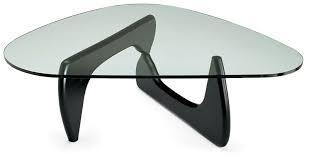
- 1—1947 - Coffee Table
Isamo Noguchi - Japan/USA
It was manufactured by Herman Miller and is suggestive of Automatic Surrealism. Noguchi is famous for abstract sculptural designs. - 2—1960-1967 - Stacking Chair
Verner Panton - Denmark
It was single injection-molded and manufactured by Herman Miller. Light/easy to move. One of Denmark's most influential industrial designers; known for innovative and futuristic designs with plastic.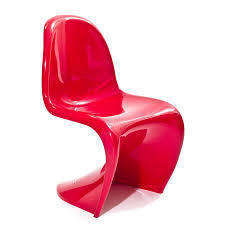
- 3—1956 - SK4 Radio-Phonograph
Max Braun, Dieter Rams & Hans Gugelot - Germany
Nicknamed "Snow White's Coffin," parts are arranged by a rectangular grid system. Rames and Gugelot were consultant designers for Braun while serving as faculty at Ulm. They created a unified product identity for Braun.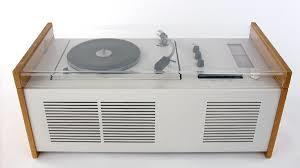
- 4—1969 - AT&T Trademark
Saul Bass - USA
Logo is easily recognized and very bold. Bass is known for creating consistent and recognizable corporate identity systems.
- 5—1962 - Tandem Sling Multiple Seating
Ray & Charles Eames - USA
Easily assembled in flexible units from a small number of parts. Nylon seats/aluminum. Herman Miller. The Eameses were prominent designers known for their groundbreaking contributions to architecture, furniture design, industrial design and manufacturing, and photography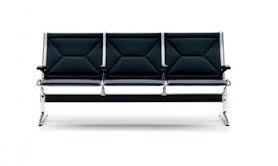
- 6—1984 - Macintosh Computer
Apple Corporation - 1984
Offered a portable and integrated box that combined monitor and hardware. First computer with a GUI. Apple Corporation was founded by Steve Jobs, Steve Wozniak, and Ronald Wayne: consumer electronics.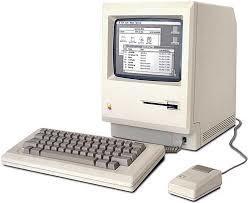
- 7—1965 - Stacking Chair
Joe Colombo - Italy
Unified design where legs , seat and back are parallel or perpendicular to each other as well as to walls/floor. Colombo is known for his futuristic designs and multifunctional living spaces.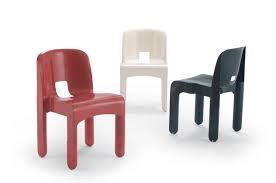
- 8—1946 - Vespa Motor Scooter
Corradino D'Ascanio - Italy
Efficient, practical, inexpensive mode of personal transportation with streamlined housing, enclosure of mechanical parts and cutaway profile of seat. Aeronautical engineer.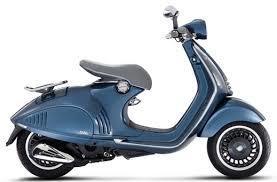
- 9—1969 - Valentine Typewriter
Ettore Sottssas Jr. & Perry King - Italy/England
Sleek, manual portable typewriter: bright red color/name -> personality. "An anti-machine" machine. Designed for Olivetti (both were consultants).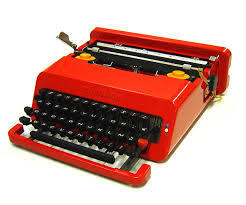
- 10—1958 - Artichoke Hanging Lamp
Poul Henningsen - Denmark
Combines simple curved geometric forms in concentric and inverted arrangements to evenly diffuse light. Henningsen's designs expanded the vocabulary of elementary geometric components of interwar modernism into more intricate and sculptural designs.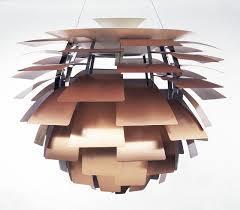
- 11—1984 - Poster for Swatch
Paula Scher - USA/Switzerland
Appropriates elements from a Herbert Matter Swiss tourism poster from 1934; photomontage/juxtapositions.
Graphic designer and Pentagram partner.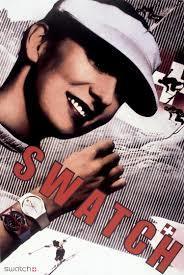
- 12—1952-58 - Optima Typeface
Hermann Zapf - Germany
Between serif/san-serif. Smooth and controlled transition from thick to thin.
Showed respect for traditional typography by inventing new influential serif-faces: self-taught calligrapher and art director influenced by Rudolf Koch.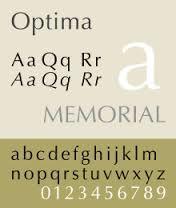
- 13—1969 - Poster for Olivetti Valentine Typewriter
Milton Glaser - USA/Italy
Refers to "His Master's Voice" trademark for RCA Victor.
Intuitive graphic designer; tested the limits of traditional illustration through different techniques and media and reductive/subjective approaches.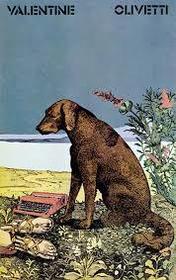
- 14—1978 - Proust Armchair
Alessandro Mendini - Italy
References Victorian comfort/craftsmanship but upholstery refers to pointillism. Important in developing design: postmodern designs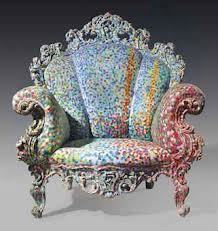
- 15—1967 - Concert Poster
Wes Wilson - USA
Calligraphic/elastic typography derived from Art Nouveau. Blurred distinction between text, illustration and decoration.
Wilson is known for designing psychedelic posters.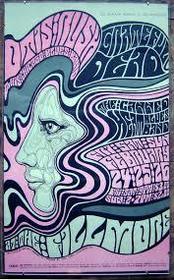
- 16—1956 - Ad for Knoll Tulip Chair
Herbert Matter - USA/Switzerland
Minimal copy and ample white space = the new advertising.
Matter was a graphic designer and photographer whose work shaped 20th century art.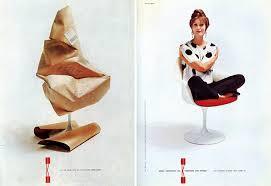
- 17—1953 - Ad for Olivetti Lettera 22
Giovanni Pintori - Italy
Colorful; assymetrical layout that jextaposes a photograph with a flat abstract design. Pintori's abstract designs created a dynamic aesthetic that the company also used for its showrooms.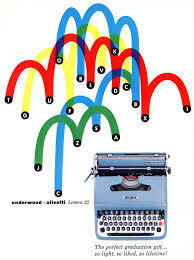
- 18—1981 - Tartar Table
Ettore Sottsass Jr. - Italy
Laminated surfaces and juxtaposition of patterns. Sottsass was a consultant for Olivetti known for experimenting with materials.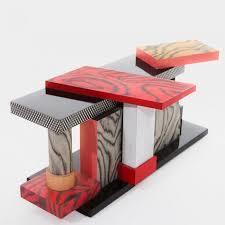
- 19—1980 - Contents Logo
Neville Brody - Britain
Original lettering and trademarks that parodied the uniformity and consistency of corporate graphics. Brody was controversial; used music posters to evoke emotional responses in viewers.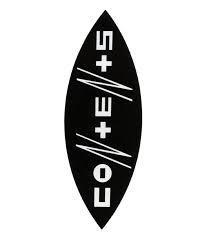
- 20—1998 - Dual Cyclone DC 24 Vacuum
James Dyson - Britain
Uses product semantics (clear plastic to show effectiveness, mudguards and fins). Industrial designer who invented the first bagless vacuum cleaner using cyclonic separation.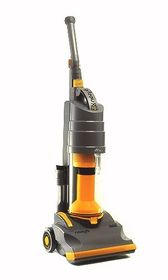
- 21Abstract Expressionisma post–World War II art movement in American painting, developed in New York in the 1940s. Jackson Pollock, etc. : action-painting, gestural, Mark Rothko etc.: color-field painting, reflection and mood.
- 22Alvar AaltoFinnish architect and designer.
Known for the Finnish Pavilion for the NY World's Fair, Savoy Vase and Paimio chair designed for sanitarium. Furniture design: Scandinavian Modern. - 23Scandinavian DesignMiddle ground between standardization/efficiency and psychological dimensions of modern living. Compromise between individuality/craft traditions and mechanized industrial manufacturing methods/materials.
- 24Wabi & Sabifinding beauty in imperfection and profundity in nature, of accepting the natural cycle of growth, decay, and death. Wabi refers to a philosophical construct, a sense of space, direction, or path, while sabi is an aesthetic construct rooted in a given object and its features, plus the occupation of time, chronology, and objectivity.
- 25Isamo NoguchiJapanese-American designer who united Japanese art with modern design: Automatic surrealism, abstract sculptural designs
- 26The Eames'sThe Eameses were prominent designers known for their groundbreaking contributions to architecture, furniture design, industrial design and manufacturing, and photography. Produced a lot of designs that were manufactured through Herman Miller. Experimented with new materials (fiberglass etc.)
- 27Eva Zeisela Hungarian-born American industrial designer known for her work with ceramics, primarily from the period after she migrated to the United States. Her forms are often abstractions of the natural world and human relationships.
- 28Herman MillerA major American manufacturer of office furniture, equipment and home furnishings. It is notable as one of the first companies to produce modern furniture and is likely the most prolific and influential producer of furniture of the modernist style. Among classic Herman Miller products are the Equa chair, Aeron chair, Noguchi table, Marshmallow sofa, and the Eames Lounge Chair.
- 29PostmodernismComplexity and Contradiction
- 30—