
Flashcards
A&P Lab Final
Flashcards do conjunto (238)
- 1The ___ glands in the axilla become active at the time of pubertyapocrine sweat
- 2The ___ glands in the axilla become active at the time of pubertyapocrine sweat
- 3The layer of the skin that contains the blood vessels and nerves that are closest to the surface of the skin is the ____ layerpapillary
- 4The layer of the skin that contains the blood vessels and nerves that are closest to the surface of the skin is the ____ layerpapillary
- 5All of the following are true of the subcutaneous layer, EXCEPT it -is attached to the dermis by a basement membrane -is well supplied with nerves that pass into the skin -contains large amounts of adipose tissue -contains many blood vessels -permits independent movement of deeper structuresis attached to the dermis by a basement membrane
- 6All of the following are true of the subcutaneous layer, EXCEPT it -is attached to the dermis by a basement membrane -is well supplied with nerves that pass into the skin -contains large amounts of adipose tissue -contains many blood vessels -permits independent movement of deeper structuresis attached to the dermis by a basement membrane
- 7the type of cells that form the strata in the epidermis arekeratinocytes
- 8the type of cells that form the strata in the epidermis arekeratinocytes
- 9the layer of diving cells at the base of the epidermis is thestratum germinativum
- 10the layer of diving cells at the base of the epidermis is thestratum germinativum
- 11Each of the following is a function of the integumentary system, except -protection of underlying tissue -maintenance of body temperature -provision of sensation -excretion of salts and wastes -synthesis of vitamin Csynthesis of vitamin C
- 12Each of the following is a function of the integumentary system, except -protection of underlying tissue -maintenance of body temperature -provision of sensation -excretion of salts and wastes -synthesis of vitamin Csynthesis of vitamin C
- 13The layer of the skin that contains bundles of collagen and elastic fibers responsible for the strength of the skin is the ___ layerreticular
- 14The layer of the skin that contains bundles of collagen and elastic fibers responsible for the strength of the skin is the ___ layerreticular
- 15When the arrector pili muscles contract"goose bumps" are formed
- 16When the arrector pili muscles contract"goose bumps" are formed
- 17Accessory structure of the skin include all of the following, exceptepidermis
- 18Accessory structure of the skin include all of the following, exceptepidermis
- 19The two components of the integumentary system are thecutaneous membrane and accessory structures
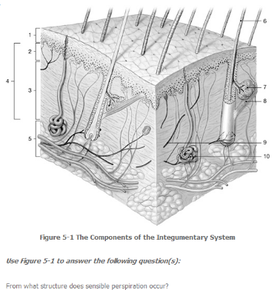
- 20The two components of the integumentary system are thecutaneous membrane and accessory structures
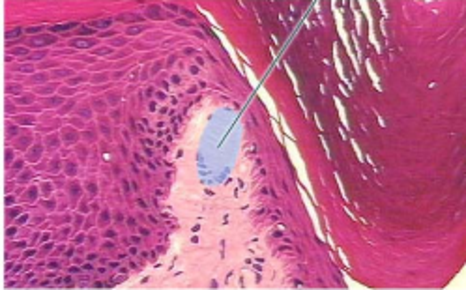
- 21—Meissner's corpuscle
- 22—10
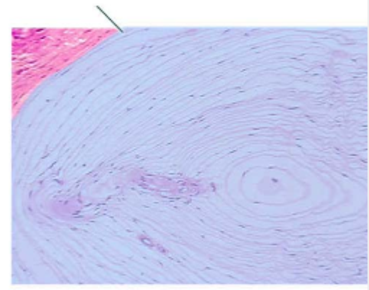
- 23—Pacinian corpuscle
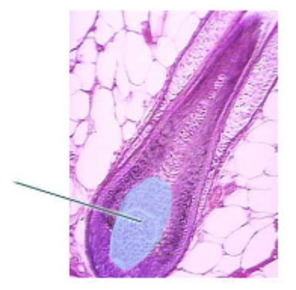
- 24—hair papilla
- 25—dermis
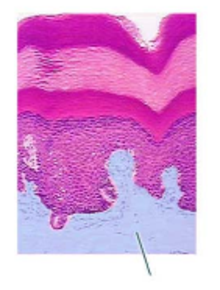
- 26—sebaceous gland
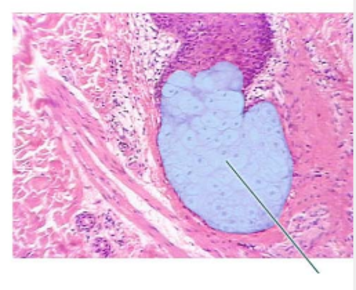
- 27—1
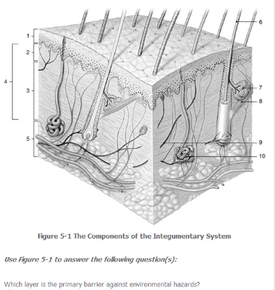
- 28—3
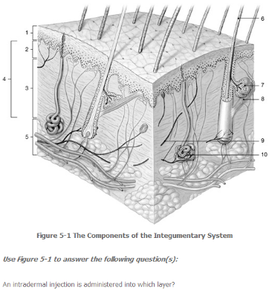
- 29—3
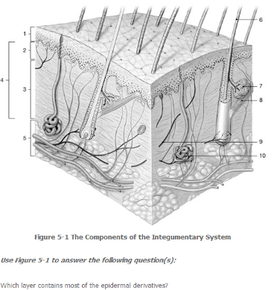
- 30—areolar connective tissue
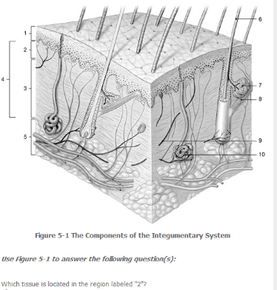
- 31—perforating canal
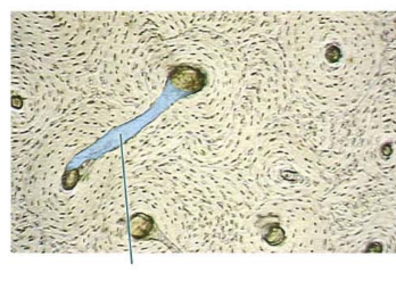
- 32The central canal of an osteon containsblood vessels
- 33The articular cartilage of a typical long bone is composed of what type of cartilagehyaline cartilage
- 34Cartilage is separated from surrounding tissues by a fibrousperichondrium
- 35Chondrocytes are to cartilage as osteocytes are tobone
- 36The trabeculae of spongy boneare organized along stress lines
- 37The type of cartilage that is found in the external ear iselastic
- 38—lacunae
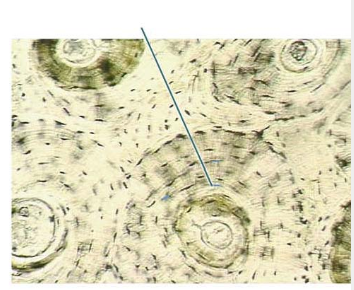
- 39In compact bone, the osteons -are lacking in the diaphysis -are separated by medullary spaces -are lined up perpendicular to long axis -are lined up in the same direction -are arranged in an irregular patternare lined up in the same direction
- 40Which of the following is a characteristic of bone? -the matrix of the bone contains chondroctin sulate -the matrix of the bone is very dense and contains deposits of calcium salts -the matrix of the bone is very light and contains deposits of hyaluronic acid-the matrix of the bone is very dense and contains deposits of calcium salts
- 41—lacunae
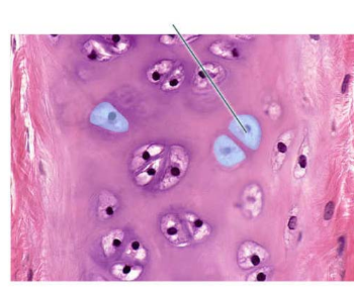
- 42Which of the following labels best matches osteocyte -stem cell -secretes organic matrix -mature bone cell -dissolves matrix-mature bone cell
- 43The most common type of cartilage is ____ cartilagehyaline
- 44The narrow passageways that contain cytoplasmic extensions of osteocytes are calledcanaliculi
- 45—fibrocartilage
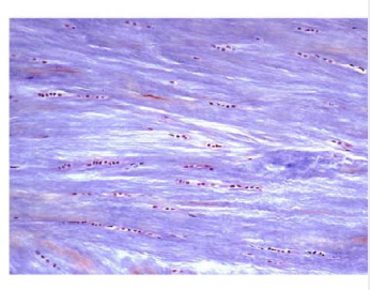
- 46—osteon
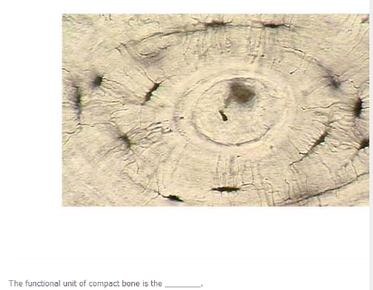
- 47—concentric lamellae
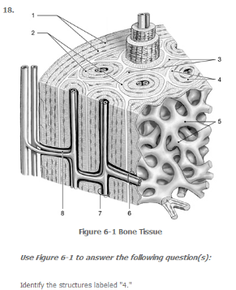
- 48—5
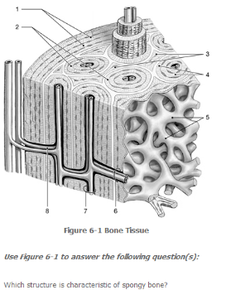
- 49The space occupied by an osteocyte is called alacuna
- 50The rib cage is part of the axial or appendicular skeleton?axial skeleton
- 51The region of a long bone between the end and the shaft is known as themetaphysis
- 52Which of the following is not a bone of the axial skeleton? -sternum -rib -skull -vertebrae -clavicleclavicle
- 53Which of the following is a function of the skeletal system? -blood cell production -calcium homeostasis -body support -protection of internal organs -all of the choices are correct-all of the choices are correct
- 54The lining of the medullary cavity is called theendosteum
- 55Which of the following is not part of the appendicular skeleton? -radius -hyoid -humerus -ulna -carpalhyoid
- 56A deep hollow on a bone is called afossa
- 57The pectoral girdle is part of the axial or appendicular skeleton?appendicular skeleton
- 58A shallow depression in a bone is called afossa
- 59The medullary cavity of bones containsmarrow
- 60Fat is stored within themedullary cavity
- 61The smooth, rounded articular process of a bone is called acondyle
- 62A sharp slender process is aspine
- 63The shaft of a long bone is called thediaphysis
- 64A hole through a bone is called aforamen
- 65Which of these is not considered one of the bones of the face? -maxilla -mandible -zygomatic -vomer -frontalfrontal
- 66Which of these is a forearm bone? -tibia -fibula -humerus -femur -radiusradius
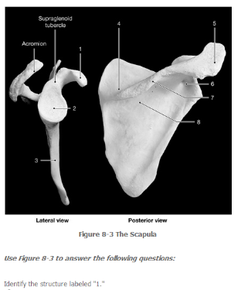
- 67—coracoid process
- 68The suture that forms the articulation of the parietal bones with the frontal bone is the ___ suturecoronal
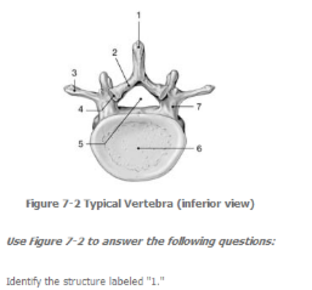
- 69—spinous process
- 70Which of the following is not part of the axial skeleton? -pectoral girdle -skull -auditory ossicles -hyoid bone -vertebral columnpectoral girdle
- 71The largest component coxal bone is theilium
- 72The tarsus contains _(#)_ bones7
- 73The longest and heaviest bone in the body is thefemur
- 74The paranasal sinuses are located in all of the following bones except the -maxillae -frontal -ethmoid -zygomatic -sphenoidzygomatic
- 75The ribs articulate with the -thoracic vertebrae -cervical vertebrae -lumbar vertebrae -spinous process -all of the choices are correctthoracic vertebrae
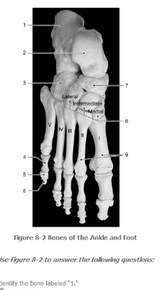
- 76—calcaneus
- 77The odontoid process is found on theaxis
- 78—2
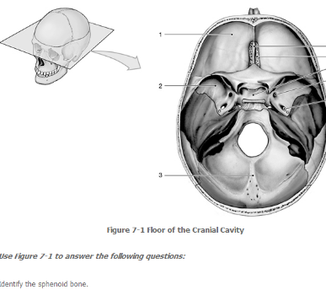
- 79—7
- 80The hypophyseal fossa of the sella turcica contains the ___ glandpituitary
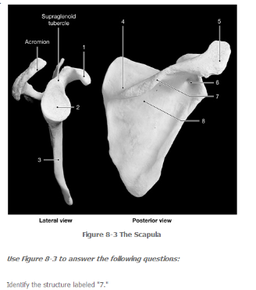
- 81—spine
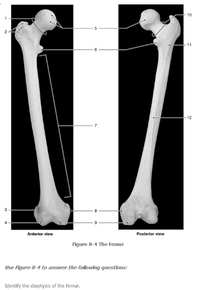
- 82—greater tronchanter
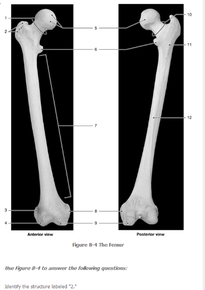
- 83the bones that form the fingers are thephalanges
- 84humans normally have ___ pairs of ribs12
- 85—tibia
- 86Which foot movement enables the ballerina to stand on her toesplantar flexion
- 87The movements known as dorsiflexion and plantar flexion involve moving thefoot
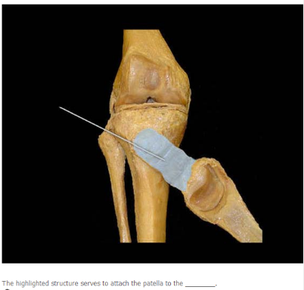
- 88The ligament that provides support to the front of the knee joint is thepatellar
- 89The back of the knee joint is reinforced by ___ ligamentspopliteal
- 90—anterior
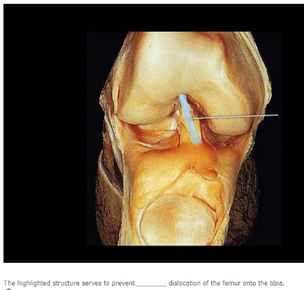
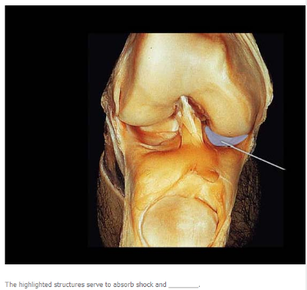
- 91In the knee joint the medial and lateral menisci -are carilages that bind the knee to the tibia -both A and D -act as cushions and conform to the shape of the articulating surfaces -take the place of bursae -are found between the patella and femuract as cushions and conform to the shape of the articulating surfaces
- 92A twisting motion of the foot that turns the sole outward iseversion
- 93An extension past the anatomical position is calledhyperextension
- 94The medial surface of the knee joint is reinforced by the ___ ligamenttibial collateral
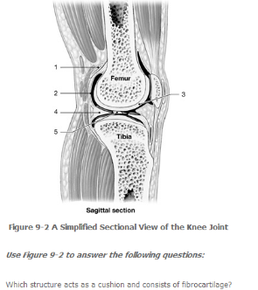
- 95—improve the fit between articulating bones
- 96—4
- 97a movement away from the midline isabduction
- 98Which of the following is a good example of supination -spreading fingers -turning palm up -moving hand toward shoulder -extreme bending head backward -opening mouthturning palm upward
- 99Which of the following is a good example of depression? -spreading fingers -moving hand toward shoulder -extreme bending head backward -turning palm up -opening the mouth-opening the mouth
- 100—calcium ions
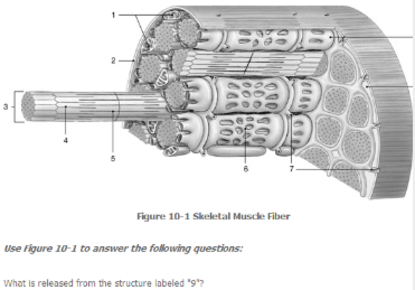
- 101Which of the following is not characteristic of smooth muscle -thin filaments are attached to dense bodies -do not contain sarcomeres -forms tendons and aponeuroses -uninucleate -neurons that innervate are under involuntary controlforms tendons and aponeuroses
- 102interactions between actin and myosin of sarcomere are responsible formuscle contraction
- 103Compared to "typical" body cells, skeletal muscle cells are -filled with crystaline 3D arrays of fibrous proteins -multinucleate -larger than normal -capable of rapid shortening against load -all correctall correct
- 104The types of muscle tissue include all of the following except -cardiac -skeletal -smooth -striated -none-striated
- 105The plasma membrane of skeletal muscle is called thesarcolemma
- 106—cardiac
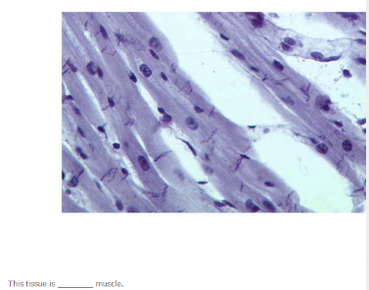
- 107The dense layer of connective tissue that surrounds an entire skeletal muscle is theepimysium
- 108Which of the following best describes the term Z line? -repeating unit of striated myofibrils -largely made of myosin -storage site for calcium -protein that accounts for elacsticity of resting muscle -thin filaments are anchored here-thin filaments are anchored here
- 109Which of the following is a recognized function of skeletal muscle -maintain body temp -maintain posture -produce movement -guard body entrances and exits -all of the aboveall of the above
- 110The area in the center of the A band that contains no thin filaments is theH band
- 111At the end of the muscle, the collagen fibers of the epimysium, and each perimysium and endomysium, come together to form atendon
- 112a single motor neuron together with all the muscle fibers it innervates is calleda motor unit
- 113The region of the sarcomere containing the thick filaments is theA band
- 114Muscle tissue, one of the four basic tissue groups, consists chiefly of cells that are highly specialized forcontraction
- 115The skeletal muscle complex known as the triad consists ofa transverse tubule and two terminal cisternae
- 116—smooth muscle fiber
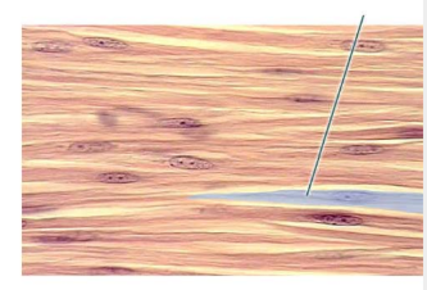
- 117The thin filaments of striated muscle are made of which protein(s)? -troponin -nebulin -tropomyosin -actin -all of the aboveall of the above
- 118Each skeletal muscle fiber is controlled by a motor neuron at a singleneuromuscular junction
- 119—1
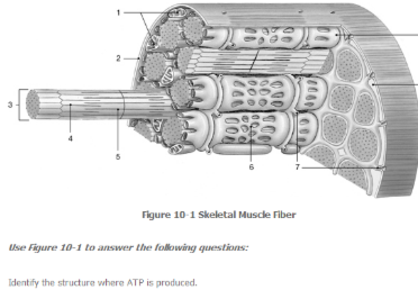
- 120The "kissing muscle" that purses the lips is theorbicularis oris
- 121What is the main muscle of respirationdiaphragm
- 122Which of the following muscles compresses the abdomen -external oblique -rectus abdominis -diaphragm -all of the aboveall of the above
- 123The ____ convers the anterior surface of the neckplatysma
- 124Which of the following muscles does not elevate the mandible? -temporalis -masseter -medial pteregoid -platismaplatisma
- 125—rectus abdominis
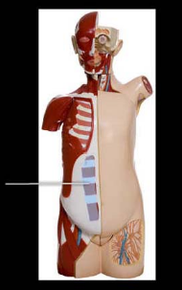
- 126A muscle that inserts on the body of the mandible is probably involved inchewing
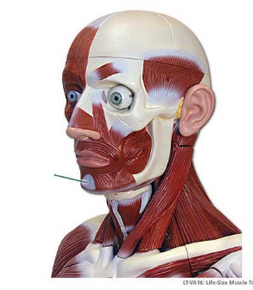
- 127—mentalis
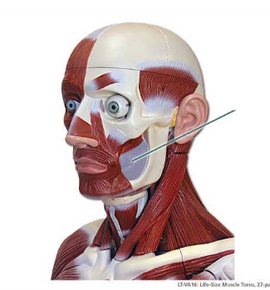
- 128—buccinator
- 129Which muscle compresses the prostate gland in males?external urethral sphincter
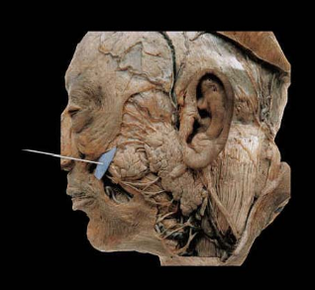
- 130—zygomaticus major
- 131The ___ muscle is the strongest jaw musclepterygoid
- 132—orbicularis oris
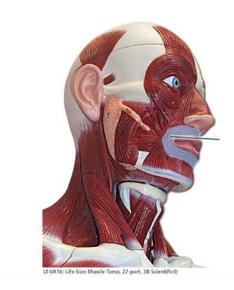
- 133Which muscle is not involved in mastication? -mentalis -temporalis -maseter -lateral pteregoid -medial pteregoidmentalis
- 134A muscle that flexes the spinal column is the -spinalis -rectus abdominis -sacrospinalis -iliocostalis -longissimusrectus abdominis
- 135Which of the following si not primarily a muscle of facial expression? -orbicularis oris -mentalis -risorius -buccinator -massetermasseter
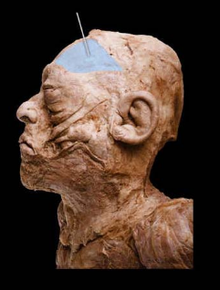
- 136—frontalis
- 137Which of the following muscles is found within the pelvic floor? -ischiocavernosus -erineal group -coccygeus -bulbospongiosus -all of the aboveall of the above
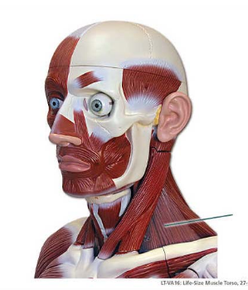
- 138—scalenes
- 139The muscle that extends the arm while doing push-ups is thetriceps
- 140—rectus femoris
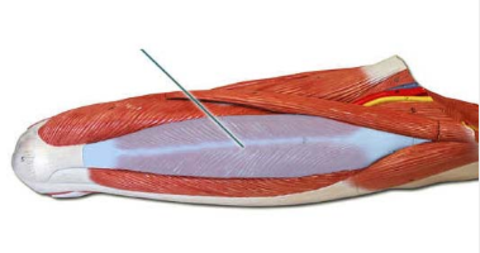
- 141—latissimus dorsi
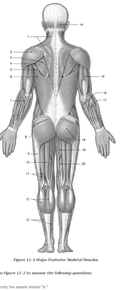
- 142Which of the following does not move the shoulder girdle? -pectoralis major -deltoid -rhomboid -serratus anterior -trapezius-deltoid
- 143—gastrocnemius
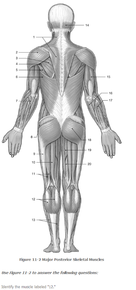
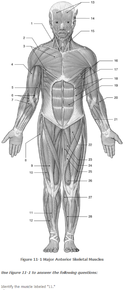
- 144Which of the following is a member of the hamstring group? -semitendinosus -semimembranosus -biceps femoris -all of the aboveall of the above
- 145The powerful abductor muscle of the upper arm is thedeltoid
- 146—tibialis anterior
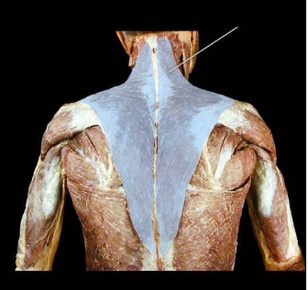
- 147—trapezius
- 148Muscles that laterally rotate the thigh include all of the following except the -gluteus maximus -tensor fasciae latae -obturator externus -piriformis -obturator internus-tensor fascia latae
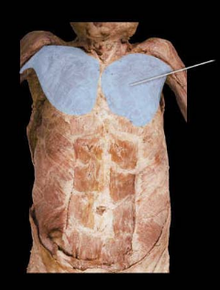
- 149—pectoralis major
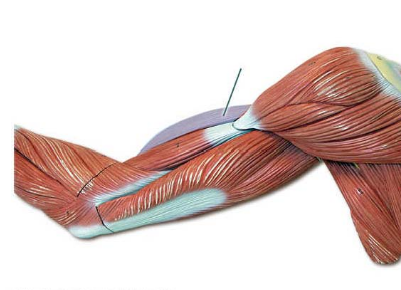
- 150—biceps brachii
- 151The muscle that pronates the forearm and opposes biceps brachii is thepronator quadratus
- 152The muscle that adducts and rotates the scapula laterally is therhomboid
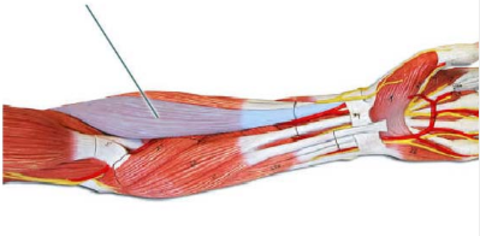
- 153—brachioradialis
- 154Which of the following describes the action of the serratus anterior? -medial rotation of humerus -adducts the arm -protracts the shoulder, abducts and medially roates the scapula -adducts and flexes the humerus -lateral rotation of the humerusprotracts the shoulder, abducts and medially roates the scapula
- 155Muscles that insert on the olecranon process of the ulna can act toextend the forearm
- 156—anterior superior iliac spine
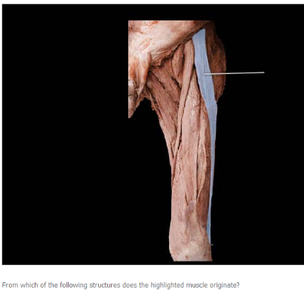
- 157—sartorius
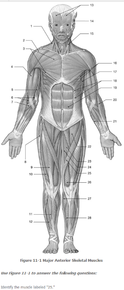
- 158A muscle that adducts the humerus is the -deltoid -trapezius -bracialis -latissimus dorsilatissimus dorsi
- 159—soma
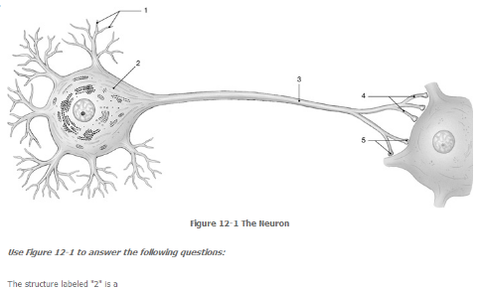
- 160Functions of astrocytes include all of the following except -maintaining the blood-brain barrrier -conducting action potentials -forming a 3D framework for the CNS -responding to neural tissue damage -guiding neuron developmentconducting action potentials
- 161Which of the following is not a recognized structural classification for neurons? -bipolar -anaxonic -pseudopolar -unipolar -multipolarpseudopolar
- 162___ neurons are small and have no anatomical features that distinguish dendrites from axonsanaxonic
- 163___ neurons form the afferent division of the PNSsensory
- 164—synaptic terminals
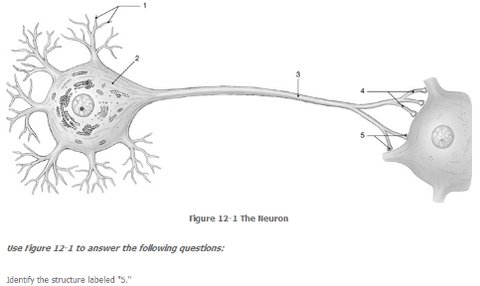
- 165—axon
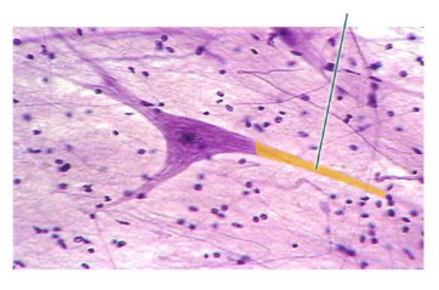
- 166Which of the following is not a function of the neuroglia? -phagocytosis -secretion of CSF -support -maintenance of the blood-brain barrier -memorymemory
- 167clusters of RER and free ribosomes in neurons are calledNissl bodies
- 168Branches that may occur along an axon are calledcollaterals
- 169Neurons that have one axon and one dendrite, with the soma in between, are calledbipolar
- 170The axon is connected to the soma at theaxon hillock
- 171Damage to the ependymal cells would most likely affect the -repair of axons -formation of CSF -transport of neurotransmitters within axons -formation of myelin sheaths -formation of gangliaformation of CSF
- 172—3 and 4
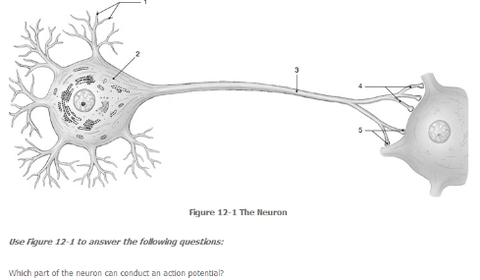
- 173The myelin sheath that covers many CNS axons is formed byoligodendrocytes
- 174Axons terminate in a series of fine extensions known astelodendria
- 175The cytoplasm that surrounds the nucleus of a neuron is called theperikaryon
- 176Neurons that have several dendrites and a single axon are calledmultipolar
- 177Glial cells that surround the neurons in ganglia aresatellite cells
- 178Which of the following are a type of glial cell found in the PNS? -oligodendrocytes -microglia -satellite cells -ependymal cells -astrocytessatellite cells
- 179—central canal
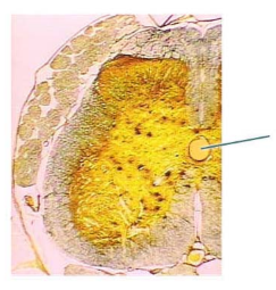
- 180—ventral roots
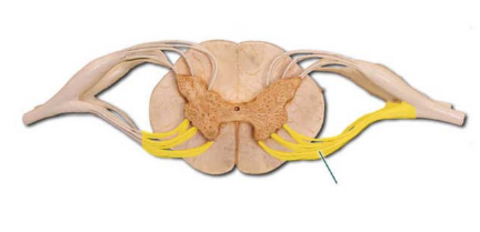
- 181Enlargements of the spinal cord occurin those spinal segments that control the limbs
- 182The ___ nerve, which arises in the cervical plexus, innervates the diaphragmphrenic
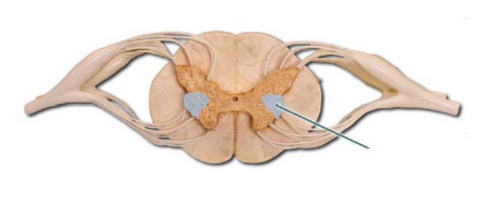
- 183The outward projections from the central gray matter of the spinal cord are calledhorns
- 184—brachial
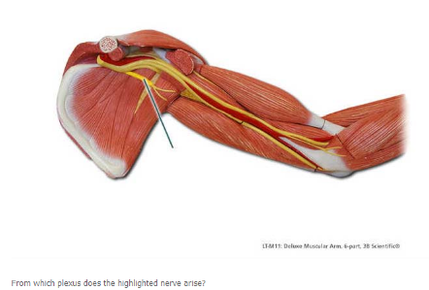
- 185—lateral horns
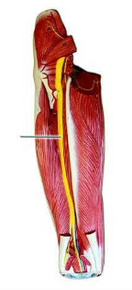
- 186—sciatic
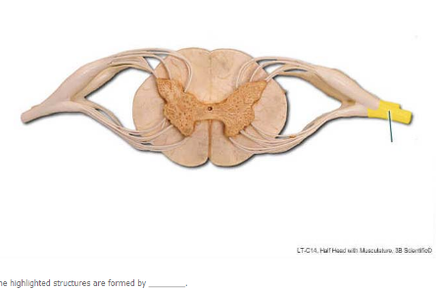
- 187—ventral roots and dorsal roots
- 188The white matter of the spinal cord containsbundles of axons with common origins, destinations, and functions
- 189The dorsal root ganglia mainly containcell bodies of sensory neurons
- 190In which plexus does the ulnar nerve arisebrachial
- 191—dorsal horns
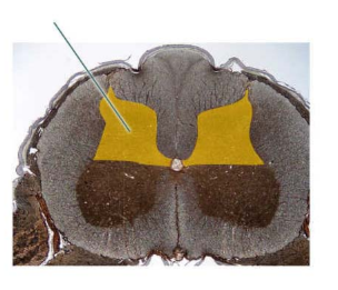
- 192The spinal cord consists of 5 regions and _(#)_ segments31
- 193The ___ is a strand of fibrous tissue that provides longitudinal support as a component of the coccygeal ligamentfilum terminale
- 194The outermost connective-tissue covering of nerves is theepineurium
- 195Spinal nerves are -purely sensory -purely motor -interneuronal -involuntary -both sensory and motorboth sensory and motor
- 196—muscles of the posterior arm and forearm
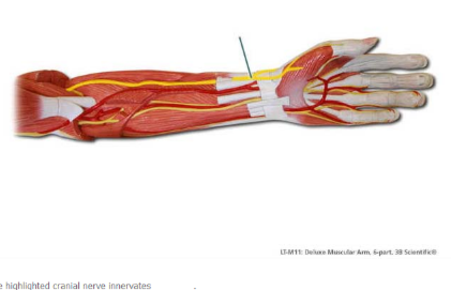
- 197The specialized membranes that surround the spinal cord are called thespinal meninges
- 198In the spinal cord, white matter is separated into ascending and descending tracts organized ascolumns
- 199—frontal lobe
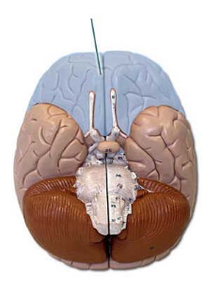
- 200The cranial nerves that innervate the eye muscles areIII, IV, VI
- 201Which of the following is a function of the hypothalamus -controls autonomic centers -secretes oxytocin -regulates body temperature -produces ADH -all of the aboveall of the above
- 202Autonomic centers that control blood pressure, heart rate, and digestion are located in themedulla oblongata
- 203—central sulcus
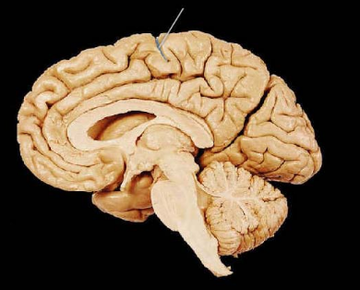
- 204The dural fold that projects into the longitudinal fissure between cerebral hemispheres is called thefalx cerebri
- 205—eye movement
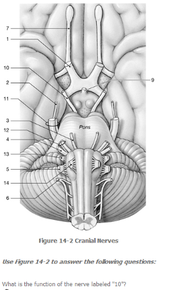
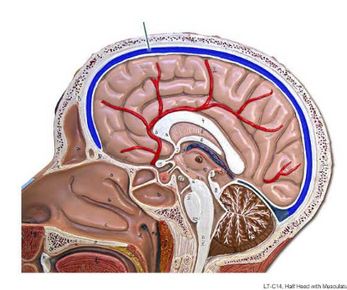
- 206—superior sagittal sinus
- 207The cranial nerve that has three major branches is thetrigeminal
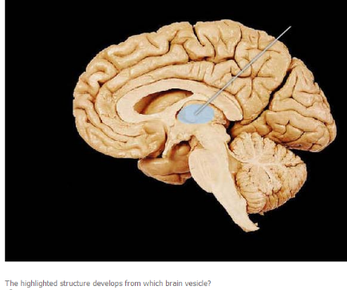
- 208—diencephalon
- 209The visual cortex is located in theoccipital lobe
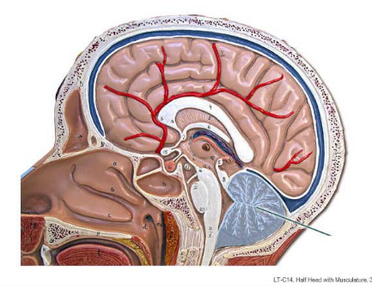
- 210—cerebellum
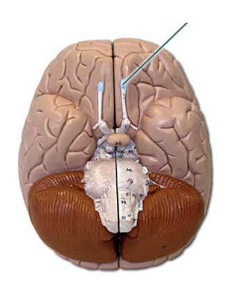
- 211—olfactory bulb
- 212—arachnoid granulation
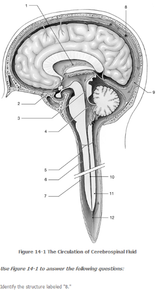
- 213—cerebral aqueduct
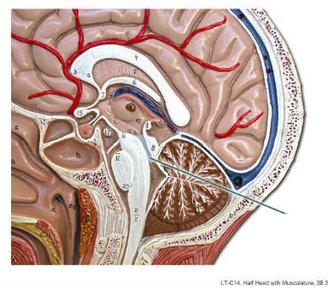
- 214A neural cortex is found on the surface of thecerebral hemispheres and cerebellum
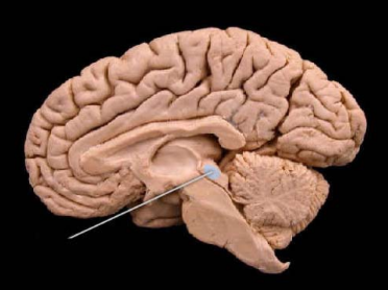
- 215—superior colliculus
- 216The two cerebral hemispheres are separated by thelongitudinal fissure
- 217The tentorium cerebelli separates which two brain regions?cerebellum and cerebrum
- 218—mammilary bodies
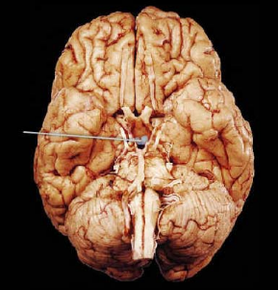
- 219—11
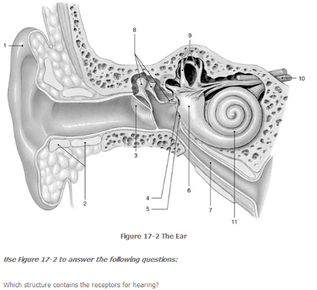
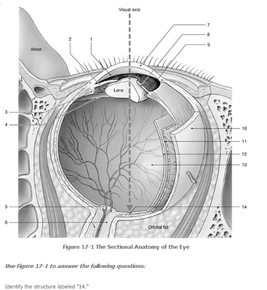
- 220—fovea
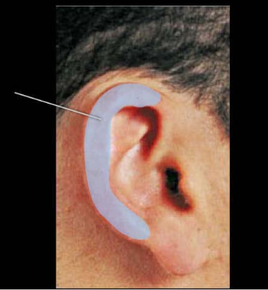
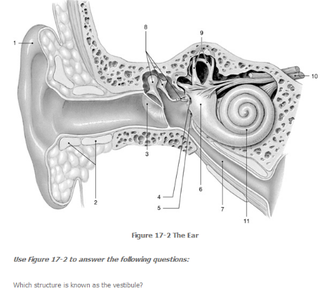
- 221—pinna or auricle
- 222The ___ covers most of the exposed surface of the eyeconjunctiva
- 223—semicircular canals
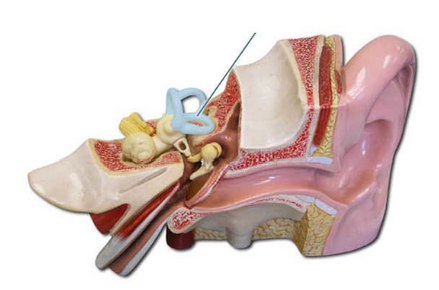
- 224—anterior cavity
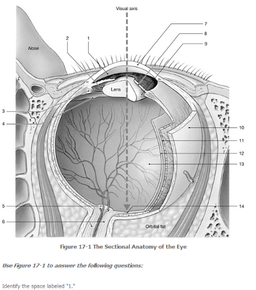
- 225The part of the eye that determines eye color is theiris
- 226—vibratory waves
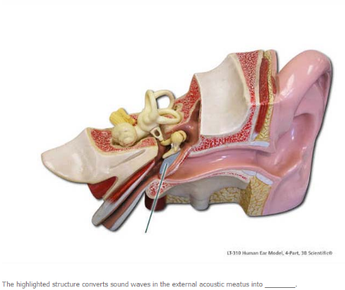
- 227All of the following are true of the fibrous tunic of the eye, except that it -consists of the sclera, limbus, and cornea -contributes substantial focusing power -produces aqueous humor -is where extrinsic eye muscles insert -provides mechanical support and some protection for the eyeproduces aqueous humor
- 228The middle ear communicates with the nasopharynx through theauditory tube
- 229The structure that overlies the organ of Corti is thetectorial membrane
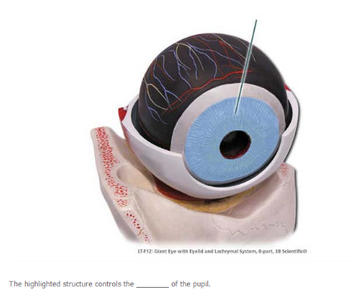
- 230—diameter
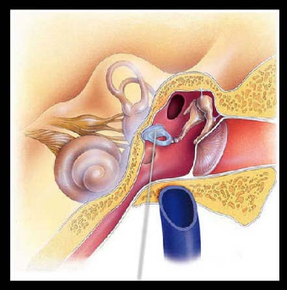
- 231—stapes
- 232—6
- 233The vitreous bodyhelps to stabilize the eye and give physical support to the retina
- 234—superior oblique
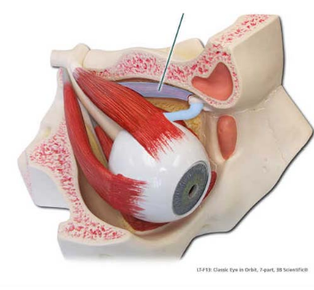
- 235What structure changes the shape of the lens for far and near vision?ciliary body
- 236—cornea
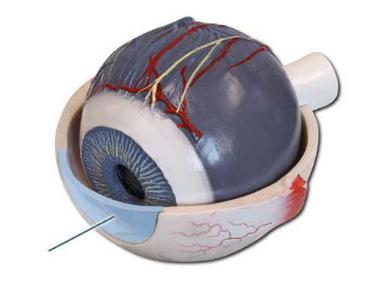
- 237Which of the following is true of the vascular tunic of the eye? -secretes and reabsorbs the aqueous humor -regulates the amount of light entering eye -controls shape of lens -provides a route for blood vessels and lymphatics that supply tissues of the eye -all of the aboveall of the above
- 238The senses of equilibrium and hearing are provided by receptors of theinner ear
Informações
- Descrição
- FlashCards sobre A&P Lab Final, criado por anna.d.mcgrew em 28-04-2014.
- Criado por
- anna.d.mcgrew
- Visualizações
- 8.091
- Avaliação