
Fluxograma
Immune Response
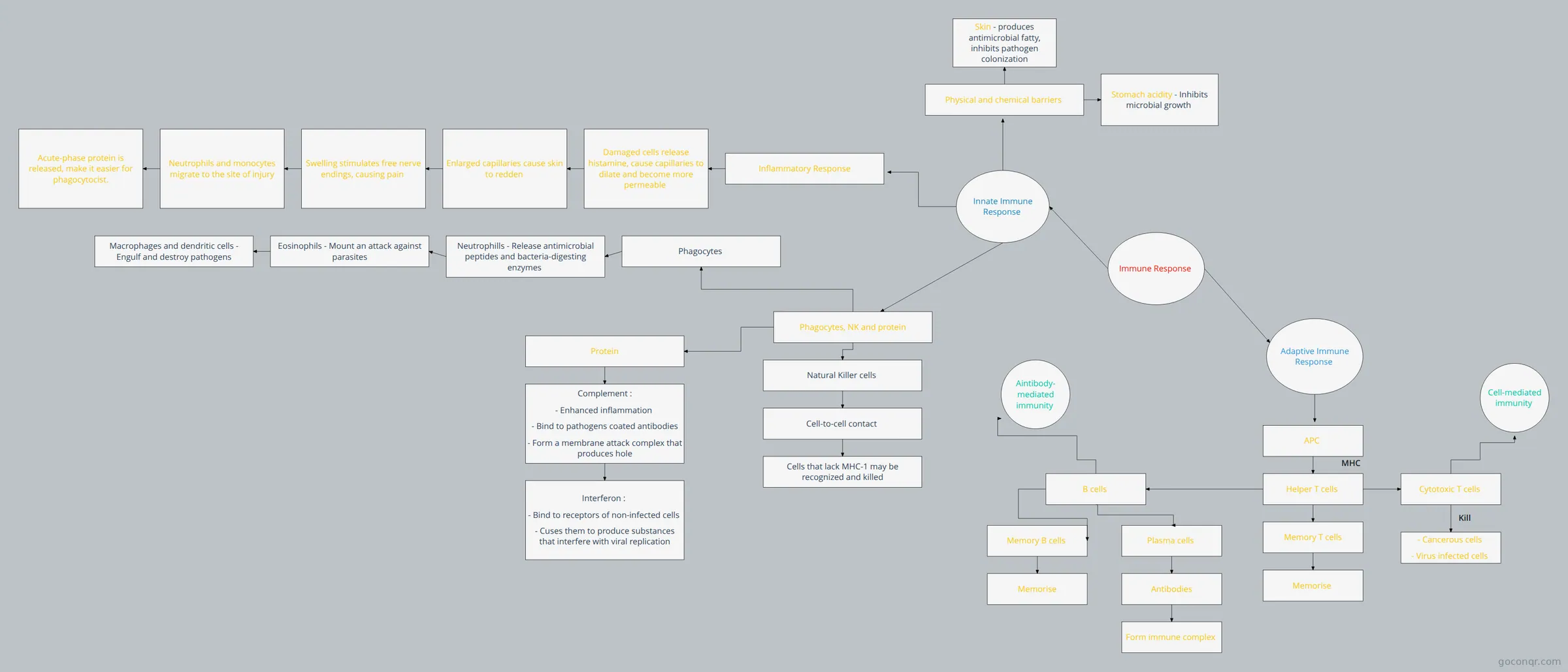
Flowchart: immune response
Conteúdo do fluxograma
Immune Response
Adaptive Immune Response
APC
Helper T cells
Memory T cells
Cytotoxic T cells
- Cancerous cells
- Virus infected cells
Cell-mediated immunity
Kill
Memorise
MHC
B cells
Plasma cells
Memory B cells
Antibodies
Form immune complex
Memorise
Aintibody- mediated immunity
Innate Immune Response
Physical and chemical barriers
Skin - produces antimicrobial fatty, inhibits pathogen colonization
Stomach acidity - Inhibits microbial growth
Inflammatory Response
Damaged cells release histamine, cause capillaries to dilate and become more permeable
Enlarged capillaries cause skin to redden
Swelling stimulates free nerve endings, causing pain
Neutrophils and monocytes migrate to the site of injury
Acute-phase protein is released, make it easier for phagocytocist.
Phagocytes, NK and protein
Natural Killer cells
Cell-to-cell contact
Cells that lack MHC-1 may be recognized and killed
Phagocytes
Neutrophills - Release antimicrobial peptides and bacteria-digesting enzymes
Eosinophils - Mount an attack against parasites
Macrophages and dendritic cells - Engulf and destroy pathogens
Protein
Complement :
- Enhanced inflammation
- Bind to pathogens coated antibodies
- Form a membrane attack complex that produces hole
Interferon :
- Bind to receptors of non-infected cells
- Cuses them to produce substances that interfere with viral replication
Informações
- Descrição
- Innate Immune and Adaptive Immune Response
- Criado por
- Nur Athirah Syazwani
- Visualizações
- 44
- Avaliação