
Mapa mental
Coming of the Europeans - Reasons for Founding of SG
Conteúdo do mapa
Coming of the Europeans - Reasons for Founding of SG
factors leading to European "discovery" of "new lands"
- GOLD (economic)
- necessity for oriental goods, esp. spices - main source was Moluccas Islands
- GOD (religion)
- religious zeal inspired kings like Philip II to send navigators to spread Christian fiath
- GLORY (prestige)
- increase trade and build profitable empires - glory and prestige
- GOLD (economic)
reasons for founding of SG
- ECONOMIC/COMMERCIAL REASONS
- China trade
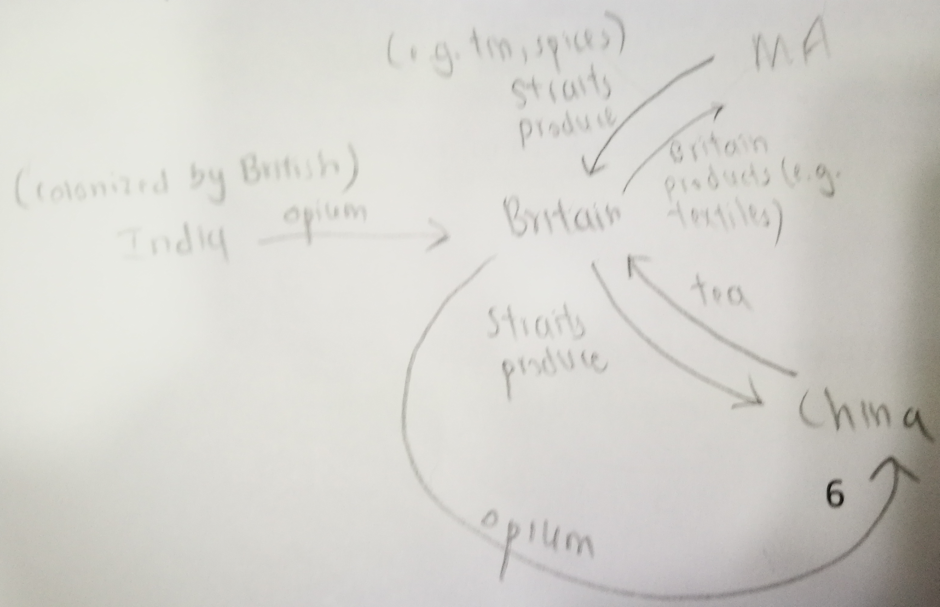
- when British EIC organised trade between Britain and the East for private traders who were interested in obtaining goods not available in Britain or Europe (mainly silk, porcelain, tea from China)
- by 18th C - tea became most impt trading commodity of China trade because of gvt's huge reduction in import tax from over 100% to 12.5%
- more affordable product - gained mass appeal - new mass consumer market - more traders attracted to tea trade
- Britain wanted to sell her manufactures to China in exchange for tea - ideal trade
- BUT: trade imbalance because there was little China wanted from Britain - no suitable exchange commodity - had to make up in actual silver currency
- PROBLEM SOLVED: Britain found an exchange commodity in the form of opium - grown in India cheaply - addictive - guaranteed and constant demand
- needed a convenient stopover mid-way through journey between China, London and India
- SG - port-of-call in Malay archipelago for ships to harbour, refit and refill / wait for monsoon winds
- needed a convenient stopover mid-way through journey between China, London and India
- PROBLEM SOLVED: Britain found an exchange commodity in the form of opium - grown in India cheaply - addictive - guaranteed and constant demand
- BUT: trade imbalance because there was little China wanted from Britain - no suitable exchange commodity - had to make up in actual silver currency
- Britain wanted to sell her manufactures to China in exchange for tea - ideal trade
- more affordable product - gained mass appeal - new mass consumer market - more traders attracted to tea trade
- by 18th C - tea became most impt trading commodity of China trade because of gvt's huge reduction in import tax from over 100% to 12.5%
- when British EIC organised trade between Britain and the East for private traders who were interested in obtaining goods not available in Britain or Europe (mainly silk, porcelain, tea from China)
- Malay Archipelago trade
- regional trading network that supported British India-China trade
- goods from M.A --> exchanged with Britain's goods --> exchanged with China's tea
- Straits Produce necessary to supplement/augment British goods for the Chinese market --> further support China trade as British goods not sought after by Chinese
- goods from M.A --> exchanged with Britain's goods --> exchanged with China's tea
- 1813: EIC lost monopoly of India trade which had regulated supply of British imports to safeguard against an oversupply of British imports to ensure price remains high
- other private traders entered China trade - British huge loss of profits
- new port needed to capture potential new markets for increased flow in British goods - founding of SG
- other private traders entered China trade - British huge loss of profits
- regional trading network that supported British India-China trade
- China trade
- POLITICAL REASONS
- Anglo-Dutch Rivalry
- British: EIC
- benefitted and took situation to advantage
- Dutch: VOC
- gained upper hand in M.A - commanded Sunda Straits and Straits of Malacca - virtual monopoly of profitable spice trade
- Napoleonic Wars (1799-1815) - Dutch fortunes changed - transfer Dutch possessions to British's temporary care - Kew Letters (Cape of Good Hope; India; Sumatra; Java; Malaca)
- lower tariffs on British goods using formerly Dutch controlled ports that were temporarily under British control
- BUT end of Napoleonic Wars (1815) - returning of Dutch possessions to Holland
- stricter trading rules - tighter trading control of 2 main trade routes
- created urgency for British to break Dutch monopoly
- establish new trading settlement
- created urgency for British to break Dutch monopoly
- stricter trading rules - tighter trading control of 2 main trade routes
- BUT end of Napoleonic Wars (1815) - returning of Dutch possessions to Holland
- lower tariffs on British goods using formerly Dutch controlled ports that were temporarily under British control
- gained upper hand in M.A - commanded Sunda Straits and Straits of Malacca - virtual monopoly of profitable spice trade
- British: EIC
- Anglo-Dutch Rivalry
- STRATEGIC REASONS
- need for 3rd port as Bencoolen and Penang were ineffective - too far away from centre of trade and no timber for ship-building and ship-repairing
- need to check Dutch power (e.g. Raffles, Lord Hastings)
- ECONOMIC/COMMERCIAL REASONS
Imagens e arquivos do mapa
Informações
- Descrição
- Coming of the Europeans - Reasons for Founding of Singapore + Reasons for Europeans' Age of Exploration
- Criado por
- nichifuri 101
- Visualizações
- 13
- Tags
- Avaliação