
Mapa mental
THEORIES OF INTERNATIONAL TRADE
Conteúdo do mapa
THEORIES OF INTERNATIONAL TRADE
THE THEORY OF ABSOLUTE ADVANTAGE
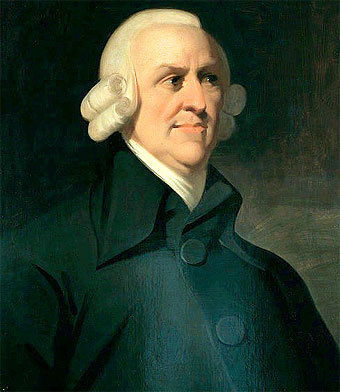
- This theory was proposed in 1776, by Adam Smith
- This is the basis of international trade lies in the division of absolute advantage, which can be defined as the good, or services in which country is more efficient or can produce more than the other country or it can produce the same quantity with another country that uses fewer resources.
- This theory was proposed in 1776, by Adam Smith
THE COMPARATIVE ADVANTAGE THEORY
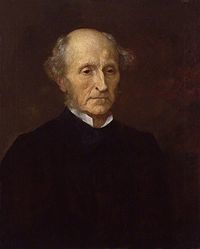
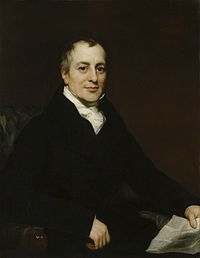
- This theory was first declared by Adam Smith and later developed by David Richardo and John Stuart Mill.
- According to Adam Smith, "it is the maximum of every prudent teacher in a family that never try to do at home what it will cost more to do than buy. "
- Richardo took the application of the law to trade between two countries and concluded that both countries will benefit if each one concentrates on producing the product where it can perform more efficiently and exchange the product with which you can produce less efficiently.
- This theory was first declared by Adam Smith and later developed by David Richardo and John Stuart Mill.
RENTAL FOR EXCESSIVE THEORY
- This theory has its origin with classical economists
- A country carries out that surplus part of the product of their land and labor for which there is no demand; gives a value of these surpluses, change them for something else, that can satisfy a part of your wishes, and increase your enjoyment.
- The important aspect of income from the theory of surplus includes:
- International trade does not necessarily reassign the factors of production, but allows production.
- The population density of a country.
- Excess production capacity.
- The important aspect of income from the theory of surplus includes:
- A country carries out that surplus part of the product of their land and labor for which there is no demand; gives a value of these surpluses, change them for something else, that can satisfy a part of your wishes, and increase your enjoyment.
- This theory has its origin with classical economists
THE THEORY OF FACTOR PROPORTIONS
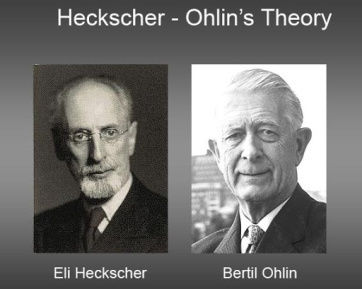
- This theory is also known as the Heckscher-Onlin theory.
- The Heckscher-Ohlin theory states that differences in the relative prices of products in the two isolated regions (and this is the basic cause of international trade) depend on the conditions of demand and supply of goods in the two regions.
- This theory is also known as the Heckscher-Onlin theory.
COMPETITIVE ADVANTAGE OF NATIONS
- Michael Porter of Harvard Business School developed this theory.
- Explain why Individual nations achieve international success in particular industries.
- The competitiveness of a nation depends on the ability of your industry to innovate and update.
- Which categorized into four main components. They are:
- Conditions of the factors.
- Demand conditions.
- Firm strategy, structure and rivalry.
- Related and support industries.
- Which categorized into four main components. They are:
- The competitiveness of a nation depends on the ability of your industry to innovate and update.
- Explain why Individual nations achieve international success in particular industries.
- Michael Porter of Harvard Business School developed this theory.
Jesús Eduardo Gallegos Lechuga.303011. Ingles 6. Joaquin Horacio Romero Robledo.
Imagens e arquivos do mapa

Informações
- Descrição
- Mapa Mental sobre THEORIES OF INTERNATIONAL TRADE, criado por Jesús Gallegos Lechuga em 08-04-2018.
- Criado por
- Jesús Gallegos Lechuga
- Visualizações
- 50
- Avaliação