
Mapa mental
Fever In Returning Traveler
Conteúdo do mapa
Fever In Returning Traveler
Blood and Tissue Protozoa
- Plasmodium species
- Plasmodium vivax
- Liver stages
- Persistent hypnozoites, relapse
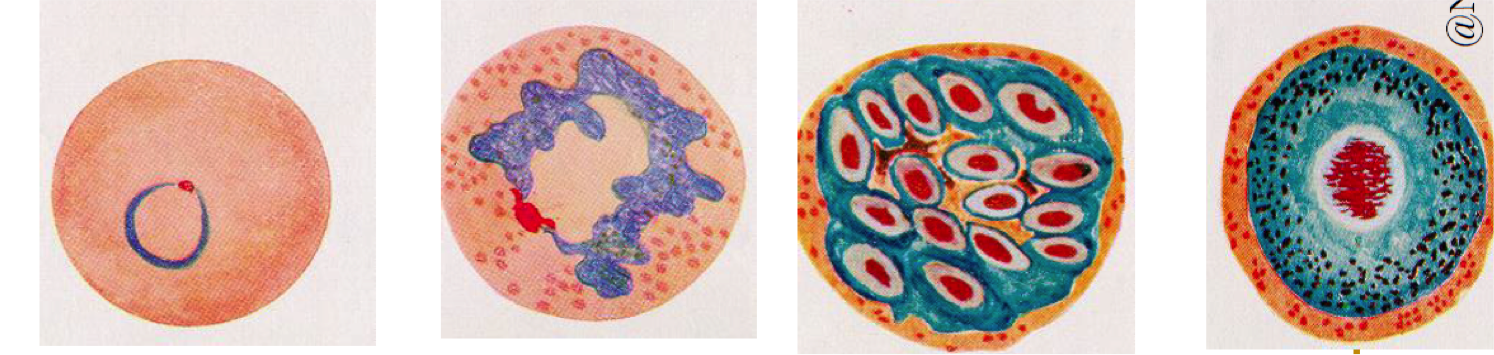
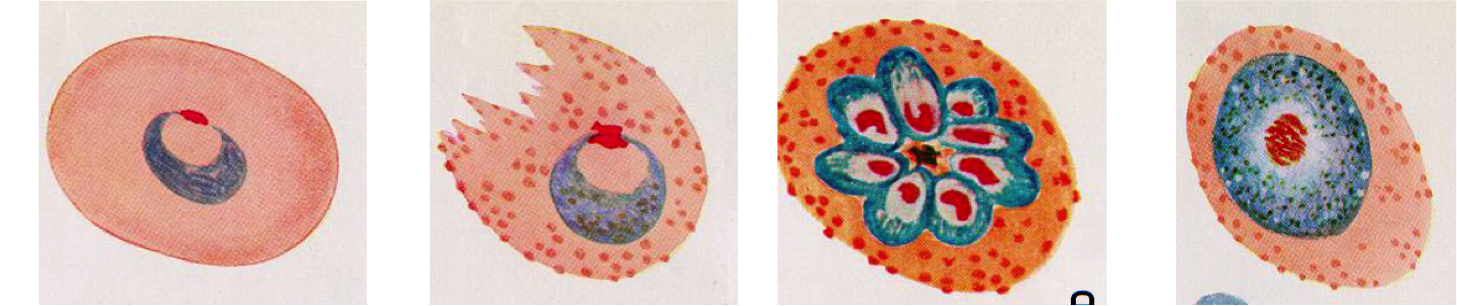
- Microscopical features
- Enlarged RBCs
- Rings are big and coarse
- Trophozoites have ameboid appearance
- Gametocytes are round, oval and covering the surface of RBC
- Schuffner's dots in RBC
- Predominant areas (World wide)
- RBCs invaded
- Young immature erythrocytes
- Liver stages
- Plasmodium ovale
- Tertian malaria
- Microscopical features
- Oval, jagged, enlarged RBCs
- Schuffner's dots
- Trophozoites have compact and irregular appearance
- Schizonts have rosette shape
- Gametocytes are round in shape
- Liver stages
- Persistent hypnozoites, relapse
- Predominant areas (Tropical Africa)
- RBCs invaded
- Young immature erythrocytes
- Plasmodium malariae
- Quartan malaria
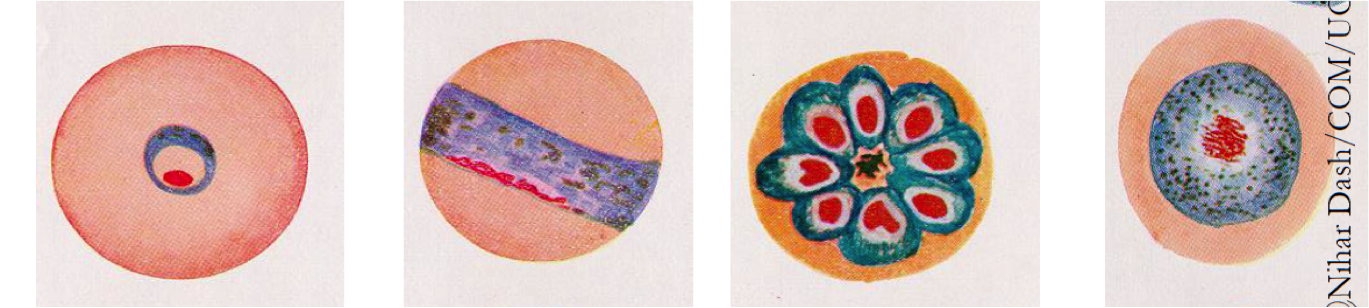
- Microscopical features
- RBCs are not enlarged
- Parasite has bar and band appearance
- Rosette schizonts
- Ziemann dots
- Round to oval shaped gametocytes
- Liver stages
- No persistent stage, recrudescence
- Predominant areas (Subtropical and Temperate areas)
- RBCs invaded
- Mature erythrocytes
- Complications
- Nephrotic syndrome
- Plasmodium falciparum
- Malignant tertian malaria
- Irregular fever, most severe and fetal
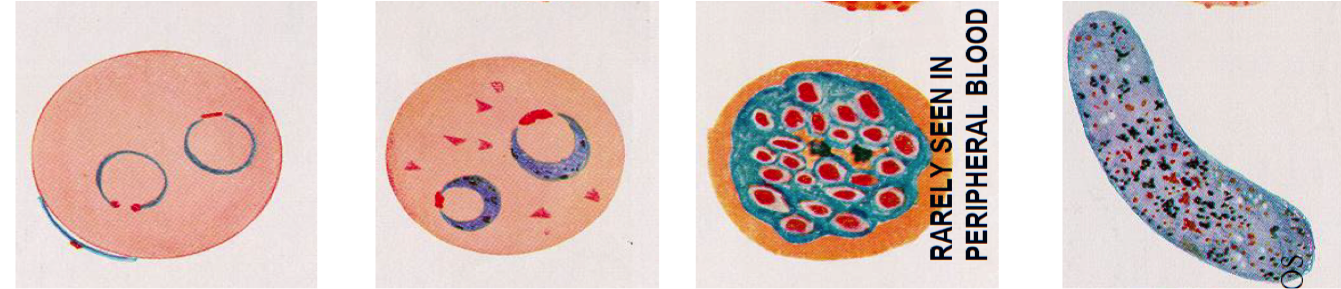
- Microscopical features
- Normal sized RBC
- The rings are fine, small and multiple
- Crescent shaped gametocytes
- Maurer’s dots
- Peripheral smear
- Early ring stage and gametocytes stages
- Liver stages
- No persistent stage, recrudescence
- Predominant areas
- Tropical Africa, Asia, Latin America
- RBCs invaded
- All erythrocytes
- Complications
- Due to
- Invades all erythrocytes
- High parasitaemia
- Rosetting
- Sequestration
- Ligands
- Plasmodium falciparum erythrocyte membrane protein
- Receptors
- Placental binding receptor (Chondroitin sulfate A)
- Endothelial cells receptors (CD36, ICAM-1, E-selectin)
- Cytokines
- TNF-a , IL1, IL6, Nitric oxide
- Cerebral malaria
- Severe anemia
- Severe hypoglycemia
- Blackwater fever
- Hepatosplenomegaly
- Nephrotic syndrome
- Poor pregnancy outcome
- Liver or spleen failure
- Due to
- Malignant tertian malaria
- Causes
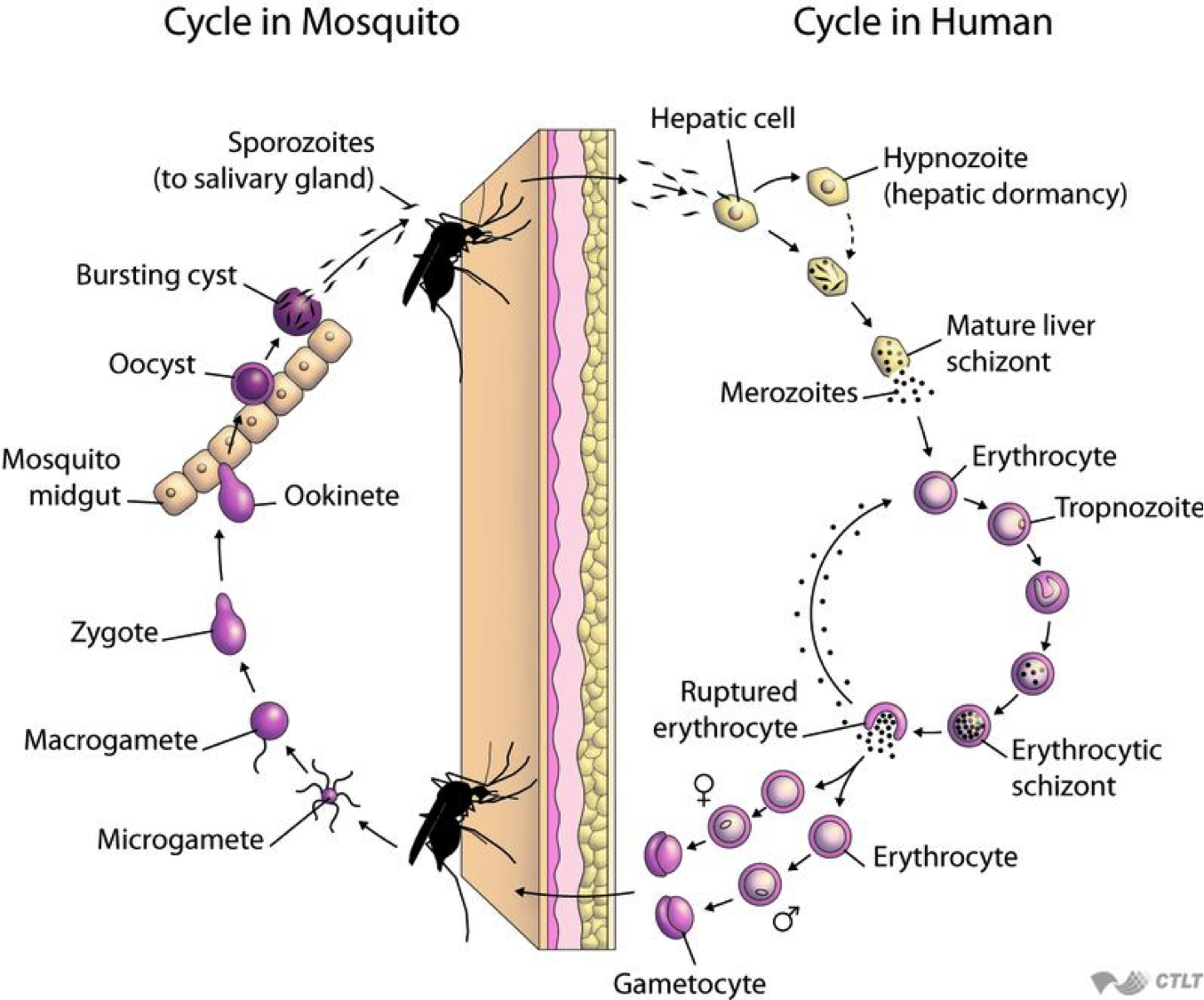
- Life Cycle
- Plasmodium vivax
- Toxoplasma species
- Toxoplasmosis
- Caused by Toxoplasma gondii
- Intracellular parasite
- Natural reservoir (Cat)
- Immunocompenet
- Asymptomatic or lymphadenopathy
- Immunosuppressed
- Severe symptoms: swollen glands, fever, seizures, headache, psychosis, and problems with vision, speech and movement
- Immunocompenet
- Natural reservoir (Cat)
- Intracellular parasite
- Congenital toxoplasmosis
- Diagnosed by Antibody detection
- IgG / IgM / PCR
- Caused by Toxoplasma gondii
- Toxoplasmosis
- Trypanosomes species
- African trypanosomiasis
- Two subspecies
- Trypanosoma brucei gambiense
- Single central nucleus and a single flagellum
- Undulating membrane / Covered by glycoprotein
- Trypanosoma brucei rhodesiense
- Trypanosoma brucei gambiense
- Symptoms
- Bite reaction
- Parasitemia
- Winterbottom’s sign
- CNS involvement (Sleeping sickness)
- Transmitted (Female tsetse fly)
- Two subspecies
- American trypanosmiasis
- Caused by Trypanosoma cruzi
- Transmitted (kissing (riduvid) bug)
- Causes
- Chagas' disease
- Chacoma
- Chronic stages
- Cardiomegaly
- Megaesophagus
- Megacolon
- Chagas' disease
- Caused by Trypanosoma cruzi
- African trypanosomiasis
- Babesiosis
- Caused by Babesia microti
- Intracellular parasite
- Transmitted by (tick)
- Enters the RBCs
- Under microscope (Maltase cross form)
- Enters the RBCs
- Causes
- Tick fever (hemolytic anemia, jaundice, fever and hepatomegaly
- Diagnosed by
- Peripheral blood smear
- Caused by Babesia microti
- Plasmodium species
Malaria
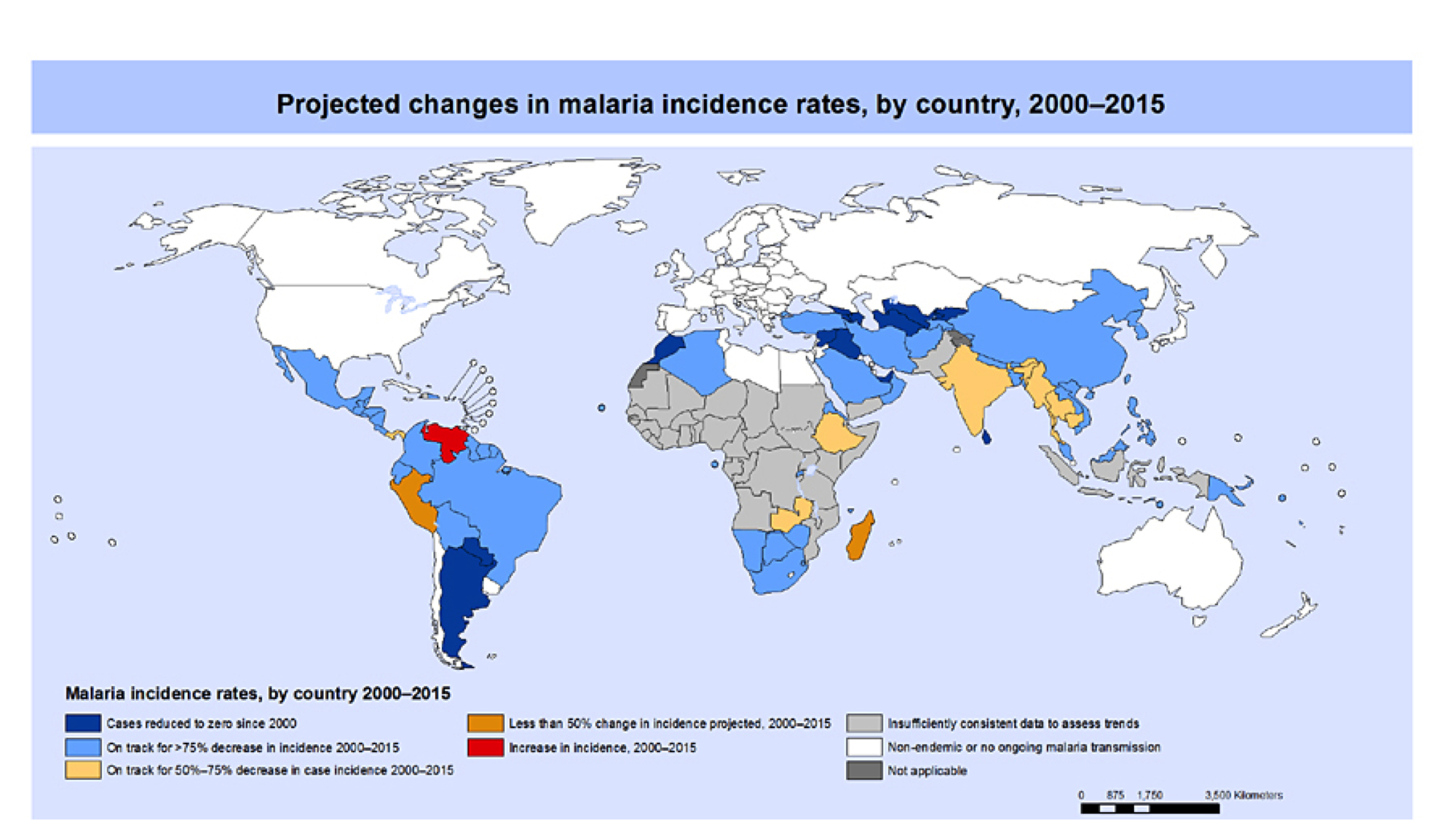
- Epidemiology
- 219 million cases of malaria in 2017
- African Region 2017
- 92% of malaria cases
- 93% of malaria deaths
- 5 countries accounted half of all malaria cases worldwide (2017)
- Nigeria (25%)
- Democratic Republic of the Congo (11%)
- Mozambique (5%)
- India (4%)
- Uganda (4%)
- Risk factors
- Area of malaria
- Bite from infected mosquito
- Age (Young and old)
- Travelers
- Immune system deficiency
- Pregnancy
- Newborns (Transmission from the mother)
- Blood transfusion
- Poverty
- Lack of knowledge
- No access to health care centers
- Environmental factors
- No protective clothing
- Exposed sleeping accommodations
- Lack of insect repellent
- No precautions and prophylaxis
- Clinical manifestation
- Prodromal Symptoms
- Non-specific flu-like symptoms (anorexia, muscle pain, headaches)
- Clinical Infection
- Febrile attacks (Malarial paroxysms)
- Three successive stages
- Sweating stage (2 to 4 hours)
- Fever drops rapidly and the patient sweats
- Hot stage (2 to 6 hours)
- Fever (41°C), flushed, dry burning skin, throbbing headache, nausea and vomiting
- Cold stage (15 to 60 minutes)
- Intense cold and strong shivering
- Sweating stage (2 to 4 hours)
- Periodic Febrile Response
- Caused by
- Rupture of mature schizonts in all types of malaria
- P.malariae, fever happens every 72 hours
- Quartan malaria
- P.falciparum, fever may occur every 48 hours, however it is usually irregular and shows no distinct periodicity
- P.vivax and P.ovale malaria, schizonts mature every 48 hours
- Tertian malaria
- P.malariae, fever happens every 72 hours
- Rupture of mature schizonts in all types of malaria
- Caused by
- Three successive stages
- Fever
- Chills
- Headache
- Myalgia
- Nausea, vomiting, diarrhea
- Abdominal pain
- Cough
- Hepatomegaly
- Splenomegaly
- Anemia
- Febrile attacks (Malarial paroxysms)
- Prodromal Symptoms
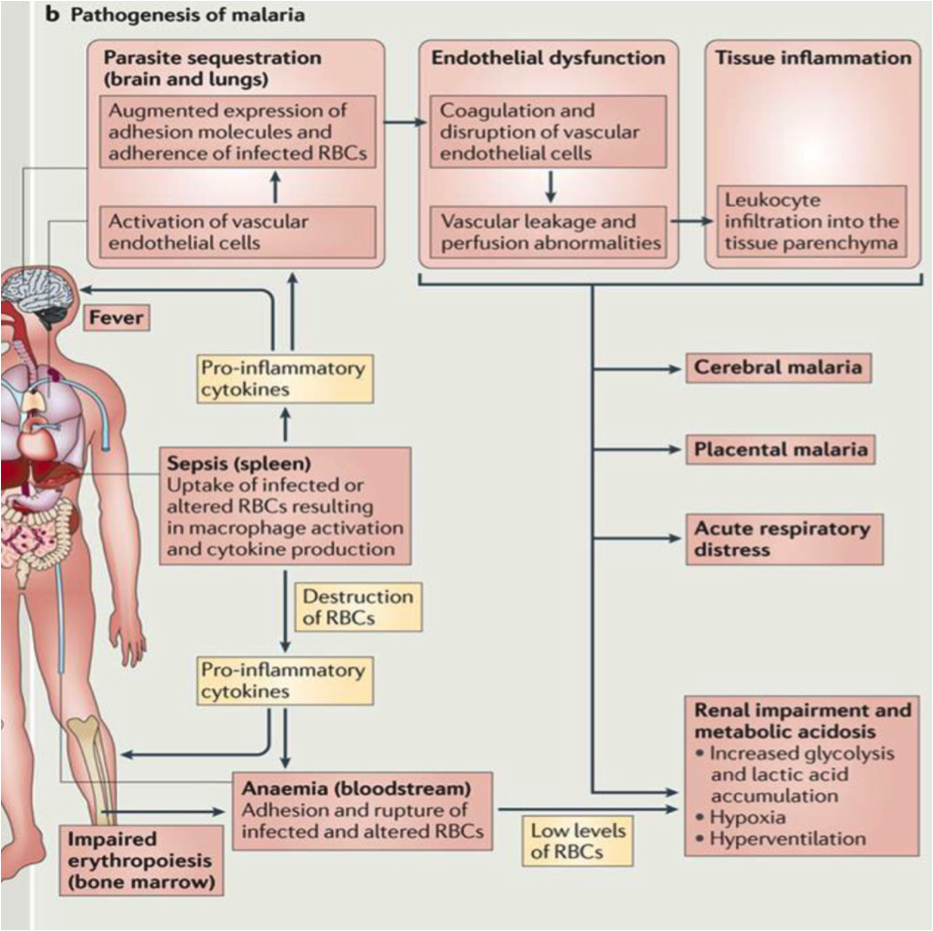
- Pathogenesis
- Invistigations
- Thick smear microscope (Gold standard)
- Detects parasites
- Rapid Ag test (Most popular screening test)
- Detects parasite specific antigen
- Rapid Ab test
- Detects antibodies to malaria parasites
- ELISA Ab test
- Detects antibodies to malaria infection
- Molecular method (Very sensitive and expensive)
- Detects the malaria gene
- Thick smear microscope (Gold standard)
- Managment
- Treated appropriately > Prognosis is excellent
- Uncomplicated malaria > improvement within 48 hours after treatment
- Fever free after 96 hours
- P,falciparum > Untreated > Poor prognosis
- Uncomplicated malaria > improvement within 48 hours after treatment
- Drugs
- Chloroquine
- P.vivax and P.ovale
- Prophylaxis and treatment in areas without resistant P.falciparum
- Adverse effects
- GI distress / skin rash / headache / retinal dysfunction (high dose)
- Quinine
- Treatment of multidrug-resistant malaria
- Adverse effects
- Cinchonism / hemolysis in G6PD deficiency / Blackwater fever / hypoglycemia
- Primaquine
- Eradication of liver stages of P.vivax and P.ovale
- Adverse effects
- GI distress / methemoglobinemia / hemolysis in G6PD deficiency
- Atovaquone-proguanil (Malarone)
- Adverse effects
- GI distress / headache / rash hemolysis / folate deficiency
- Adverse effects
- Mefloquine
- Prophylaxis and treatment of multidrug-resistant P.falciparum
- Adverse effects
- GI distress / rash / headache / cardiac conduction defects and neurologic symptoms (high dose)
- Artemisinins
- Standard of care for all chloroquine-resistant malaria
- Adverse effects
- GI distress / rare neutropenia / anemia / allergic reactions / QT prolongation
- Pyrimethamine
- Not used alone for P. falciparum
- Adverse effects
- Megaloblastic anemia
- Chloroquine
- Treated appropriately > Prognosis is excellent
- Prevention and Control
- Prevent mosquito breeding
- Drain potential breeding sites
- Outdoor insecticide spraying
- Chemical & biological larvicides
- Male sterilisation of mosquitoes
- Avoid mosquito bites
- Site dwellings away from breeding sites
- Protective clothing
- Insect repellants (DEET based)
- Use of insecticide treated bed net (ITN)
- Residual indoor insecticide spraying
- Early diagnosis
- Intermittent preventive treatment (IPT) in pregnancy
- Chemoprophylaxis in non-immune travellers
- Prevent mosquito breeding
- Epidemiology
Imagens e arquivos do mapa
Informações
- Descrição
- Mapa Mental sobre Fever In Returning Traveler, criado por Moza Almualla em 10-02-2019.
- Criado por
- Moza Almualla
- Visualizações
- 83
- Avaliação