
Mapa mental
Rhesus Incompatibility
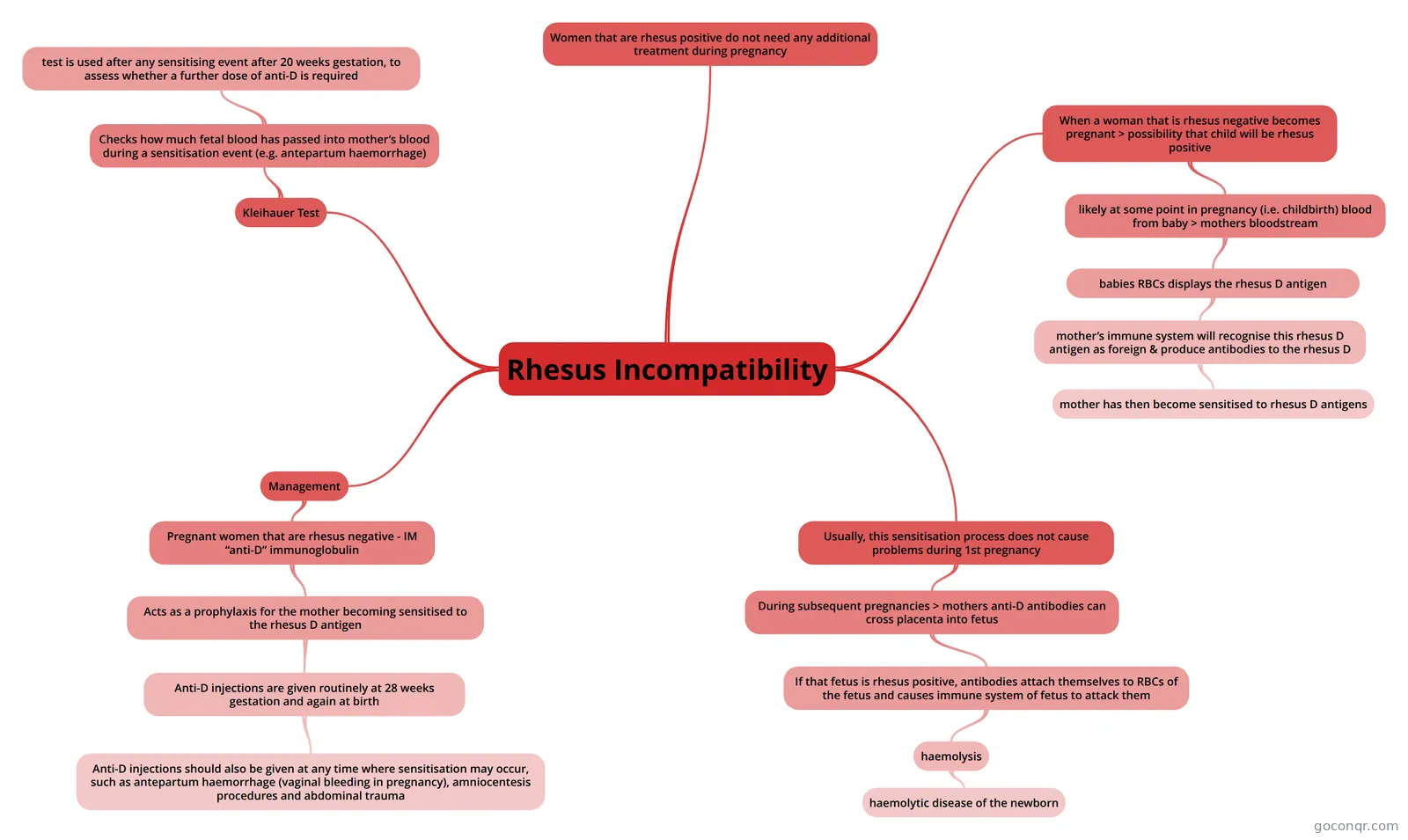
Mind map: Rhesus incompatibility
Conteúdo do mapa
Rhesus Incompatibility
Women that are rhesus positive do not need any additional treatment during pregnancy
When a woman that is rhesus negative becomes pregnant > possibility that child will be rhesus positive
- likely at some point in pregnancy (i.e. childbirth) blood from baby > mothers bloodstream
- babies RBCs displays the rhesus D antigen
- mother’s immune system will recognise this rhesus D antigen as foreign & produce antibodies to the rhesus D
- mother has then become sensitised to rhesus D antigens
- mother’s immune system will recognise this rhesus D antigen as foreign & produce antibodies to the rhesus D
- babies RBCs displays the rhesus D antigen
- likely at some point in pregnancy (i.e. childbirth) blood from baby > mothers bloodstream
Usually, this sensitisation process does not cause problems during 1st pregnancy
- During subsequent pregnancies > mothers anti-D antibodies can cross placenta into fetus
- If that fetus is rhesus positive, antibodies attach themselves to RBCs of the fetus and causes immune system of fetus to attack them
- haemolysis
- haemolytic disease of the newborn
- haemolysis
- If that fetus is rhesus positive, antibodies attach themselves to RBCs of the fetus and causes immune system of fetus to attack them
- During subsequent pregnancies > mothers anti-D antibodies can cross placenta into fetus
Management
- Pregnant women that are rhesus negative - IM “anti-D” immunoglobulin
- Acts as a prophylaxis for the mother becoming sensitised to the rhesus D antigen
- Anti-D injections are given routinely at 28 weeks gestation and again at birth
- Anti-D injections should also be given at any time where sensitisation may occur, such as antepartum haemorrhage (vaginal bleeding in pregnancy), amniocentesis procedures and abdominal trauma
- Anti-D injections are given routinely at 28 weeks gestation and again at birth
- Acts as a prophylaxis for the mother becoming sensitised to the rhesus D antigen
- Pregnant women that are rhesus negative - IM “anti-D” immunoglobulin
Kleihauer Test
- Checks how much fetal blood has passed into mother’s blood during a sensitisation event (e.g. antepartum haemorrhage)
- test is used after any sensitising event after 20 weeks gestation, to assess whether a further dose of anti-D is required
- Checks how much fetal blood has passed into mother’s blood during a sensitisation event (e.g. antepartum haemorrhage)
Informações
- Descrição
- Obstetrics and Gynaecology (Antenatal care) Mapa Mental sobre Rhesus Incompatibility, criado por liba aysha em 26-10-2019.
- Criado por
- liba aysha
- Visualizações
- 4
- Avaliação