Mapa mental
LANGUAGE - TEACHING - LEARNING

Conteúdo do mapa
LANGUAGE - TEACHING - LEARNING
LANGUAGE
- Language refers to the cognitive faculty that enables humans to learn and use systems of complex communication.
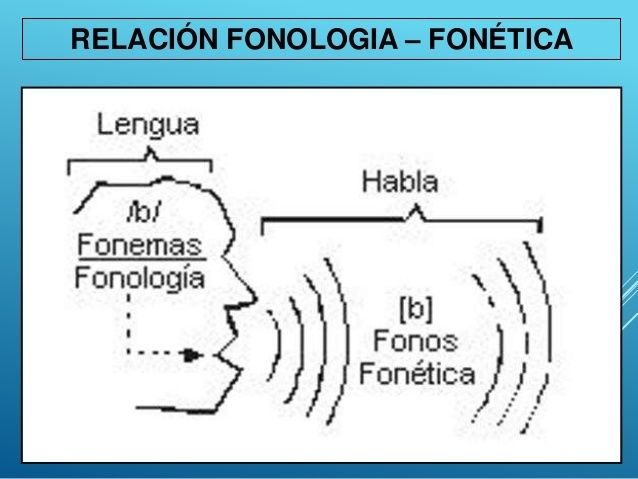
- The phonetic organization.
- In the first instance, the phonetic organization is focused on the integration of the phonemes, that is, the sounds which are the minimum units of language without meaning, whose definition is characterized by the forms of emission (loudness, resonance, points and articulation modes).
- The semantic organization.
- The semantic organization, in charge of the meaning or level of the content, which deals with the meanings or signifiers that are part of the sign, that is, the evolution of the meaning of the words, which happens when there is a correspondence relationship between emission and object. For example: when a child realizes that a chair is a chair, regardless of whether it changes location or attributes.
- The morphosyntactic organization
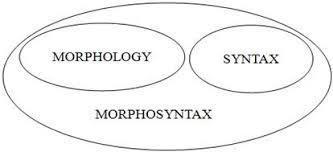
- For its part, the morphosyntactic organization, which is related to the organization and order of words when integrating a sentence. In this sense, Morphology is focused on the way words have, while syntax is related to the relationships and functions they have. For example: Morphology shows that the word friend is a noun, while syntax tells us that it can be the core of the subject within a simple sentence. Thus, adverbs, verbs, articles, pronouns, etc. are used in this period of organization.
- Pragmatic functions.
- Finally, with respect to pragmatic functions; pragmatics can be defined as “the study of the uses of language and linguistic communication so, these functions encompass the communicative intentions of people because language acquires a dynamic form from the use made of it to adapt to a specific environment where communication can be established.
- The phonetic organization.
- Language refers to the cognitive faculty that enables humans to learn and use systems of complex communication.
TEACHNG
- Teaching is a process in which one individual teaches or instruct another individual. Teaching is considered as the act of imparting instructions to the learners in the classroom situation.
- METHODOLOGY
- Pedagogical practices in general (including theorical underpinnings and related research).
- APPROACH
- Theoretically well-informed positions and beliefs about the nature of language, the nature of languuage learning.
- METHOD
- A generalized set of classroom specifications for accomplishing linguistic objectives.
- CURRICULUM
- Desins for carrying out a particular language program.
- TECHNIQUE
- Any of a wide varity of exercise activities, or tasks used in the language classroom for realizing lesson objectives.
- METHODOLOGY
- Teaching is a process in which one individual teaches or instruct another individual. Teaching is considered as the act of imparting instructions to the learners in the classroom situation.
LEARNING
- is the process of acquiring new, or modifying existing, knowledge, behaviors, skills, values, or preferences
- MEMORY
- Memory is our ability to encode, store, retain and subsequently recall information and past experiences in the human brain.
- COGNITIVE
- Is the mental action or process of acquiring knowledge and understanding through thought, experience, and the senses Jean Piaget's theory of cognitive development suggests that children move through four different stages of mental development.
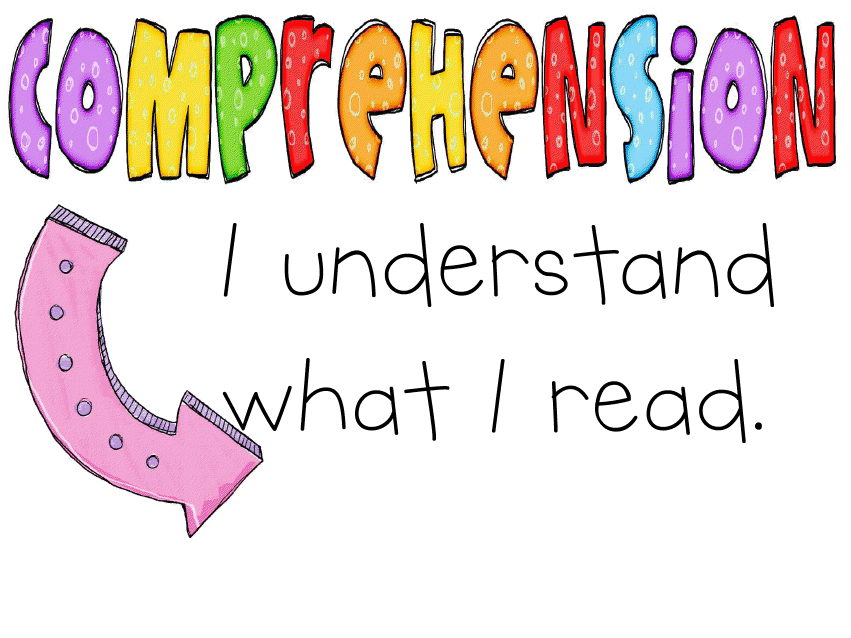
- COMPREHENSION
- Is active and intentional thinking in which the meaning is constructed through interactions between the test and the reader (Durkin, 1973).
- METACOGNITIVE
- Metacognition essentially means cognition about cognition. It refers to both people's awareness and control, not only of their cognitive processes, but of their emotions and motivations as well
- SOCIAL
- Attitudes, orientations, or behaviors which take the interests, intentions, or needs of other people into account (in contrast to anti-social behavior) has played some role in defining the idea or the principle.
- MEMORY
- is the process of acquiring new, or modifying existing, knowledge, behaviors, skills, values, or preferences