
Mapa mental
FOOD TECH - Special Dietary Needs
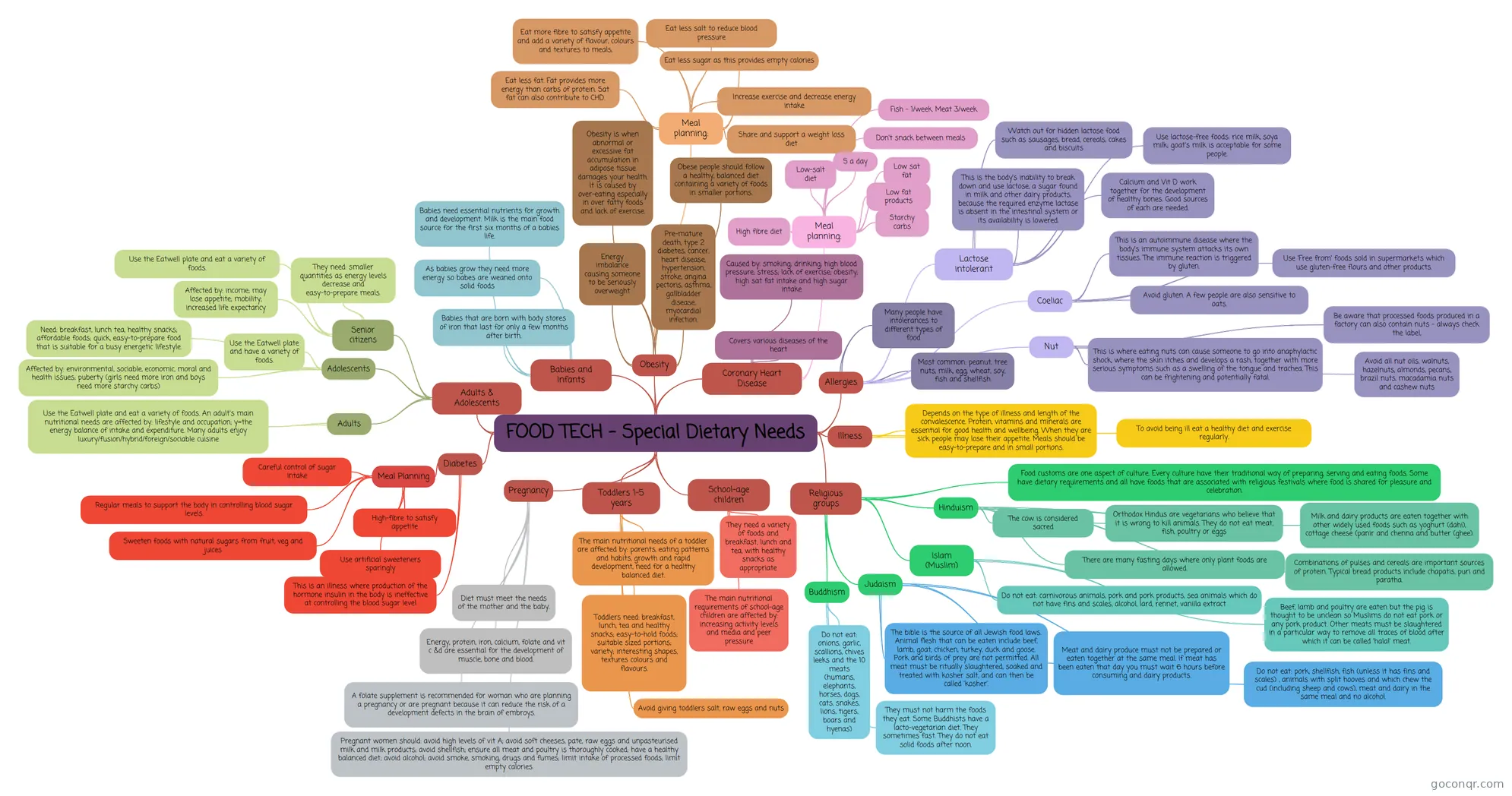
Mind map: Special Dietary Needs
Conteúdo do mapa
FOOD TECH - Special Dietary Needs
Obesity
- Pre-mature death, type 2 diabetes, cancer, heart disease, hypertension, stroke, angina pectoris, asthma, gallbladder disease, myocardial infection.
- Obesity is when abnormal or excessive fat accumulation in adipose tissue damages your health. It is caused by over-eating especially in over fatty foods and lack of exercise.
- Obese people should follow a healthy, balanced diet containing a variety of foods in smaller portions.
- Meal planning:
- Eat less fat. Fat provides more energy than carbs of protein. Sat fat can also contribute to CHD.
- Eat more fibre to satisfy appetite and add a variety of flavour, colours and textures to meals,
- Eat less salt to reduce blood pressure
- Eat less sugar as this provides empty calories
- Increase exercise and decrease energy intake
- Share and support a weight loss diet
- Energy imbalance causing someone to be seriously overweight
Coronary Heart Disease
- Covers various diseases of the heart
- Caused by: smoking; drinking; high blood pressure; stress; lack of exercise; obesity; high sat fat intake and high sugar intake
- Meal planning:
- Low-salt diet
- 5 a day
- Low sat fat
- High fibre diet
- Low fat products
- Starchy carbs
- Don't snack between meals
- Fish - 1/week. Meat 3/week
Babies and Infants
- Babies that are born with body stores of iron that last for only a few months after birth.
- As babies grow they need more energy so babes are weaned onto solid foods
- Babies need essential nutrients for growth and development. Milk is the main food source for the first six months of a babies life.
Allergies
- Lactose intolerant
- This is the body's inability to break down and use lactose, a sugar found in milk and other dairy products, because the required enzyme lactase is absent in the intestinal system or its availability is lowered.
- Watch out for hidden lactose food such as sausages, bread, cereals, cakes and biscuits
- Use lactose-free foods: rice milk, soya milk; goat's milk is acceptable for some people.
- Calcium and Vit D work together for the development of healthy bones. Good sources of each are needed.
- Coeliac
- This is an autoimmune disease where the body's immune system attacks its own tissues. The immune reaction is triggered by gluten.
- Use 'Free from' foods sold in supermarkets which use gluten-free flours and other products.
- Avoid gluten. A few people are also sensitive to oats.
- Nut
- This is where eating nuts can cause someone to go into anaphylactic shock, where the skin itches and develops a rash, together with more serious symptoms such as a swelling of the tongue and trachea. This can be frightening and potentially fatal.
- Avoid all nut oils, walnuts, hazelnuts, almonds, pecans, brazil nuts, macadamia nuts and cashew nuts
- Be aware that processed foods produced in a factory can also contain nuts - always check the label,
- Many people have intolerances to different types of food
- Most common: peanut, tree nuts, milk, egg, wheat, soy, fish and shellfish
- Lactose intolerant
Illness
- Depends on the type of illness and length of the convalescence. Protein, vitamins and minerals are essential for good health and wellbeing. When they are sick people may lose their appetite. Meals should be easy-to-prepare and in small portions.
- To avoid being ill eat a healthy diet and exercise regularly.
Adults & Adolescents
- Adolescents
- Use the Eatwell plate and have a variety of foods.
- Affected by: environmental, sociable, economic, moral and health issues; puberty (girls need more iron and boys need more starchy carbs)
- Need: breakfast, lunch tea, healthy snacks; affordable foods; quick, easy-to-prepare food that is suitable for a busy energetic lifestyle.
- Adults
- Use the Eatwell plate and eat a variety of foods. An adult's main nutritional needs are affected by: lifestyle and occupation; y=the energy balance of intake and expenditure. Many adults enjoy luxury/fusion/hybrid/foreign/sociable cuisine
- Senior citizens
- Affected by: income; may lose appetite; mobility; increased life expectancy
- Use the Eatwell plate and eat a variety of foods.
- They need: smaller quantities as energy levels decrease and easy-to-prepare meals.
- Adolescents
Diabetes
- Meal Planning
- Careful control of sugar intake
- Regular meals to support the body in controlling blood sugar levels.
- High-fibre to satisfy appetite
- Use artificial sweeteners sparingly
- Sweeten foods with natural sugars from fruit, veg and juices
- This is an illness where production of the hormone insulin in the body is ineffective at controlling the blood sugar level
- Meal Planning
Pregnancy
- Diet must meet the needs of the mother and the baby.
- Energy, protein, iron, calcium, folate and vit c &d are essential for the development of muscle, bone and blood.
- A folate supplement is recommended for woman who are planning a pregnancy or are pregnant because it can reduce the risk of a development defects in the brain of embroys.
- Pregnant women should: avoid high levels of vit A; avoid soft cheeses, pate, raw eggs and unpasteurised milk and milk products; avoid shellfish; ensure all meat and poultry is thoroughly cooked; have a healthy balanced diet; avoid alcohol; avoid smoke, smoking, drugs and fumes; limit intake of processed foods; limit empty calories.
Religious groups
- Food customs are one aspect of culture. Every culture have their traditional way of preparing, serving and eating foods. Some have dietary requirements and all have foods that are associated with religious festivals where food is shared for pleasure and celebration.
- Buddhism
- Do not eat: onions, garlic, scallions, chives leeks and the 10 meats (humans, elephants, horses, dogs, cats, snakes, lions, tigers, boars and hyenas)
- They must not harm the foods they eat. Some Buddhists have a lacto-vegetarian diet. They sometimes fast. They do not eat solid foods after noon.
- Islam (Muslim)
- Beef, lamb and poultry are eaten but the pig is thought to be unclean so Muslims do not eat pork or any pork product. Other meats must be slaughtered in a particular way to remove all traces of blood after which it can be called 'halal' meat.
- Do not eat: carnivorous animals, pork and pork products, sea animals which do not have fins and scales, alcohol, lard, rennet, vanilla extract
- Hinduism
- Orthodox Hindus are vegetarians who believe that it is wrong to kill animals. They do not eat meat, fish, poultry or eggs
- Milk and dairy products are eaten together with other widely used foods such as yoghurt (dahi), cottage cheese (panir and chenna and butter (ghee).
- Combinations of pulses and cereals are important sources of protein. Typical bread products include chapatis, puri and paratha.
- The cow is considered sacred
- There are many fasting days where only plant foods are allowed.
- Judaism
- The bible is the source of all Jewish food laws. Animal flesh that can be eaten include beef, lamb, goat, chicken, turkey, duck and goose. Pork and birds of prey are not permitted. All meat must be ritually slaughtered, soaked and treated with kosher salt, and can then be called 'kosher'.
- Do not eat: pork, shellfish, fish (unless it has fins and scales) , animals with split hooves and which chew the cud (including sheep and cows), meat and dairy in the same meal and no alcohol.
- Meat and dairy produce must not be prepared or eaten together at the same meal. If meat has been eaten that day you must wait 6 hours before consuming and dairy products.
Toddlers 1-5 years
- The main nutritional needs of a toddler are affected by: parents, eating patterns and habits, growth and rapid development, need for a healthy balanced diet.
- Toddlers need: breakfast, lunch, tea and healthy snacks; easy-to-hold foods; suitable sized portions; variety; interesting shapes, textures colours and flavours.
- Avoid giving toddlers salt, raw eggs and nuts
School-age children
- They need a variety of foods and breakfast, lunch and tea, with healthy snacks as appropriate
- The main nutritional requirements of school-age children are affected by: increasing activity levels and media and peer pressure