
Mapa mental
BUILDING PATHOLOGY : COMMON DEFECTS (PART 1)
Conteúdo do mapa
BUILDING PATHOLOGY : COMMON DEFECTS (PART 1)
TIMBER DEFECTS
- Beetle rot
- Dry / wet rot
- Causes
- Species of timber
- Chronic dampness
- Poor ventilation
- Normal internal temperature
- Effects / signs
- Sound hollow and dull
- Be of abnormal colour
- Wood disintegration
- Fungi
- Dry rot
- Brown
- Cubical
- Fluffy
- Yellow mycelium
- Musty smell
- Will not grow in saturated conditions
- Red spores
- Wet rot
- Less pervasive and harmful generally
- Minimum moisture content of 20%
- Produces cubical failure in wood similar to dry rot
- Olive green / brown fruiting body
- Affected timber darkened
- Surface may appear to be sound
- Dry rot
- Causes
DAMP
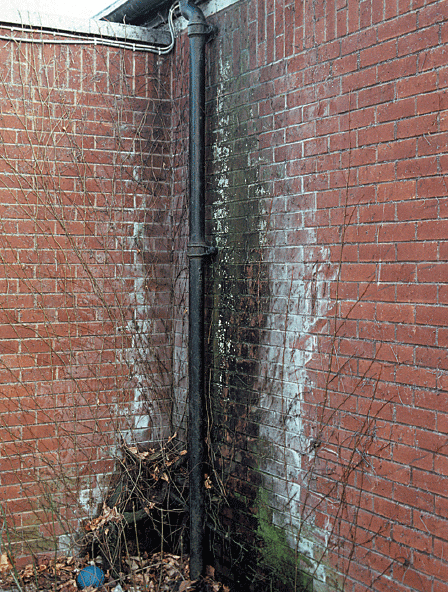
- Rising damp
- Moisture present in ground below walls rising up through fabric of wall
- Capillary action
- Below ground moisture sources
- Free water in subsoil (water table)
- Water main breach
- Build up from drain / pipe leaks
- Investigation using trial holes
- Confirm existence of DPC which may be concealed
- Verify construction of walls below ground
- Establish height of water table
- Chemical analysis
- Can confirm that salts present could only have been derived from below ground sources.
- Causes
- Defective DPC
- DPC bridging
- No DPC
- Characteristics
- 'Tide line' of yellow / brownish staining
- Damp / rotting floors or skirting boards
- White fluffy deposits on walls
- Moisture present in ground below walls rising up through fabric of wall
- Penetrative damp
- Refers to any moisture sourced outside the habitable space
- Occurs through roofs, chimneys, parapet walls and walls above ground level
- Physical mechanisms enabling water to enter fabric (Causes)
- Gravity
- Lateral winds
- Surface tension
- Higher external pressure
- Examples
- Leaks in rainwater goods
- Rain splash to base of walls
- 2 more examples
- Characteristics
- Requires link from outside to inside
- Needs time to percolate into building
- Can by mistaken for rising damp
- Carries sulphates and carbonates
- Condensation
- 2 main types
- Surface
- Interstitial
- Moisture caused by everyday living.
- Occurs when warm moist air comes into contact with a cold surface which is lower in temperature.
- Factors that contribute (Causes)
- Temperature
- Ventilation rate
- Amount of moisture available
- Examples
- Build up of condensation on glazing panes, can lead to rotting of window cill
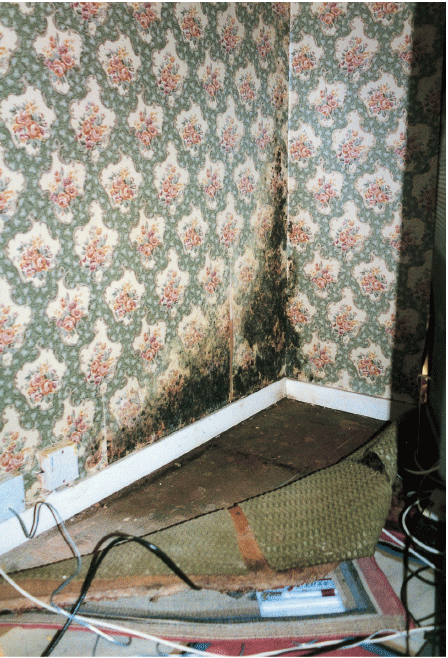
- Black mould in crescent shape formation
- Characteristics
- Can be mistaken for rising damp
- Needs cold surfaces to form water
- Does not contain contaminants
- Can form inside walls and roofs
- Causes mould marks in still areas
- 2 main types
- Rising damp
CORROSION
- Causes
- Carbonation
- CO2 in atmosphere reacts with cement hydrates to form Calcium Carbonate
- Lowers alkalinity of concrete, which leads to depassivation of steel reinforcement
- CO2 in atmosphere reacts with cement hydrates to form Calcium Carbonate
- Chloride action
- Cast in chlorides
- Up until 1977, CaCl routinely added to concrete as an accelerator
- De-icing salts
- Salt spreading on pedestrian areas
- Salts brought in by cars
- Marine environment
- Cast in chlorides
- Carbonation
- Effects
- Carbonation
- Uniform corrosion
- Hairline cracking along line of reinforcement
- Chloride action
- Localised, severe pitting corrosion
- Bulging / cracking of concrete
- Rust staining
- Carbonation
- Causes
STRUCTURAL MOVEMENT
- Subsidence
- Vertical downward movement of a building
- Loss of support beneath foundations
- Causes
- Clay soils
- Trees
- Leaking drains
- Mining activity
- Effects / signs
- Distortion of openings
- Stepped cracking
- Cracks extending through DPC
- Cracks mirrored internally
- Seasonal opening and closing of cracks
- Vertical downward movement of a building
- Settlement
- Usually occurs in new or relatively new buildings.
- Cause
- Initial
- Ground compacting beneath building, adjusting to new load
- Long term consolidation
- Water table variation
- Load variation
- Initial
- Effects / signs
- Same as subsidence
- Moisture movement
- Causes
- Irreversible
- Once-off change in baseline moisture content
- Bricks : period of moisture absorption as they adjust from post-firing dryness
- Concrete : undergoes shrinkage during initial drying out
- Reversible
- Direct wetting / drying
- Irreversible
- Effects / signs
- Bulging / distortion
- Tensile cracks
- Affects traditional, permeable materials
- Causes
- Thermal movement
- Causes
- Seasonal and diurnal patterns
- May produce permanent movement
- Seasonal and diurnal patterns
- Effects / signs
- Cracking
- Blistering
- Displaced movement
- Reversible process
- Factors affecting failure
- Rate of temperature change
- Differential movement between components
- Thermal capacity of component
- Causes
- Subsidence
Imagens e arquivos do mapa
Informações
- Descrição
- APC BUILDING PATHOLOGY Mapa Mental sobre BUILDING PATHOLOGY : COMMON DEFECTS (PART 1), criado por tayto16 em 20-04-2015.
- Criado por
- tayto16
- Visualizações
- 86
- Avaliação