
Mapa mental
Kubernetes
Conteúdo do mapa
Kubernetes
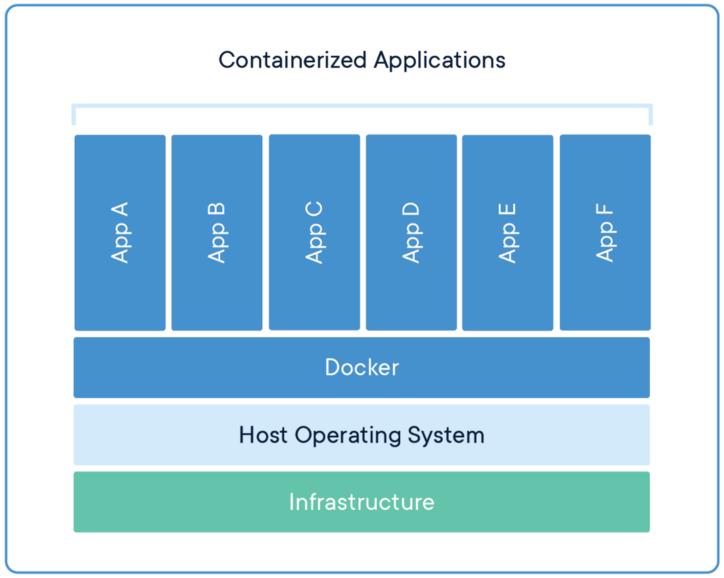
CONTAINERS
- standarized, portable and consistent application environments
- Control groups (cgroups)
- Hardware resources management
- Allow the host to share or limit resources for a process or container
- Hardware resources management
- Namespaces
- Process, filesystem and networking isolation
- Container processes are limited to see only what is in the same namespace
- Process, filesystem and networking isolation
- Union filesystems
- Containers run from an image (.iso)
- Control groups (cgroups)
- standarized, portable and consistent application environments
Components
- Most common ones for basic deployments
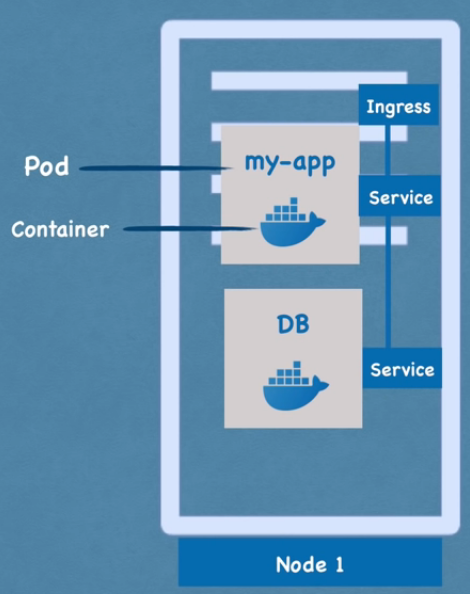
- Node
- A physical or virtual machine
- Where the service is deployed
- Pod
- the smallest unit of K8's
- Runner environment over the Node
- Abstraction over container
- Helps so it only interacts with the kubernetes layer
- Can run a variety of container technologies
- There's usually one container (appliaction) per pod
- Each Pod gets an IP of a K8 virtual network
- Gets a new IP each time it restarts
- Service
- Static IP address
- Can be attached to a Pod
- If a Pod dies, the service keeps the IP address
- Can be external (targets the node) or internal (targets the pod)
- Can be attached to a Pod
- Load Balancer
- Static IP address
- Ingress
- Does forwarding from requests to services
- Ensures TLS and DNS
- Node
- Meta-configuration
- ConfigMap
- External configuration for an application
- config services URL, etc.
- External configuration for an application
- Secret
- Contains meta-variables encoded in a base64 format
- variables like credentials
- Contains meta-variables encoded in a base64 format
- ConfigMap
- Data Storage
- Volumes
- Data in Pods are volatile
- Attaches a physical storage in the hard drive to a Pod
- Storage can be done on the local machine or remotely (outisde of K8 cluster)
- Volumes
- Replica and Schedule Management
- Deployment
- Blueprints for applications running on pods
- Abstraction of Pods
- Adjust the number of replicas of a Pod
- Blueprints for applications running on pods
- StatefulSet
- Avoid data inconsistencies on pods that need persistant data (like datbases)
- Control which pods write on volumes
- for STATEFUL applications
- Avoid data inconsistencies on pods that need persistant data (like datbases)
- Deployment
- Most common ones for basic deployments
Architecture
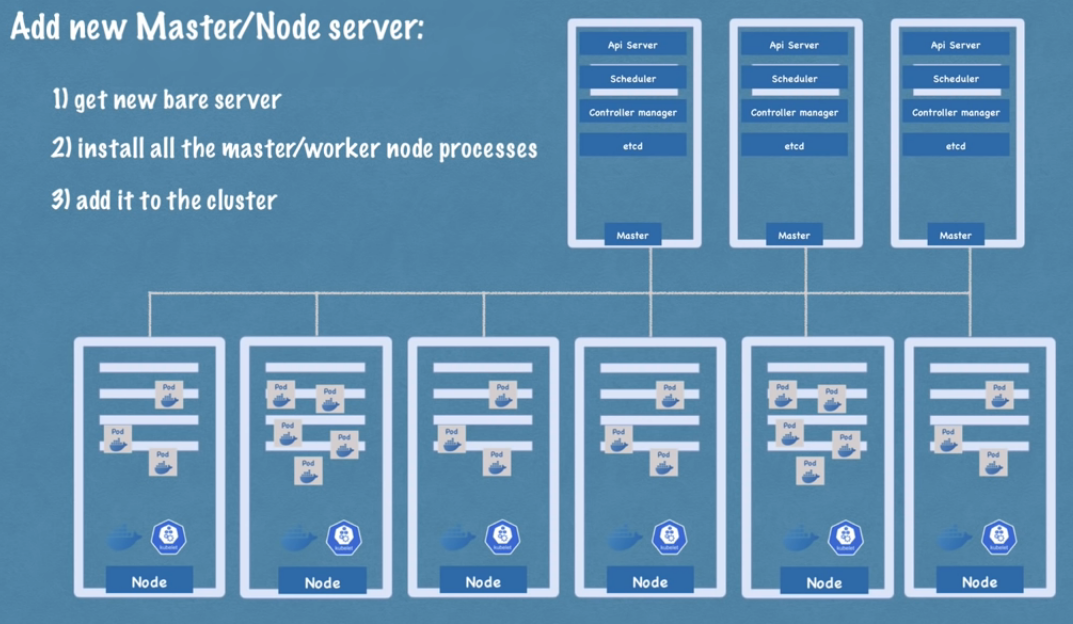
- Types of nodes
- Master
- 4 Processes necessary on Master Node
- API Server
- Interaction from user to cluster to deploy applications
- Can be a UI, CLI (kubelet)
- Cluster gateway which validates requests
- Scheduler
- Decides which node starts an application Pod
- Schedules based on performance and resource usage on Pods
- Controller Manager
- Monitors and detects state changes like Pod failures
- Tells Scheduler to re-schedule downed Pods
- etcd
- key value stored of the cluster state
- Logs of cluster activities
- Application data is not stored, only cluster related data
- API Server
- 4 Processes necessary on Master Node
- Slave
- 3 Processes necessary on each node
- Container runtime
- Ex. Docker
- Kubelet
- Interacts with the container runtime and the pod
- Assign resources to the container
- Kube Proxy
- Forwards requests from services to Pod
- Performance of communication
- Container runtime
- also called Worker node
- Does the application (service) processing
- 3 Processes necessary on each node
- Master
- Types of nodes
It is a Container Orchestrator
- Makes microservices more available
- Services that are Highly maintainable and testable, loosely coupled, independtly deployable and owned by a small team.
- Multiple development environment scenarios
- Cloud
- On premises
- Hybrid
- Management of large scale conteneraized applications
- Offering availability, scalability and disaster recovery of services
- Makes microservices more available
Imagens e arquivos do mapa
Informações
- Descrição
- Conceptos de Kubernetes
- Criado por
- Andrés Felipe Velandia Orjuela
- Visualizações
- 838
- Tags
- Avaliação