
Mapa mental
Cloud computing and ubiquitous computing systems
Conteúdo do mapa
Cloud computing and ubiquitous computing systems
cloud computing and cloud storage
- cloud computing means using computer services on another organisation’s computers, which are known as hosts. The services are provided by organisations known as hosting companies.
- Some well-known hosting companies for cloud computing include Amazon®, Microsoft ® , Google™ and RackSpace. Cloud users can access software, data and storage on the host computers, which will be at a remote location. Users do this through a web browser or mobile app, without ever directly accessing the servers that the information is stored on.
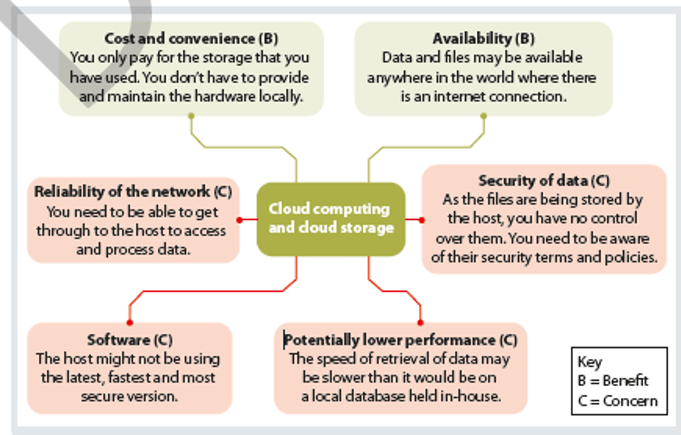
- cloud storage is related to cloud computing – it is where only the storage, access and retrieval facilities are provided by the host provider, often via the internet. The benefi ts to the customer and some concerns about cloud computing and storage are shown in figure 1.5.
- cloud computing means using computer services on another organisation’s computers, which are known as hosts. The services are provided by organisations known as hosting companies.
Ubiquitous computing systems
- Ubiquitous means ‘existing everywhere’. Processors can be embedded in any device, including clothing, appliances, vehicles, buildings and people, to connect them to the internet so that the data generated by the processors will be readily available.
- Radio frequency identification (RFID)
- Currently, objects within a ubiquitous computing environment usually contain radio frequency identification (RFID) chips. RFID is a technology that uses radio waves to transfer data to a tag on a person or an object so that the person/object can be identified and tracked. These tags contain information that is stored electronically and which can be transmitted. It is similar to the bar code systems used in supermarkets, but unlike a bar code, RFID does not need to be scanned. An example of a use of RFID is the cat flaps that only open for the animal that has the correct chip in its collar.
- Applications of ubiquitous computing
- Currently, there are computing systems in place which monitor the shelf and warehouse stock. This technology is used by many industries (supermarkets, book and DVD suppliers, car part manufacturers, etc). When the stock reaches a certain minimum level, an order is automatically placed with the appropriate supplier electronically. Mainly this is done by a process where the tills feed product sales to a central computer, which then calculates the present stock. Currently manual checks still have to be made to allow for ‘shrinkage’ (i.e. loss due to theft or damage).
- However, there are now experimental systems involving products which contain RFID. The RFIDs register when any product leaves the premises.
- Currently, there are computing systems in place which monitor the shelf and warehouse stock. This technology is used by many industries (supermarkets, book and DVD suppliers, car part manufacturers, etc). When the stock reaches a certain minimum level, an order is automatically placed with the appropriate supplier electronically. Mainly this is done by a process where the tills feed product sales to a central computer, which then calculates the present stock. Currently manual checks still have to be made to allow for ‘shrinkage’ (i.e. loss due to theft or damage).
- Applications of ubiquitous computing
- Currently, objects within a ubiquitous computing environment usually contain radio frequency identification (RFID) chips. RFID is a technology that uses radio waves to transfer data to a tag on a person or an object so that the person/object can be identified and tracked. These tags contain information that is stored electronically and which can be transmitted. It is similar to the bar code systems used in supermarkets, but unlike a bar code, RFID does not need to be scanned. An example of a use of RFID is the cat flaps that only open for the animal that has the correct chip in its collar.
- Radio frequency identification (RFID)
- Ubiquitous means ‘existing everywhere’. Processors can be embedded in any device, including clothing, appliances, vehicles, buildings and people, to connect them to the internet so that the data generated by the processors will be readily available.
Imagens e arquivos do mapa
Informações
- Descrição
- Mapa Mental sobre Cloud computing and ubiquitous computing systems, criado por JACK SQUIRE em 09-10-2015.
- Criado por
- JACK SQUIRE
- Visualizações
- 6
- Avaliação