
Mapa mental
Pack 15 - Recombinant DNA technology
Conteúdo do mapa
Pack 15 - Recombinant DNA technology
Producing DNA fragments
- A gene is a section of DNA on a chromosome coding for one or more polypeptides and some forms of RNA
- Recombinant is the combining of DNA together from two different organisms
- Major ways fragments of DNA can be produced:
- 1) conversion of mRNA to cDNA
- 2) Restriction endonuclease enzymes cutting from mRNA
- 3) Created in the "gene machine"
- Process of GMO:
- 1) Isolation of the gene of interest
- 2) Insertion of gene
- 3) Transformation, transfer gene and vector into host
- 4) Identification of the host cells that have taken up the gene
- 5) Growth/cloning of the host cells
- It is difficult to transfer genes from eukaryotes into prokaryotes due to introns (non-coding DNA)
- This can be overcome by using reverse transcriptase:
- This is the formation of DNA using RNA template
- Produces cDNA (no introns) which is:
- Complimentary DNA
- Made of DNA complementary to original mRNA
- Produces cDNA (no introns) which is:
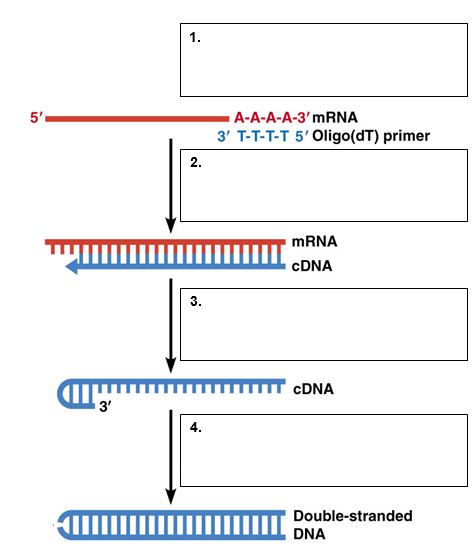
- Process of making cDNA:
- mRNA coding for a particular gene
- mRNA acts as template which single stranded DNA, cDNA formed with reverse transcriptase
- DNA is isolated by hydrolysis of RNA with an enzyme
- Double stranded DNA is formed by incubating with DNA polymerase and DNA nucleotides
- DNA is isolated by hydrolysis of RNA with an enzyme
- mRNA acts as template which single stranded DNA, cDNA formed with reverse transcriptase
- mRNA coding for a particular gene
- This is the formation of DNA using RNA template
- This can be overcome by using reverse transcriptase:
- Using restriction endonucleases
- These are a group of enzymes which cut the DNA at certain specific base sequences.
- Recognition sequences are often 6 bp long and are palindromic
- When cut, DNA can form one of two things:
- sticky end - single stranded over hang
- Blunt end - no single stranded overhang
- Sticky ends are better than blunt ends because blunt end is non-specific and can go in the wrong way round
- Making a gene in a gene machine:
- 1) desired nucleotide sequence inputed into computer
- 2) computer designs series of small overlapping DNA sequences
- 3) Small single stranded sequences assembled by adding a nucleotide at a time
- 3) join together to make gene
- 4) Gene replication by PCR
- 5) Genes are sequenced and those with errors are refected
- 6) Correct genes are transferred to host cell
- 5) Genes are sequenced and those with errors are refected
- 4) Gene replication by PCR
- 3) join together to make gene
- 3) Small single stranded sequences assembled by adding a nucleotide at a time
- 2) computer designs series of small overlapping DNA sequences
- 1) desired nucleotide sequence inputed into computer
- Preparing a DNA fragment for insertion into host cell
- Promoter and terminator required
- Promoter =
- Located in front of gene
- Specific sequence for binding of transcription factors
- Terminator =
- Location where DNA polymerase disengages from DNA
- Promoter =
- Place a promoter in front of the gene and a terminator behind the gene
- Promoter and terminator required
In vivo cloning - Use of vectors
- In vivo = performed or taking placed in a living organism
- In vitro = in glass
- A vector is something which carries DNA into a cell
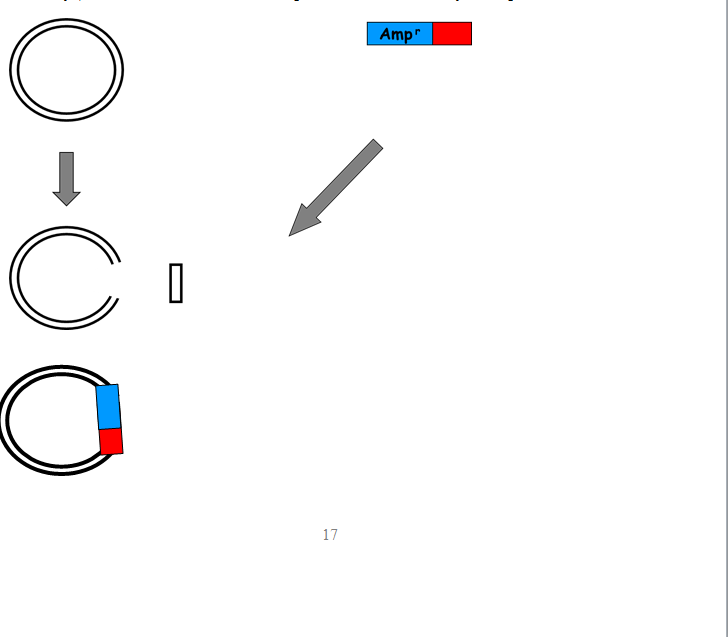
- How to add DNA fragment into a Vector:
- 1) cut vector with sticky ends using restriction endonucleases
- 2) Cut the insert with sticky ends with restriction endonucleases
- 3) mix together
- 4) single stranded DNA overhands complementary base pairs
- 5) add DNA ligase to connect sugar-phosphate backbone on both strands
- 4) single stranded DNA overhands complementary base pairs
- 3) mix together
- 2) Cut the insert with sticky ends with restriction endonucleases
- 1) cut vector with sticky ends using restriction endonucleases
- Advantages:
- Once DNA is in vector, it is easy to transform
- only gene complementary to sticky ends cloned
- Clone specific genes
- bacteria make multiple copes of gene
Introduction of DNA into host cells
- By inserting the DNA into the host cell, every time it replicates it will have the DNA
- Process of insertion is called transformation
- Transformation can only occur when:
- Host bacterial cell is mixed with calcium ions to make them more permeable
- Chill in ice, then warmed to 42 degrees C
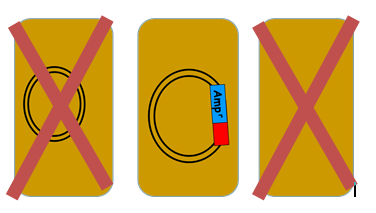
- After transformation, not all bacteria take up the DNA because:
- Some plasmids may not contain the insert at all
- Sometimes DNA fragments join together to form plasmids
Screening for genetically modified cells
- 1) Antibiotic resistance Marker Genes
- Cut plasmid with same RE used to produce gene fragment
- Add fragment and DNA ligase to cut plasmid
- Everywhere the ampicillin resistance gene goes, the gene of interest goes too, as they are joined together
- Recombinant plasmid
- Everywhere the ampicillin resistance gene goes, the gene of interest goes too, as they are joined together
- Add fragment and DNA ligase to cut plasmid
- When diluted and plated onto agar plates containing ampicillin, the two plates marked will die
- This leaves only the plate with the recombinant plasmid in, so these can be grown and used
- Cut plasmid with same RE used to produce gene fragment
- 2) Fluorescence Marker Genes
- Screening for loss of fluorescence:
- 1) Original plasmid contains both antibiotic resistance and fluorescence protein gene
- 2) Gene of interest is inserted into centre of fluorescence gene
- 3) diluted bacteria spread onto agar plate containing Ampicillin
- 4) bacteria that do not glow green are selected
- 3) diluted bacteria spread onto agar plate containing Ampicillin
- 2) Gene of interest is inserted into centre of fluorescence gene
- 1) Original plasmid contains both antibiotic resistance and fluorescence protein gene
- Screening for gain of fluorescence:
- 1) Original plasmid contains only antibiotic resistance gene (Ampicillin)
- 2) the gene of interest together with the fluorescence gene is ligated into a plasmid
- 3) Diluted bacteria are spread onto agar plate containing Ampicillin
- 4) Bacteria that glow green are selected
- 3) Diluted bacteria are spread onto agar plate containing Ampicillin
- 2) the gene of interest together with the fluorescence gene is ligated into a plasmid
- 1) Original plasmid contains only antibiotic resistance gene (Ampicillin)
- Screening for loss of fluorescence:
- 3) Enzyme Marker Genes
- Screening for loss of enzyme:
- 1) original plasmid contains both antibiotic resistance (Ampicillin) and LacZ enzyme gene
- 2) The gene of interest is inserted into the centre of LacZ gene
- 3) Diluted bacteria are spread onto an agar plate containing Ampcillin and substrate
- 4) Bacteria that do not hydrolyse the substrate are selected
- 3) Diluted bacteria are spread onto an agar plate containing Ampcillin and substrate
- 2) The gene of interest is inserted into the centre of LacZ gene
- 1) original plasmid contains both antibiotic resistance (Ampicillin) and LacZ enzyme gene
- Screening for gain of enzyme:
- 1) original plasmid contains only an antibiotic resistance gene for Ampicillin
- 2) gene of interest is inserted together with LacZ
- 3) Diluted bacteria are spread onto agar plate containing Ampicillin and substrate
- 4) Bacteria that hydrolyse the substrate are selected
- 3) Diluted bacteria are spread onto agar plate containing Ampicillin and substrate
- 2) gene of interest is inserted together with LacZ
- 1) original plasmid contains only an antibiotic resistance gene for Ampicillin
- Screening for loss of enzyme:
- 1) Antibiotic resistance Marker Genes
RE = restriction endonuclease
In Vitro gene cloning PCR
- To replicate DNA in vitro you need:
- DNA fragment
- pair of primers
- Nucleotides
- DNA polymerase
- Thermocycler
- How PCR works:
- 1) Strand separation - DNA heated to 95 degrees to break H bonds
- 2) Primer binding - cooled 55 degrees to allow primer to anneal
- 3) Strand synthesis - heat it to 72 degrees DNA polymerase, two strands of DNA complementary to original DNA
- 2) Primer binding - cooled 55 degrees to allow primer to anneal
- 1) Strand separation - DNA heated to 95 degrees to break H bonds
- Advantages:
- make a lot of DNA
- Fast
- can be used for forensic analysis
- No need for culture cells
- Disadvantages:
- Risk of contamination
- Risk of mutation
- To replicate DNA in vitro you need:
Relating recombinant DNA technology to gene therapy
- Somatic cells = non-repoductive
- Germ cells = reproductive cells
- Somatic cell therapy targets tissue
- Germ cell therapy occurs in fertilised eggs
- Cystic Fibrosis
- Caused by deletion mutation
- Chlorine ions are kept inside the cell so osmosis cannot occur as well, less water will leave the cell
- Therefore, mucus builds up so infections cannot be removed
- Gene therapy can replace the defective gene with healthy gene
- Gene supplementation, several healthy genes are placed alongside the defective gene and the dominant healthy gene will be expressed
- Delivering healthy genes to sufferers:
- 1) Use of an adenovirus
- a) Virus rendered harmless by removal of some genes
- b) Virus grown in an epithelial cell culture together with plasmids and healthy gene
- c) Plasmids enter the adenovirus DNA
- d) Virus are extracted from the cell culture and inserted into the noses of patients
- e) The virus injects its DNA into the epithelial cells of the lungs
- d) Virus are extracted from the cell culture and inserted into the noses of patients
- c) Plasmids enter the adenovirus DNA
- b) Virus grown in an epithelial cell culture together with plasmids and healthy gene
- Effects are short lived, can cause infections, patients can develop immunity to adenovirus, genes not always expressed
- Viruses can target specific cells and can adept their own methods of inserting into DNA
- With more treatments, there is a better immune response, so it is less likely to be taken up
- Antibodies may attack the virus
- a) Virus rendered harmless by removal of some genes
- 2) Use of a liposome
- Liposome aerosol may not be fine enough to pass through bronchioles
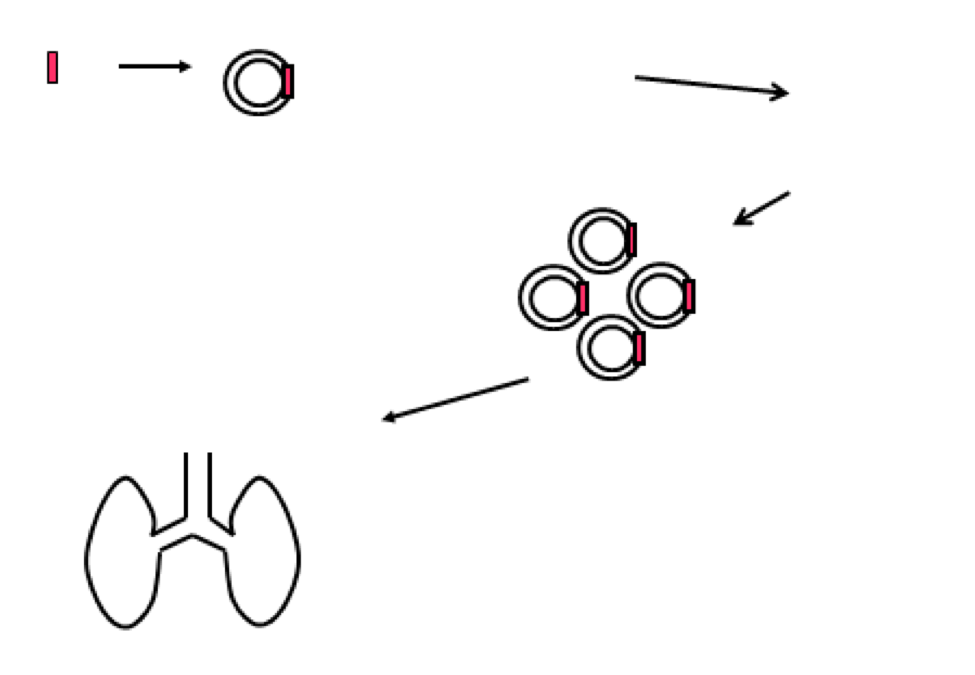
- CFTR gene
- Gene in vector
- Multiple copies are made of vector and insert
- Cloned copies of the vector placed into liposome
- Liposomes passed into lungs via an aerosol
- This makes the plasmid lipid soluble
- Cloned copies of the vector placed into liposome
- Multiple copies are made of vector and insert
- Gene in vector
- Very few of the genes are expressed
- 1) Use of an adenovirus
- Somatic cells = non-repoductive
DNA probes
- This is a:
- Short sequence of DNA
- Complementary nucleotide sequence of gene of interest
- Radioactive or fluorescence label added
- Radioactive probe causes film to have a dark shadow where the radioactive label has been
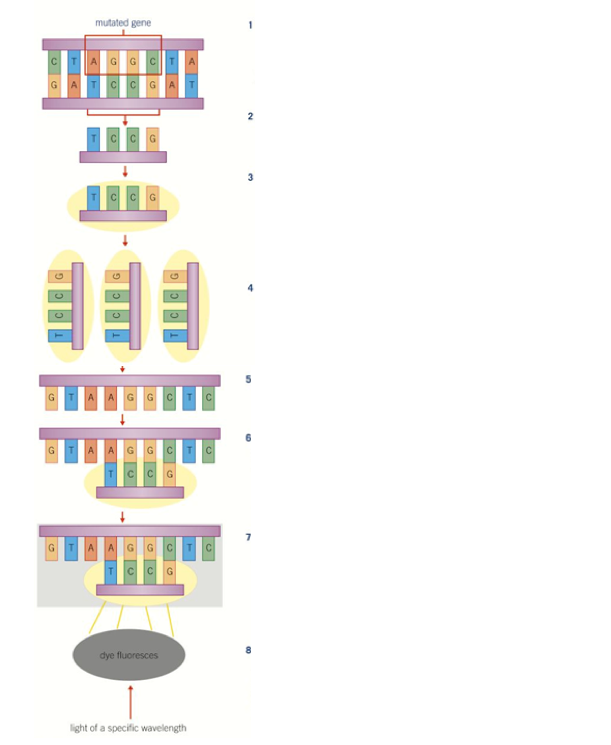
- Process of locating a specific allele of a gene:
- Sequence of nucleotides on mutated gene is determined by DNA sequencing
- Fragment of DNA with complementary bases to the mutant allele of the gene is produced
- DNA probe is formed by fluorescently labelling the DNA fragment
- PCR techniques are used to produce multiple copes of DNA probe
- Probe is added to single stranded DNA fragments from the person being screened
- If the donor has a mutated gene, some donor DNA fragments will be complementary to the probe, so the probe will bind
- These DNA fragments will now be labelled with the probe and can be distinguished
- If complementary fragments are present, the DNA probe will be taken up and the dye will fluoresce.
- These DNA fragments will now be labelled with the probe and can be distinguished
- If the donor has a mutated gene, some donor DNA fragments will be complementary to the probe, so the probe will bind
- Probe is added to single stranded DNA fragments from the person being screened
- PCR techniques are used to produce multiple copes of DNA probe
- DNA probe is formed by fluorescently labelling the DNA fragment
- Fragment of DNA with complementary bases to the mutant allele of the gene is produced
- Sequence of nucleotides on mutated gene is determined by DNA sequencing
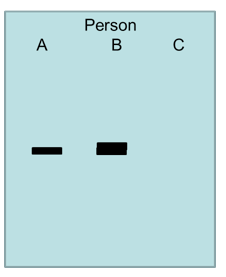
- The more binding with the probe and the DNA (so hence more fluorescence) shows that more of that gene is present
- e.g.
- Where the probe is complementary to cystic fibrosis (allele = a)
- Aa
- aa
- AA
- aa
- Aa = carrier aa = disease AA = healthy
- e.g.
- Screening for tumour suppressor gene is important because:
- Mutations of both alleles will result in inactive tumour suppressor
- Screening may identify hereozygous individuals for gene, so higher chance
- This allows for personalised medicines:
- Medicinal treatments can be based on genotype
- Some patients genotype means drugs may be more/less effective
- Tailer drug selection and dosage to each individual
- Genetic counselling is the process by which patients at risk of an inherited disorder are advised of the consequences and probability of having children
- This is a:
DNA fingerprinting
- Some parts of non-coding DNA contain short sequences of repeated DNA
- The technique:
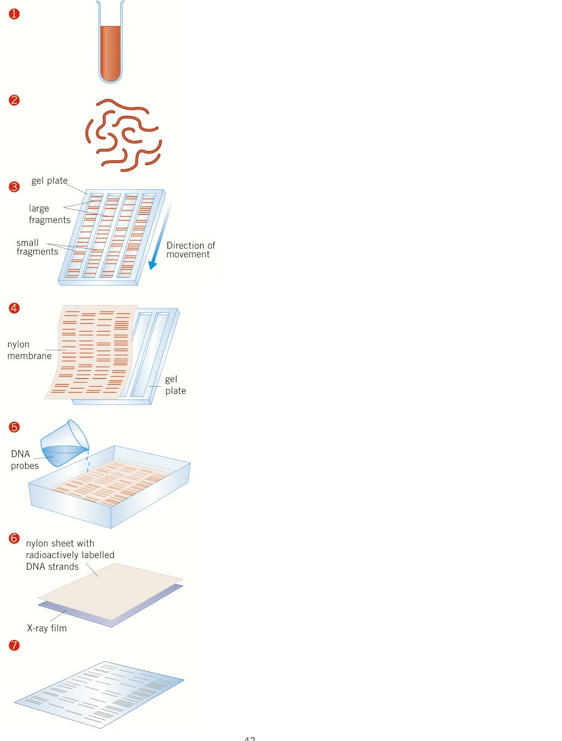
- Extraction - DNA extracted from sample
- Digestion - restriction endonucleases cut the DNA into fragments
- Separation - Fragments separated with electrophoresis
- Separation - DNA fragments transferred from gel to nylon membrane
- Hybridisation - DNA probes added to label fragments
- Development - Membrane with radioactive labelled DNA fragments placed onto film
- Development - Reveals dark bands where DNA probes attached
- Development - Membrane with radioactive labelled DNA fragments placed onto film
- Hybridisation - DNA probes added to label fragments
- Separation - DNA fragments transferred from gel to nylon membrane
- Separation - Fragments separated with electrophoresis
- Digestion - restriction endonucleases cut the DNA into fragments
- Extraction - DNA extracted from sample
- Red blood cells cannot be used for DNA fingerprinting because they have no nucleus
- DNA must be washed with dilute acid after the fragments are on the nylon membrane to make it single stranded
- This is because it must be single stranded to allow the probe to bind
Describing how genetic fingerprinting works in an exam:
- 1) DNA is cut
- 2) Using restriction enzyme
- 3) Electrophoresis
- 4) Separates according to size
- 5) DNA made single stranded
- 6) Transfer to nylon membrane
- 7) apply probe
- 8) radioactivity detected on film
- 9) Pattern is unique to every individual
- 8) radioactivity detected on film
- 7) apply probe
- 6) Transfer to nylon membrane
- 5) DNA made single stranded
- 4) Separates according to size
- 3) Electrophoresis
- 2) Using restriction enzyme
- 1) DNA is cut
Imagens e arquivos do mapa
Informações
- Descrição
- Revision for pack 15 - Recombinant DNA technology
- Criado por
- Jacob Shepherd
- Visualizações
- 92
- Tags
- Avaliação