
Mapa mental
Syringomyelia
Conteúdo do mapa
Syringomyelia
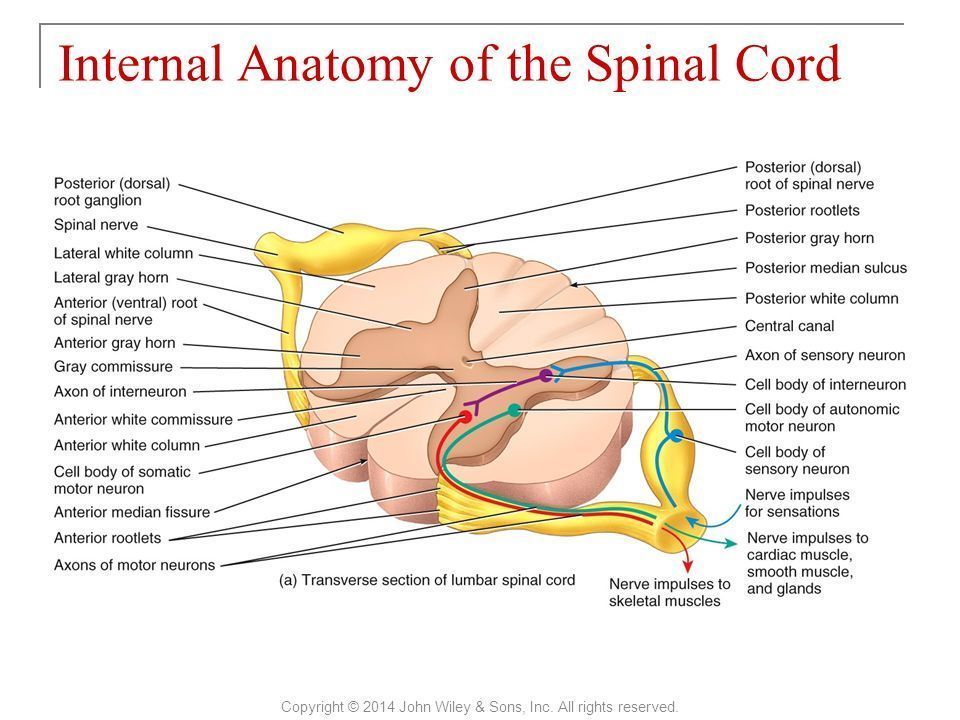
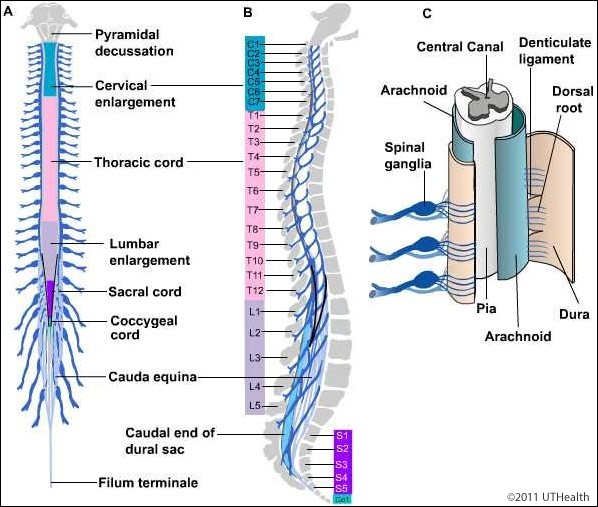
Anatomy of spinal cord
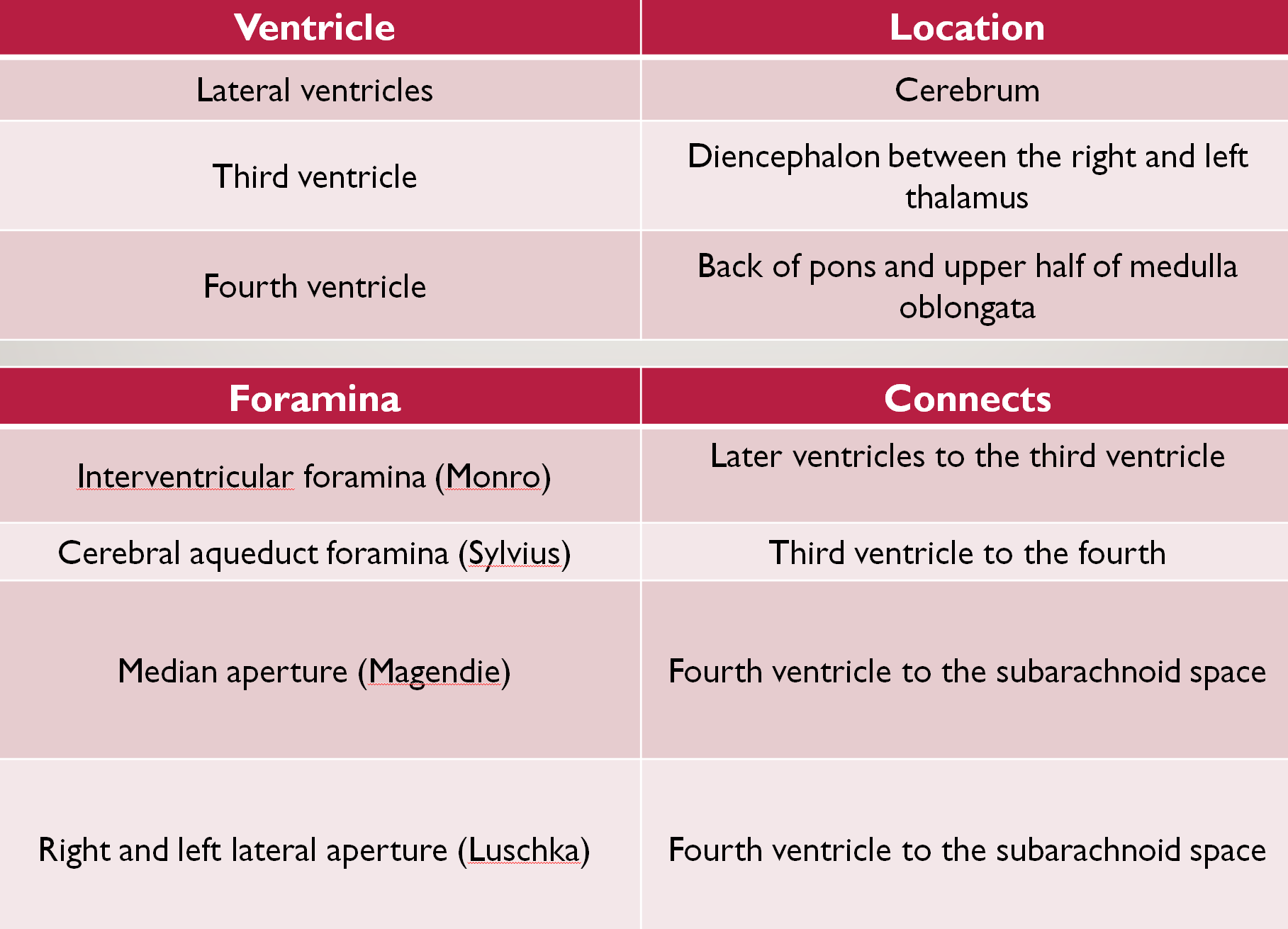
The ventricular system
- is a set of four interconnected cavities (ventricles) in the brain, where the cerebrospinal fluid (CSF) is produced. Within each ventricle is a region of choroid plexus.
- Formation of CSF
- The cerebrospinal fluid is produced by the choroid plexus of the ventricles, which is a network of capillaries with fenestrated endothelial cells and specialized ependymal cells.
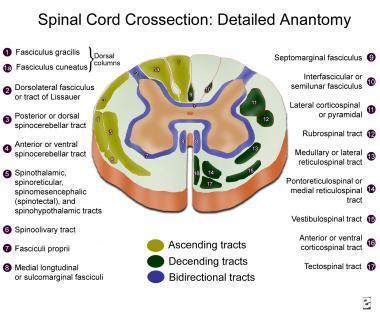
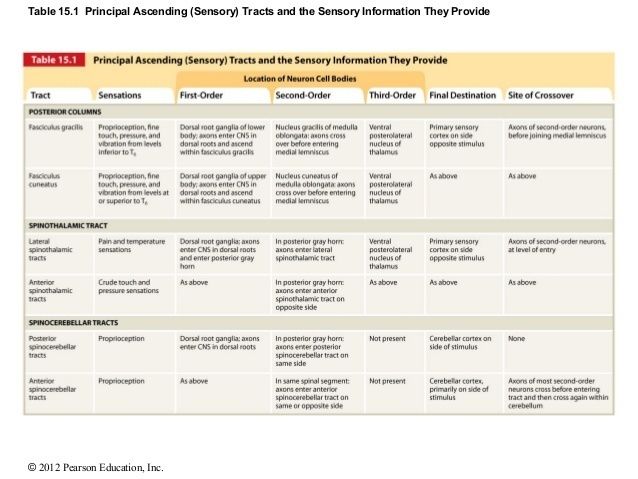
Ascending & descending tracts
- Motor Pathway
- Pyramidal System
- Corticospinal tract
- Voluntary, skilled, discrete movements.
- UMN
- Neurons of the cerebral cortex in motor areas (pyramidal cells) giving descending fibers → converge in corona radiate →pass through posterior limb of internal capsule →fibers descend through basis pedunculi of the midbrain →then through pyramids of medulla.
- LMN
- Anterior horn of the spinal cord
- Corticospinal tract
- Pyramidal System
- Sensory Pathways
- Posterior white column
- Posterior (dorsal) spinocerebellar
- Anterior (ventral) spinocerebellar
- Lateral Spinothalamic
- Anterior Spinothalamic
- Motor Pathway
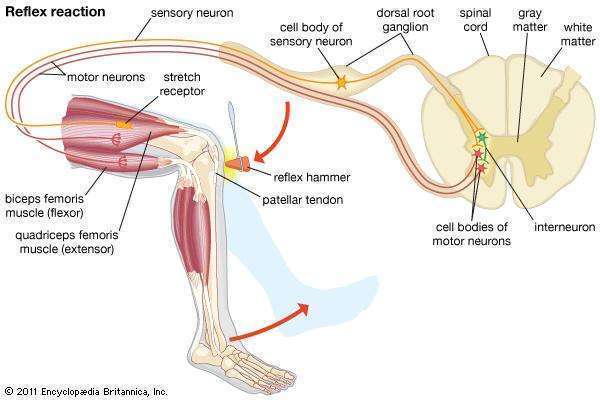
Reflexes
- A reflex is an involuntary and instantaneous movement in response to a stimulus.
- Components
- 1. Stimulus 2. Sensory receptor 3. Sensory (afferent) neuron 4. CNS integration 5. Efferent (motor) neuron 6. Effector (target tissue) 7. Response (movement)
- Classified by
- Development
- Innate reflex
- Acquired reflex
- Response
- Somatic reflex
- Visceral reflex
- Compexity of circuit
- Monosynaptic
- Polysynaptic
- Processing site
- spinal reflex
- Cranial reflex
- Development
- Mechanism
- Strange Reflexes
- Babinski reflex
- Snout reflex
- Glabellar reflex (Myerson's sign)
- Palomental reflex
- Clonus
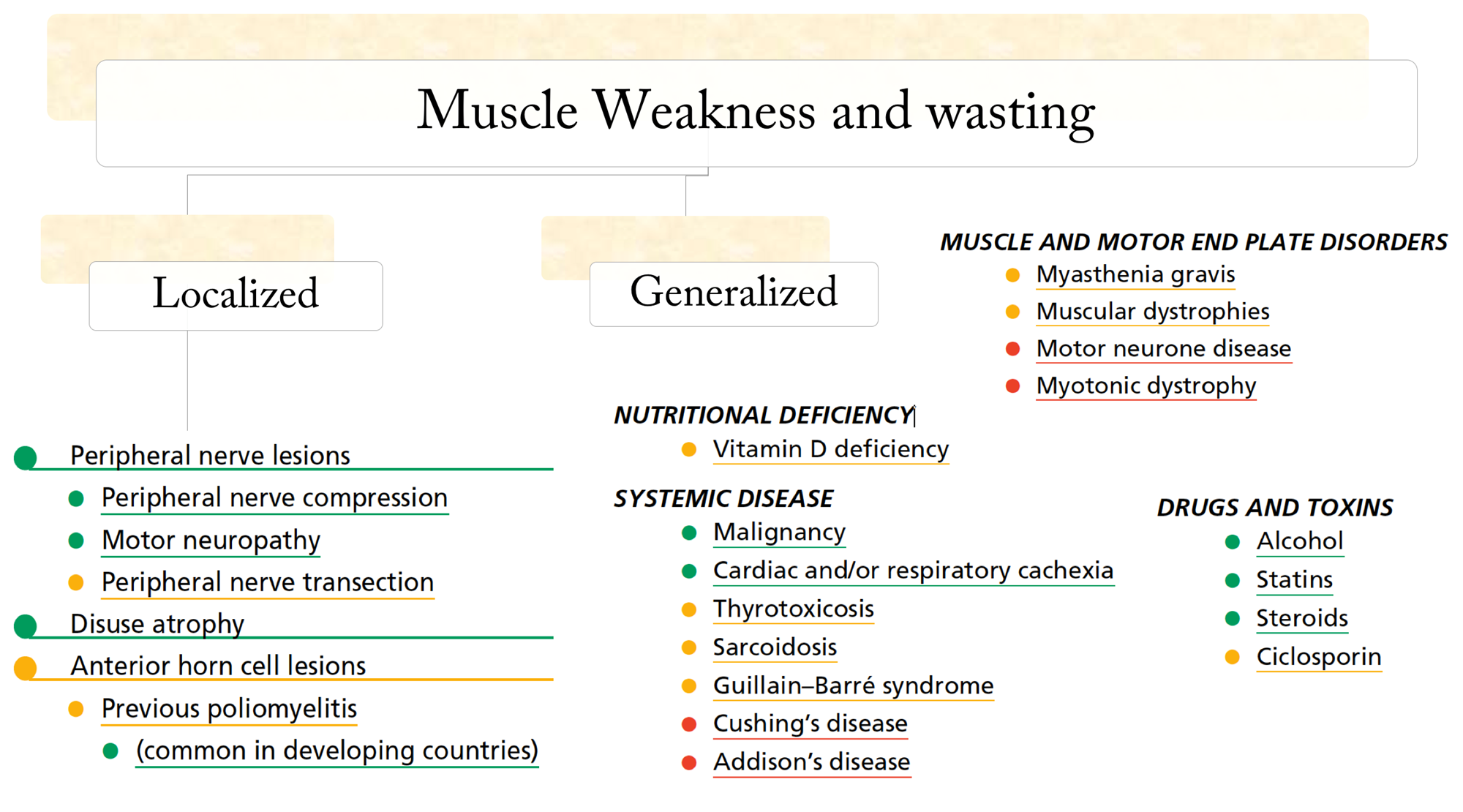
Differentials of muscle weakness and wasting
Differentials of Stiffness
- Traumatic brain injury (TBI)
- Spinal cord injury
- Stroke
- Meningitis
- Brain damage due to a lack of oxygen
- Encephalitis
- Phenylketonuria
Differentials of Numbness
- PERIPHERAL NEUROPATHY
- vitamin B1 deficiency and B12 deficiency
- Multiple sclerosis
- Stroke
- Disorders of the brain and spinal cord
- Injuries
- Tumors
- Aneurysm
- Infection
- Syringomyelia
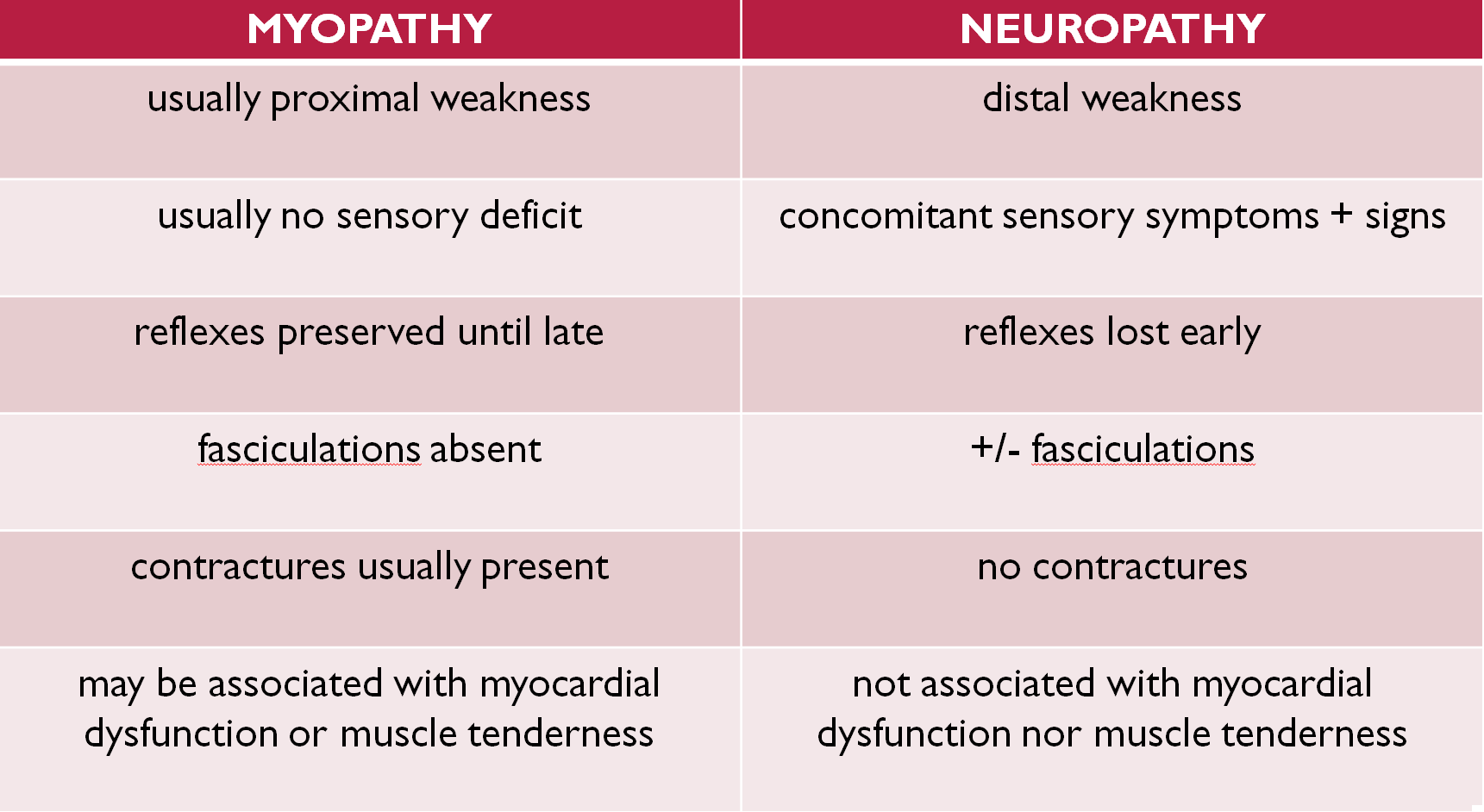
Difference between neuropathy and myopathy
Neurlogical Examination
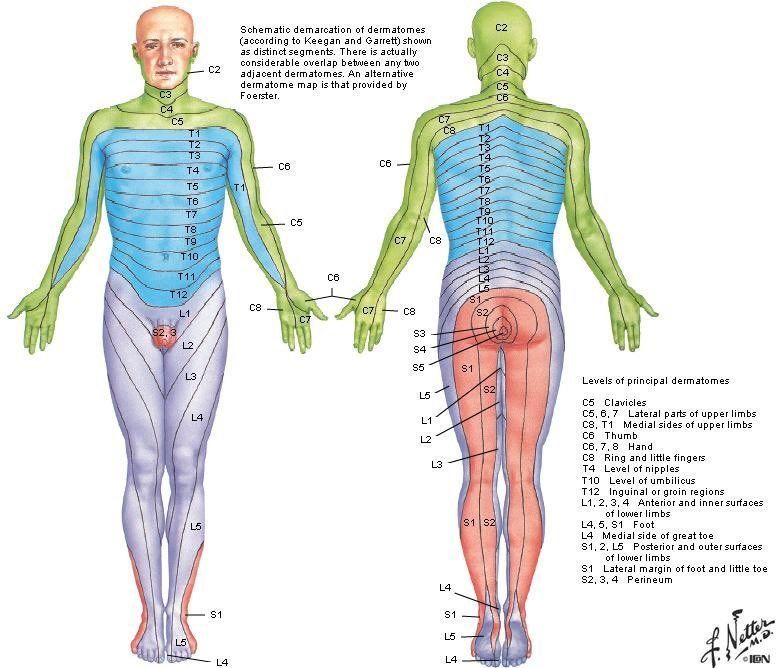
- Dermatomes
- Neurological Examination Of The Upper Limb
- Assesses muscle tone
- pronator test
- Checks power
- Checks deep tendon reflexes: biceps, triceps, supinator, fingers.
- Joint position Vibration sense Light touch & pin prick
- Coordination assessment
- Neurological Examination Of The Lower Limb
- Assesses gait
- muscle tone
- Romberg’s test
- Checks power
- Checks deep tendon reflexes: knee, ankle, planter reflex.
- Joint position Vibration sense Light touch & pin prick
- Coordination assessment
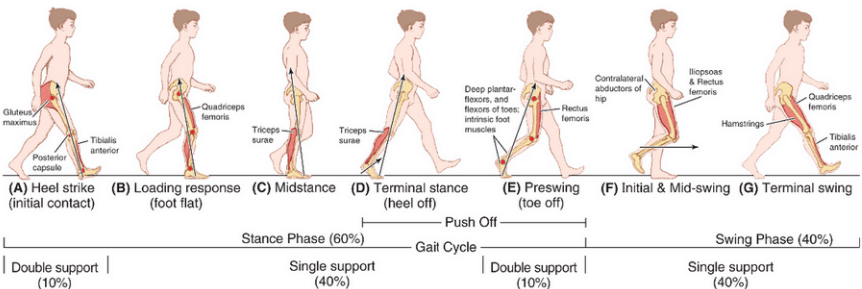
Normal Gait
- major criteria essential to walking
- Equilibrium
- Locomotion
- Musculoskeletal Integrity
- Neurological Control
- gait cycle
- major criteria essential to walking
Pathophysiology of syringomyelia
- Syrinx acts as intramedullary mass. Redirected CSF fills expanding central canal. Continual movement of CSF builds pressure. Syrinx widens & compresses nerve fibers. Resulting in pain, weakness, and stiffness in back, shoulders, arms, or legs. Each patient experiences a different combination of symptoms depending on where in spinal cord syrinx forms and how far it expands.
Signs and Symptoms of syringomyelia
- Loss of pain and temperature sensation
- Muscle wasting and loss of reflexes
- Ptosis, miosis, and anhidrosis
Investigations
- MRI
- Myelogram
Management of syringomyelia
- Asymptomatic syringomyelia with a small syrinx cavity and with no clear etiology is best managed with watchful waiting and imaging examination.
- Posterior fossa decompression
- Percutaneous aspiration of the syrinx
- Syrinx shunt
- Resection of the tumor
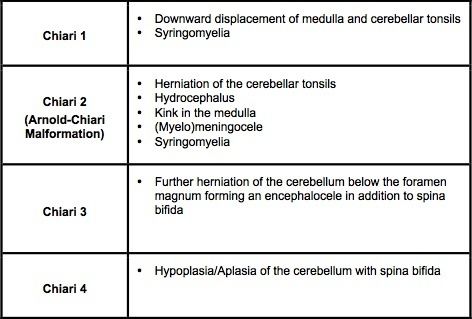
Chiari malformations
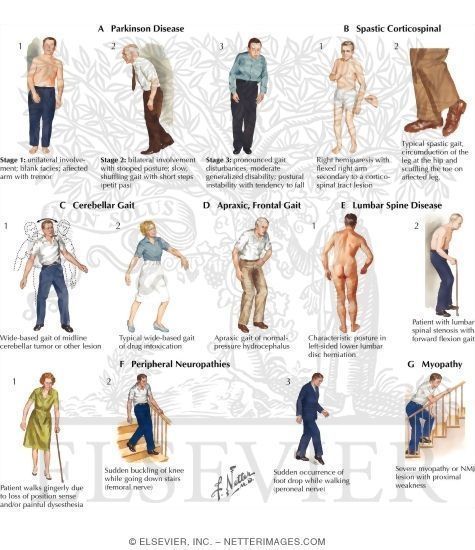
Abnormal gait
Imagens e arquivos do mapa
Informações
- Descrição
- Mapa Mental sobre Syringomyelia, criado por hamda ali em 14-09-2018.
- Criado por
- hamda ali · set 2018
- Atualizado
- 14 set 2018
- Visualizações
- 162
- Avaliação