
Mapa mental
SEPTIC SHOCK
Conteúdo do mapa
SEPTIC SHOCK
What is it
- Pathophysiology
- Gram-negative have a higher morbidity and mortality then Gram-positive
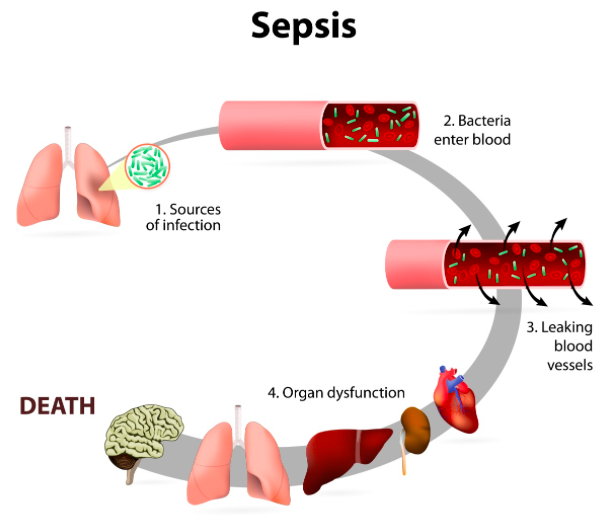
- The patient has an infection which is causing the body to activate a systemic inflammatory response
- The patient has hypotension that can not be reversed with fluid replacement and tissue perfusion is abnormal
- The body produces the natural inflammatory response to an antigen that enters to try and kill the microorganism to keep the body from contracting disease
- The problem is that the response initiated by the body is severe and exaggerated causing more harm than good
- Platelet activating factor in released and causes blood to clot and cause the body to produce microthrombi that block the small vasculature system
- The problem is that the response initiated by the body is severe and exaggerated causing more harm than good
- Immunosuppressed people and invasive procedures are often the reasons why people develop septic shock
- Pathophysiology
Stages of Shock
- Compensatory Shock
- Progressive Shock
- Refractory Shock
- aerobic metabolism is exaggerated by vastconstriction and decreased cardiac output
- Lactic acid increases permeability allowing fluid and plasma to leave the vascular space
- Continued decrease in blood volume and blood flow leads to continued cardiac output decrease
- Lung, liver, and kidney failure cause accumulation build up of lactate, urea, ammonia, and carbon dioxide
- Unlikely to recover, organ failure has occurred and compensation mechanisms are overwhelmed
- Lung, liver, and kidney failure cause accumulation build up of lactate, urea, ammonia, and carbon dioxide
- Continued decrease in blood volume and blood flow leads to continued cardiac output decrease
- Lactic acid increases permeability allowing fluid and plasma to leave the vascular space
- aerobic metabolism is exaggerated by vastconstriction and decreased cardiac output
- Aggressive intervention should be taken in this stage
- Fluid and protein go out of the vascular space to the interstitial space
- volume of blood circulating is low and interstitial edema
- pulmonary arterioles constrict increasing pulmonary artery
- Mental status changes are important, kidneys can be effected and potential myocardial infarctions may occur gastro intestinal and liver function may be effected
- pulmonary arterioles constrict increasing pulmonary artery
- volume of blood circulating is low and interstitial edema
- Fluid and protein go out of the vascular space to the interstitial space
- Refractory Shock
- One of the first signs is hypotension caused by decreased cardiac output
- Decreased blood flow to kidneys
- Vasoconstriction causing more blood to return to the heart causing and increase in BP
- Sodium and water reabsorption by kidneys to increase blood volume
- Decrease in blood to gastrointestinal, causing immobility, and to the skin, causing clammy cool skin except in early stages.
- This is a multi-system response and if corrected at this stage by the perfusion deficit being reversed/corrected, the patient can recover with little to no residual effects. If they do not correct this stage the patient enters the progressive stage
- Decrease in blood to gastrointestinal, causing immobility, and to the skin, causing clammy cool skin except in early stages.
- Sodium and water reabsorption by kidneys to increase blood volume
- Vasoconstriction causing more blood to return to the heart causing and increase in BP
- Decreased blood flow to kidneys
- Progressive Shock
- Compensatory Shock
6 Steps Within 1st Hour /Nursing care
- 1. Give 100% O2
- 2. Take blood cultures to help determine any antibiotic therapy.
- 3. Give IV antibiotics/drugs.
- 4. Give IV therapy.
- 5. Measure lactate and hemoglobin.
- 6. Insert catheter and monitor urine output.
- Assist in managing accurate fluid balance
- Nurse should watch Vital signs, Body temperature, Hemodynamic function, Urine output, LOC, Laboratory values
- Assist in managing accurate fluid balance
- Lactic acidosis may happen from tissue hypoxia
- Monitoring lactic acid levels is of extreme importance may be one of the first signs of impending shock
- 6. Insert catheter and monitor urine output.
- Give isotonic fluids
- If fluids do not help inotropic drugs
- 5. Measure lactate and hemoglobin.
- Broad-spectrum antibiotic that is appropriate as soon as septic shock is suspected
- vasopressors
- 4. Give IV therapy.
- 3. Give IV antibiotics/drugs.
- Maintain own airway or mechanical ventilation
- Proper positioning to promote respiratory function ABGs should be monitored
- o Circulatory functions should be addressed with either fluids or medication
- 2. Take blood cultures to help determine any antibiotic therapy.
- 1. Give 100% O2
Signs & Symptoms
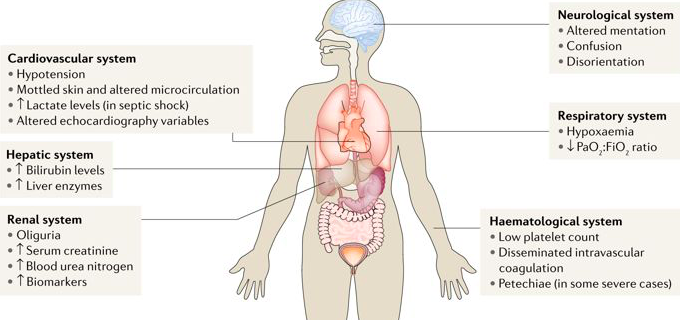
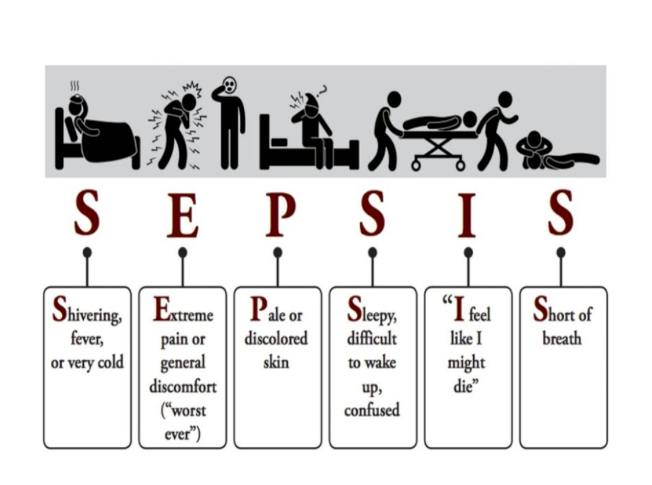
- Complex and no symptom or set of symptoms is specific to this diagnosis.
- Usually the patient has a hyper dynamic state where there is an increased cardiac output and decreased stroke volume rate
- Patients tend to hyperventilate to try and compensate which will grow them into respiratory alkalosis, once they can no longer compensate the body goes into acidosis. Many patients will develop respiratory failure.
- Altered level of consciousness
- Patients tend to hyperventilate to try and compensate which will grow them into respiratory alkalosis, once they can no longer compensate the body goes into acidosis. Many patients will develop respiratory failure.
- Usually the patient has a hyper dynamic state where there is an increased cardiac output and decreased stroke volume rate
- Complex and no symptom or set of symptoms is specific to this diagnosis.
Collaborative care
- It is suggested is to assess patients daily to determine if antibiotics should be reduced
- Empiric antibiotics be discontinued once the pathogen is identified or there is clinical improvement in the patient
- It is suggested is to assess patients daily to determine if antibiotics should be reduced
Diagnostic Studies
- No single diagnosis
- Health history, surgical background
- Decreased tissue perfusion leads to elevated lactate levels and high base deficit
- Blood cultures
- Liver enzymes
- Blood cultures
- Decreased tissue perfusion leads to elevated lactate levels and high base deficit
- Health history, surgical background
- No single diagnosis
Imagens e arquivos do mapa
Informações
- Descrição
- Mapa Mental sobre SEPTIC SHOCK, criado por Bethany Hawkins em 20-10-2018.
- Criado por
- Bethany Hawkins
- Visualizações
- 5
- Avaliação