
Mapa mental
INTERCULTURAL STUDIES

Conteúdo do mapa
INTERCULTURAL STUDIES
The natural approach
- Characteristics
- Almost all classroom activities are devoted to communication. Grammar outside of class.
- Less emphasis on teacher monologues, direct repetition, and formal questions and answers.
- Less focus on accurateproduction of target language sentences.
- Stress the similarities between learning the first and second languages. There is no correction of mistakes.Learning takes place by the students being exposed to language that is comprehensible or made comprehensible to them
- Characteristics
Grammar-translation approach
- Approach Axiomatic:
- Describes how people acquire their knowledge of the language and make statements the conditions whish will promote successful language learning. waider than a method or technique. Is the source of the principles and practices of language teaching
- Methodology Procedural
- Is a practical realization of an approach. A methodology is a group of procedures, a system that visibly explain how to teach a language (syllabus organization-contents and skills to be taugh- roles and materials)
- Methodology Procedural
- Describes how people acquire their knowledge of the language and make statements the conditions whish will promote successful language learning. waider than a method or technique. Is the source of the principles and practices of language teaching
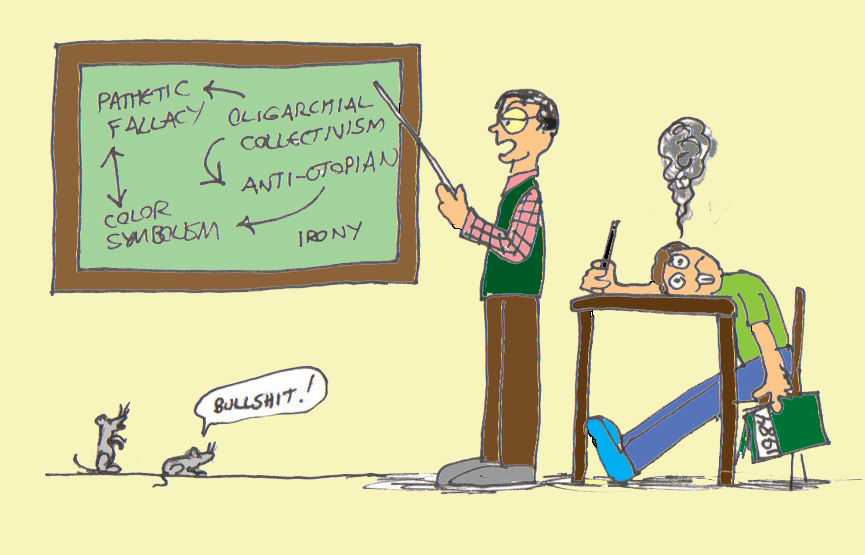
- Learning by translation to and from the target language. Grammar rules are to be memorized and long lists of vocabulary are learned.
- There is little or no emphasis placed on developing oral ability.
- Approach Axiomatic:
Audiolingual method
- Learning a language means acquiring habits.There is much practice of dialogues of every situations.New language is first heard and extensively drilled before being seen in its written form.
- Characteristics
- Dialogues: imitation and repetition.
- Drills: Repetition, backward build-up, chain, substitution, transformation and Q&A.
- Teacher: is like an orchestra leader.
- Leader. Students: imitators.
Total physical response
- Characteristics
- The coordination of speech and action.
- Learners roles of listener and performer.
- Learning language by gesture (Body movements).
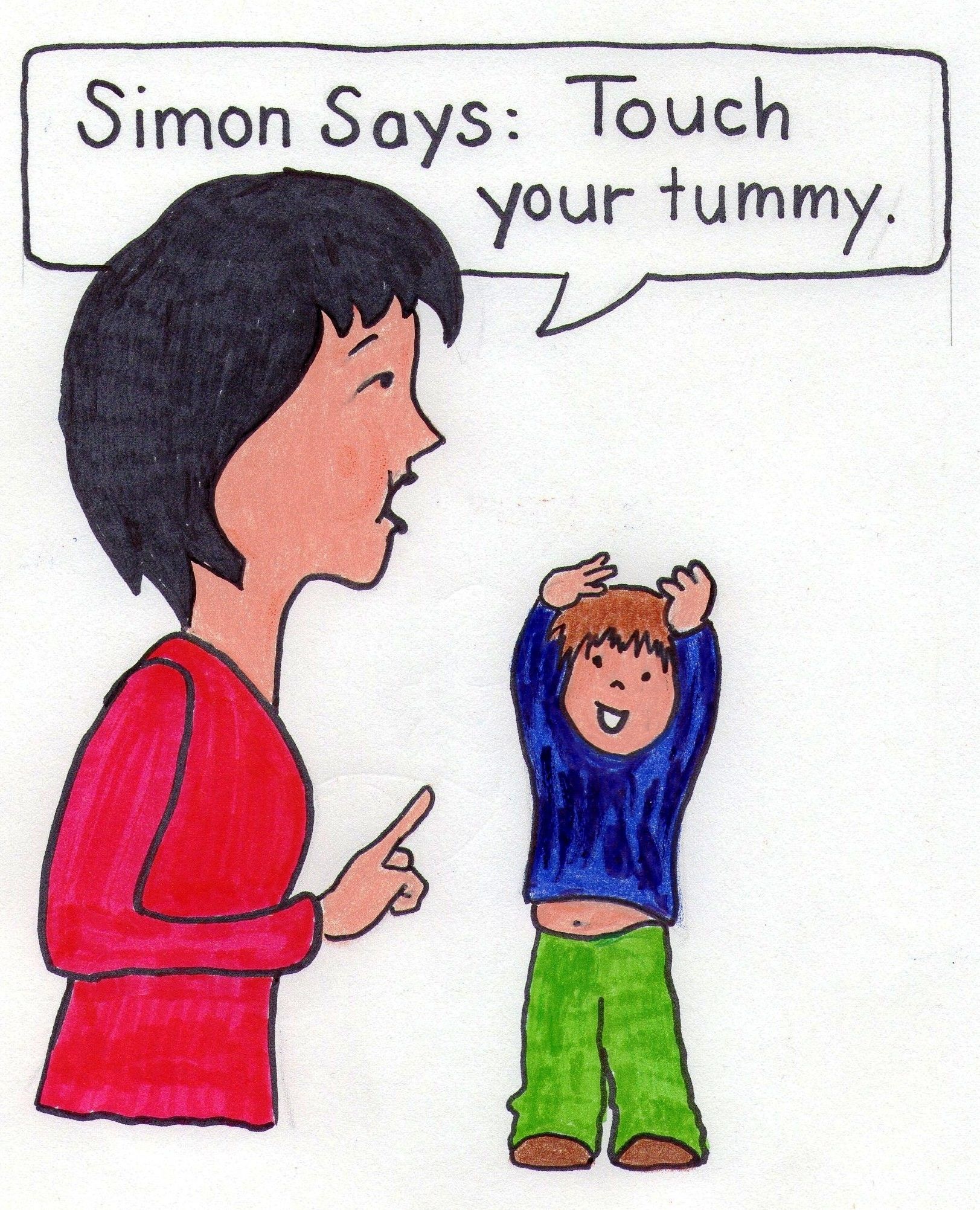
- works by having the learner respond to simple commands such as "sit down", "silent", "go to the door and open it ",. The method stresses the importance of aural comprehension.
- Characteristics
ADQUISICIÓN Y APRENDIZAJE DE UNA LENGUA EXTRANJERA
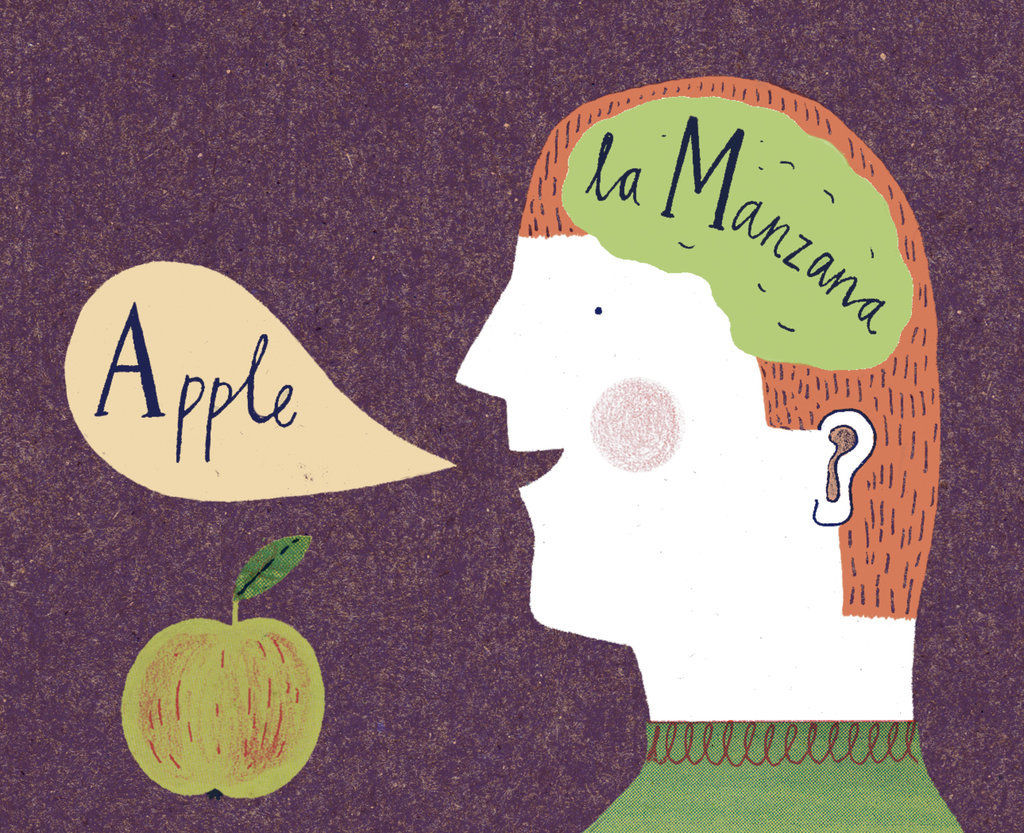
- BILINGUALISM AND SECOND LANGUAGE ACQUISITION
- What is Bilingualism?
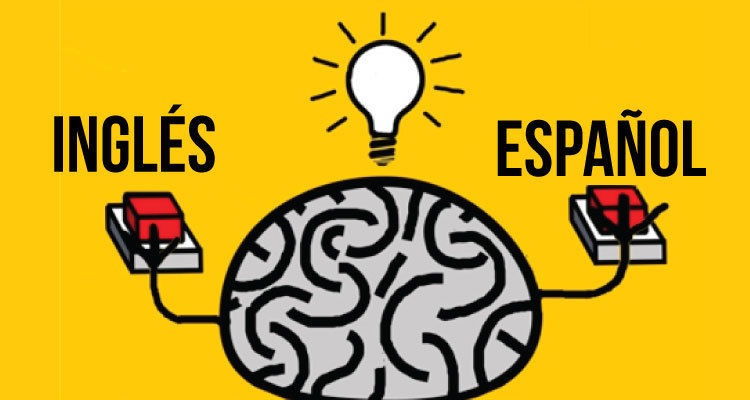
- Simply, as the ability to express oneself with ease in two languages. Bilinguals are equally proficient with both languages in speaking, listening, writing, reading as well as having a perfect knowledge of their respective cultures. Bilinguals usually don’t speak both languages equally well and that is because they use each language in different contexts, activities and domains.
- https://www.youtube.com/watch?v=ABcNewF69Nw
- https://www.youtube.com/watch?v=ABcNewF69Nw
- Simply, as the ability to express oneself with ease in two languages. Bilinguals are equally proficient with both languages in speaking, listening, writing, reading as well as having a perfect knowledge of their respective cultures. Bilinguals usually don’t speak both languages equally well and that is because they use each language in different contexts, activities and domains.
- What is second Languague acqusition?
- Refers both to the study of individuals and groups who are learning a language subsequent to learning their first one as young children, and to the process of learning that language. The additional language is called a second language (L2), even though it may actually be the third, fourth, or tenth to be acquired.
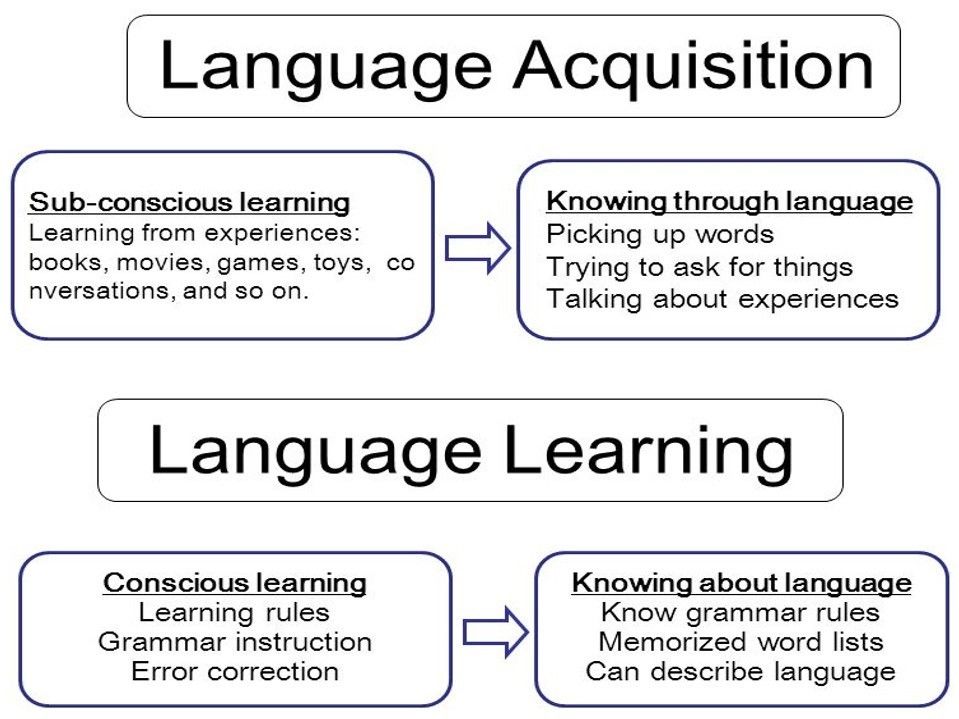
- Language Acquisition
- Difference between
- Language Learning
- It is the result of direct instruction in the rules of language. And it certainly is not an age-appropriate activity for your young learners. In language learning, students have conscious knowledge of the new language and can talk about that knowledge. They can fill in the blanks on a grammar page. Research has shown, however, that knowing grammar rules does not necessarily result in good speaking or writing. A student who has memorized the rules of the language may be able to succeed on a standardized test of English language but may not be able to speak or write correctly.
- https://www.youtube.com/watch?v=nKAECRp2qJE&t=81s
- Language Learning
- Children acquire language through a subconscious process during which they are unaware of grammatical rules. This is similar to the way they acquire their first language. They get a feel for what is and what isn’t correct. In order to acquire language, the learner needs a source of natural communication. The emphasis is on the text of the communication and not on the form. Young students who are in the process of acquiring English get plenty of “on the job” practice. They readily acquire the language to communicate with classmates.
- Difference between
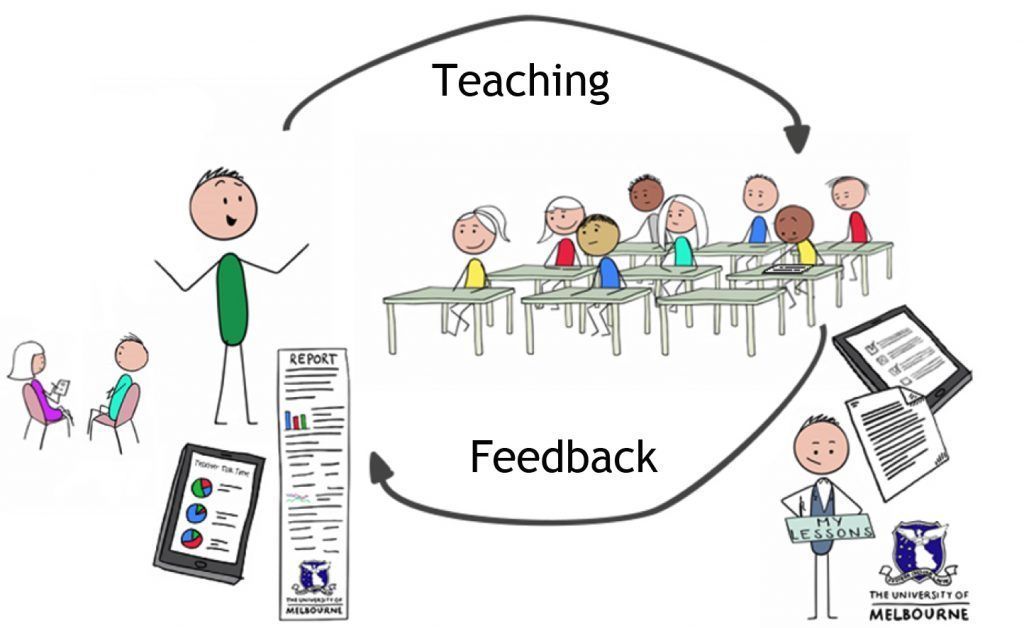
- Corrective and implicit feedback
- corrective feedback facilitates acquisition by activating internal processes, such as attention and repetition, which make acquisition possible. Such feedback can occur in the context of a dialogue between teacher and student, through clarification, repetition or some other type of signal against the mistake made.
- Corrective feedback, provided by someone with greater skills and knowledge, would facilitate and help the learner in their process of recognizing and correcting errors independently.
- Feedback can be given directly or indirectly, in this case direct feedback is made when errors are corrected granting correction to the student, on the other hand, indirect feedback does not provide the answer but encourages the student to self-correct.
- https://www.youtube.com/watch?v=JE5UTQK0L30
- https://www.youtube.com/watch?v=KNBU8Ny46jE
- Mistakes…
- To correct errors you can use two ways: Focus on them, that is, look at specific errors or blurring, this helps us to correct the problem by looking at the global error and not specific. To correct these errors, it is efficient to use feedback, which causes the learner to detect problems, find the resources to solve it and generate self-correction, thus facilitating the acquisition autonomously.
- Teaching Language
- Refers to the process and practice of acquiring a second or foreign language. It primarily is a branch of applied linguistics, however can be considered an interdisciplinary field. There are four main learning categories for language education: communicative competencies, proficiencies, cross-cultural experiences, and multiple literacies.
- Language Skills
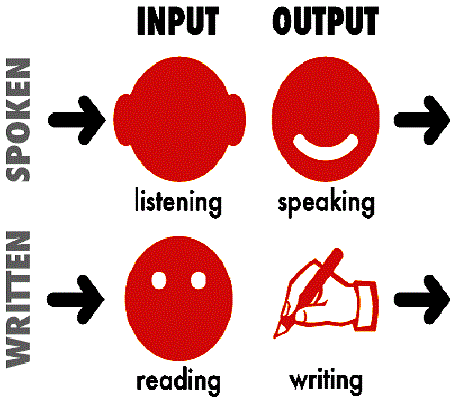
- The four skills of language (also known as the four skills of language learning) are a set of four capabilities that allow an individual to comprehend and produce spoken language for proper and effective interpersonal communication.
- Listening
- Listening is the first language skill we acquire in our native language. It is what is known as a receptive skill, or a passive skill, as it requires us to use our ears and our brains to comprehend language as it is being spoken to us. It is the first of two natural language skills, which are required by all natural spoken languages.
- Speaking
- Speaking is the second language skill we acquire in our native language. It is what is known as a productive skill, or an active skill, as it requires us to use our vocal tract and our brains to correctly produce language through sound. It is the second of two natural language skills.
- Reading
- Reading is the third language skill we may acquire in our native language. As with listening, it is a receptive, or passive skill, as it requires us to use our eyes and our brains to comprehend the written equivalent of spoken language.
- Writing
- Writing is the fourth language skill we may acquire in our native language. As with speaking, it is a productive, or active skill, as it requires us to use our hands and our brains to produce the written symbols that represent our spoken language. Along with reading, it is one of the two artificial language skills
- https://www.youtube.com/watch?v=IUuMf4EumsQ
- Listening
- The four skills of language (also known as the four skills of language learning) are a set of four capabilities that allow an individual to comprehend and produce spoken language for proper and effective interpersonal communication.
- What is Bilingualism?
- BILINGUALISM AND SECOND LANGUAGE ACQUISITION
Imagens e arquivos do mapa










Informações
- Descrição
- Ingles Mapa Mental sobre INTERCULTURAL STUDIES, criado por Stefany Reyes Rodriguez em 02-04-2019.
- Criado por
- Stefany Reyes Rodriguez
- Visualizações
- 0
- Histórico
-
- Criado por Stefany Reyes Rodriguez · 6 mar 2018
- Copiado por Stefany Reyes Rodriguez · 2 abr 2019
- Avaliação