
Mapa mental
week 3: reading
Conteúdo do mapa
week 3: reading
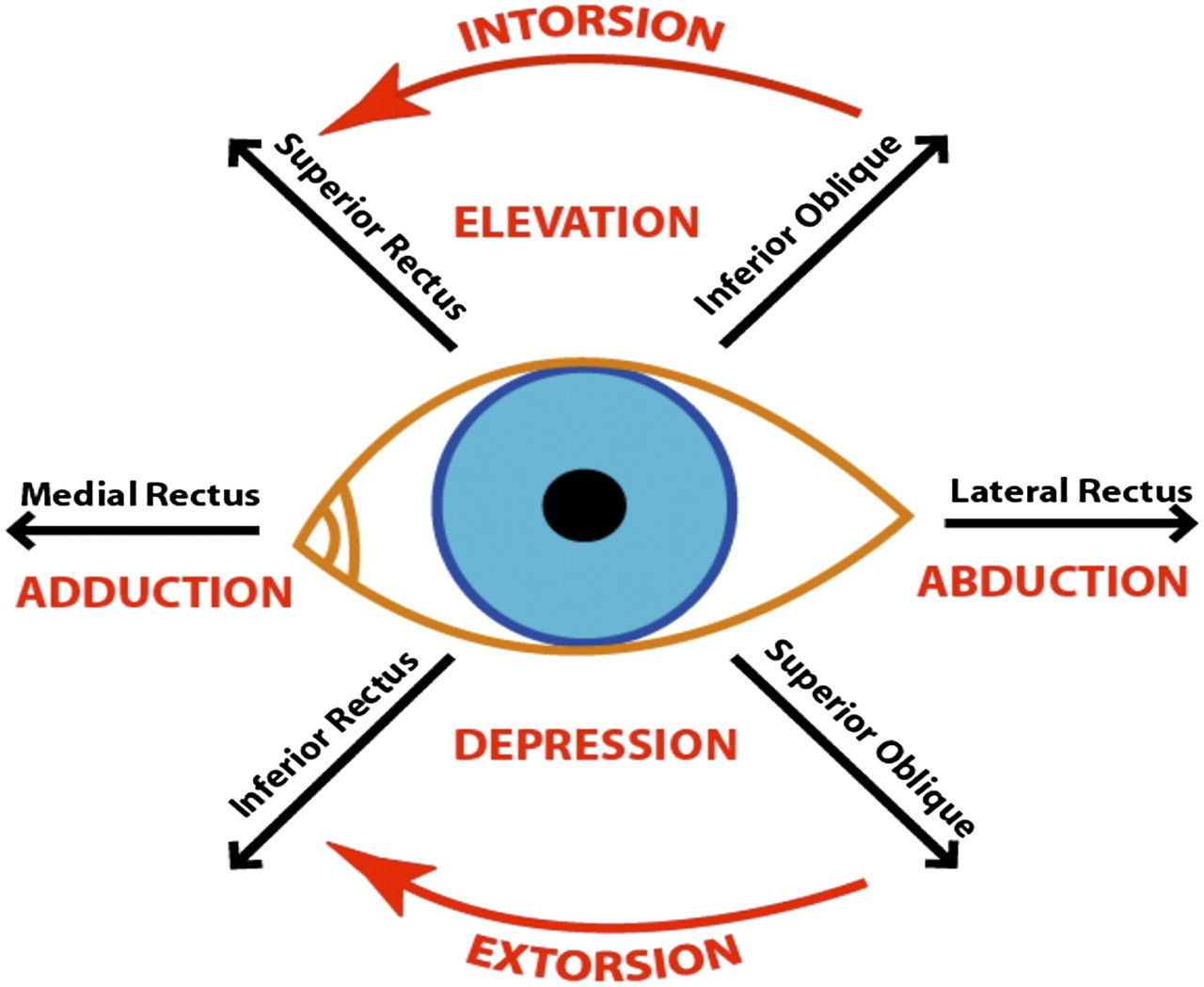
orbit = human eye rotating within the socket. the eye and orbit form a ball and socket joint (no segment attached to the ball)
upward movement = ELEVATION downward movement = DEPRESSION towards nose = ADDUCTION towards temple = ABDUCTION tilts inward to nose = INTORSION tilts outward toward temple = EXTROSION
conjucate eye movement (VERSION) = coordinated eye movement of the 2 eyes move in the same direction at the same time at the same angle
- disconjucate eye movement (VERGENCE) = the eyes move in opposite directions at the same time and same angle
human eye moved by the extraocular muscles. lateral rectus and medial rectus have opposing actions (abduction - adduction).
- superior and inferior recti oppose (elevation and depression). superior and inferior oblique (intorsion - extorsion)
adduction = towards nose (medial rectus) adduction = towards temple (lateral rectus) elevation = upwards (superior rectus) depression = downward (inferior rectus) intorsion = tilt to temple (superior oblique) extorsion = tilt to nose (inferior oblique)
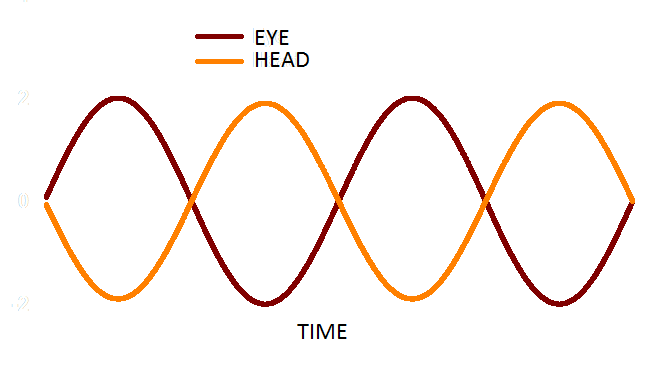
Vestibular ocular = responds to stimulation of vestibular organs, stimulation of semi-circular organs. keep the image stable on the retina when the head moves. conjucate movement
- generates couter rotational eye movements, the eye compensates for the head rotation during walking e.g. 2deg to left when walking = counter rotate 2deg to the right
- EQUAL AND OPPOSITE ROTATION.
- generates couter rotational eye movements, the eye compensates for the head rotation during walking e.g. 2deg to left when walking = counter rotate 2deg to the right
Optokinetic reflex system = keep the whole image stable on retina during smooth, sustained movement. generated in response to wide-field image flow stimulation of the retinal photoreceptors
- OKR generates compensatory eye movements in response to visual stimulation. Produced by rotational image flows
- nystagmus - following an object but flicking back to central position
- OKR generates compensatory eye movements in response to visual stimulation. Produced by rotational image flows
translational vestibulatory ocular reflex = counter-rotational movements that keep images stable during brief and cyclical translations of the head
- translations = bob up and down/ shifts from side-side
Imagens e arquivos do mapa
Informações
- Descrição
- Neural Mapa Mental sobre week 3: reading, criado por Katie gavriel em 05-04-2019.
- Criado por
- Katie gavriel
- Visualizações
- 0
- Avaliação