
Mapa mental
B3 Part I
Conteúdo do mapa
B3 Part I
Molecules of Life
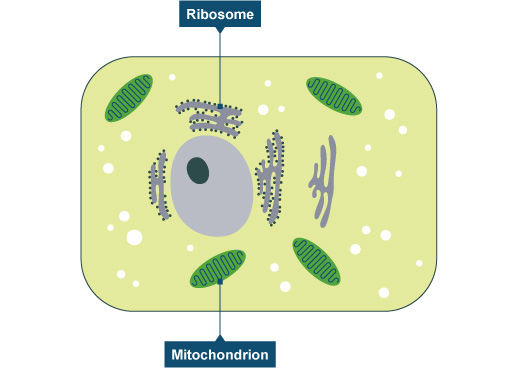
- Mitochondria
- Tiny structures found in the cells. Respiration occurs here
- Respiration-Releases energy from glucose
- Tissues/organs have large numbers of it e.g. liver and muscle cells
- Ribosomes
- Can be seen with electron microscope
- Found in the cytoplasm and are in the site of protein synthesis
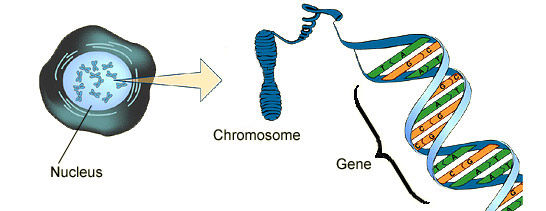
- Chromosomes
- Cells nucleus contains chromosomes
- Long coiled molecules of DNA
- DNA
- The information contained in genes is in the form of instructions called genetic coding
- Genetic coding controls cell activity, meaning it controls some characteristics of the organism
- Controls the production of different proteins
- Needed for growth and repair of cells
- Structure
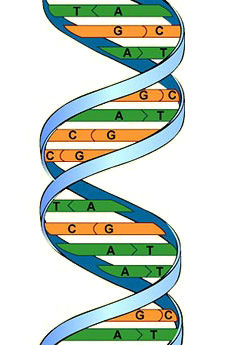
- Two chains wound into a double helix
- Each strand is made of chemical bases
- G-C-A-T
- Base pairs G-C and A-T
- G-C-A-T
- Two strands coil together to form a double helix
- With chemical cross links between the two strands , formed by pairs of bases
- Genes and proteins
- contains a different sequence of bases and codes for a particular protein
- Proteins are made in the cytoplasm
- Genes cannot leave nucleus
- Copy is made which is able to leave the nucleus
- Making proteins
- G-C-A-T
- Protein structure is determined on Base Codes
- Each amino acid coded by sequence order of three bases
- mRNA(messenger RNA)
- Copied DNA is carried by mRNA
- mRNA from DNA = Transcription
- Proteins from mRNA is called translation
- Copied DNA is carried by mRNA
- Controls the function of a cell by controlling its production of proteins
- e.g. enzymes
- The information contained in genes is in the form of instructions called genetic coding
- Mitochondria
Proteins and mutations
- Proteins
- Polymers
- Large molecules made from many smaller molecules
- Each protein molecule built from amino acids
- which are smaller monomer molecules
- Join end to end making protein polymer molecule
- which are smaller monomer molecules
- Each protein has own number of sequence of amino acids
- Gives the protein a particular shape allowing a particular function to be carried out
- Types of protein
- Structural = Collagen
- Hormone = Insulin
- Carrier molecule = Heamoglobin
- Enzyme = Amylase
- Polymers
- Enzymes
- Biological catalysts
- speed up chemical reactions
- Catalyse chemical reactions in living cells
- Respiration
- Photosynthesis
- Protein synthesis
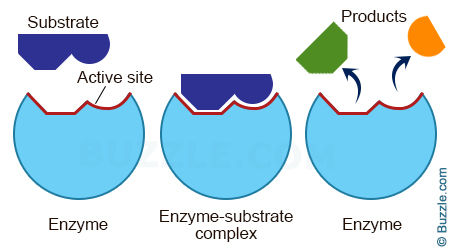
- Active Sites
- Shape determines how it works
- active sites are where the substrate molecules fit into when the reaction happens
- Substrate molecule - a substance on which the enzymes react
- Has to be right shape for the substrate molecules to fit into
- enzymes have high specificity for their substrate
- A particular enzyme with particular substrates
- enzymes have high specificity for their substrate
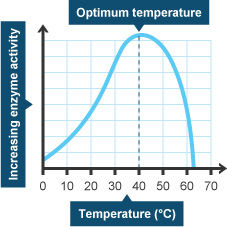
- Temperature
- At low temp enzyme reactions are slow
- Reaction speeds up as temp rise until an optimum temp is reached
- After this point the slow down and eventually stop
- Steady increase between 0-40'C ussally optimum is around 40
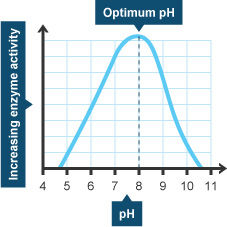
- pH
- optimum pH like temp
- Biological catalysts
- Mutations
- Spomtaneous
- Happen because of
- Radiation
- Chemicals such as tar from cigarette smoke
- Harmful or Helpful
- Often harmful
- Genes can be switched on and off
- mutations can alter the production of certain protiens
- Changing shape of the active site will cause reaction to slow
- Eventually the reaction will stop
- Enzymes become denatured
- Eventually the reaction will stop
- Q10 = measure of the rate of change of a reaction when the temperature us uncreased by 10'C
- Many of Q10 of 2
- Q10 = rate at higher temperature / rate at lower temperature
- Proteins
Imagens e arquivos do mapa
Informações
- Descrição
- B3
- Criado por
- Gurwinder Singh · fev 2015
- Atualizado
- 13 jan 2017
- Visualizações
- 39
- Avaliação