
Mapa mental
Process of Inflammation
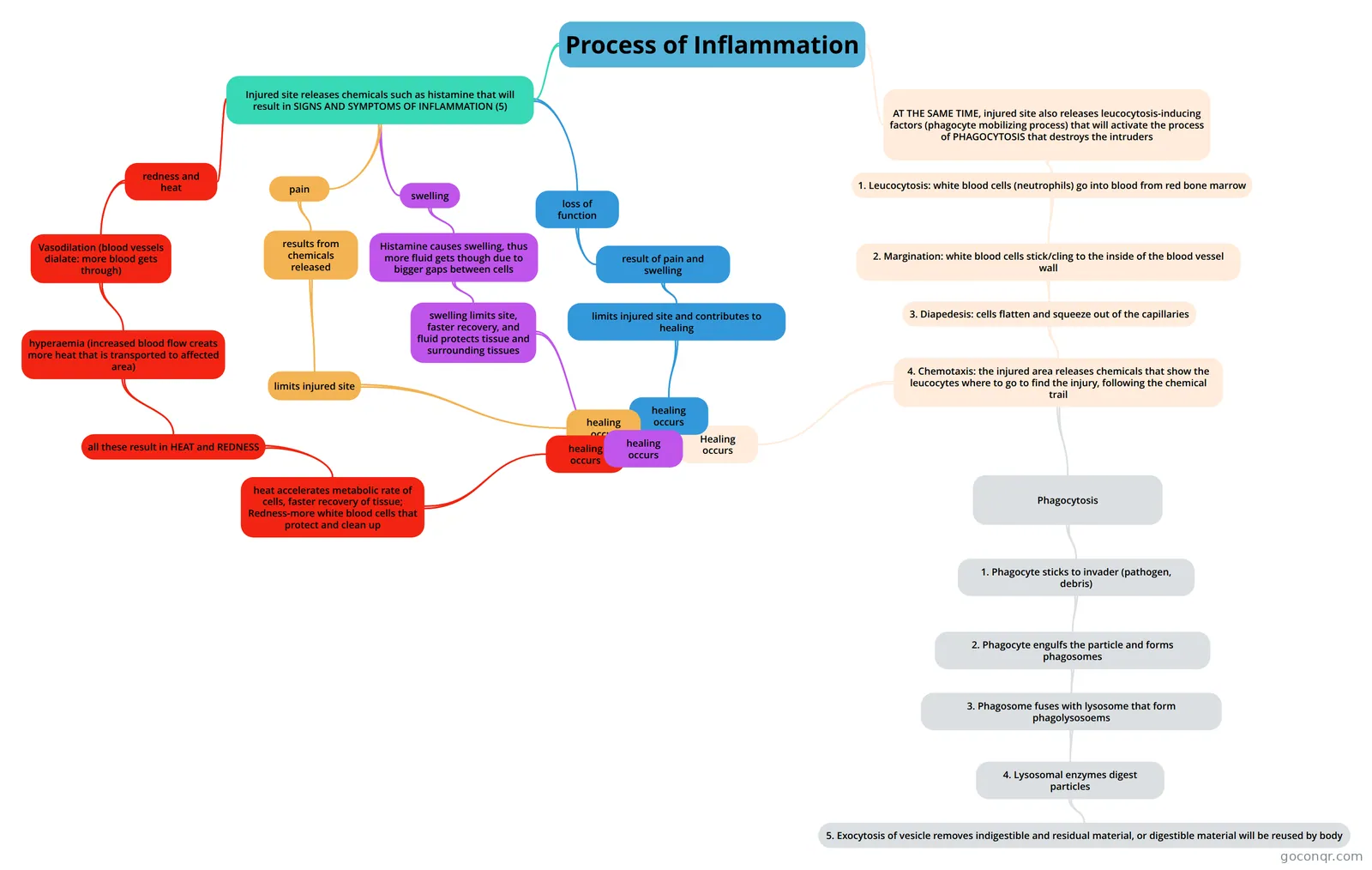
Mind map: Process of inflammation
Conteúdo do mapa
Process of Inflammation
Injured site releases chemicals such as histamine that will result in SIGNS AND SYMPTOMS OF INFLAMMATION (5)
- redness and heat
- Vasodilation (blood vessels dialate: more blood gets through)
- hyperaemia (increased blood flow creats more heat that is transported to affected area)
- all these result in HEAT and REDNESS
- heat accelerates metabolic rate of cells, faster recovery of tissue; Redness-more white blood cells that protect and clean up
- healing occurs
- heat accelerates metabolic rate of cells, faster recovery of tissue; Redness-more white blood cells that protect and clean up
- all these result in HEAT and REDNESS
- hyperaemia (increased blood flow creats more heat that is transported to affected area)
- Vasodilation (blood vessels dialate: more blood gets through)
- pain
- results from chemicals released
- limits injured site
- healing occur
- limits injured site
- results from chemicals released
- swelling
- Histamine causes swelling, thus more fluid gets though due to bigger gaps between cells
- swelling limits site, faster recovery, and fluid protects tissue and surrounding tissues
- healing occurs
- swelling limits site, faster recovery, and fluid protects tissue and surrounding tissues
- Histamine causes swelling, thus more fluid gets though due to bigger gaps between cells
- loss of function
- result of pain and swelling
- limits injured site and contributes to healing
- healing occurs
- limits injured site and contributes to healing
- result of pain and swelling
- redness and heat
AT THE SAME TIME, injured site also releases leucocytosis-inducing factors (phagocyte mobilizing process) that will activate the process of PHAGOCYTOSIS that destroys the intruders
- 1. Leucocytosis: white blood cells (neutrophils) go into blood from red bone marrow
- 2. Margination: white blood cells stick/cling to the inside of the blood vessel wall
- 3. Diapedesis: cells flatten and squeeze out of the capillaries
- 4. Chemotaxis: the injured area releases chemicals that show the leucocytes where to go to find the injury, following the chemical trail
- Healing occurs
- Phagocytosis
- 1. Phagocyte sticks to invader (pathogen, debris)
- 2. Phagocyte engulfs the particle and forms phagosomes
- 3. Phagosome fuses with lysosome that form phagolysosoems
- 4. Lysosomal enzymes digest particles
- 5. Exocytosis of vesicle removes indigestible and residual material, or digestible material will be reused by body
- 4. Lysosomal enzymes digest particles
- 3. Phagosome fuses with lysosome that form phagolysosoems
- 2. Phagocyte engulfs the particle and forms phagosomes
- 1. Phagocyte sticks to invader (pathogen, debris)
- 4. Chemotaxis: the injured area releases chemicals that show the leucocytes where to go to find the injury, following the chemical trail
- 3. Diapedesis: cells flatten and squeeze out of the capillaries
- 2. Margination: white blood cells stick/cling to the inside of the blood vessel wall
- 1. Leucocytosis: white blood cells (neutrophils) go into blood from red bone marrow
Informações
- Descrição
- Mapa Mental sobre Process of Inflammation, criado por Bernadett em 12-03-2015.
- Criado por
- Bernadett
- Visualizações
- 0
- Avaliação
Mais sobre Inflammation and the inflammatory response