
Mapa mental
P2 (part one)
Conteúdo do mapa
P2 (part one)
a&b
- photocells
- convert light into electricity
- larger SA, more electricity produced
- more sunlight can be absorbed
- useful when mains not avalable
- remote areas
- where electricity is expensive
- remote areas
- produces dc
- one direction
- advantages
- robust
- little maintenance
- no fuel required
- no polluting waste
- no power cables
- uses renewable energy resource
- long-life
- disadvantages
- no electricity when dark or bad weather
- quite expensive
- light intensity
- SA exposed
- distance from light source
- photocells
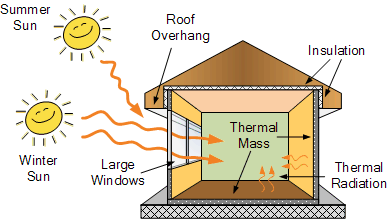
passive solar heating
- in the day
- sun heats floors and walls
- at night
- the heat is radiated back from walls and floors
- in the day
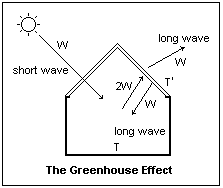
greenhouses
- the sun is very hot
- so has short wavelength
- the glass of the greenhouse is transparent to the suns radiation
- the material absorb radiation and heat up
- reradiated infrared radiation cos they're are cooler and have longer wavelength
- reflected back
- reradiated infrared radiation cos they're are cooler and have longer wavelength
- the material absorb radiation and heat up
- the glass of the greenhouse is transparent to the suns radiation
- so has short wavelength
- the sun is very hot
wind power
- result of sun heating the earth
- creating convection currents in the earths atmosphere
- winds ->
- blades ->
- generator
- blades ->
- advantages
- robust
- renewable resource
- dont pollute
- disadvantages
- ugly
- noisy
- shut down at high wind speeds
- needs space
- result of sun heating the earth
dynamo
- generates electricuty
- increased by: stronger magnetic field, more turns on coil, faster movements.
- ac- slip rings motor-split rings
- moving coil near magnet or moving a magnet near a coil
- coil of wire is free to rotate between the poles of a magnet (close) as coil rotates, it cuts thee magnetic field and a current will pass through the coil a current is induces and movement is essential)
- freq. no. complete waves passing a point in 1sec
- the ac from generator has a freq.
- output can be displayed on an oscilloscope
- shows how current produced by dynamo changes over time
- time for one complete cycle is called the period of alternating curent
- height is the mx./peak voltage
- length of wave represents time for one cycle
- frequency (hz) .= 1/period(s)
national grid
- source of energy are power stations
- fuels are used to heat water
- water boils to produce steam
- steam at high pressure turns a turbine
- turbine drivesa generator
- generator produces electricity
- then step-up transformer (less energy loss)
- power lines etc.
- step-down transformer
- consumers (homes, schools, farms etc)
- step-down transformer
- power lines etc.
- then step-up transformer (less energy loss)
- generator produces electricity
- turbine drivesa generator
- steam at high pressure turns a turbine
- water boils to produce steam
- fuels are used to heat water
- source of energy are power stations
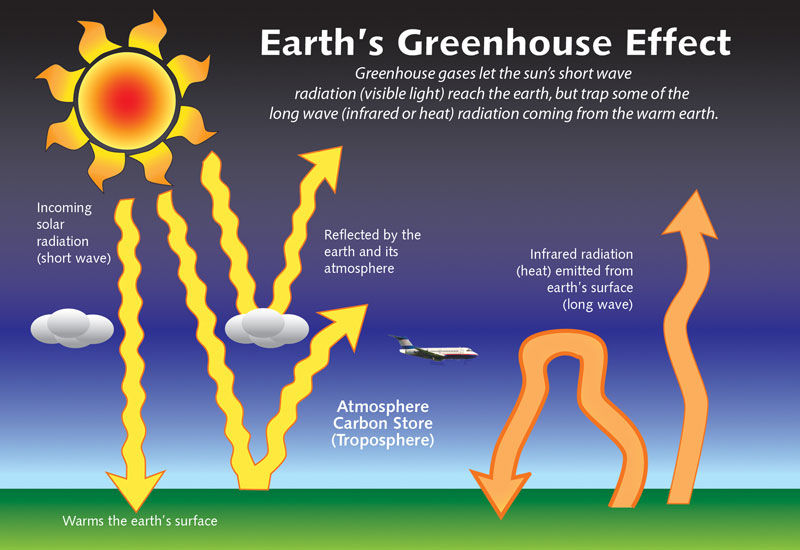
greenhouse effect
- earths atmosphere traps energy; alike a greenhouse
- atmospheric gases let short wavelength uv to pass through
- infrared radiation; long wavelength; is radiated back from warmed surface of earth
water vapour; carbon dioxide; methane
- natural sources
- water vapour
- evaporation of large bodies (e.g lakes)
- transpiration
- carbon dioxide
- fermentation
- respiration
- volcanic eruptions
- methane
- decomposition of organic matter (wetlands)
- formation of fossil fuels (coal)
- termites
- water vapour
- manmade sources
- water vapour
- 0.001% human activity
- methane
- cows
- rice paddies
- mining and burning of fossil fuels
- burying waste on landfill
- carbon dioxide
- burning solid fuels (eg. coal/oil/gas)
- incineration of waste
- cement manufacture
- deforestation
- water vapour
- environmental issues
- factories produce smoke which reflects radiation from the cities, back to earth, warming it up
- volcanoes emit ash when they erupt, which stops the suns rays reaching the earth, thus cooling down the earth
- natural sources
Imagens e arquivos do mapa
Informações
- Descrição
- GCSE GCSE Mapa Mental sobre P2 (part one), criado por abbie Fitzpatrick em 26-03-2015.
- Criado por
- abbie Fitzpatrick
- Visualizações
- 98
- Tags
- Avaliação