
Mapa mental
Electricity in the home
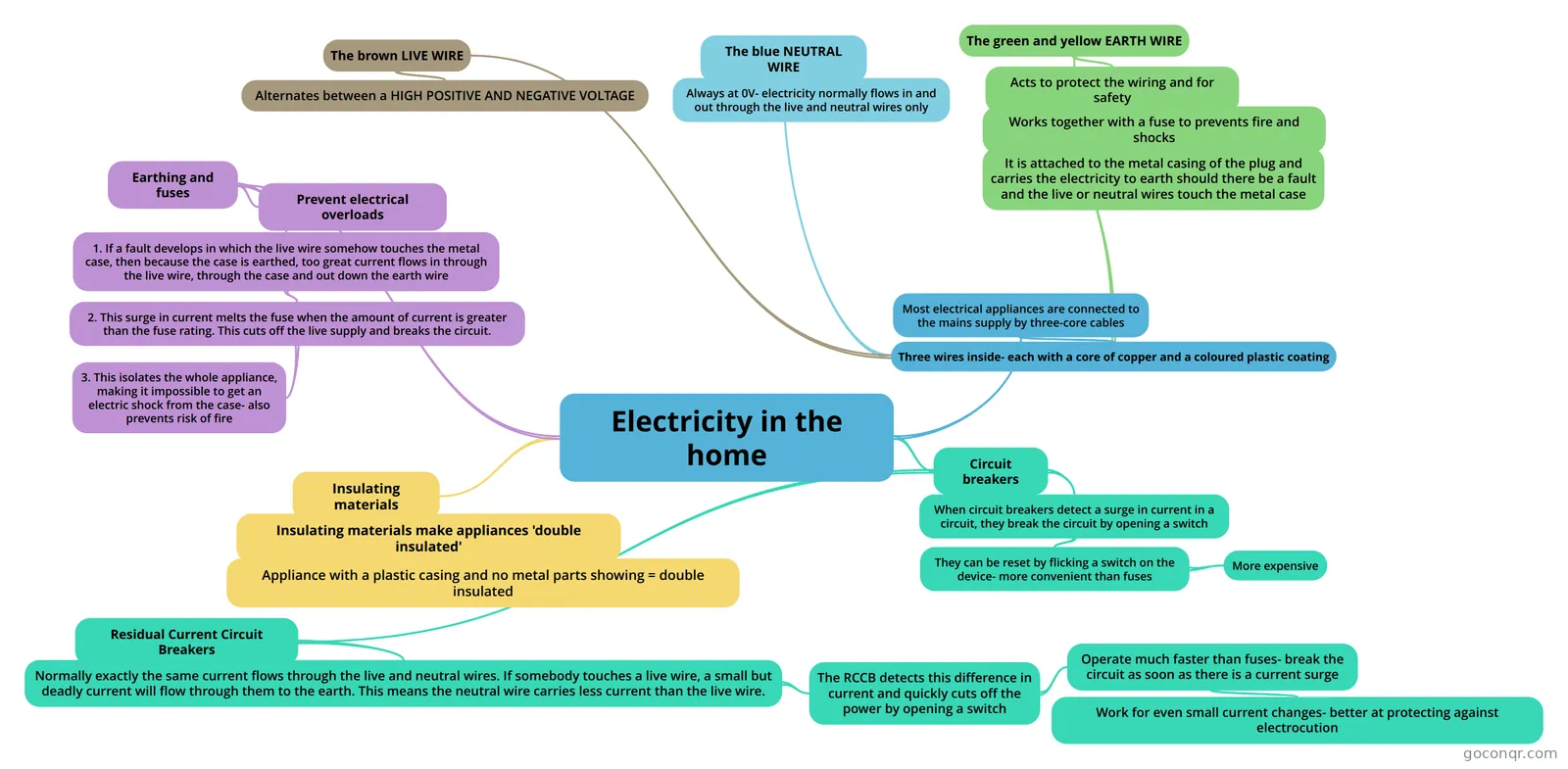
Mind map: Electricity in the home
Conteúdo do mapa
Electricity in the home
Most electrical appliances are connected to the mains supply by three-core cables
- Three wires inside- each with a core of copper and a coloured plastic coating
- The brown LIVE WIRE
- Alternates between a HIGH POSITIVE AND NEGATIVE VOLTAGE
- The blue NEUTRAL WIRE
- Always at 0V- electricity normally flows in and out through the live and neutral wires only
- The green and yellow EARTH WIRE
- Acts to protect the wiring and for safety
- Works together with a fuse to prevents fire and shocks
- It is attached to the metal casing of the plug and carries the electricity to earth should there be a fault and the live or neutral wires touch the metal case
- Works together with a fuse to prevents fire and shocks
- Acts to protect the wiring and for safety
- The brown LIVE WIRE
- Three wires inside- each with a core of copper and a coloured plastic coating
Earthing and fuses
- 1. If a fault develops in which the live wire somehow touches the metal case, then because the case is earthed, too great current flows in through the live wire, through the case and out down the earth wire
- 2. This surge in current melts the fuse when the amount of current is greater than the fuse rating. This cuts off the live supply and breaks the circuit.
- 3. This isolates the whole appliance, making it impossible to get an electric shock from the case- also prevents risk of fire
- 2. This surge in current melts the fuse when the amount of current is greater than the fuse rating. This cuts off the live supply and breaks the circuit.
- Prevent electrical overloads
- 1. If a fault develops in which the live wire somehow touches the metal case, then because the case is earthed, too great current flows in through the live wire, through the case and out down the earth wire
Insulating materials
- Insulating materials make appliances 'double insulated'
- Appliance with a plastic casing and no metal parts showing = double insulated
- Insulating materials make appliances 'double insulated'
Circuit breakers
- When circuit breakers detect a surge in current in a circuit, they break the circuit by opening a switch
- They can be reset by flicking a switch on the device- more convenient than fuses
- More expensive
- They can be reset by flicking a switch on the device- more convenient than fuses
- Residual Current Circuit Breakers
- Normally exactly the same current flows through the live and neutral wires. If somebody touches a live wire, a small but deadly current will flow through them to the earth. This means the neutral wire carries less current than the live wire.
- The RCCB detects this difference in current and quickly cuts off the power by opening a switch
- Operate much faster than fuses- break the circuit as soon as there is a current surge
- Work for even small current changes- better at protecting against electrocution
- Operate much faster than fuses- break the circuit as soon as there is a current surge
- The RCCB detects this difference in current and quickly cuts off the power by opening a switch
- Normally exactly the same current flows through the live and neutral wires. If somebody touches a live wire, a small but deadly current will flow through them to the earth. This means the neutral wire carries less current than the live wire.
- When circuit breakers detect a surge in current in a circuit, they break the circuit by opening a switch
Informações
- Descrição
- GCSE Physics Mapa Mental sobre Electricity in the home, criado por Gretta Mildred em 04-05-2015.
- Criado por
- Gretta Mildred
- Visualizações
- 17
- Avaliação