Mapa mental
Types of Mutations
Conteúdo do mapa
Types of Mutations
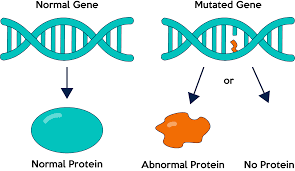
Gene mutations
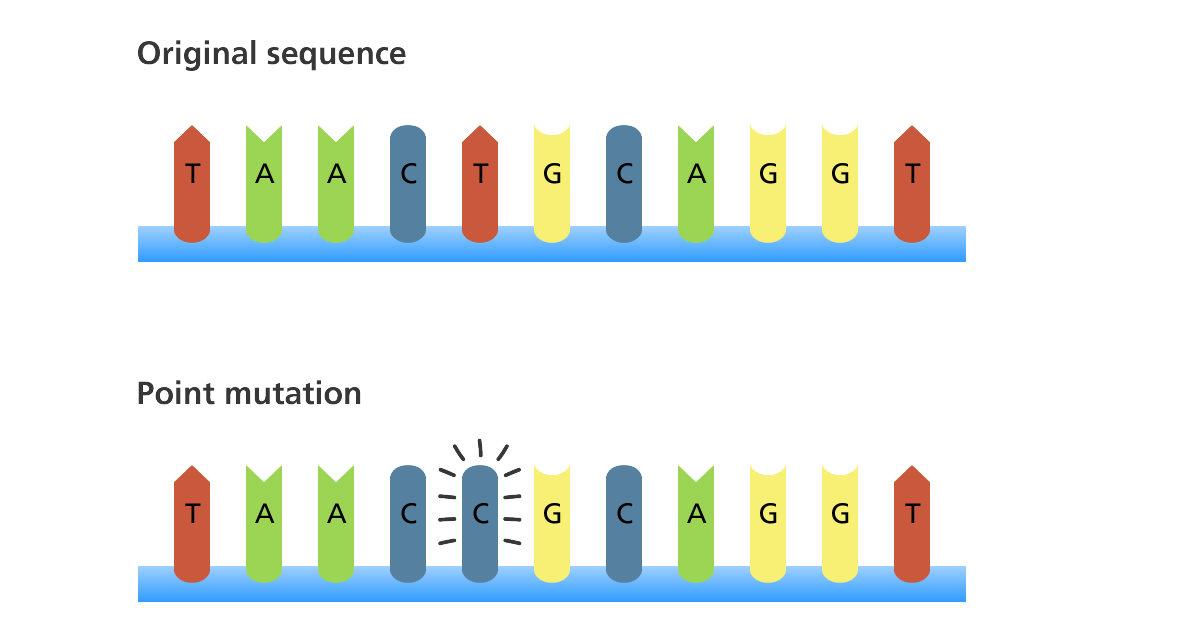
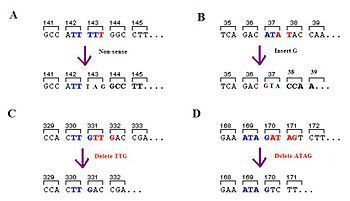
- Is a permanent alteration in the DNA sequence that makes up a gene, such that the sequence differs from what is found in most people.
- Point Mutations
- Example: Sickle-cell anemia
- Point Mutations
- Example: Down syndrome and Turner syndrome.
- Is a permanent alteration in the DNA sequence that makes up a gene, such that the sequence differs from what is found in most people.
Gene Mutations
- Is a permanent alteration in the DNA sequence that makes up a gene, such that the sequence differs from what is found in most people.
- Point Mutations
- Example: Down Syndrome
- Is a permanent alteration in the DNA sequence that makes up a gene, such that the sequence differs from what is found in most people.
Factors that causes Mutations
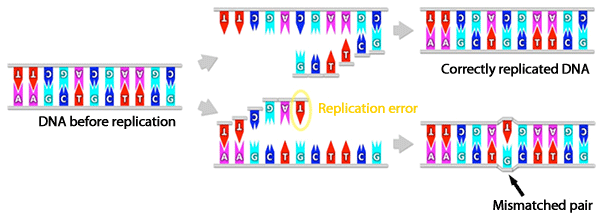
- Replications errors
- Results from the covalent addition of an incorrect nucleotide subunit, or the lack of addition of a nucleotide subunit, during polymerization of the growing newly synthesized DNA strand during replication.
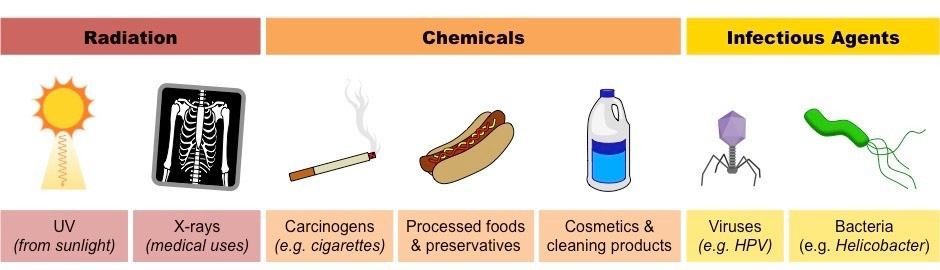
- Mutagens
- Are chemical compounds or forms of radiation (such as ultraviolet (UV) light or X-rays) that cause irreversible and heritable changes (mutations) in the cellular genetic material, deoxyribonucleic acid (DNA)
- Example: Viruses, Bacteria, Transposons
- Are chemical compounds or forms of radiation (such as ultraviolet (UV) light or X-rays) that cause irreversible and heritable changes (mutations) in the cellular genetic material, deoxyribonucleic acid (DNA)
- Example: Cáncer
- Mutagens
- Results from the covalent addition of an incorrect nucleotide subunit, or the lack of addition of a nucleotide subunit, during polymerization of the growing newly synthesized DNA strand during replication.
- Replications errors
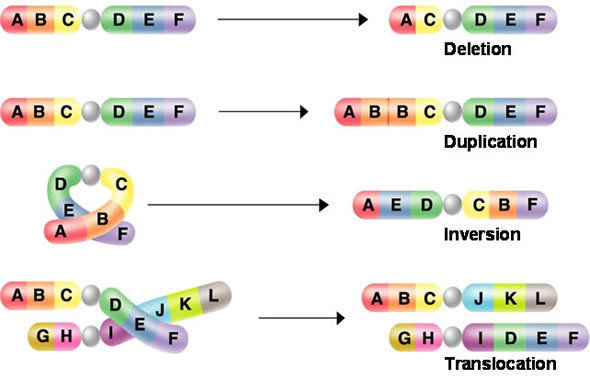
Chromosomal Mutations
- Are alterations that affect whole chromosomes and whole genes rather than just individual nucleotides.
- Example: Edward's syndrome or trisomy 18. Patau syndrome or trisomy 13.
- Are alterations that affect whole chromosomes and whole genes rather than just individual nucleotides.