
Mapa mental
NATURAL SELECTION, ADAPTATION AND MICROEVOLUTION
Conteúdo do mapa
NATURAL SELECTION, ADAPTATION AND MICROEVOLUTION
1) STUDYING ADAPTATION
- why do organisms live the way they do?
- how has past evo shaped a trait or an orgnsm?
- why can't nat sel. fashion perfect orgnsm?
- correlated traits mutation allele lack of variation, can't change
5) LIFE HISTORY EVO BY NAT SEL
- LH traits can evolve rapidly
- The factors driving evo can be tested
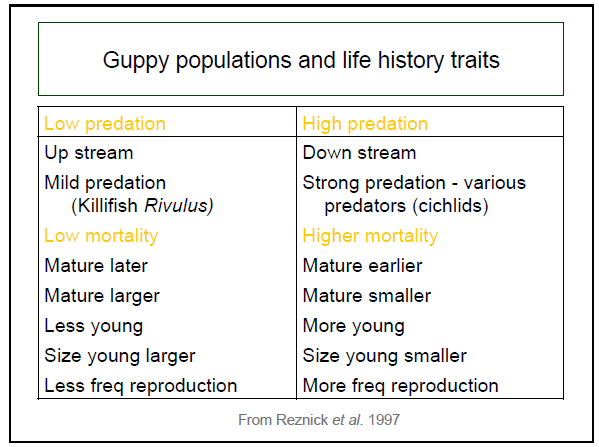
- Translocation exp- guppy
- guppy popn in low and high predation area
- *selection can act on multiple co-adapted traits
- *the adaptiveness of traits & the drivers of evo can be tested
- * adapted traits are subjected to ongoing natural selection as environmental conditions change & continue to evolve
- Microevolution can lead to appreciable change that occurs rapidly on ecological timescales
- guppy popn in low and high predation area
2) ADAPTIVE TRADE-OFFS
- if fitness is abt survival & reproduction? why can't they continuously produce high quality offspring and live forever?
- some orgnsm close to perfect, but only SOME of the traits (e.g.thrips egg mite, brown kiwi)
- a) time & E an orgnsm can harvest is finite
- b) biological processes take time
- c) fundamental trade-offs in the set of traits.
- d) increase fitness in one trait can reduce a fitness of another trait
- if fitness is abt survival & reproduction? why can't they continuously produce high quality offspring and live forever?
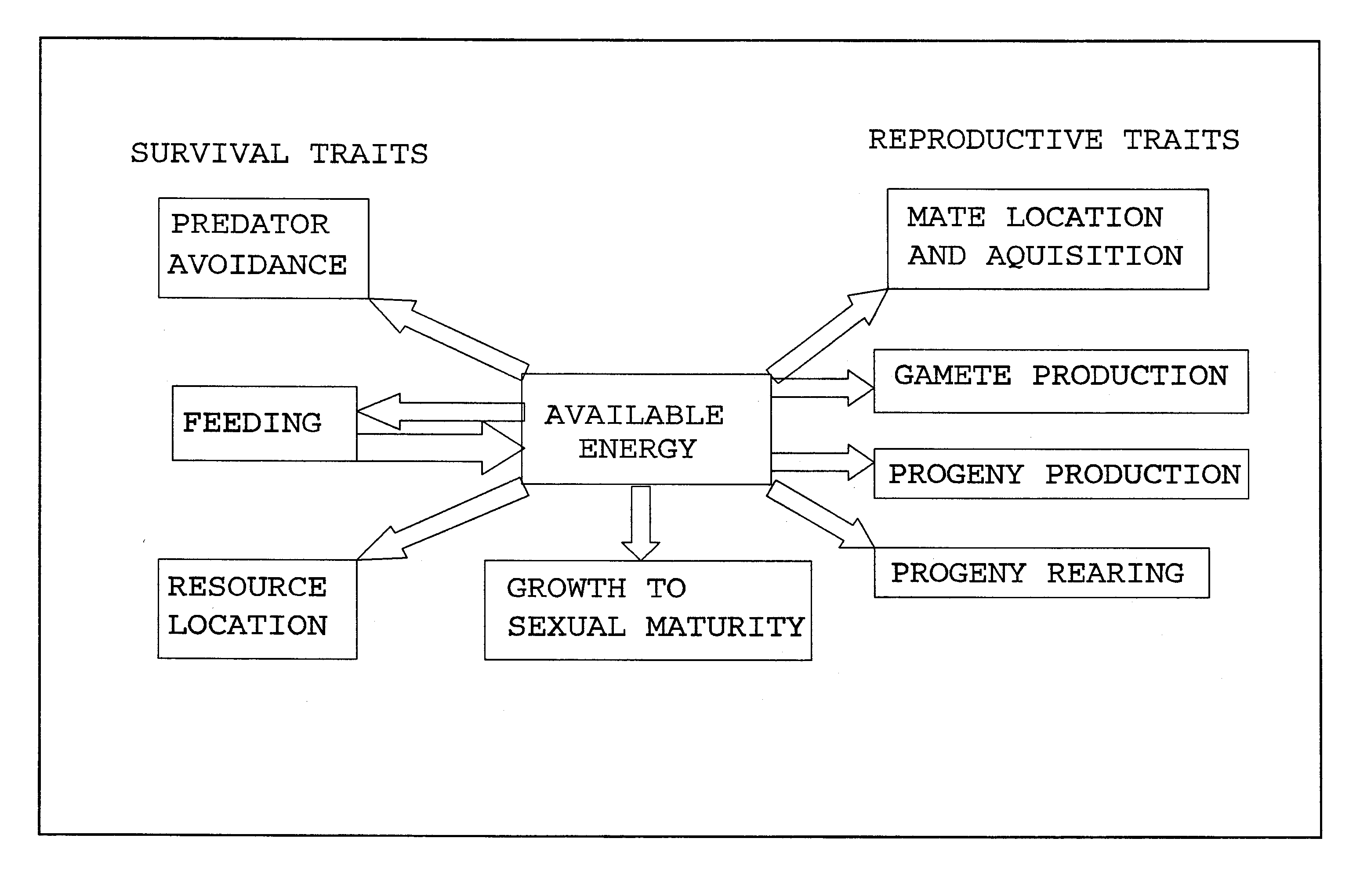
3) ADAPTATION & THE EVOLUTIONARY STRATEGIES
- 1) An evolutionary strategy
- a set of co-adapted traits which allow an organism to survive & adapt to their ecological niche
- 2) Life history strategy (LHS)
- an orgnsm's investment in growth, maturation, reproduction, survival
- 1) An evolutionary strategy
4) LIFE HISTORY STRATEGIES
- LH traits are associated w fitness and are polygenic traits
- Key qs in LH analysis
- Why live as long as they do?
- Why some reproduce once and others have many reproductive attempts during their lifespan?
- Why vary in the number of offspring they produce?
- Why vary in the time they take to become sexually mature?
- 1) Trade-offs: Fecundity vs Lifespan
- e.g. rotifiers
- - produced lots of young, early in their life – had a shorter life
- - produced less young per day, lived longer and produced more young over their lifespan
- * High reproduction on one day decreases chances of survival to the next day
- * Reproduction is deleterious to future survival
- e.g. rotifiers
- Trade-offs: Current vs future reproduction
- e.g. Meadow grass
- the number of inflorescences per plant - produced in the 1st year or 2nd yr
- produce more in 1st yr, produce less in its 2nd yr
- the number of inflorescences per plant - produced in the 1st year or 2nd yr
- e.g. collared flycatchers Ficedula albicollis
- some produce young in first yr, smaller clutch size, but their lifetime reproductive succesful is higher
- increase clutch size in the 1st year, the clutch size reduces with age
- young that was produced in bigger clutch size will have less clutch size itself
- e.g. Meadow grass
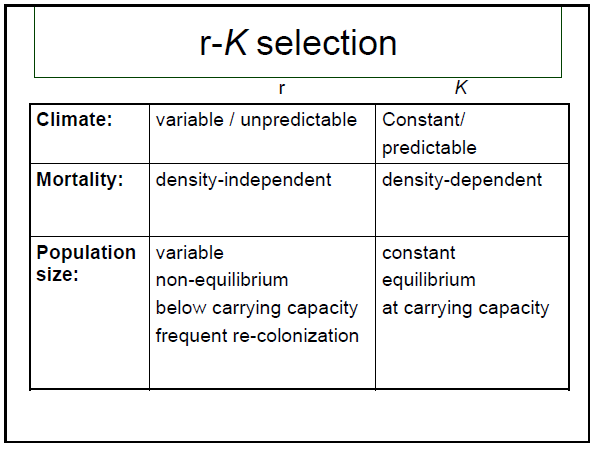
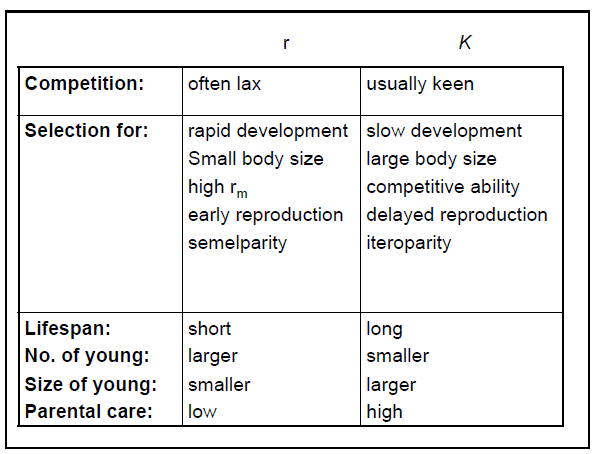
- Predictable & unpredictable Env
- rm = reproductive rate
6) MICROEVO AS A SOURCE OF LARGE SCALE CHANGE
- * genetic drift causes random changes in allele/traits- popn can drift in diff directions and diverge.
- * selection leads to adaptation to local conditions, & differences btwn popn can accumulate
- * Limited gene flow + drift/selection can cause popns to diverge
- * Low levels of gene flow help to maintain diversity & connection of popns & still allow adaptation to local conditions, high levels of gene flow may swap local selection
- RING SP - two reproductively isolated forms are connected by a chain of intermediate populations
- Bridge between microevolution and speciation/ macroevolution
- Show the history of divergence of 2 sp & demonstrate how microevolutionary changes can accumulate into differences btwn sp.
- Show how geographical differentiation to the level of sp can occur in the face of ongoing gene flow
- e.g. Siberian Greenish warbler Phylloscopus trochiloides
- 2 populations that are not interbreeding - different morphology and song
- Interbreeding in intermediate popns around the ring
- Bridge between microevolution and speciation/ macroevolution
Imagens e arquivos do mapa
Informações
- Descrição
- undergraduate degree genetics and evolution Mapa Mental sobre NATURAL SELECTION, ADAPTATION AND MICROEVOLUTION, criado por chaz_id89 em 27-10-2013.
- Criado por
- chaz_id89
- Visualizações
- 94
- Tags
- Avaliação