
Mapa mental
Theme
Mind map: Theme in literature
Conteúdo do mapa
Theme
Definition
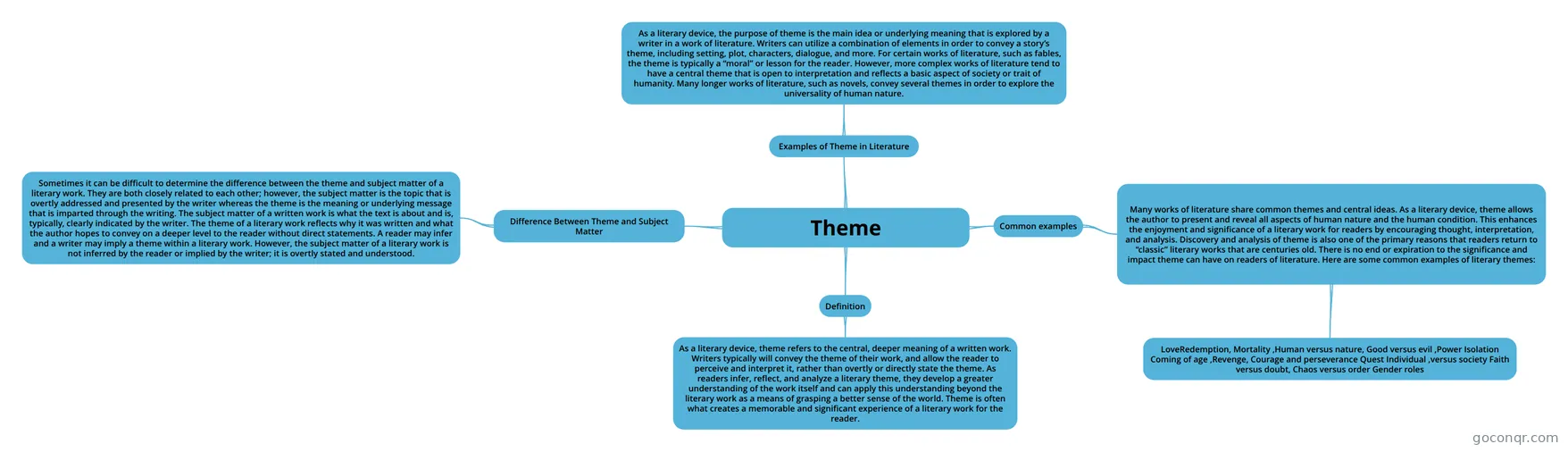
- As a literary device, theme refers to the central, deeper meaning of a written work. Writers typically will convey the theme of their work, and allow the reader to perceive and interpret it, rather than overtly or directly state the theme. As readers infer, reflect, and analyze a literary theme, they develop a greater understanding of the work itself and can apply this understanding beyond the literary work as a means of grasping a better sense of the world. Theme is often what creates a memorable and significant experience of a literary work for the reader.
Common examples
- Many works of literature share common themes and central ideas. As a literary device, theme allows the author to present and reveal all aspects of human nature and the human condition. This enhances the enjoyment and significance of a literary work for readers by encouraging thought, interpretation, and analysis. Discovery and analysis of theme is also one of the primary reasons that readers return to “classic” literary works that are centuries old. There is no end or expiration to the significance and impact theme can have on readers of literature. Here are some common examples of literary themes:
- LoveRedemption, Mortality ,Human versus nature, Good versus evil ,Power Isolation Coming of age ,Revenge, Courage and perseverance Quest Individual ,versus society Faith versus doubt, Chaos versus order Gender roles
- Many works of literature share common themes and central ideas. As a literary device, theme allows the author to present and reveal all aspects of human nature and the human condition. This enhances the enjoyment and significance of a literary work for readers by encouraging thought, interpretation, and analysis. Discovery and analysis of theme is also one of the primary reasons that readers return to “classic” literary works that are centuries old. There is no end or expiration to the significance and impact theme can have on readers of literature. Here are some common examples of literary themes:
Difference Between Theme and Subject Matter
- Sometimes it can be difficult to determine the difference between the theme and subject matter of a literary work. They are both closely related to each other; however, the subject matter is the topic that is overtly addressed and presented by the writer whereas the theme is the meaning or underlying message that is imparted through the writing. The subject matter of a written work is what the text is about and is, typically, clearly indicated by the writer. The theme of a literary work reflects why it was written and what the author hopes to convey on a deeper level to the reader without direct statements. A reader may infer and a writer may imply a theme within a literary work. However, the subject matter of a literary work is not inferred by the reader or implied by the writer; it is overtly stated and understood.
Examples of Theme in Literature
- As a literary device, the purpose of theme is the main idea or underlying meaning that is explored by a writer in a work of literature. Writers can utilize a combination of elements in order to convey a story’s theme, including setting, plot, characters, dialogue, and more. For certain works of literature, such as fables, the theme is typically a “moral” or lesson for the reader. However, more complex works of literature tend to have a central theme that is open to interpretation and reflects a basic aspect of society or trait of humanity. Many longer works of literature, such as novels, convey several themes in order to explore the universality of human nature.
Informações
- Descrição
- Mapa Mental sobre Theme, criado por daniel felipe barrera em 02-10-2021.
- Criado por
- daniel felipe barrera
- Visualizações
- 0
- Avaliação
Mais sobre Theme, Symbolism and Allegory