
Mapa mental
Genetic Mind Map
Conteúdo do mapa
Genetic Mind Map
Cells
- All living things are made up of cells
- Cells are the basic unit of structure and function in living things
- New cells are produced from existing cells
- Cells are the basic unit of structure and function in living things
- Nucleus - contains nearly all the cell's DNA and the coded instructions for making for making proteins and other important molecules.
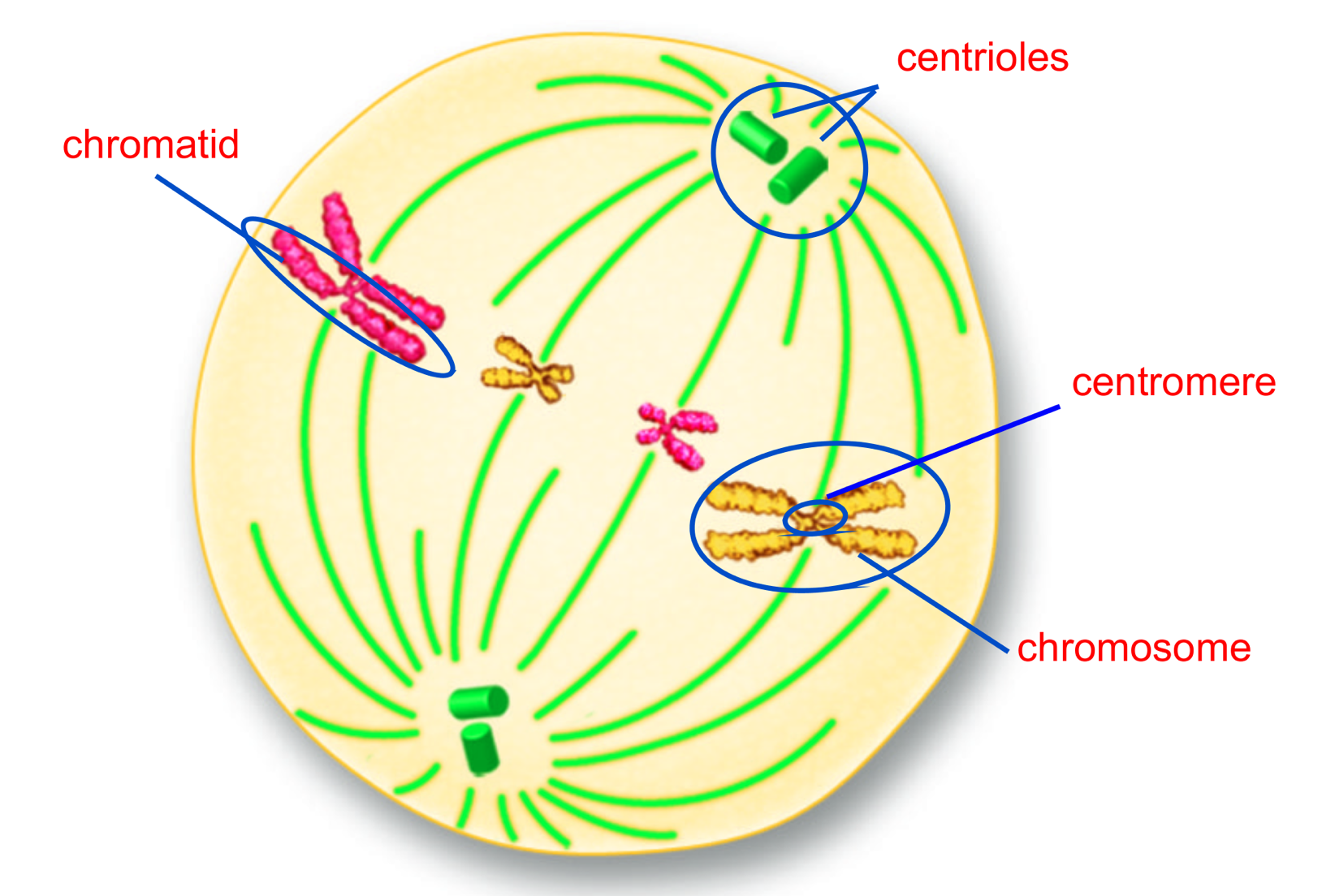
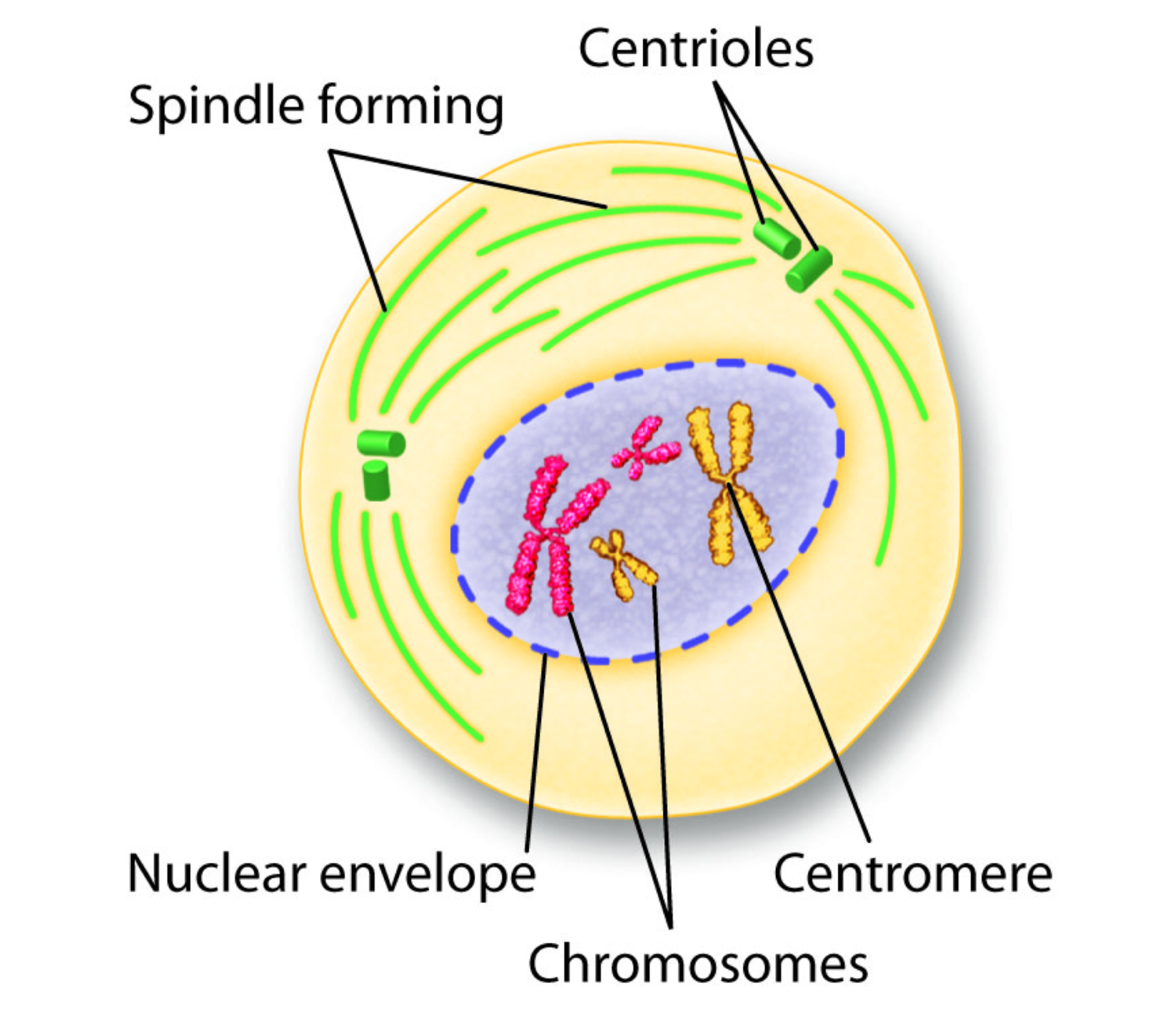
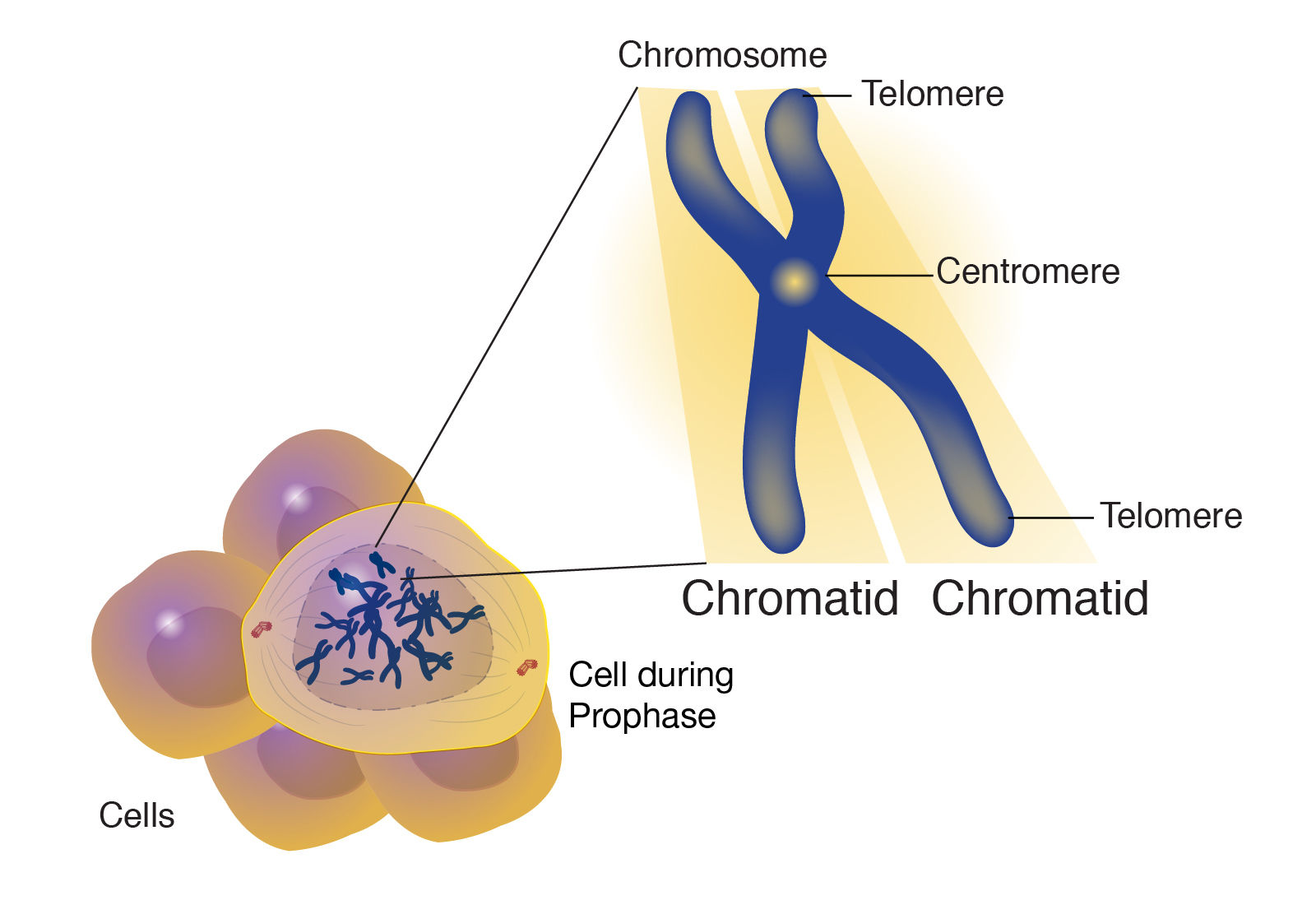
- Chromosomes - packages of DNA that hold a cell's genetic information
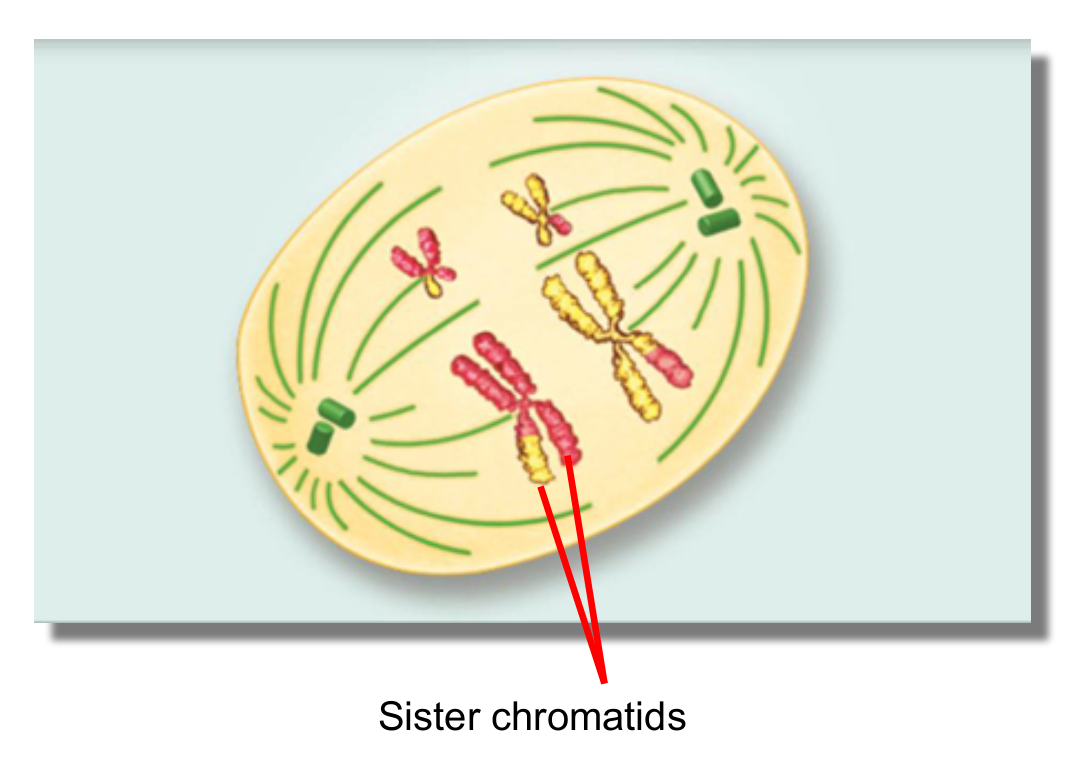
- Chromatids - one half of a duplicated chromosome
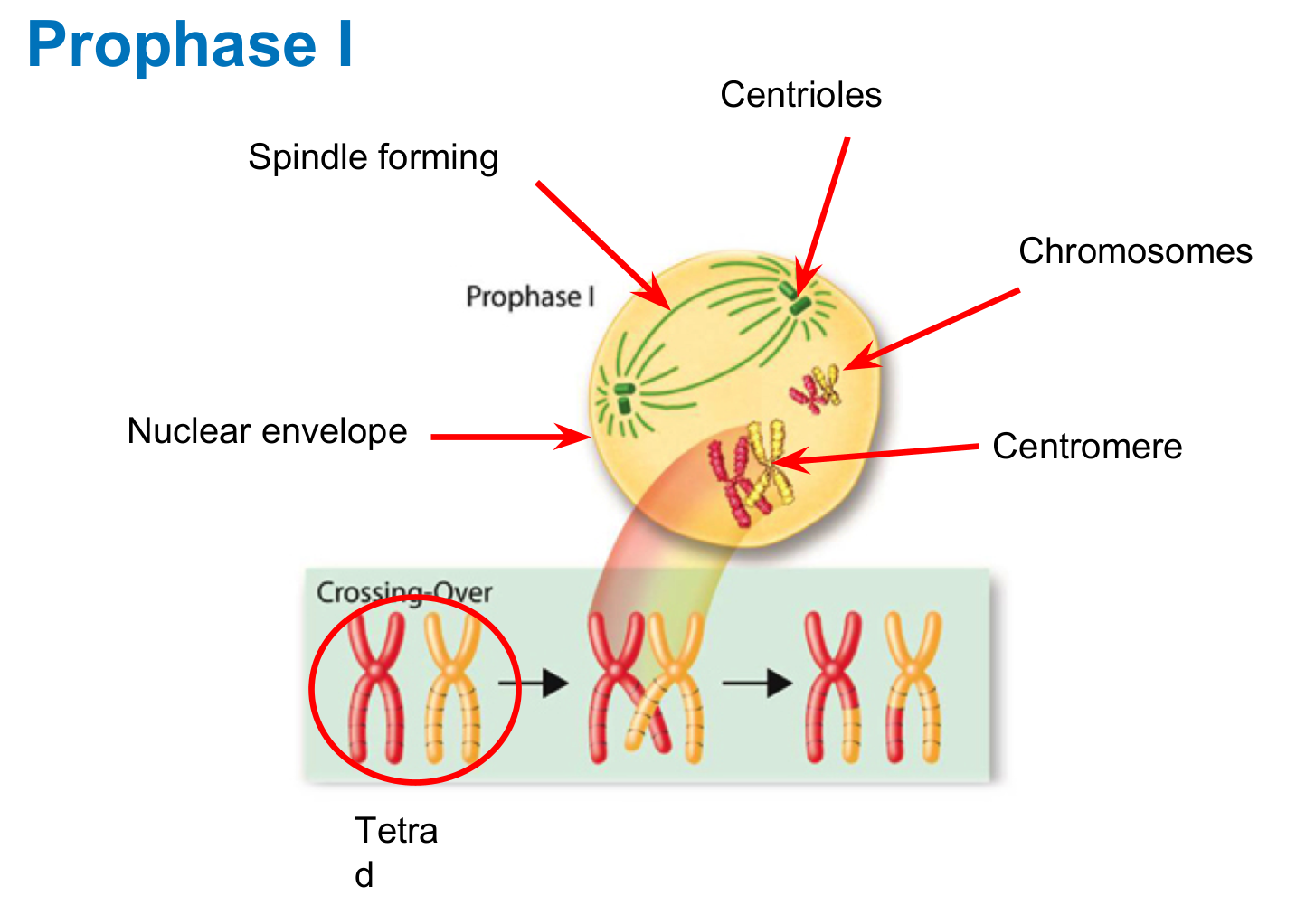
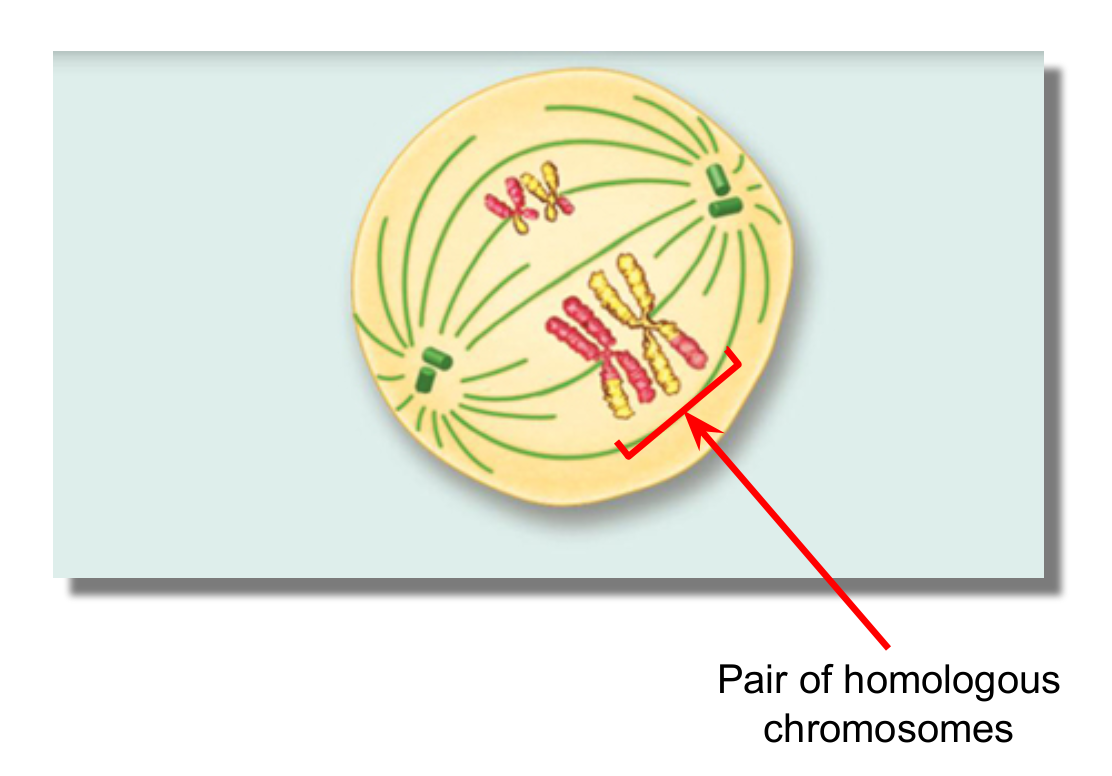
- Tetrad - replicated chromosome pairs with its corresponding homologous chromosome
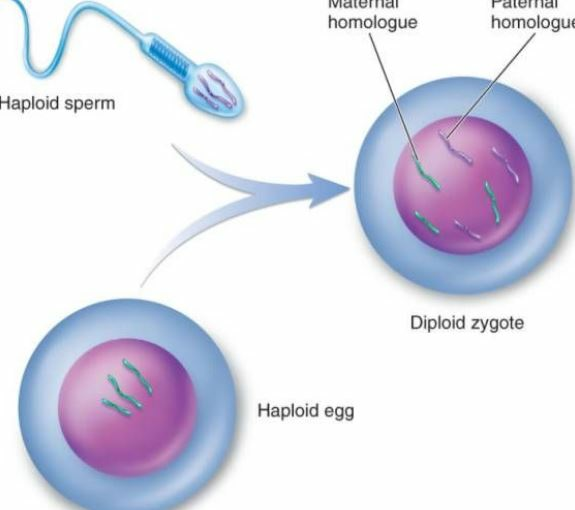
- Zygote - is a fertilized eukaryotic cell, which means that it refers to a cell that forms after the union of sex cells (also called gametes)
- Tetrad - replicated chromosome pairs with its corresponding homologous chromosome
- Homologous - chromosomes with the same genes, one from the parents of the individual
- Diploid - contain both sets of homologous chromosomes, 2N
- Haploid - contain only a single set of chromosomes, 1N
- Polyploid - Cells that possess three or more sets of chromosomes
- Chromatids - one half of a duplicated chromosome
- Sex cells
- Gamettes - reproductive cell of an animal or plant
- Female gametes are called ova or egg cells, and male gametes are called sperm. Ova and sperm are haploid cells, with each cell carrying only one copy of each chromosome. During fertilization, a sperm and ovum unite to form a new diploid organism
- Sperm
- the sperm cells are produced by male gametogenesis (called spermatogenesis)
- Ova
- the egg cells are produced by female gametogenesis (called oogenesis).
- Sperm
- Female gametes are called ova or egg cells, and male gametes are called sperm. Ova and sperm are haploid cells, with each cell carrying only one copy of each chromosome. During fertilization, a sperm and ovum unite to form a new diploid organism
- Gamettes - reproductive cell of an animal or plant
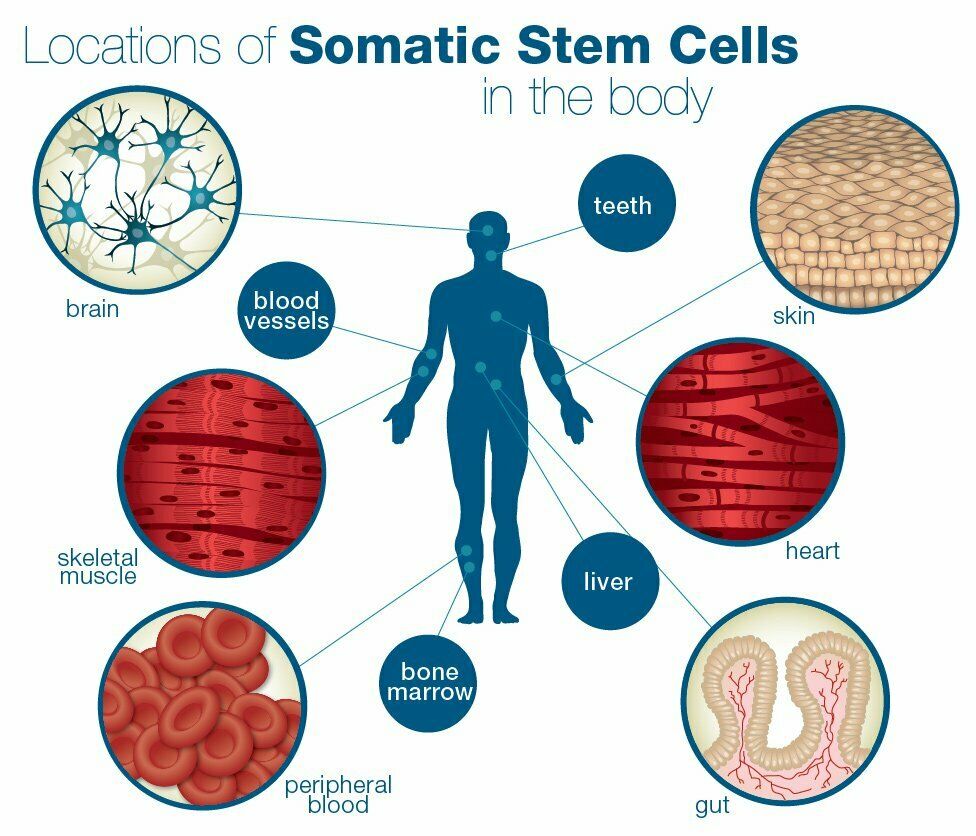
- Somatic cells
- In humans, somatic cells are diploid, meaning they contain two sets of chromosomes, one inherited from each parent.
- DNA mutations in somatic cells can affect an individual, but they cannot be passed on to their offspring.
- In humans, somatic cells are diploid, meaning they contain two sets of chromosomes, one inherited from each parent.
- Chromosomes - packages of DNA that hold a cell's genetic information
- Genome - is the code that cells use to know how to behave
- The entire set of DNA instructions found in a cell.
- Cell specialization
- Process through which "generic" or "common" cells transform into specialized cells with defined tasks. Generic embryonic cells differentiate into specialized cells
- Muscle cell, sex cell, fat cell, immune cell, bone cell, epithelial cell, blood cell, nervous cell
- Process through which "generic" or "common" cells transform into specialized cells with defined tasks. Generic embryonic cells differentiate into specialized cells
- All living things are made up of cells
Mitosis
- growth
- Somatic cells - continuos
- 2N diploid - 2 cells
- Identical daughter cells
- 4 phases
- Identical daughter cells
- 2N diploid - 2 cells
- Somatic cells - continuos
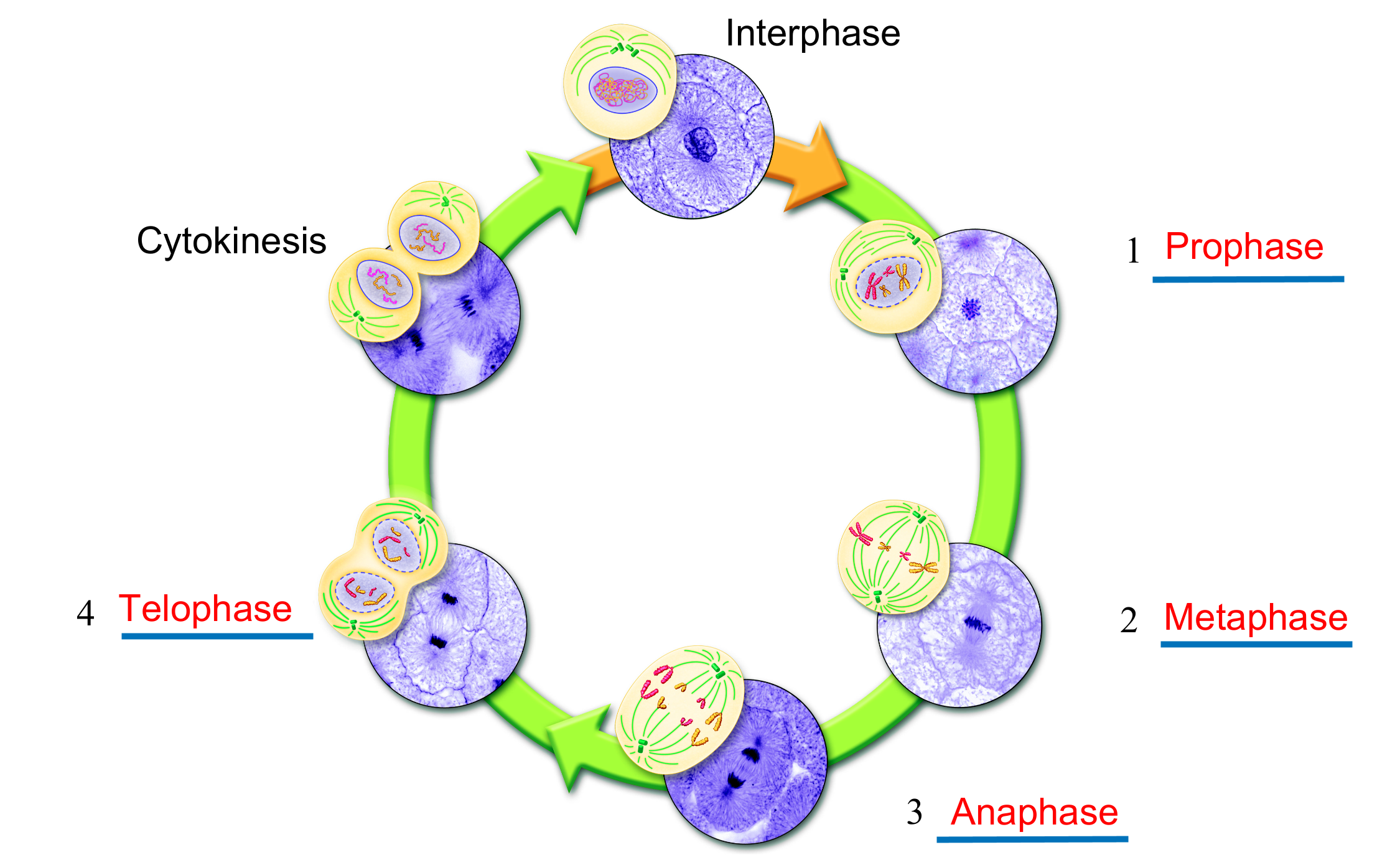
- Prophase - nucleus condenses, chromosomes duplicate, the spindle begins to form
- Metaphase - chromosomes line up at the center of the cell
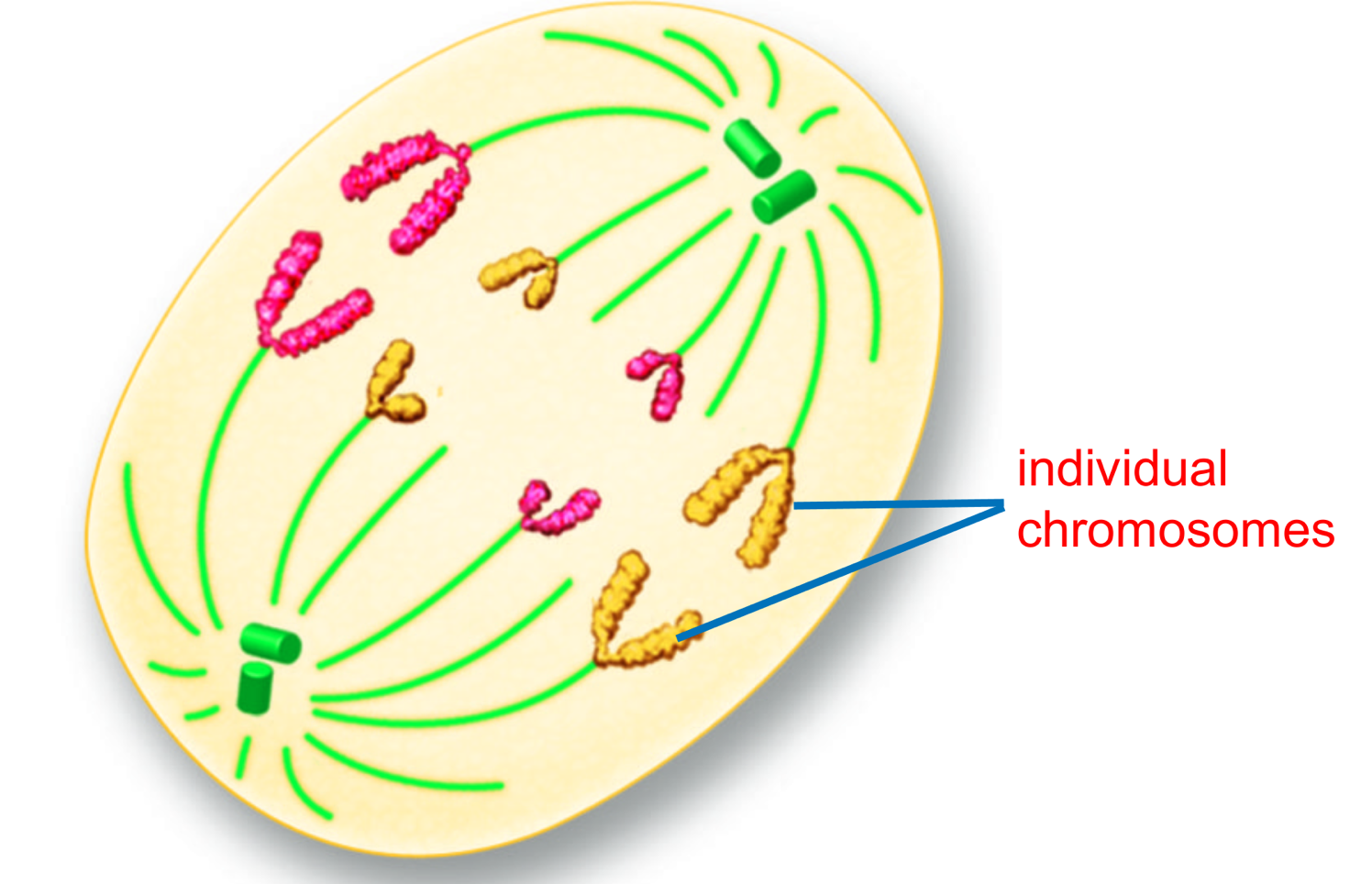
- Anaphase - chromosomes move toward opposite poles
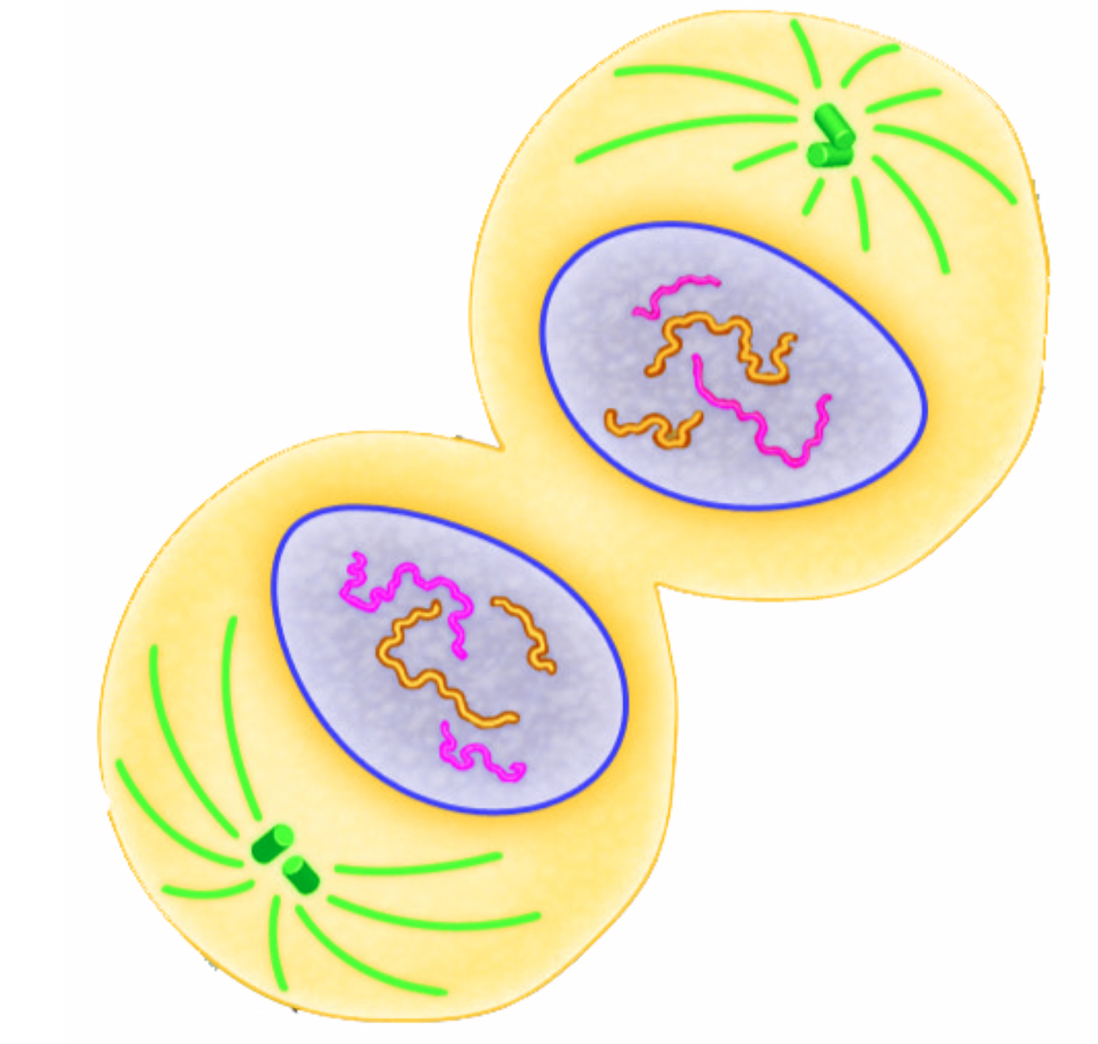
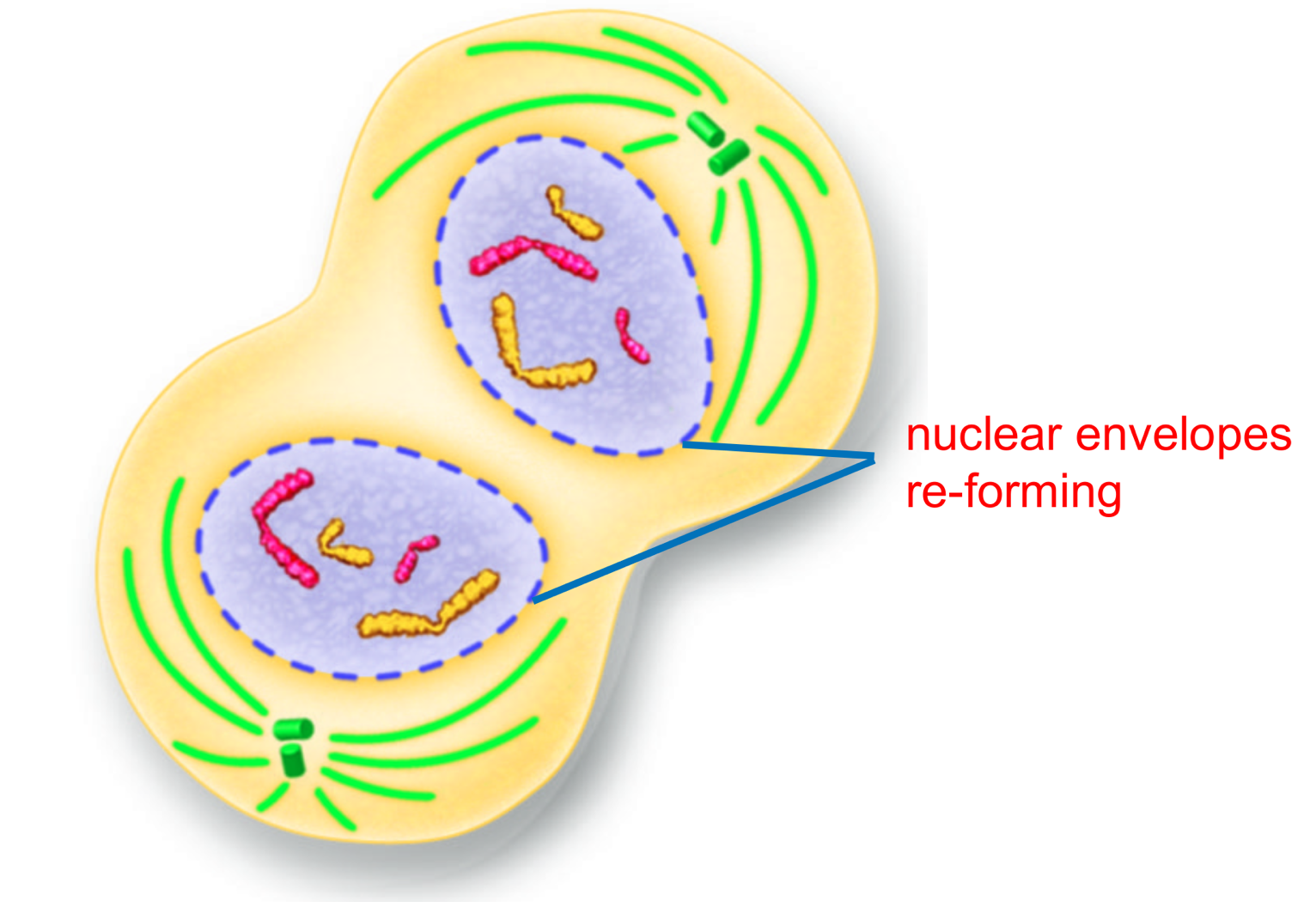
- Telophase - the cell begins to divide into daughter cells
- Cytokinesis - physical process of cell division, the cytoplasm of the parent cell divides into the two daughter cells
- Telophase - the cell begins to divide into daughter cells
- Anaphase - chromosomes move toward opposite poles
- Metaphase - chromosomes line up at the center of the cell
- growth
Meiosis
- sexual - because it happens in the reproductive system
- gametes - cycled
- sperms - ovaries
- 4N haploid
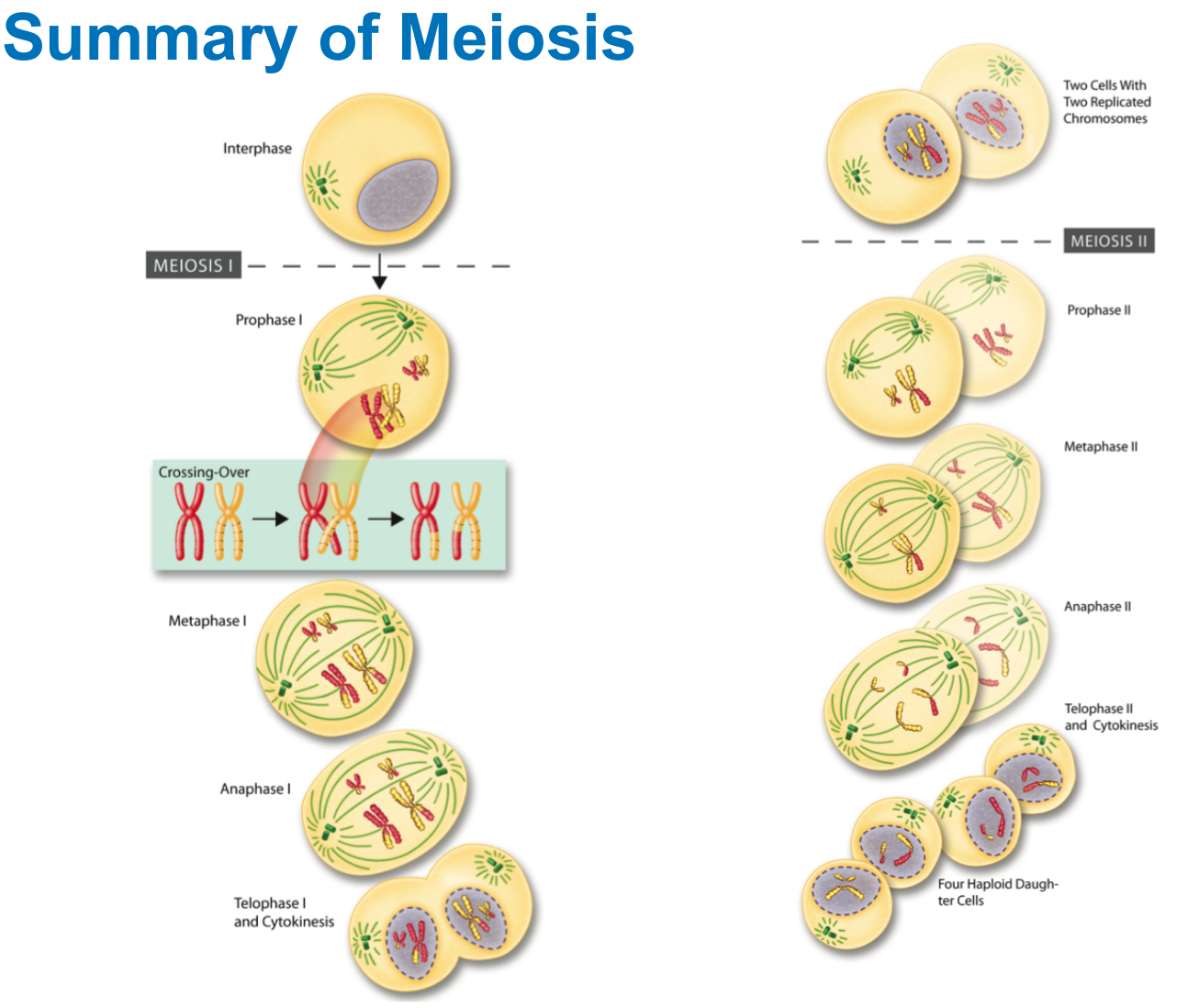
- Genetic diversity in daughter cells through cross-over"shuffling genes"
- Crossing over - to randomize the genetic inheritance of the offspring
- 8 phases
- Genetic diversity in daughter cells through cross-over"shuffling genes"
- gametes - cycled
- Phases
- Interphase - the cell rests, grows, replicates its chromosomes and prepares for cell division
- Prophase I - alleles shuffling --> randomizing genetic inheritance
- Metaphase I - chromosomes align, spindle fibers connected to chromosomes
- Anaphase I - spindle fibers pull chromosomes apart
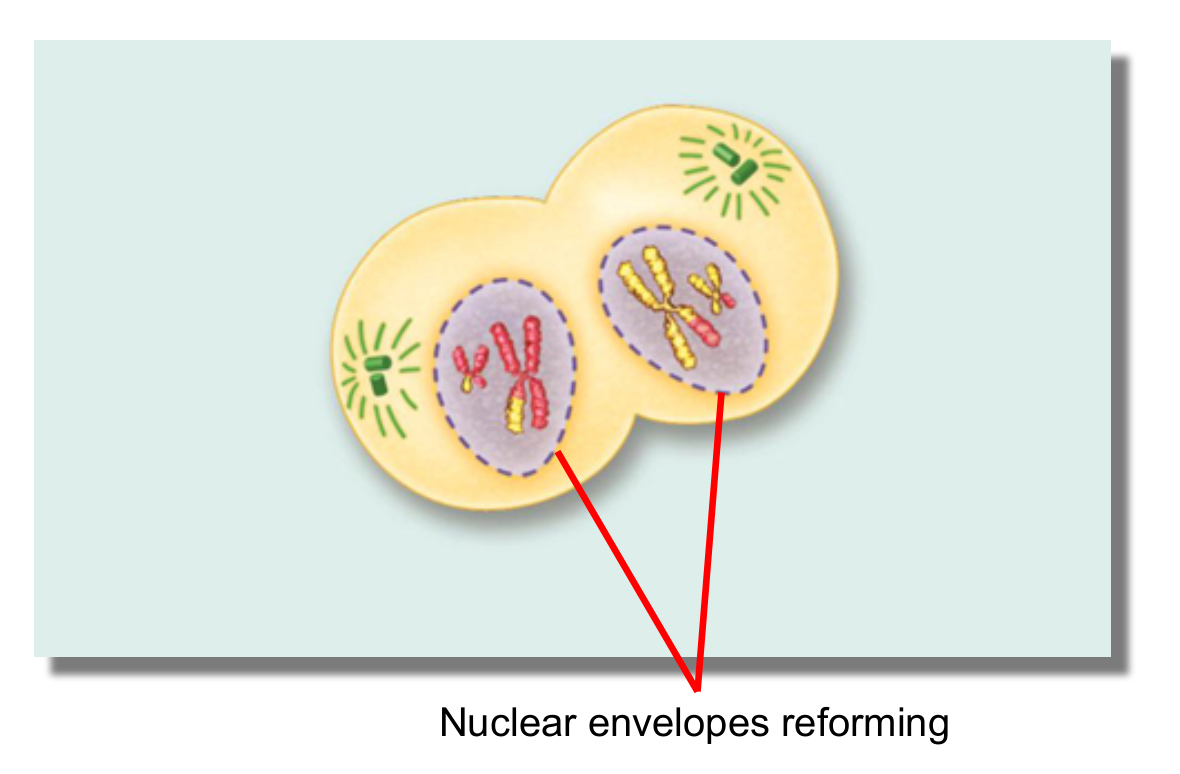
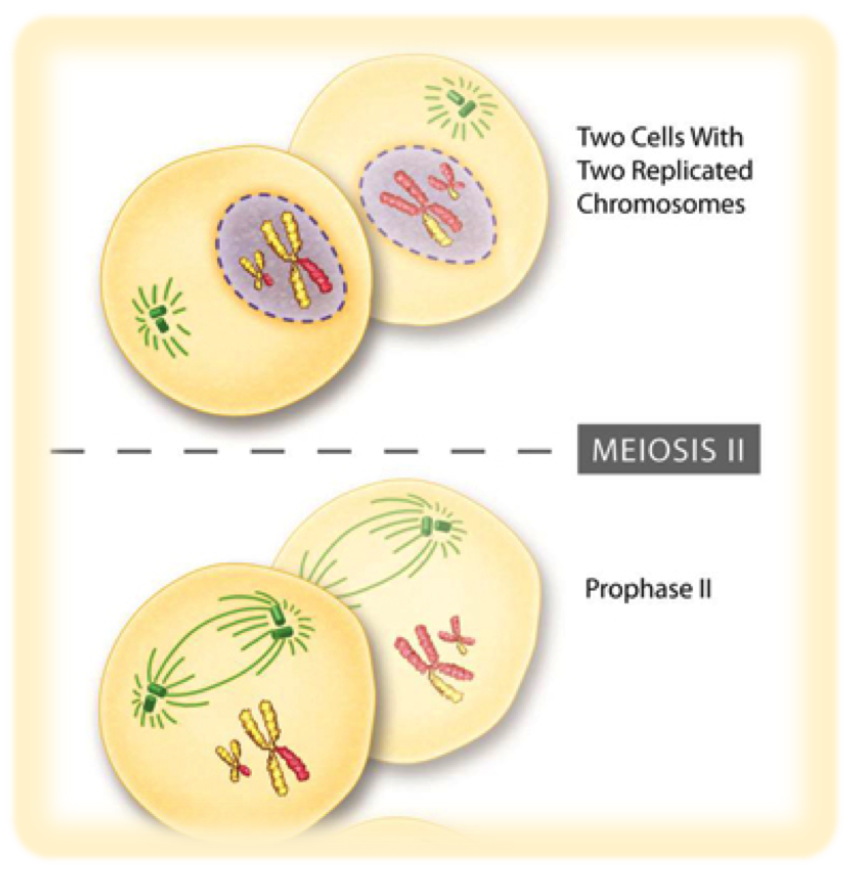
- Telophase I - chromosomes gather at the poles of the cells, cytoplasm divides
- Anaphase I - spindle fibers pull chromosomes apart
- Metaphase I - chromosomes align, spindle fibers connected to chromosomes
- Prophase I - alleles shuffling --> randomizing genetic inheritance
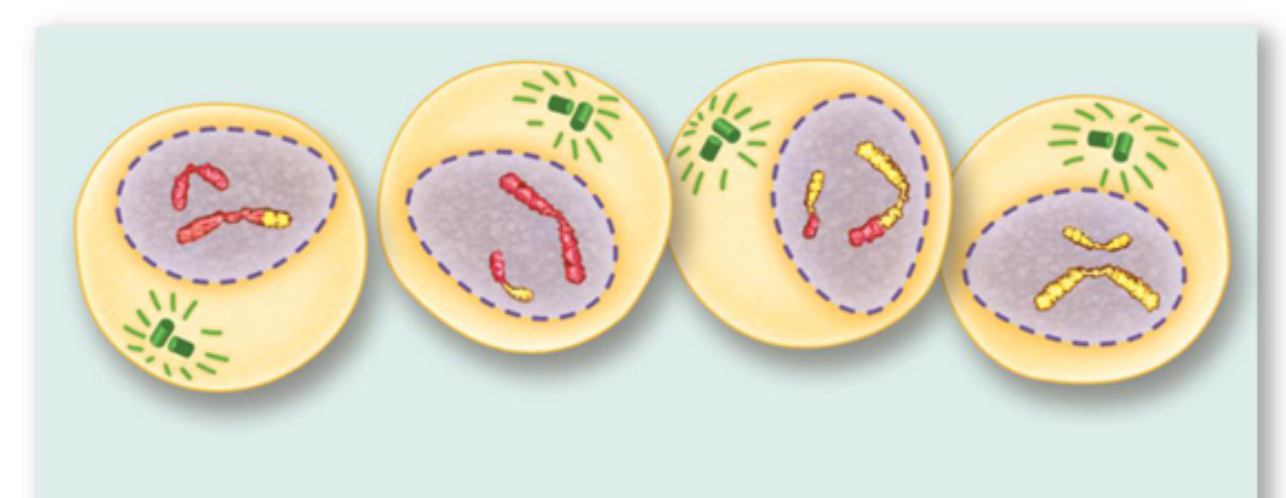
- Prophase II - new spindle forms around the chromosomes
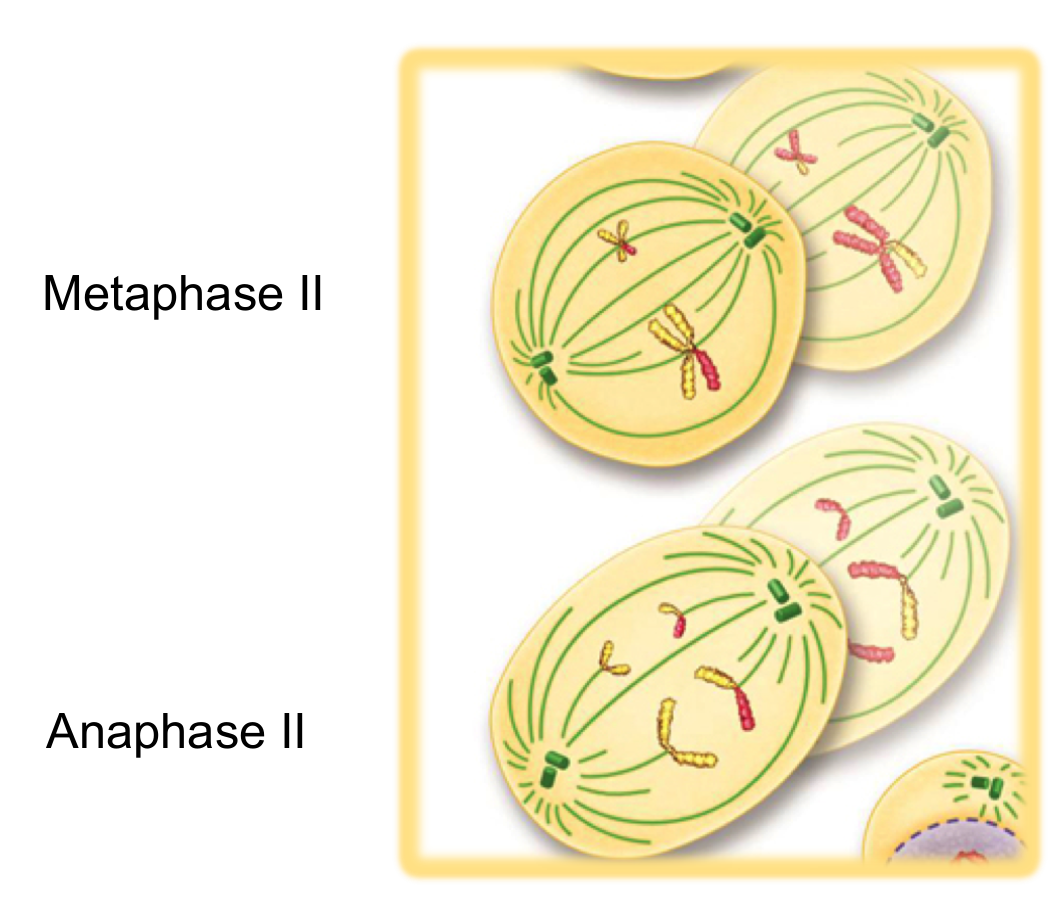
- Metaphase II - chromosomes line up at the middle
- Anaphase II - centromeres divide, chromatids move to the opposite poles
- Telophase II - nuclear envelope forms again, cytoplasm divides
- Anaphase II - centromeres divide, chromatids move to the opposite poles
- Metaphase II - chromosomes line up at the middle
- Interphase - the cell rests, grows, replicates its chromosomes and prepares for cell division
- sexual - because it happens in the reproductive system
Genetics
- Inheritance - the genes that pass from parent to offspring
- Mendelian genetics
- Principle of dominance
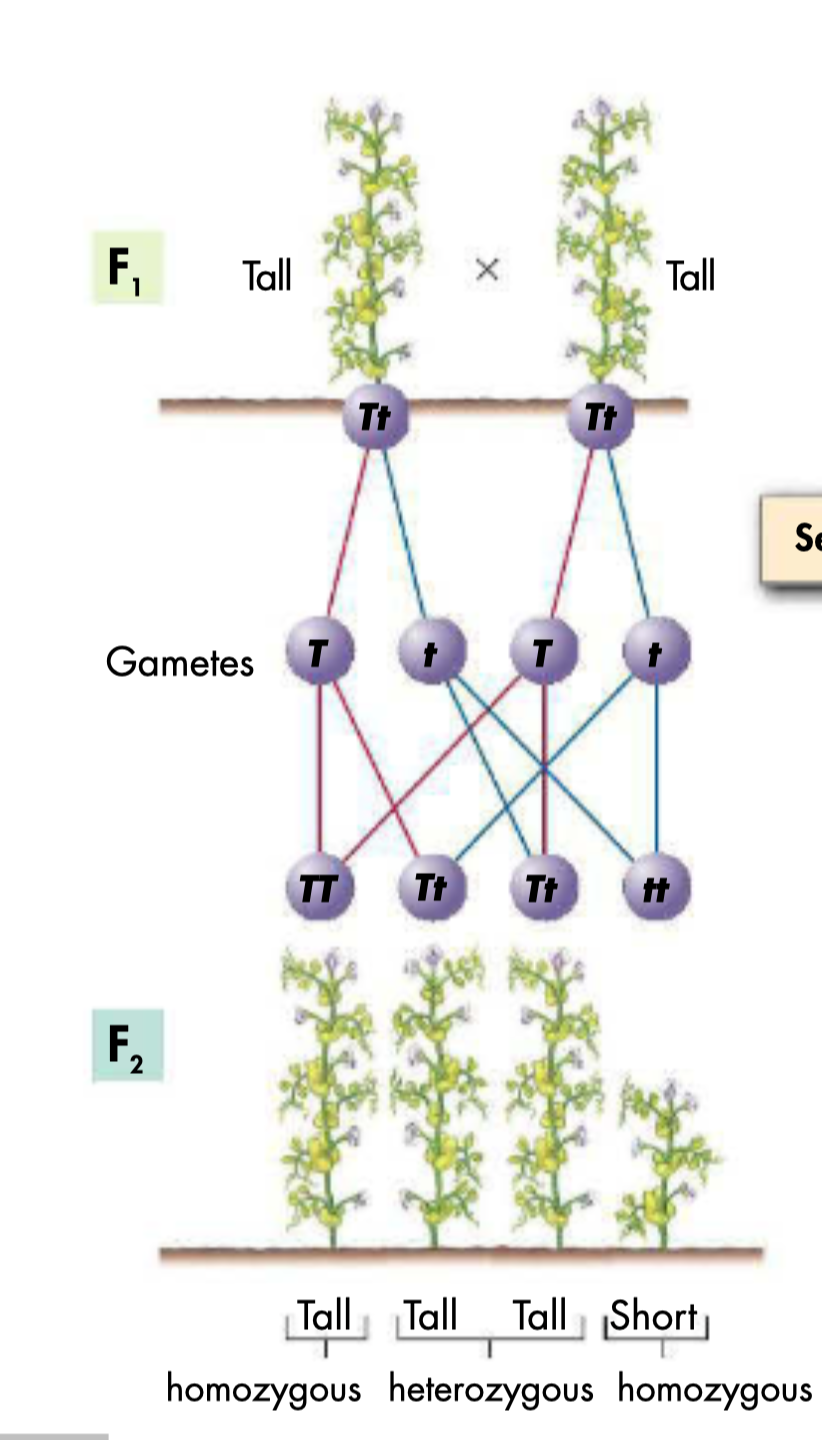
- Recessive - Recessive alleles for a particular trait will exhibit or show ONLY when the dominant allele for the trait is not present
- Dominant - the dominant allele for a particular trait will show or exhibit that form of the trait
- Hybrid
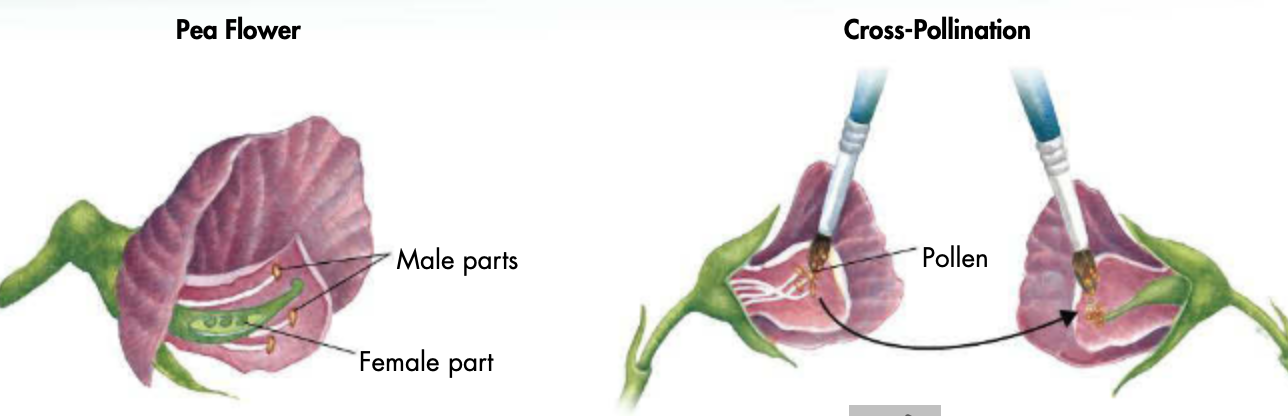
- offspring of the crossing of parents with different traits
- Pure breed
- offspring resulting from a cross of the same breed of unmixed lineage over many generations
- Segregation
- Alleles separate from each other, so that each gamete carries only one allele for each gene.
- In Mendel's experiment he said that the alleles for tallness and shortness in the F1 plants must have segregated from each other in the formation of sex cells
- Alleles separate from each other, so that each gamete carries only one allele for each gene.
- Probability
- possibility that an event in particular occurs
- Mendel figured out that probability could explain the result of those genetic crosses
- possibility that an event in particular occurs
- Principle of dominance
- Non-mendelian genetics
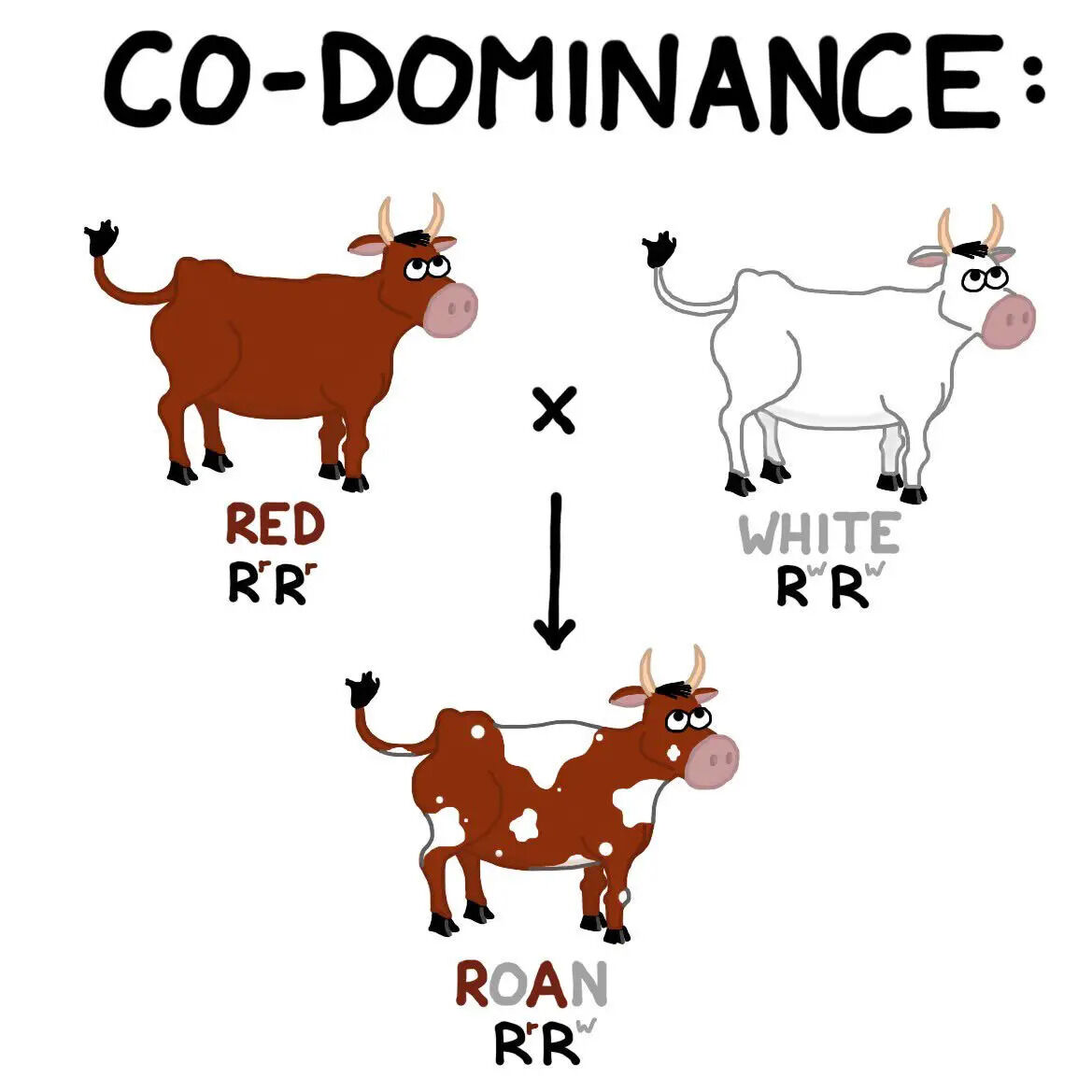
- Incomplete dominance - alleles that are neither dominant nor recessive
- Cases in which one allele is not completely dominant over another
- Codominance - the phenotypes produced by both alleles are clearly expressed
- Polygenic traits means "many genes"
- many traits are produced by the interaction of several genes
- at least 3 genes are involved in making the reddish-brown pigment in the eyes of fruit flies
- many traits are produced by the interaction of several genes
- Incomplete dominance - alleles that are neither dominant nor recessive
- the study of heredity in science
- heredity - characteristics delivered from parent to offspring
- Ancestry - Information that shows who an individual is biologically descended from, including their genetic relationships, can be combined with historical information to infer where an individual's distant ancestors lived.
- Epigenetics
- study of how cells control gene activity without changing the DNA sequence.
- These modifications are attached to DNA and do not change the sequence of DNA building blocks
- Within the complete set of DNA in a cell (genome), all of the modifications that regulate the activity (expression) of the genes is known as the epigenome.
- These modifications are attached to DNA and do not change the sequence of DNA building blocks
- study of how cells control gene activity without changing the DNA sequence.
- Mutation - change that occurs in our DNA sequence, either due to mistakes when the DNA is copied or as the result of environmental factors (mutagens)
- Syndrome - Genetic disorders occur when a mutation affects your genes or when you have the wrong amount of genetic material.
The central dogma of molecular biology
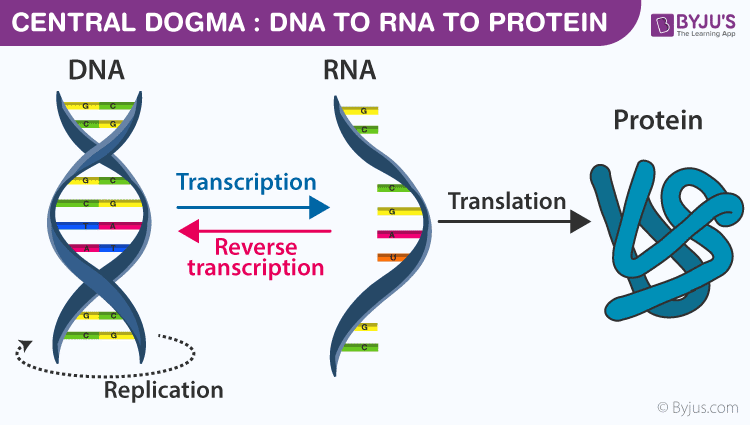
- States that genetic information flows only in one direction, from DNA, to RNA, to protein, or RNA directly to protein.
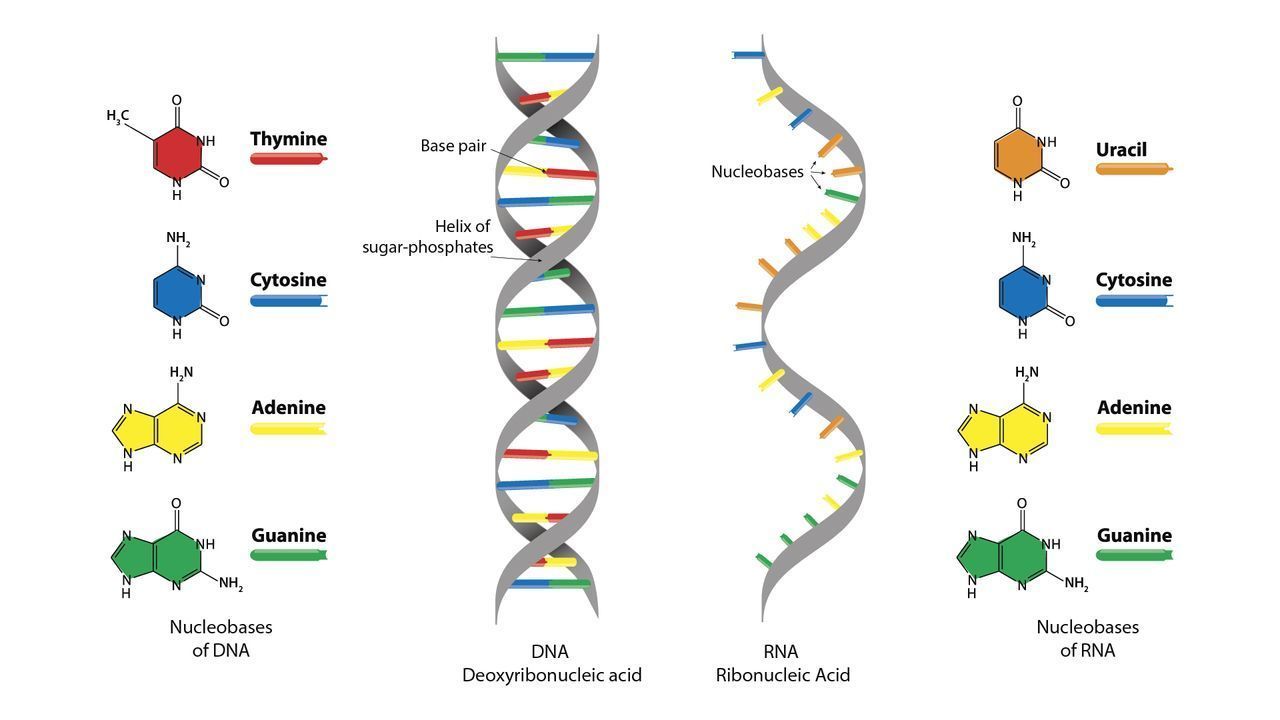
- DNA - spiraling chain-like molecule made of nucleotides, acts as blueprint for living things
- Alleles - variations of a gene at a given genomic location, individuals inherit two alleles, one from each parent. If the two alleles are the same, the individual is homozygous for that allele. If the alleles are different, the individual is heterozygous.
- Gene - Basic unit of heredity passed from parent to child, made up of sequences of DNA and are arranged, one after another, at specific locations on chromosomes in the nucleus of cells.
- Trait - specific characteristic of an individual, like height or hair color
- Genotype - genetic code of the individual, all the information found in the cell's of the individual
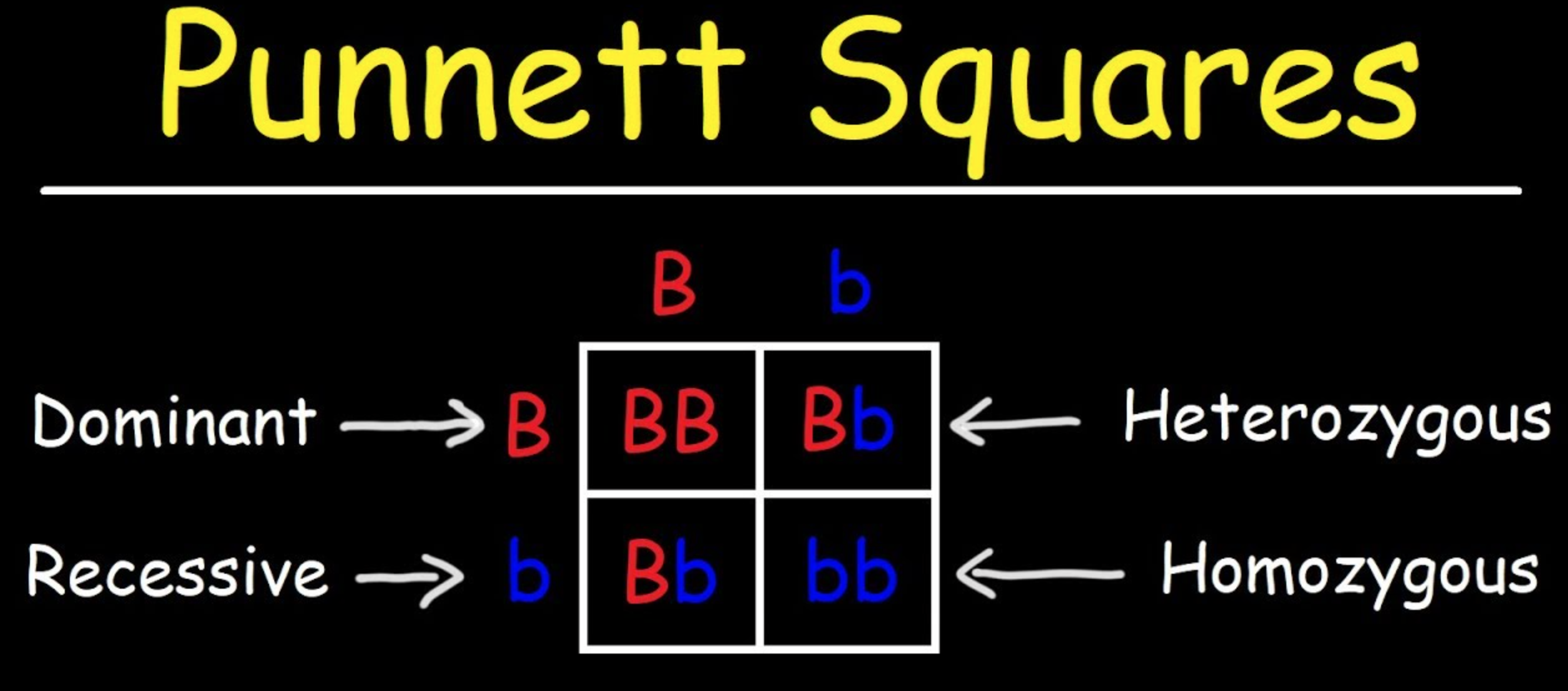
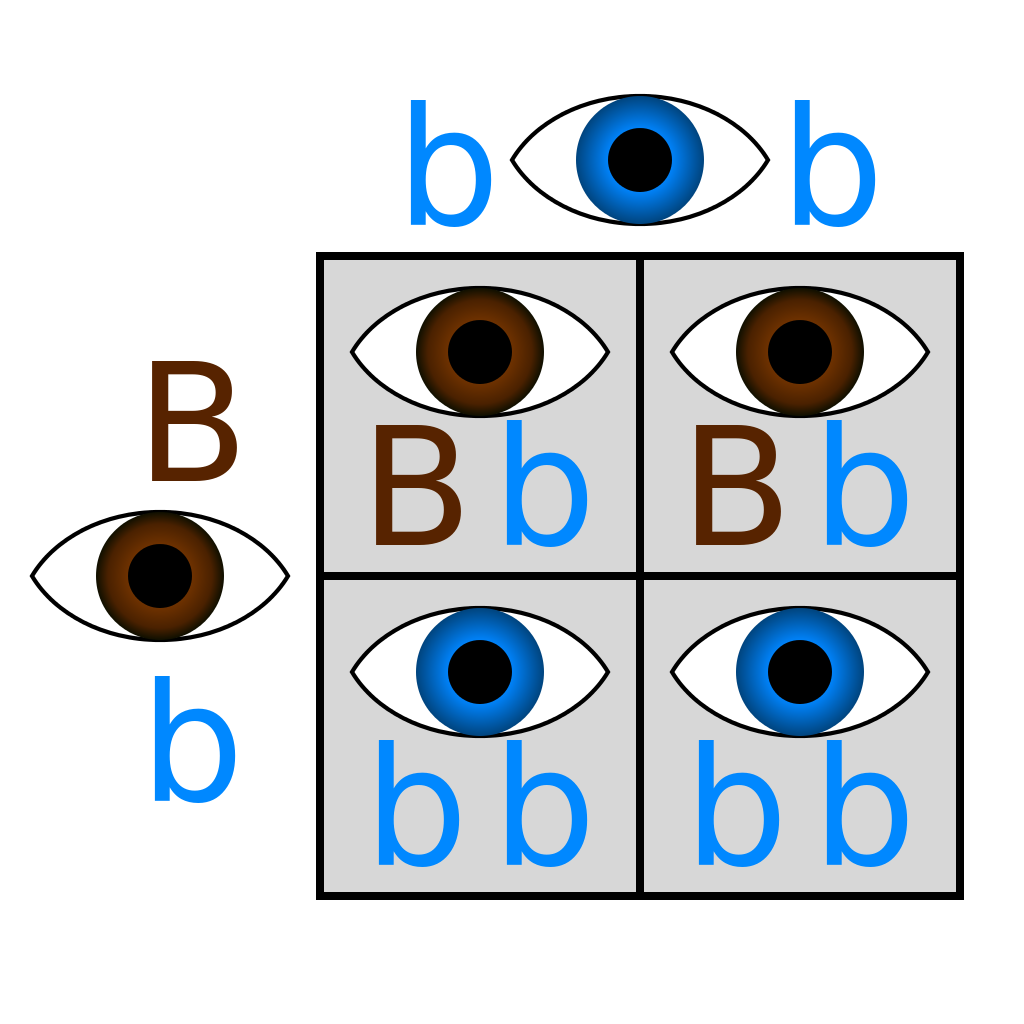
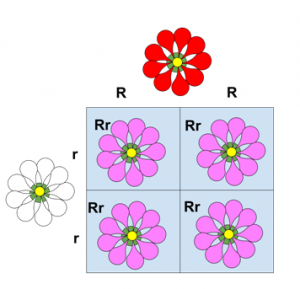
- Punnett square
- Dominant homozygous BB
- Recessive homozygous bb
- Dominant heterozygous Bb
- Recessive homozygous bb
- shows the genotype’s two individuals can produce when crossed
- Since all allele combinations are equally likely to occur, a Punnett Square predicts the probability of a cross producing each genotype.
- Dominant homozygous BB
- Punnett square
- Phenotype - visible characteristics, can be influenced by the environment
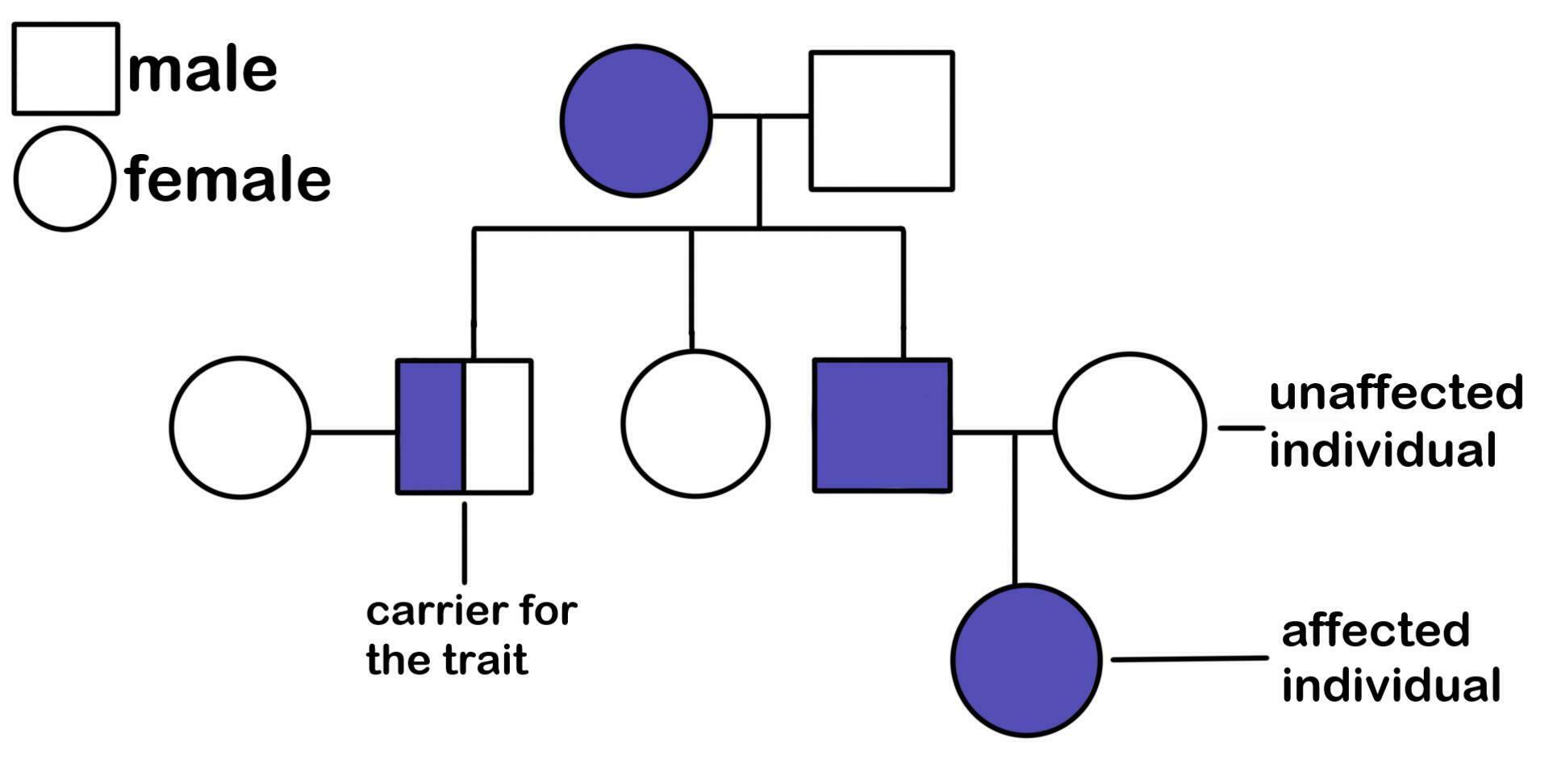
- Pedigree chart - Shows the genetic history of a family over several generations.
- Males=square and females=circles
- Shaded symbols=individual is affected by a condition, unshaded symbol=they are unaffected
- Horizontal line between male and female=mating, resulting children are shown as offshoots to this line
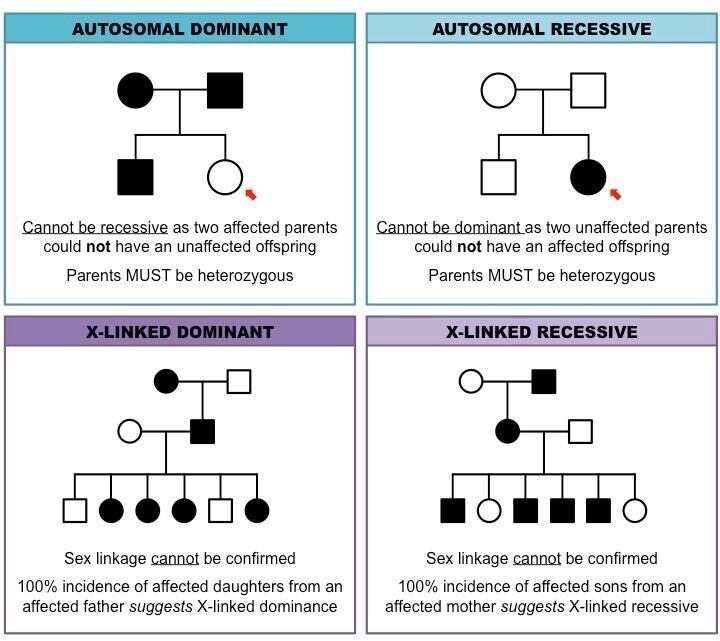
- It is not possible to confirm sex linkage to a trait or disease from pedigree charts
- Autosomal dominant
- If both parents are affected and an offspring is unaffected, the trait must be dominant (parents are both heterozygous)
- All affected individuals must have at least one affected parent
- If both parents are unaffected, all offspring must be unaffected (homozygous recessive)
- All affected individuals must have at least one affected parent
- If both parents are affected and an offspring is unaffected, the trait must be dominant (parents are both heterozygous)
- Autosomal recessive
- If both parents are unaffected and an offspring is affected, the trait must be recessive (parents are heterozygous carriers)
- If both parents show a trait, all offspring must also exhibit the trait (homozygous recessive)
- If both parents are unaffected and an offspring is affected, the trait must be recessive (parents are heterozygous carriers)
- X-Linked dominant
- If a male shows a trait, so too must all daughters as well as his mother
- An unaffected mother cannot have affected sons (or an affected father)
- If a male shows a trait, so too must all daughters as well as his mother
- X-Linked recessive
- An unaffected mother cannot have affected sons (or an affected father)
- An unaffected mother can have affected sons if she is a carrier (heterozygous)
- An unaffected mother cannot have affected sons (or an affected father)
- Y-Linked
- Y-linked diseases also exist, but are not very common. They are only present in males, as females don’t have Y chromosome
- Autosomal dominant
- It is not possible to confirm sex linkage to a trait or disease from pedigree charts
- Horizontal line between male and female=mating, resulting children are shown as offshoots to this line
- Shaded symbols=individual is affected by a condition, unshaded symbol=they are unaffected
- Males=square and females=circles
- Genotype - genetic code of the individual, all the information found in the cell's of the individual
- Locus - The physical site or location of a specific gene on a chromosome.
- Gene expression - is the process by which the information encoded in a gene is turned into a function
- Trait - specific characteristic of an individual, like height or hair color
- Gene - Basic unit of heredity passed from parent to child, made up of sequences of DNA and are arranged, one after another, at specific locations on chromosomes in the nucleus of cells.
- Nucleotides - DNA is made up of them: a deoxyribose molecule, a phosphate group and a nitrogen-containing base
- The 4 bases are adenine A, guanine G, cytosine C, thymine T
- Transcription - is the process of making an RNA copy of a gene’s DNA sequence. This copy, called messenger RNA (mRNA), carries the gene’s protein information encoded in DNA.
- RNA - genetic information as a single strand that has been copied from DNA
- Translation - process through which information encoded in messenger RNA (mRNA) directs the addition of amino acids during protein synthesis.
- Proteins - made up of amino acids, sequence that corresponds to the DNA sequence that encodes it
- An RNA molecule has a backbone made of alternating phosphate groups and the sugar ribose, attached to each sugar is one of four bases: adenine (A), uracil (U), cytosine (C) or guanine (G).
- Different types of RNA exist in cells: messenger RNA (mRNA), ribosomal RNA (rRNA) and transfer RNA (tRNA).
- Translation - process through which information encoded in messenger RNA (mRNA) directs the addition of amino acids during protein synthesis.
- RNA - genetic information as a single strand that has been copied from DNA
- Alleles - variations of a gene at a given genomic location, individuals inherit two alleles, one from each parent. If the two alleles are the same, the individual is homozygous for that allele. If the alleles are different, the individual is heterozygous.
- DNA - spiraling chain-like molecule made of nucleotides, acts as blueprint for living things
- States that genetic information flows only in one direction, from DNA, to RNA, to protein, or RNA directly to protein.
Imagens e arquivos do mapa
Informações
- Descrição
- Mapa Mental sobre Genetic Mind Map, criado por Natalia Lopez em 03-02-2022.
- Criado por
- Natalia Lopez
- Visualizações
- 30
- Avaliação