
Mapa mental
Teaching strategies for effective learning (1)
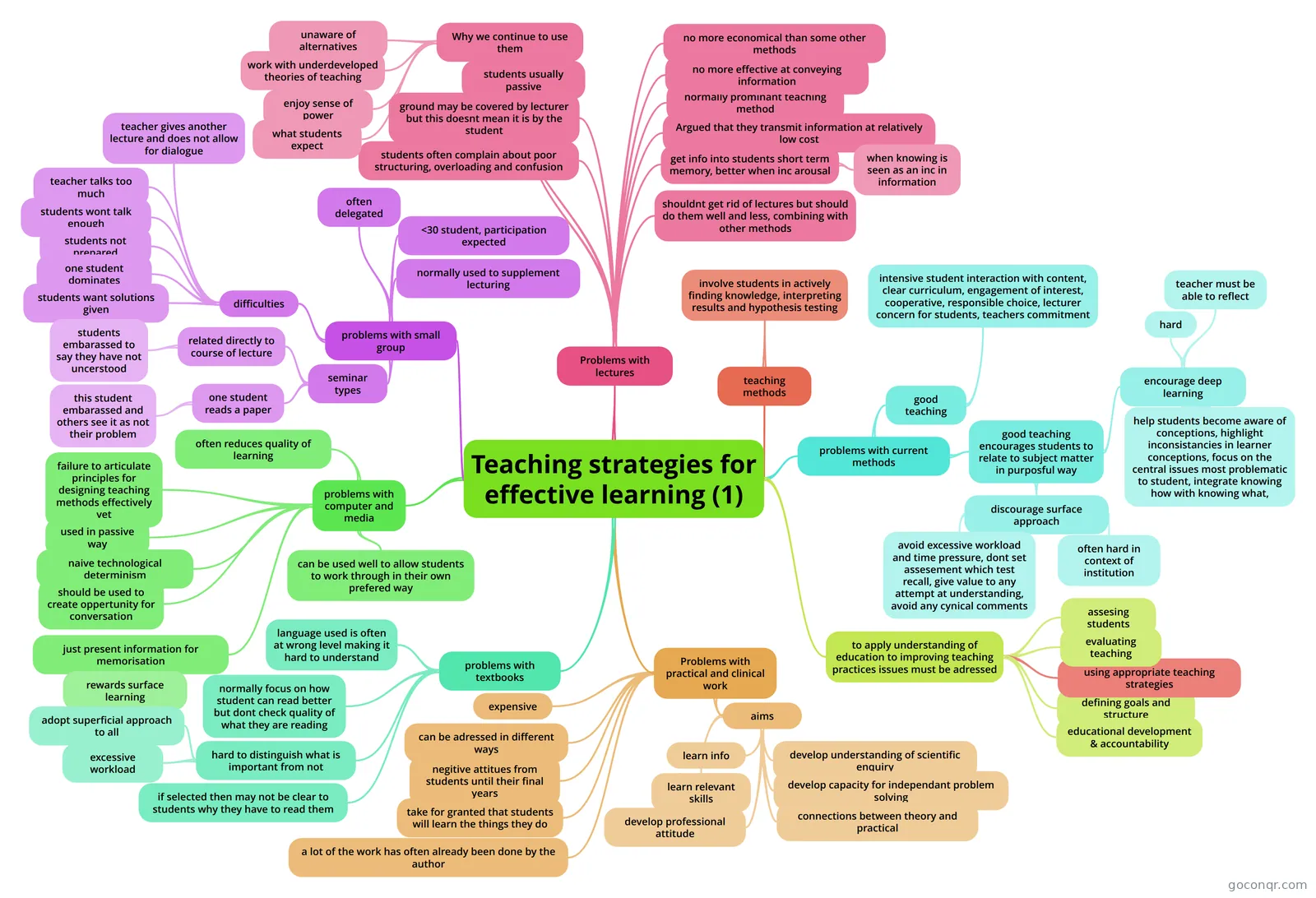
Mind map: Teaching strategies for effective learning
Conteúdo do mapa
Teaching strategies for effective learning (1)
to apply understanding of education to improving teaching practices issues must be adressed
- defining goals and structure
- using appropriate teaching strategies
- assesing students
- evaluating teaching
- educational development & accountability
problems with current methods
- good teaching encourages students to relate to subject matter in purposful way
- encourage deep learning
- hard
- help students become aware of conceptions, highlight inconsistancies in learner conceptions, focus on the central issues most problematic to student, integrate knowing how with knowing what,
- teacher must be able to reflect
- discourage surface approach
- often hard in context of institution
- avoid excessive workload and time pressure, dont set assesement which test recall, give value to any attempt at understanding, avoid any cynical comments
- encourage deep learning
- good teaching
- intensive student interaction with content, clear curriculum, engagement of interest, cooperative, responsible choice, lecturer concern for students, teachers commitment
- good teaching encourages students to relate to subject matter in purposful way
teaching methods
- involve students in actively finding knowledge, interpreting results and hypothesis testing
Problems with lectures
- normally prominant teaching method
- Argued that they transmit information at relatively low cost
- get info into students short term memory, better when inc arousal
- when knowing is seen as an inc in information
- no more economical than some other methods
- no more effective at conveying information
- ground may be covered by lecturer but this doesnt mean it is by the student
- students often complain about poor structuring, overloading and confusion
- students usually passive
- Why we continue to use them
- unaware of alternatives
- work with underdeveloped theories of teaching
- enjoy sense of power
- what students expect
- shouldnt get rid of lectures but should do them well and less, combining with other methods
problems with small group
- <30 student, participation expected
- normally used to supplement lecturing
- often delegated
- difficulties
- teacher gives another lecture and does not allow for dialogue
- teacher talks too much
- students wont talk enough
- students not prepared
- one student dominates
- students want solutions given
- seminar types
- related directly to course of lecture
- students embarassed to say they have not uncerstood
- one student reads a paper
- this student embarassed and others see it as not their problem
- related directly to course of lecture
problems with computer and media
- failure to articulate principles for designing teaching methods effectively yet
- used in passive way
- naive technological determinism
- just present information for memorisation
- rewards surface learning
- should be used to create oppertunity for conversation
- often reduces quality of learning
- can be used well to allow students to work through in their own prefered way
problems with textbooks
- normally focus on how student can read better but dont check quality of what they are reading
- hard to distinguish what is important from not
- excessive workload
- adopt superficial approach to all
- if selected then may not be clear to students why they have to read them
- language used is often at wrong level making it hard to understand
Problems with practical and clinical work
- aims
- develop understanding of scientific enquiry
- learn relevant skills
- learn info
- develop capacity for independant problem solving
- connections between theory and practical
- develop professional attitude
- expensive
- can be adressed in different ways
- negitive attitues from students until their final years
- take for granted that students will learn the things they do
- a lot of the work has often already been done by the author
- aims
Informações
- Descrição
- Mapa Mental sobre Teaching strategies for effective learning (1), criado por bsms2388 em 19-11-2013.
- Criado por
- bsms2388
- Visualizações
- 57
- Avaliação