
Mapa mental
Printing Processes Graphics
Conteúdo do mapa
Printing Processes Graphics
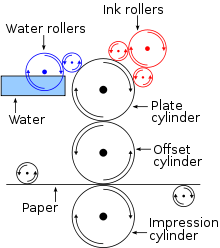
Offset Lithography
- It is mainly used for commercial printing
- It works on the principle that water and grease don't mix
- The image attracts grease (the ink) and rejects water
- The high speed and cheapness of the process makes it the most widely used method
- They use 4 colours which are, cyan, magenta, yellow and black
- The black is applied last as it creates tone
- Mass production printing
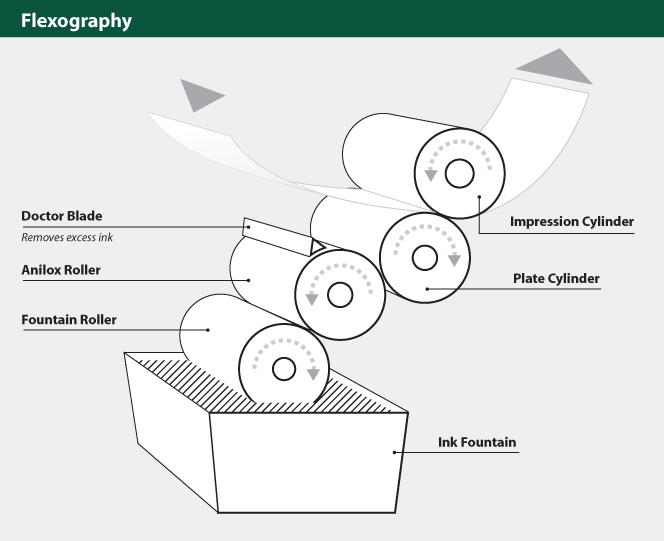
Flexography
- Uses flat printing plates, it uses flexible rubber or plastic plates for cylinders
- The cylinders rotate to print onto paper, card, plastic or metal
- It is used for packaging, cartons or point of sale material
- It can also be used to print newspapers
Gravure
- Produces high-quality prints in large volumes
- Very expensive to set up
- Its used for high quality reproduction of photos, paintings, full colour magazines and books
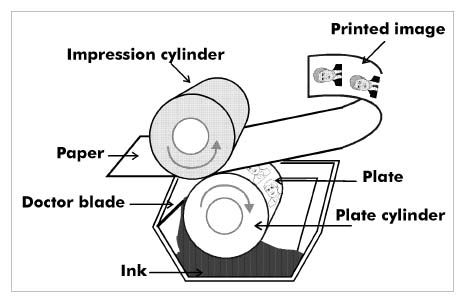
- The images are etched onto a plate through a screen. The image is broken down into dots
- Ink fills the dot cells and excess ink is removed using a doctor blade
- Rubber covered cylinders press the paper into the cells holes, creating a printed image, The deeper the holes, the darker the image
- Ink fills the dot cells and excess ink is removed using a doctor blade
Screen printing
- Can be done onto T-Shirts, Bags, Banners, Signs, Shopping bags, Posters, Packaging and flyers
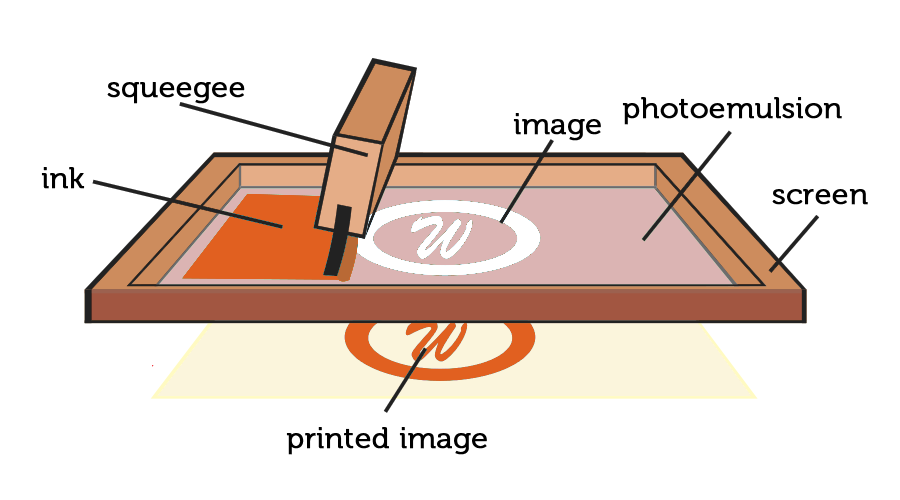
- Simple stencils can be made and used to produce relatively cheap prints fast and effectively
- 1.The screen is made as a wooden frame. Nylon fabric is cut 5cm larger than the frame and the sketched and stapled
- 2. The shape is cut out of paper and either part is used to create the stencil
- 3. The screen is hinged to allow it to be raised and lowered without changing positon, then the paper and stencil are placed under the screen
- 4. the screen is then lowered and secured in position
- 5. The ink is then squeezed through the nylon fabric mesh by using a rubber-bladed squeegee
- 6. The ink then passes through the unblocked area of the stencil to produce your final printed image
- 5. The ink is then squeezed through the nylon fabric mesh by using a rubber-bladed squeegee
- 4. the screen is then lowered and secured in position
- 3. The screen is hinged to allow it to be raised and lowered without changing positon, then the paper and stencil are placed under the screen
- 2. The shape is cut out of paper and either part is used to create the stencil
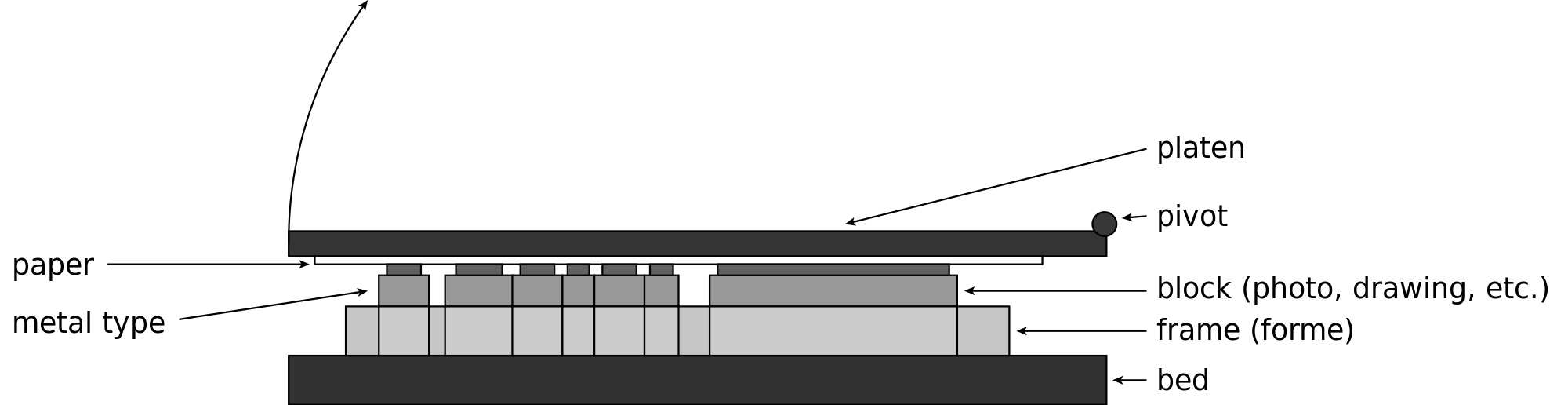
Letter Press
- Prints from a raised surface
- The surface receives ink and is then pressed onto the paper
- This process is expensive as metal letters have to be individually made
- Letter press is now only used for high quality books and stationary, generally in short runs
Imagens e arquivos do mapa
Informações
- Descrição
- Mapa Mental sobre Printing Processes Graphics, criado por Matthew Riley em 08-04-2016.
- Criado por
- Matthew Riley
- Visualizações
- 1
- Avaliação