
Notas
Vaccination Debate
Conteúdo das notas (2)
Página 1
Benefits of Vaccinations
In the 20th century, diseases such as smallpox, polio, measles and whooping cough that once killed many children, had almost been eliminated via vaccination programmes. The World Health Organisation led many campaigns to eliminate diseases across the world. In England, many vaccines were introduced following World War Two:
1955 - Polio vaccine
1963 - measles
1988 - MMR (measles, mumps and rubella)
1994 - Hepatitis B
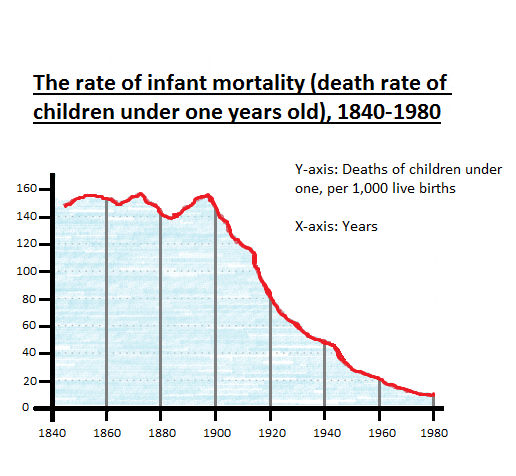
Moreover, the infant mortality rate has dropped significantly, as seen in the diagram below. Most of this effect is from immunisation.
Página 2
The MMR Debate
In 1998, Dr Wakefield published a paper in the Lancet (medical journal) suggesting there was a link between MMR, given routinely to young children, and autism. The paper was a small study that showed being vaccinated with the MMR vaccine led, in some cases, to the development of autism. Even though this was unverified by any other researcher and backed up by preliminary results, the media made a huge story out of it. For a vaccination programme to be successful at least 95% of the target population must be vaccinated.
Fierce debate had fostered around the topic of vaccines and the argument has boiled down to: do people have the choice whether or not to be vaccinated? Especially, can parents make the choice about vaccinating or not vaccinating their children?
Dr Wakefield's study has been dismissed by medical professionals and labelled as bad science. Even so, uncertainty still surrounds the questions of vaccines.
Informações
- Descrição
- O usuário eliminou as informações de disciplina Notas sobre Vaccination Debate, criado por Usuário eliminado em 24-07-2017.
- Criado por
- Usuário eliminado
- Visualizações
- 19
- Histórico
-
- Criado por Andrew Burke · 24 jul 2017
- Copiado por Andrew Burke · 24 jul 2017
- Avaliação