
Notas
Santana: Love of my Life
Conteúdo das notas (5)
Página 1
About the Piece:
After the death of his father, Santana didn’t feel up to playing or even listening to music for some time. He eventually started listening to classical music. One of the pieces that he was struck with was the third movement of Brahms’ Symphony No.3 in F major. The main theme, in 3/8 metre, definitely has a somewhat sombre, melancholic, contemplative mood so it is not difficult to see how this might affect someone grieving the loss of their father.
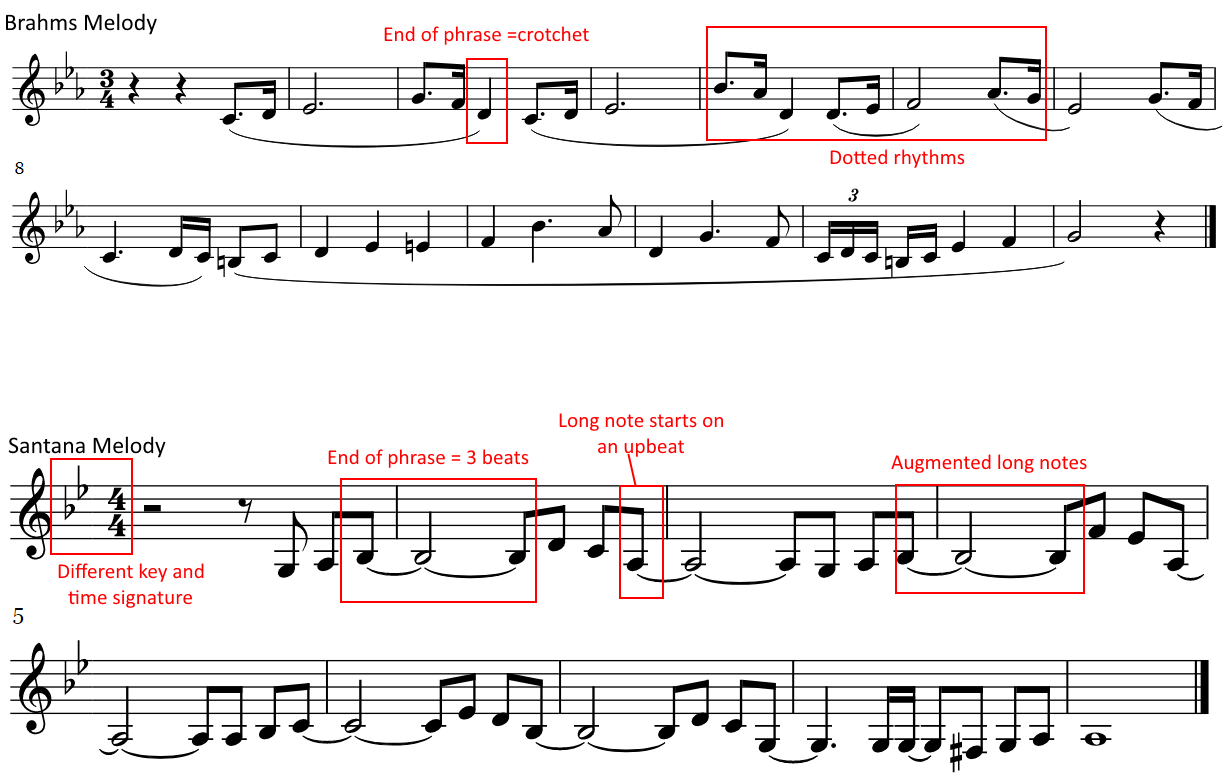
Brahms’ melody soon became the basis for Love of My Life. The original Brahms melody is twelve bars long, in the key of C minor, 3/8 time and is played by the cello section. To make this more accessible at GCSE level, the excerpt below has been modified into 3/4 time.
Santana’s interpretation of the melody is virtually identical in relation to:
The melodic shape
The melody starting with an anacrusis
A similar, sombre mood is created, although this becomes more optimistic in the final section
However, Santana’s version is a master class in creative arranging, making some clever and significant changes to alter the character and style of the music:
He changes the metre from 3 to 4
He changes the key from C minor to G minor
The long notes are syncopated
Santana splits Brahms’ theme using bars 1 - 8 for the introduction, bars 5 – 8 at the end of the verse and bars 9 – 12 for the chorus
A comparison of the two melodies is shown on the next page.
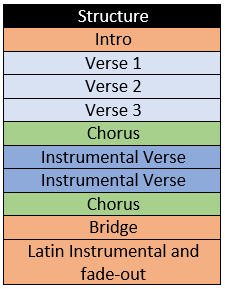
The structure of the piece (shown below) is quite unusual for the late 1990's. It is more reminiscent of classical music, which Santana took inspiration from.
Love of My Life is heavily dominated by the guitar due to the structure and lengthy final improvised section. Santana’s riffs tend to be melodically quite simple but rhythmically complex, employing a lot of syncopation which makes them very distinctive.
Página 2
Introduction:
The opening drum kit upbeat leads into a four bar rock beat accompanied by congas. This beat is characterised by the backbeat snare drum and the bass drum semiquaver on the very end of the bar, leading into the first beat of the next bar and giving the music a strong sense of drive and urgency despite the steady tempo.
Above this rhythm, the monotone rapped vocal gives a sombre feel to the intro, after which Santana enters with his modified version of Brahms’ theme played on electric guitar.
The first thing to notice about this is how Santana modifies the anacrusis at the start of the phrase and in each subsequent bar. In the Brahms version, the two-note anacrusis is constructed from a dotted quaver/semiquaver rhythm leading into crotchets. In Santana’s version, he changes the dotted rhythm to two straight quavers leading to the long notes (dotted minims) appearing on the final quaver of the bar, giving the music a syncopated feel.
The tone of the guitar used here is very mellow with just a minimal hint of vibrato on the longer notes.

Página 3
Verses:
The verse is structured around a two-bar, three chord sequence played four times: Gm, Cm, D7.
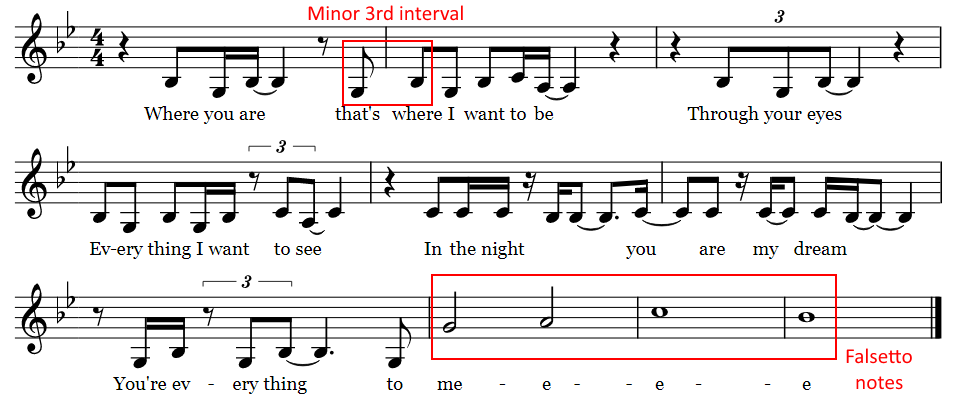
Above this, the understated vocal melody, sung by Dave Matthews has a relaxed, improvised feel and for the most part is restricted to a range of a perfect 4th and dominated by the use of the minor third interval of the tonic chord (G minor).
The end of each two bar vocal phrase has improvised guitar responses from Santana. At the end of the final vocal phrase, Matthews leaps an octave into falsetto for the final ‘me’, giving greater emphasis to the word. Santana also brings back the final four bars of the guitar introduction based on the Brahms melody.
The second verse develops from the first in that it is constructed from a call and response conversation between guitar and voice with Santana reverting to the original melody from the introduction.
The third verse is structured exactly the same as the first with the guitar responses from Santana becoming a little more bold and expansive.
Página 4
Chorus:
The chorus is based on the final four bars of the original Brahms melody, with the guitar and vocals in unison. The syncopated feel is continued here with the addition of triplet figures at the end of the phrase (shown below).
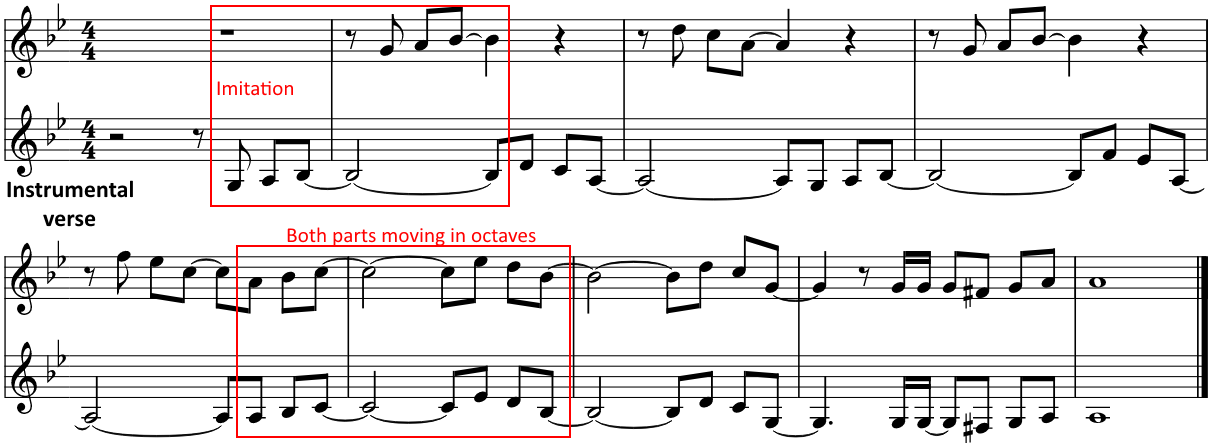
At the end of the chorus there is a two bar drum break leading into two instrumental verses. The structure of these is very similar to the second verse. The first part shows imitation between two guitar parts. In the second part, the two guitars settle into an octave texture (see below). Once again, the tonal quality of the guitars is mellow with occasional pitch bends and subtle vibrato on the longer notes.
The repetition of the instrumental verse is almost identical, the only difference being the addition of a little more decoration to the melody towards the end of the phrases.

Página 5
Bridge and Latin Fade-Out:
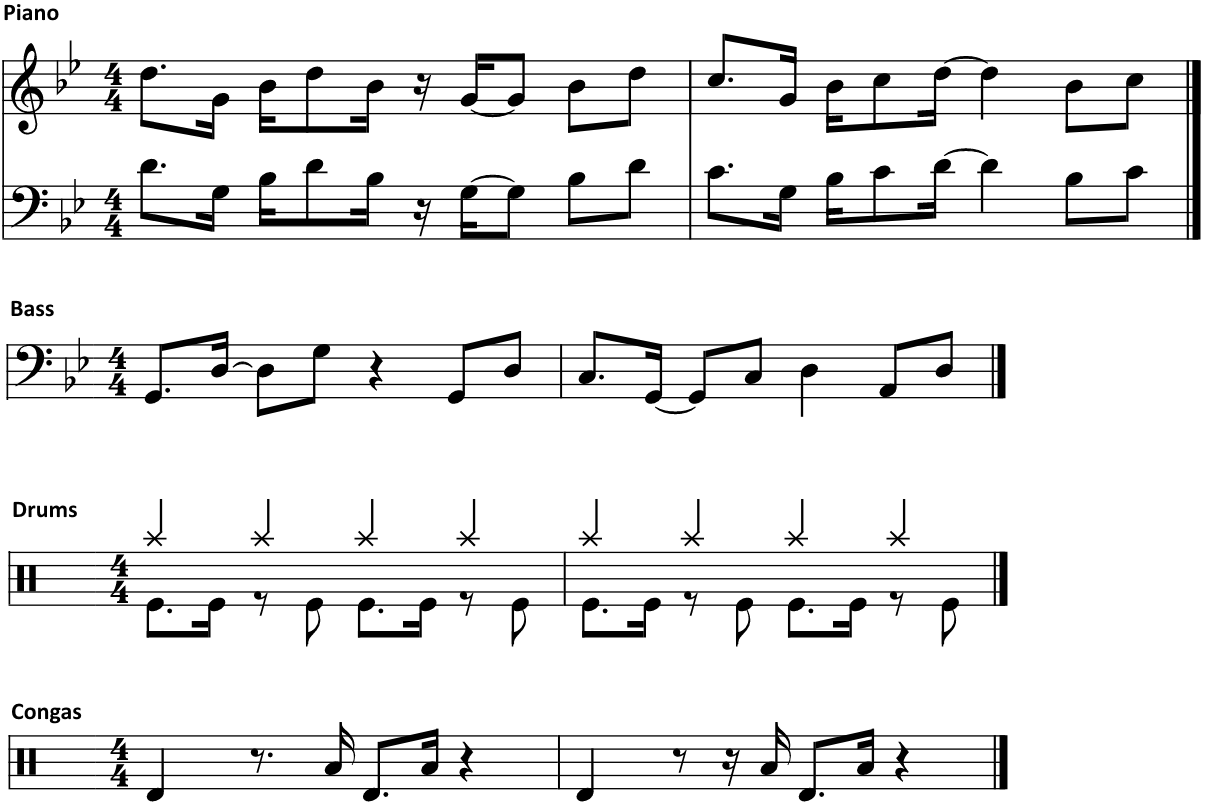
At the end of the chorus, the bridge plays, ending with a sudden crescendo and leading into an entirely new instrumental ‘Latin Section’. This section is characterised by the strong syncopated Afro-Cuban dance rhythms, especially in the two bar repeated piano pattern
Above this accompaniment, Santana plays a highly syncopated, sequential melody that gradually evolves into increasingly complex improvised passages.
This section repeats for the rest of the song. Santana makes use of guitar techniques such as pitch bend, tremolo and vibrato with increasing virtuosity encompassing the entire pitch range of the guitar, before the song fades away.
Informações
- Descrição
- O usuário eliminou as informações de disciplina Notas sobre Santana: Love of my Life, criado por Usuário eliminado em 01-08-2017.
- Criado por
- Usuário eliminado
- Visualizações
- 202
- Histórico
-
- Criado por Antonia Blankenberg · 28 jul 2017
- Copiado por Antonia Blankenberg · 1 ago 2017
- Avaliação