
Notas
Past Climate Change
Conteúdo das notas (6)
Página 1
How has the Climate Changed?
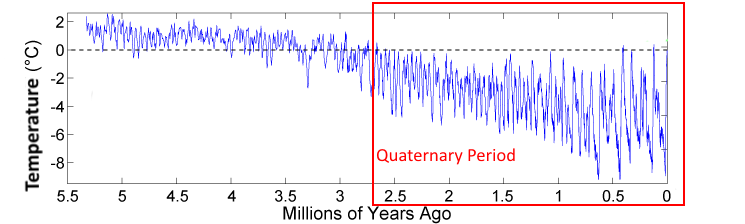
The Quaternary is the most recent period in the geological timeline of the Earth. The Quaternary stretched from 2.6 million years ago to the present day. The Quaternary marks a global drop in temperature and the beginning of the most recent ice age.
The Quaternary is determined to be an ice age due to the presence of a permanent ice sheet on Antarctica. This period is split into the Pleistocene epoch and the Holocene epoch.
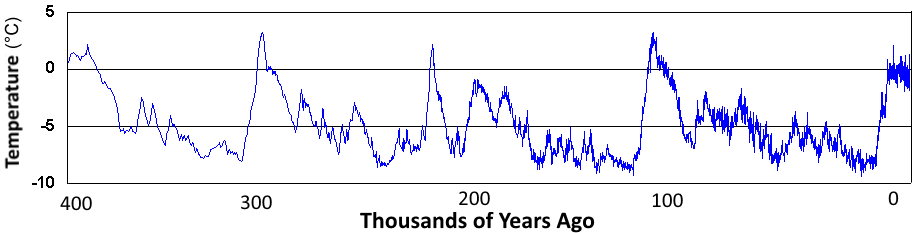
During the Pleistocene epoch there were fluctuations between cold glacial periods and warm interglacial periods. This brought the expansion and contraction of ice sheets.
The Holocene marks the beginning of the current interglacial period and the current period of relative climate stability. We are currently in the Holocene period.
Since 1000AD there have been several key periods of warming. The medieval warm period (MWP) lasted from 950 to 1250 and affected the North Atlantic Region in particular.
The MWP was followed by what is known as the Little Ice Age. From 1300 to 1870, a period of temporary cooling took over most of Europe. Accounts of the Little Ice Age have been found in diaries and government records.
Página 2
Reconstructing Past Climates
Ice Cores:
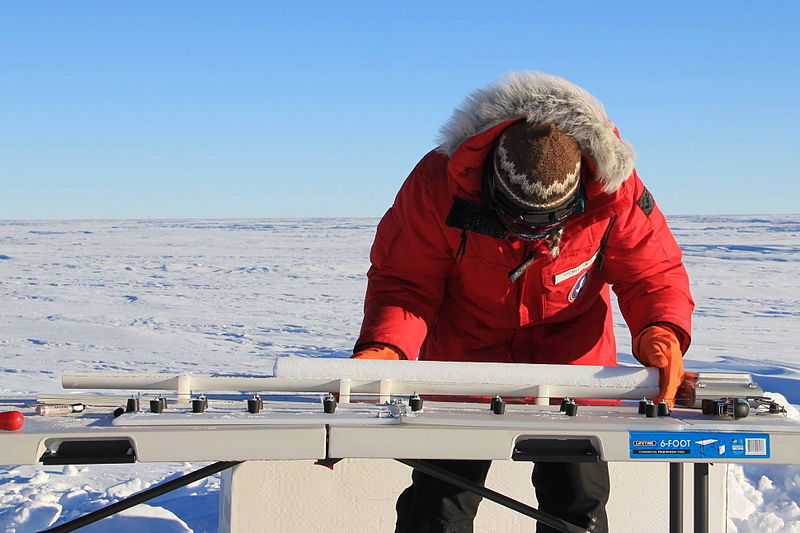
Antarctic ice cores act as a time capsule to the Earth's history; the lack of inhabitants means that there is little to no damage to these records.
The ice cores can be drilled and investigated in a lab.
Oxygen isotopes in the cores are used to estimate the global temperatures of the earth in the past.
When the cores are melted, trapped gasses like carbon dioxide and methane are released, and can be measured and compared to today's levels.
Ocean and Lake Sediments:
The principle of ocean sediment drilling works similarly to that of ice core drilling.
The amount and variation of shells in ocean sediment can determine the temperature and conditions of the planet.
Ocean sediments display the interglacial and glacial periods of the Quaternary when graphed.
Tree Rings:
The annual growth of a tree is shown by a ring in its trunk.
A narrow ring depicts a cooler, drier year.
Thicker rings show that the climate was warmer and wetter.
Patterns can be made between many trees to show the changing climate.
Página 3
Natural Causes of Climate Change: Milankovitch Cycles
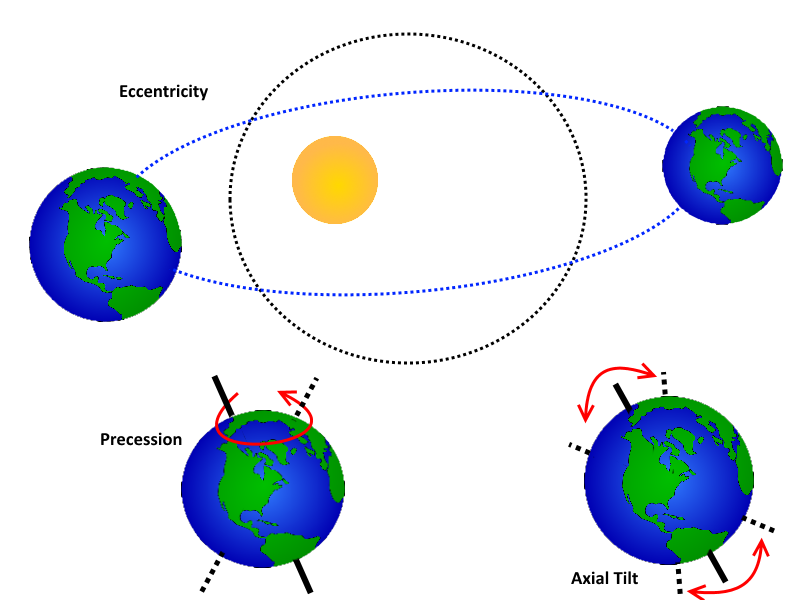
There are three different Milankovitch cycles which describe the orbital variations in the rotation of the Earth; eccentricity, precession, and axial tilt. Together, these cycles determine the amount of solar radiation each part of the world receives.
Eccentricity:
Eccentricity is the shape of the Earth's orbit around the sun.
This ranges from nearly circular to elliptical and is caused by the gravitational pull of the other planets.
A complete cycle of circular to elliptical and back to circular lasts 100,000 years. When the orbit is elliptical, winters are colder and summers are warmer.
Precession:
Because the earth is not a perfect sphere, it wobbles on its axis, similar to a spinning top.
This wobble is called precession and the Earth completes this cycle in 26,000 years.
This cycle is caused by the gravitational pull of the moon. Seasons are impacted by this; summers can become warmer.
Axial Tilt:
Axial Tilt is the angle at which the Earth's axis is pointed.
This varies between approximately 21 degrees and 24 degrees over 41,000 years.
A greater degree of tilt results in the Earth having a higher average temperature.
Página 4
Natural Causes of Climate Change: Solar Variation
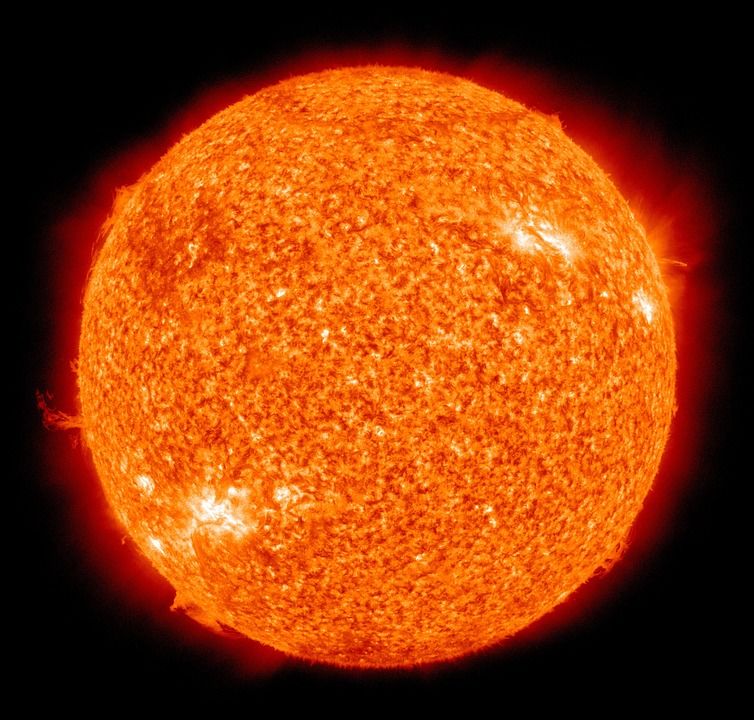
The output of the sun can be measured by monitoring sunspots on the sun's surface, these are caused by magnetic activity on the sun.
Since the 1970's, a decrease can be seen in the output of the sun, meaning that the sun is not a cause for the current warming of the climate.
There was a reduction in sun spots recorded during the period of the "Little Ice Age", explaining the cooling at this time.
Página 5
Natural Causes of Climate Change: Volcanism
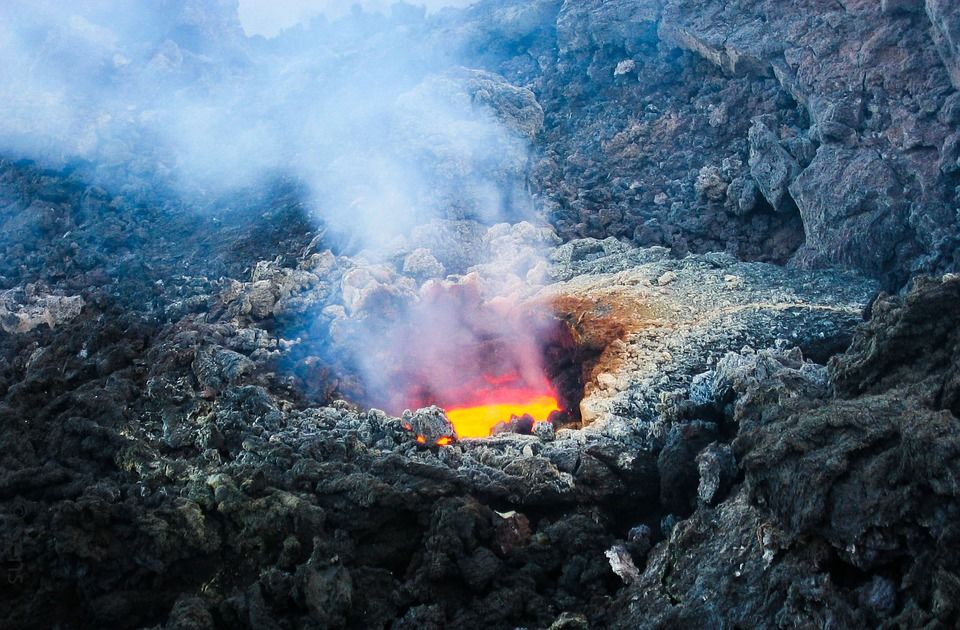
Volcanic eruptions can result in an altered climate.
Volcanoes can erupt large amounts of sulfur dioxide, which when mixed with water vapour, becomes a volcanic aerosol. This reflects sunlight away from the atmosphere and reduces the amount of solar radiation the Earth receives.
Although the carbon dioxide erupted from a volcano contributes to the greenhouse effect, the effect of the sulfur dioxide is often greater, meaning that the Earth will experience cooling.
The effect of sulfur dioxide will decrease over time with rainfall.
Página 6
Natural Causes of Climate Change: Greenhouse Gases
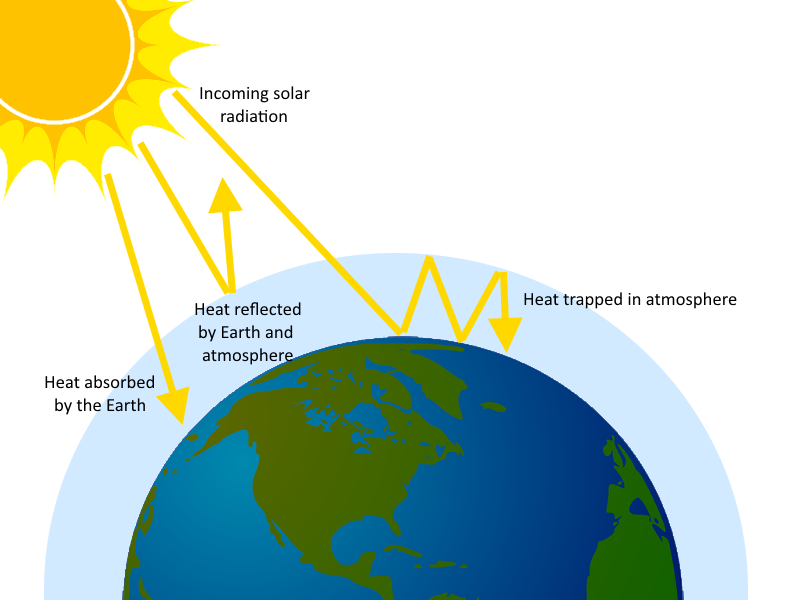
The greenhouse effect is the process by which solar radiation is trapped in the atmosphere by greenhouse gases, heating the planet.
The greenhouse effect is similar to a greenhouse, which traps solar radiation to grow plants.
The natural greenhouse effect is important for supporting life on the planet. However, human activities have released more greenhouse gases into the atmosphere, trapping more heat.
The main greenhouse gases present in the atmosphere are water vapour and carbon dioxide. There are others in smaller quantities, such as methane, nitrous oxide, and chlorofluorocarbons.
Informações
- Descrição
- O usuário eliminou as informações de disciplina Notas sobre Past Climate Change, criado por Usuário eliminado em 25-08-2017.
- Criado por
- Usuário eliminado
- Visualizações
- 233
- Histórico
-
- Criado por Antonia Blankenberg · 24 ago 2017
- Copiado por Antonia Blankenberg · 25 ago 2017
- Avaliação