
Notas
Tsarist Rule: Revolution and Reform
Conteúdo das notas (5)
Página 1
Russo-Japanese War
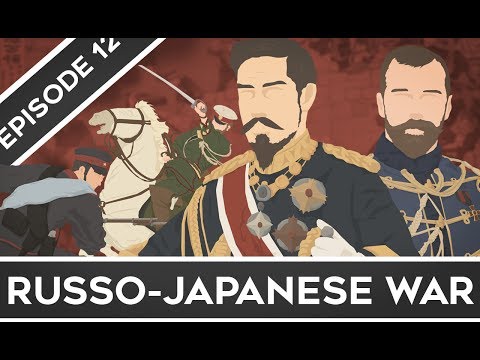
In 1904, Nicholas II decided to participate in a war against the Japanese for the territory of Manchuria. It was poor leadership on the Tsar's part that led to the death of many Russians. Moreover, people in industrial towns were suffering from shortages of food and famine. This military defeat severely undermined the authority of Nicholas II.
Feature History - Russo-Japanese War (Incorporar)
Página 2
1905 Revolution
On 22 January 1905, a peaceful demonstration under the government spy, Father Gapon (priest), occurred. The industrial workers and their families were complaining about their present conditions:
Long working hours with low pay and horrible living conditions
Protesters wanted a parliament
Questioned their loyalty to the Tsar
Nicholas II left the Winter Palace in fear of the demonstrators. The Cossacks attacked the crowds in order to assert the authority of the Tsar. An estimated 130 were killed and 3,000 wounded. This tragedy resulted in unrest across Russia:
Sailors on the Potemkin carried out a mutiny in June 1905
Strikes occurred in industrial towns
October rail strike - a national strike in the city of Moscow
Food was not reaching industrial towns
Demanded an overhaul of the system of government
Workers and soldiers gathered together to from Soviets, these were committees formed to represent them
Nicholas survived, barely, by publishing the 'October Manifesto'.

Página 3
'October Manifesto' 1905
The Tsar promised a number of reforms to the Russian people in the form of a manifesto:
The establishment of a parliament (Duma)
Nicholas would make no laws without the approval of the Duma
Liberals approved this development and many strikers went back to their jobs as they felt like they were getting their desired reforms. Some peasants continued to revolt, believing a Duma was not enough. When troops came back from the war against Japan the Tsar felt more secure. The Octobrists supported the Tsar in his manifesto. Further, taxes were lowered on the poor in society and Peter Stolypin was introduced as the Prime Minister.
The Fundamental Law of the Empire
Many riots and strikes occurred after the 1905 revolution. However, Tsar Nicholas II felt his position was strengthened again. In 1906, he introduced The Fundamental Law of the Empire:
The autocracy was ordained by God, therefore, it could not be subject to the Duma
The Duma would not control the finances of Russia
The Duma would have limited powers when it came to passing new laws
"Supreme autocratic power is vested in the Tsar of all the Russias. It is God’s command that his authority should be obeyed" - Nicholas II
Página 4
The Duma
There were four Dumas in total that were voted for by men in a secret ballot. The system of voting was fixed to allow those loyal to the Tsar to take up majority of positions. The aim of the first election was to elect a conservative Duma loyal to Nicholas II.
The Duma was split into two assemblies (houses):
State Council: upper house where over half the members were appointed by the Tsar. The rest were elected by privileged groups. This house had the power to veto the lower house.
State Duma: this was the elected body that had few powers. It needed the Tsar's approval for legislation to be passed.
First Duma (April-June 1906):
Kadets (Liberals) won majority of seats
The Tsar was deeply disappointed
The Kadets called for full control of the tax system; reminding the Tsar of his promise of constitutional governance in the October Manifesto
The Tsar dismissed the Duma and called for another election
Leading figures of the Kadets fled to Vyborg in Finland
The Kadets issued a Manifesto to condemn government action (asked people to refuse to pay taxes and do military service)
The Kadets were barred from the Duma and Peter Stolypin became Prime Minister
He brought in a policy of repression to restore order
Second Duma (February-June 1907):
Stolypin refused to allow some people to stand for election
Anti-Tsarist candidates were sent to prison
Many voters were removed from voting lists
Membership of the Duma became more polarised - Social Democrats and Socialist Revolutionaries were the leading parties
Stolypin wanted to introduce agrarian reforms but the majority opposed him
The Okhrana (secret police) argued they obtained evidence of a Social Democrat plan to assassinate the Tsar
The Tsar ordered the arrest of the Social Democrats for treason; the Duma refused and it was dismissed
Third Duma (1907-1912):
Electoral changes resulted in a right-wing majority in the Duma
1909 - Things started going wrong for Stolypin
Opponents were jealous of his success
His repressive policies managed to restore order
Agrarian reforms appeared to be going well
When in Kiev with the Tsar, Stolypin was assassinated by a revolutionary in September 1911
This led to the eventually collapse of the third Duma
Fourth Duma (1913):
Stolypin's death brought about the abandonment of reform from the government
The Duma was increasingly critical of the government for stopping reform
However, the government ignored the Duma
After 1914, its influence went into decline
Political Stalemate:
The Tsar continued to rule over Russia without ever giving any significant notice to the Duma. The first and second Dumas were critical of the Tsar and lasted short periods of time. In 1907, Nicholas changed voting regulations to prevent opponents form being elected to the Duma.
The third Duma did last for almost five years. Even the fourth Duma, which was 'loyal' to the Tsar was critical of his ministerial appointments and policies. However, the Duma had no power to change the path the Tsar took.
Página 5
Peter Stolypin
Stolypin became the Prime Minister in 1906 - he approached Russia's problems in a 'carrot and stick' manner.
He treated harshly protesters, revolutionaries and strikers
Over 20,000 people were exiled and 1,000 hanged
This suppression reduced any opposition that existed to the regime in the countryside
Stolypin attempted to win over the peasant class by giving them land
Wealthier peasants (kulaks) were allowed to leave mir communes and purchase their own land
These wealthy farmers were able to obtain larger pieces of land and farm more efficiently
As detailed below in the graph, production did increase significantly for grain produce
However, 90% of land in the fertile west of Russia consisted of inefficient communes in 1916
Peasants still lived in dire conditions
Through Stolypin's policies the kulaks became more loyal to the Tsar and opposed the idea of revolution.

Informações
- Descrição
- O usuário eliminou as informações de disciplina Notas sobre Tsarist Rule: Revolution and Reform, criado por Usuário eliminado em 29-08-2017.
- Criado por
- Usuário eliminado · ago 2017
- Atualizado
- 29 ago 2017
- Visualizações
- 57
- Histórico
-
- Criado por Andrew Burke · 28 ago 2017
- Copiado por Andrew Burke · 29 ago 2017
- Avaliação