
Cold War Early Developments
Slides do conjunto (5)
-
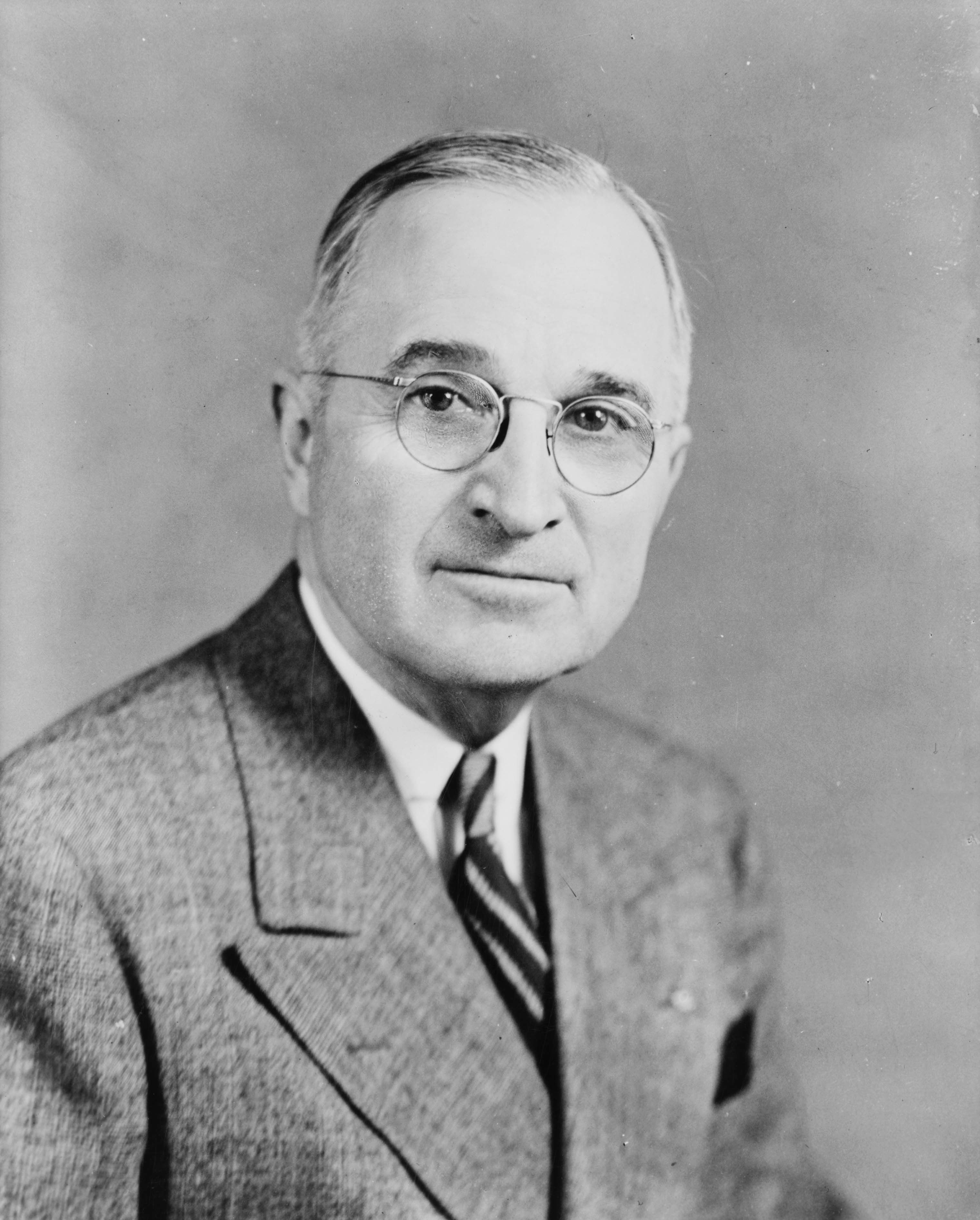
- Legenda: Above US President Harry Truman
- Truman was reluctant to get involved in European affairs as it was not popular in the US. However, he would not stand back and watch Stalin act in whatever manner he wanted.
- In March 1947, Truman made an announcement outlining the Truman Doctrine
- In this the US would provide money, equipment and advice to any country threatened by communism
- This began the policy of containment (trying to stop the spread of communism)
- Truman believed communism had gained a foothold in areas of poverty and hardship post war. He sent army general George Marshall to assess the situation.
- Marshall concluded an aid programme of $17 billion was needed to rebuild Europe
- US Congress approved the plan in April 1948
- USA wanted to create a market for US goods to avoid depression in the wake of World War Two
-
- Stalin felt the policy of Marshall Aid was attemped to make European states dependent on US money. Therefore, he forbade eastern European states from applying for Marshall Aid.
- By 1948, the USA and USSR were stocking weapons and each leader took the opportunity to denounce the policies and plans of the other. A propaganda war developed and the threat of war rose, but no shots were fired. However, the problem of Berlin 1948-49 caused great anxiety.
- After the war Germany was divided into four zones
- US outlined the Morgenthau Plan to remove all German industry and transform it into an agricultural country
- 1946 - Britain, France and USA combine their zones, which became known as West Germany in 1949
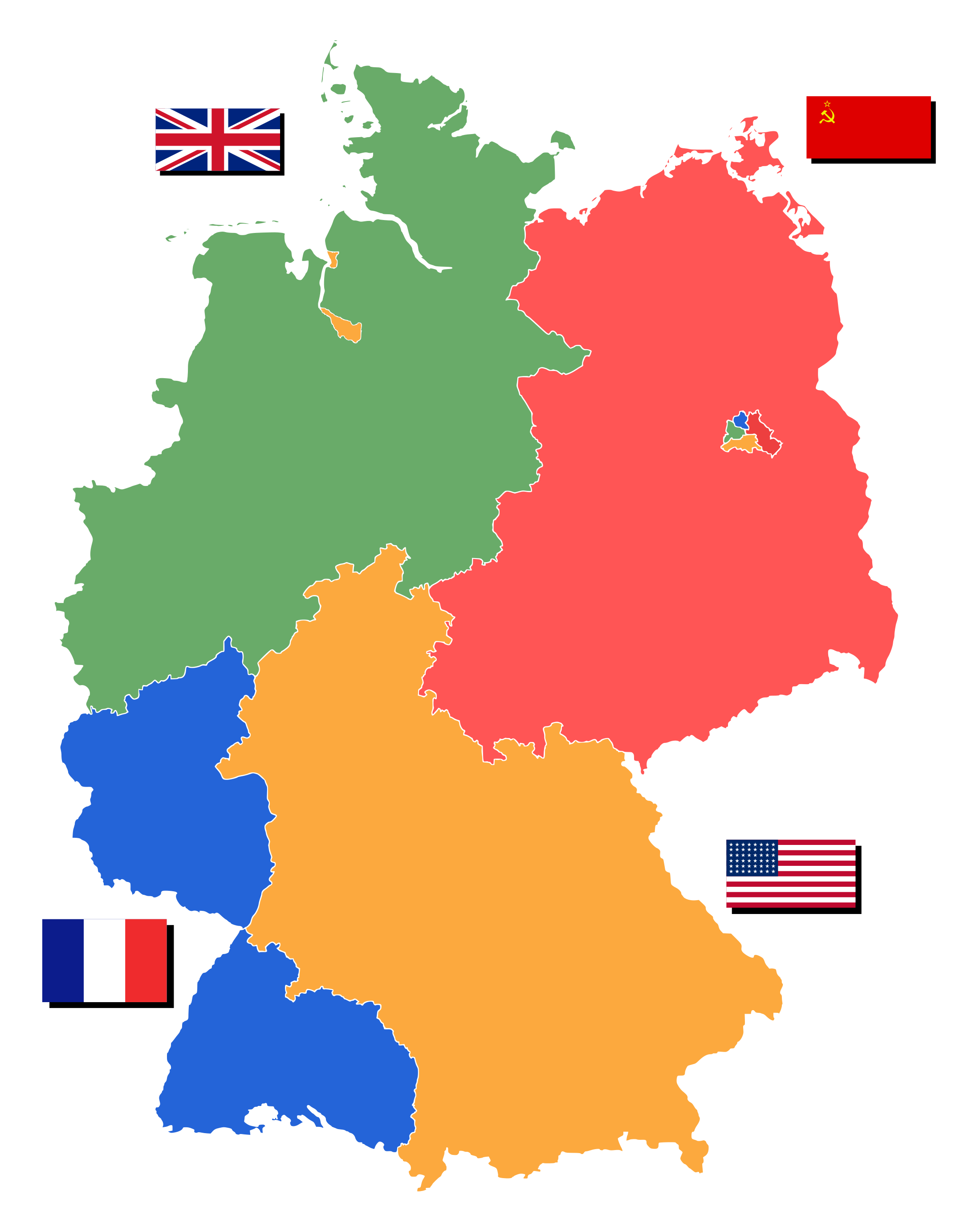
- Legenda: Berlin was located in the zone (red) that was occupied by the Soviets
-
- Stalin blocks Berlin:
- This was an attempt to show Western leaders that Stalin was serious
- Berlin was divided into four zones, but the city was deep in Soviet territory
- Berlin was linked to western areas by roadways, railways and canal
- June 1948 - Stalin blocked these supply lines to prevent Western powers from reaching their zones in Berlin
- Stalin expected the US to withdraw from Berlin, giving them full control over the city
- Berlin Airlift:
- Truman saw Berlin as a test of US patience
- Truman ordered that aircraft should lift supplies into Berlin
- Planes took off from Western territories for Berlin
- Many feared that the Soviet forces would shoot them down upon arrival, but no attack was made
- For ten months, West Berlin received all the supplies it needed
- Stalin lifted the blockade in May 1949, then with US aid, West Germany began to recover
- Berlin became a powerful symbol of Cold War rivalry between the US and USSR
-
- North Atlantic Treaty Organisation (NATO):
- NATO was formed in April 1949
- The members of NATO were required to 'keep up their individual and collective capacity to resist armed attack'
- Attacking one member would be considered an attack against them all
- Warsaw Pact:
- Stalin was critical of NATO, but did not take action until West Germany joined in 1955
- In response, the USSR and the main communist states in Eastern Europe formed an alliance known as the Warsaw Pact
- Its members promised to defend each other in the event one was attacked
- Legenda: NATO symbol
-
- In August 1949, the US received shocking news that the USSR had successfully tested an atomic bomb. In reaction, the US began to stockpile nuclear weapons. While in October 1949, the Chinese communist Mao Zedong triumphed over the Chinese nationalists and established a communist state.
- The Cold War developed along a number of lines:
- Propaganda and distrust
- Neither side would ever trust the other or claim one acted responsibly or morally, seen by negative propaganda
- Each side would bombard their own population with propaganda of the greatness of their cause and the evil nature of the enemy
- Alliances
- Form alliances to protect their own security, while claiming opponents alliances were aggressive and a threat
- Help any other state that was opposed to the other side
- Nuclear peace and 'proxy' wars
- USSR developed their own atomic bomb in 1949, with such a large scale threat nuclear weapons ensured peace and prevented war between the superpowers
- Both sides engaged in 'proxy wars' - supporting their allies in local conflicts without directly engaging with one another
Informações
- Descrição
- O usuário eliminou as informações de disciplina Slides sobre Cold War Early Developments, criado por Usuário eliminado em 01-09-2017.
- Criado por
- Usuário eliminado · set 2017
- Atualizado
- 16 out 2018
- Visualizações
- 398
- Histórico
-
- Criado por Andrew Burke · 29 jun 2017
- Copiado por Andrew Burke · 1 set 2017
- Avaliação